The Wind Blows Across the Island - Reviews

The Wind Blows Across the Island
+Add to Custom List
Sort
Add review
... Read More
I need to sit with the Uncle Wang situation for a minute because this man showed more care in two paragraphs than most novels do in fifty. Here's this guy who grumbles about Xie An'yu not having a bank account, who threatens not to pay him — and then immediately follows up by shoving a live sea bass into his hands and saying 'come back if you can.' The resentment in his voice when he says that? It's not actually anger, is it? He knows something's wrong. He knows the kid's grandmother just got buried and this boy who's been working since he was fifteen is about to disappear off the island and probably into something bad. But here's the thing — the text literally says Xie An'yu doesn't talk about his own affairs. So Wang Zhiwu gets nothing. Just a nod and 'it's nothing' and the kid walking away into the sunset. That's devastating in its own way, because this is the first adult in the story who clearly cares and gets absolutely nowhere with it. I keep thinking about what 'family matters' means here. His parents are dead, his grandmother just died, and he's apparently moving in with his aunt and cousin family. And the boss already thinks to himself — didn't he just bury his grandmother? What could possibly go wrong at home? Something is definitely going wrong. I just know it.
... Read More
The dialogue in this chapter is doing something really special. On the surface, it's just family small talk — how tall he's gotten, the ride, dinner, unpacking. But the subtext is screaming. Take Wu Jie: "Good thing you're not fat. Are you stupid? Carrying all that heavy stuff and still walking all this way? Didn't my mom tell you to call me?" This is her voice — immediate, slightly abrasive, deeply caring. She doesn't do gentle concern. She does criticism that means I noticed you and I'm mad you suffered alone. That's a love language and she's fluent in it. Xie An'yu's responses are almost comically minimal. "I walked." "It wasn't that far." "Just a few clothes. I didn't have much to bring." Each one is true but each one also deflects. He's not sharing his experience. He's minimizing it. And the dialogue makes us feel that minimization the way we feel it in real life — when someone asks how your journey was and you say "fine" even though your legs hurt and you're exhausted and you missed the bus and it was 3 AM. The dinner scene dialogue is where this technique peaks. Wu Guosheng asks about the compensation money with what sounds like genuine concern. Xie Li explains the reality with clinical precision. And then Wu Guosheng says "your younger brother is really something" — which could be read as admiration if you're not paying attention, but is obviously bitter sarcasm. The dialogue never says "I'm angry at what Xie Jianxing did." It says something else entirely and trusts us to understand. And Xie Li? Her dialogue is warm but firm. "If you sleep on the living room floor every day, what kind of household would we be?" She doesn't ask. She states. She builds a logical wall around his self-sacrifice and lets him hit it. Every character has a distinct voice, and none of them say exactly what they mean. The gap between what's said and what's meant is where the chapter lives.
... Read More
I need to talk about the Zhou Yi drumming scene because the author just dropped a whole new world on us with zero exposition dump and somehow it worked. One minute we're in a cramped apartment with a kitchen and a balcony, the next we're at a themed bar with a live band and the lighting is doing that thing where stage lights make everyone look like they're in a music video. The transition felt completely natural though, like we were just following the camera. What I love about this scene is how specific it is without being overwritten. 'A relatively less chaotic bar—one without a dance floor where a bunch of handsome men and beautiful women were wildly dancing, and the music was relatively less boisterous.' That's such a precise atmospheric choice. It's not a club, it's not a lounge, it's somewhere in between. The band is performing, the drummer (Zhou Yi) is apparently good enough to be called 'Professor Zhou,' and he's possessive about his drumsticks like they're living things. 'Take good care of them. Don't mistreat my baby.' This is a man who has opinions about equipment and expresses them loudly. And then the cut to him pulling out his phone and opening a WeChat mini-program while Yu Feng watches him with that soft, knowing expression? The author didn't tell us WHY Zhou Yi opened the app or what he was searching for, but somehow the scene still landed with weight. The world feels lived-in because these characters exist outside the main plot thread—they have hobbies, friend groups, private jokes, and this one moment made me want to read a spinoff about Zhou Yi's band life.
... Read More
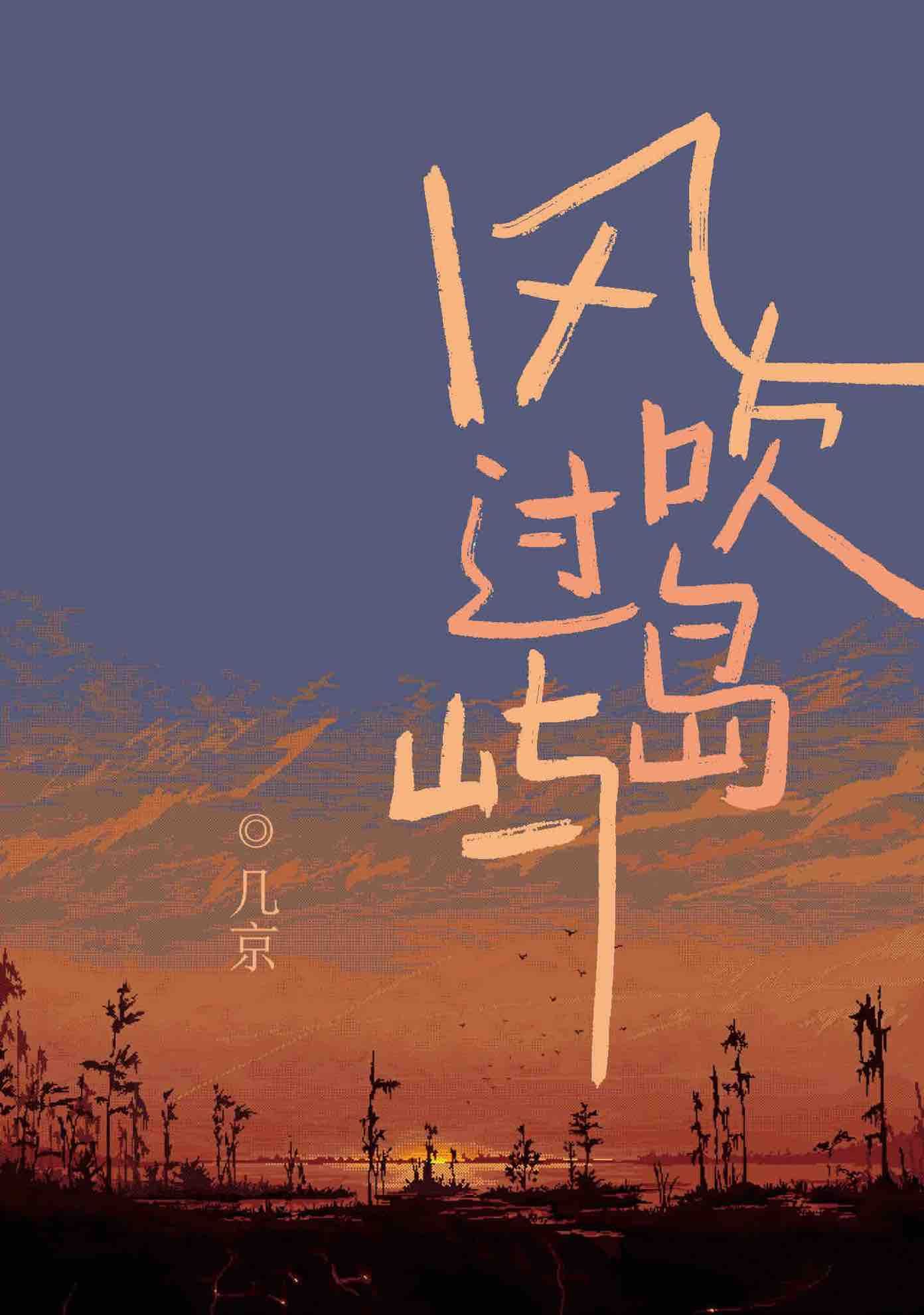
I keep coming back to that opening image of the red maple forest and the Du Mu poem, and I think it's not accidental that the story begins with autumn — the season of withering, of things letting go. The island is called Shuangye, Autumn Leaves. Everything is turning red, dying, preparing for winter. And Xie An'yu is preparing to leave the only home he's ever known. His grandmother — the last living relative who raised him — has just been buried in that same soil. The parallel is almost too on the nose, except the author never forces it, which is why it works so well. Then there's the fish. The live sea bass that Uncle Wang stuffs into his hands at the end. A living thing, still moving, given freely by someone who can't quite say the right words. It's almost like a ritual sending-off — take this, survive, come back if you can. Fish as sustenance, fish as gift, fish as the last thread connecting him to a place he's about to lose. And the poem itself — stopping your carriage to admire the maple forest at dusk — that act of pausing, of choosing to stay and look at beauty even as everything around it dies. Isn't that exactly what the reader is doing? We're stopping our carriage to look at Xie An'yu, this boy who's being forced to move on, and we can't look away.

Leave a comment

You must be logged in to leave comments. or