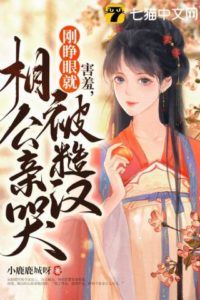
The Wet Nurse in the Marquis’ Manor Returns to the Fields
Novel Info
  • Author:
  • Status:Ongoing

Summary

... Read More
Zhao Nuan, a woman who crossed into an ancient fictional era six years prior after dying in flood relief efforts, currently serves as a lowly maid in the Yongan Marquis Estate. She entered the estate seeking survival alongside her infant daughter, Zhao Yan, after fleeing a devastating flood in her original home where she had lost her husband and family. Relying on her wits and the original host's memories of the cannibalistic chaos that followed the disaster, she secured employment and managed to keep her daughter alive. Over the years, she rose to become the wet nurse for the Eldest Young Miss, Zhou Ningan, due to a unique bond formed when the child refused all other nurses. She also gained the affection of the younger son, Zhou Ningyu, who found comfort in her presence despite not nursing from her directly. The estate, once prestigious, has seen its glory fade since the Marquis died on the battlefield the previous year.

The central conflict emerges when the Marchioness, the matriarch of the estate, summons Zhao Nuan under the pretense of concern for her health but actually to deliver dire news. The court is unstable, and rumors have accused the Marquis Estate of ties to a rebel army. With imperial forces expected to raid the estate soon, the Marchioness reveals that the family cannot preserve its name or property. She entrusts Zhao Nuan with a heavy burden: to take the six-month-old young master, Zhou Ningyu, and flee the capital immediately. The Marchioness provides Zhao Nuan with her deed of indenture, silver, and a jade bracelet, urging her to change the child's surname and never reveal his true lineage. The Marchioness explains that entrusting the boy to other family members is impossible, as the Eldest Young Mistress's maternal relatives are also implicated in the looming scandal.

A key turning point occurs before dawn on the day of their planned escape. Imperial soldiers surround the estate, searching and sealing it by decree. Flames rise from the main compound as the household is raided. Chunmei, a personal maid to the Eldest Young Mistress, rushes to Zhao Nuan’s quarters, guiding her through the back gate to escape the encircling troops. The Eldest Young Mistress, Lin Jingshu, appears in her undergarments, holding her daughter Zhou Ningan. She recognizes the deep bond between her son and Zhao Nuan, whom the child prefers over his own mother or other wet nurses. In a desperate act of love and sacrifice, Lin Jingshu entrusts Zhou Ningyu to Zhao Nuan, giving her two hundred taels of unrecorded silver hidden in a handkerchief.

Zhao Nuan accepts the young master, rocking him to silence as chaos erupts around them. Before leaving, the two young girls exchange hair ornaments as keepsakes, with Zhou Ningan thanking Zhao Yan for her companionship. Lin Jingshu pushes Zhao Nuan toward freedom, shouting for her not to look back as the estate burns. The narrative sets Zhao Nuan on a path of exile, carrying the child of a fallen noble house while concealing his identity from a hostile world. Her survival instinct, honed during her crossing and the subsequent famine years, now drives her to protect the last remnant of the Marquis line, transforming her role from a servant to a guardian in a dangerous political landscape.

Latest Release
DateGroupRelease
2026-09-26akknovel c1

Community Reviews

Rating(0 / 5.0, 6votes)
5 stars
0(0%)
4 stars
0(0%)
3 stars
0(0%)
2 stars
0(0%)
1 stars
0(0%)

Popular reviews

... Read More
Okay okay okay, I just finished these first four chapters and I have to say the plot architecture here is genuinely impressive for an opening. The author drops you into a scene that's already in motion - Zhao Nuan is holding a baby, it's dusk, a maid rushes over saying the Madam is sick. No slow warm-up, no 'let me introduce the world gently.' You're IN it within two sentences. And then the Marchioness reveals the political disaster, the debt of gratitude, the request to flee - all while the child is still in her arms. The pacing of revelations is so tight. What I really want to shout about is how the 'imperial decree' hits RIGHT as she's about to leave. She packed her bags, she's waiting for dawn, and BOOM, the gate is being stormed before she can execute the plan. That's not just a cliffhanger, that's the author yanking the rug out from under both the character AND the reader simultaneously. The Marchioness's plan was meticulous - 'you entered as a menial maid, your status hasn't changed, it would be less conspicuous' - and the plot immediately invalidates that careful logic by making escape impossible on schedule. Now we're watching the Eldest Young Mistress personally hand over the baby in her nightclothes, which shifts the entire dynamic from 'trusted maid executes a pre-written plan' to 'everyone is scrambling in real time.' I'm so curious whether the transmigration element (she was a flood relief volunteer in her previous life) is going to matter plot-wise or if it's purely backstory flavor. Because if it's flavor, fine, but if she's got some survival skills from dealing with actual disasters... that's a whole different story. Also the Chunlian subplot - the dead infant as a decoy - is such a cold, practical detail that makes the political stakes feel real. Not every noble family dies; some just... get absorbed, sealed, disappear. That's scarier than execution, honestly. Does the author plan to keep the baby's identity hidden for like forty chapters, or does the unmasking happen by book two? I need to know.
... Read More
I keep coming back to this moment where Lin Jingshu shows up in her inner garments, holding her daughter by the hand, cradling her son, and she just... says 'Zhao Nuan! I was just wondering why this child isn't attached to me or the wet nurse. It seems he has a bond with you.' And THEN she plants a kiss on his forehead and hands him over. In her nightclothes. With soldiers pounding on the front gate. And she's making a JOKE about the baby's attachment? Like, even in the middle of total chaos, her first thought is to deflect with gentle humor so the maid doesn't feel burdened by the enormity of what's being asked. That told me more about who Lin Jingshu is than any description could. She's not dramatic, not wailing, not clinging. She's practical, warm, and she's protecting Zhao Nuan's feelings even while asking her to do the most dangerous thing imaginable. And Zhao Nuan's reaction - she doesn't gush, doesn't kneel, she just asks 'What about the young master?' immediately. Like her body knows what needs doing even when her head is still processing. Their dynamic is so quiet, so already established through five years of shared routine (the feeding, the night-soil collection, the baby smelling milk on her clothes), that the handoff feels natural rather than ceremonial. What got me is the Marchioness vs. Lin Jingshu contrast. The Marchioness is the one who PLANNED this, who calculated 'you are steady and reliable, your status hasn't changed.' The older woman, the strategist. And Lin Jingshu is the one who SHOWS UP in the dark to do it herself, because apparently she couldn't let the plan be executed without her physically standing behind it. Two generations of women in the same house, both sacrificing, both in different ways. And Zhao Nuan sits in the middle of both of them - not their daughter, not their equal, but the person they chose. 'You will be his only mother from now on' hit me like a truck because it reframes everything. She's not carrying someone else's baby for a few days. She's being asked to MOTHER. To become the mother the biological one can no longer be. And she has her own six-year-old daughter who's been watching all of this happen over five years. I need to know how Yan'er processes having a new 'uncle' or whatever the family structure becomes post-escape. Does she even understand what happened? She's six. She watched her mother nearly die giving birth in a flood. She's been a refugee. And now there's another baby in the picture who's technically... more important than her? I'm braced for that tension to get nasty.
... Read More
So what struck me is that in four chapters, I can identify every single voice just by looking at a line and thinking 'oh right, THAT'S who's talking.' The Marchioness speaks in careful, measured fragments. 'I fear great changes are coming.' She doesn't say 'we're doomed.' She says 'great changes.' It's the language of someone whose body is failing but whose mind is still trying to maintain dignity. Every sentence is slightly too formal for the emotional content, which is actually the most heartbreaking choice you can make for a dying woman who's been the anchor of this household. Then Zhao Nuan's dialogue is almost exclusively short, reactive, quiet. 'Reporting to the Madam, it has been five years and ten months.' She counts her years like she's reciting a prison sentence. 'You honor me too much, Madam. But...' The 'But' she can't finish is doing SO much work. She's pushing back, negotiating, trying to find a less dangerous option, and the author lets that unfinished 'But' hang in the air without resolving it because it's more true to how a frightened person actually talks. They don't deliver monologues. They trail off. And then Lin Jingshu - her single major line, the one about the baby not being attached to her, is delivered with a 'strained smile' and a joke. In the middle of soldiers at the gate, in her underclothes, she's JOKING. Because that's how a person who has been holding everything together for five years (her husband dead, the estate declining, a political storm approaching) copes. Humor as armor. As deflection so the maid doesn't freeze. I also love that Chunmei's dialogue is pure function: 'Go quickly!' 'The front gate is already surrounded by soldiers. I'll take you out through the back!' No pleasantries, no 'I'm so sorry, Madam, but-' She's already in motion, she's speaking while running. You can HEAR her breathless state in the syntax. Short. Imperative. No adjectives. One minor complaint: the Marchioness's 'I remember you came to the estate seeking a way to survive, having fled disaster in your hometown with your newborn daughter' is slightly too... encyclopedic. A real person remembering something from five years ago would probably not recite it as neatly. Maybe 'Oh, you were the one who walked in here with your daughter barely a month old, weren't you? After that flood.' Something less polished. But I'm splitting hairs. Overall the voices are distinct and the dialogue carries the emotional weight that the narration handles the physical world. Good division of labor.
... Read More
I re-read the opening paragraph four times. Not because it's complex, but because it's SO specific in a way that makes the whole world snap into focus. 'Golden ginkgo leaves drifted down with the wind, covering the ground like scattered flakes of gold foil.' One sentence. Autumn. Dusk. Lanterns lit early. A corridor in the west wing. And suddenly I'm standing there, the air is cool enough that you'd pull your collar up, the lantern light is making the falling leaves look almost metallic, and there's this tiny baby against Zhao Nuan's chest making those little grunting noises. The author doesn't describe the whole estate. Doesn't give us a map. Just: west wing corridor, the path to the Madam's courtyard, the sound of muffled coughing carried on the evening air. It's all sensory fragments, and somehow that's MORE immersive than a detailed architectural overview would be. Because you remember what it FEELS like to be a small person moving through a big house at night. The scale is implied rather than stated - the Marchioness's chamber is far enough away that you hear coughing but don't see the source. The gate is far enough that you hear knocking before you see soldiers. Distance becomes a character in itself. Then there's the flood backstory - 'corpses strewn across the land and people exchanging children to eat' - which is not a 'nice atmosphere' description, it's a gut-punch that explains WHY Zhao Nuan would sell herself into servitude without hesitation. She's seen the bottom. The estate, even in decline, is ABOVE the bottom. That contrast - the ginkgo leaves, the lanterns, the relative safety of being indoors - versus what she walked three hundred li to escape - makes every comfortable detail in the estate feel slightly shameful, slightly temporary. And the final scene: Lin Jingshu in her inner garments, the baby against her bare shoulder, the front gate banging. The warmth of the earlier corridor replaced by cold panic. I don't need a description of the estate's layout to feel the geography. I know where everyone is because I know where they're NOT. The back gate. The main gate. The courtyard between them. It all maps itself out through the characters' movements rather than any 'and to the north lay the...' exposition. Very smart, very filmic, and I think the author understands that in a transmigration story, the reader already brings 'ancient China' imagery with them, so you don't need to paint the whole landscape - you just need the right leaf falling at the right moment.
... Read More
'The court situation is unstable. Someone has accused our estate of having ties to the rebel army.' I hit that line around chapter two and my brain just went - WAIT, we've been here like twenty pages and already there's a political death sentence hanging over the whole household? The author doesn't let you breathe. Chapter one is: hold baby, get called, hear the plan, get the silver, go back to pack. Chapter two is: you're packing, you're SLEEPING, and the gate is being broken open. There is NO interlude where Zhao Nuan walks through the estate and we get a leisurely tour. No 'meanwhile in the kitchen, the cook is discussing the weather.' Every single scene is either advancing the political threat or deepening the personal bond that makes the threat matter. The pacing is basically a sprint with no halftime. What I'm noticing is how the author uses the baby as a metronome. He's held, he's put down, he's picked up again. Every time the baby changes hands or position, the emotional register shifts a half-step. When the Marchioness talks politics, the baby is in the wet nurse's arms, distant. When the Marchioness grabs her hands and says 'you will be his only mother,' the baby is RIGHT THERE, being looked at, being pointed at. The physical proximity of the infant tracks the emotional intensity of the conversation without anyone saying 'this is a serious moment.' Smart structural choice. The transmigration backstory dump in chapter three - the flood, the bare-handed umbilical cord cutting, the three-hundred-li walk - lands in the middle of the night, when she's tossing and turning unable to sleep. It's NOT a separate info-dump chapter. It's woven into her insomnia. She's remembering because she CAN'T sleep, and the reader gets the backstory because they're sharing her restlessness. I did notice one spot where I wanted to skip ahead - the explanation of how she became the wet nurse (the night-soil collection, the baby smelling milk, the refusal to nurse from anyone else). It's necessary context, I get it, but it's the one place where the narrative goes slightly sideways to explain logistics. I skimmed it the first time and went back. Not a dealbreaker, just the one moment in four chapters where my brain said 'ok fine, I'll let this slide.' The chapter breaks themselves are well-placed - each one ends on a micro-tension. No wasted breath.
... Read More
WHAT I AM NOT OKAY WITH IS HOW THE AUTHOR LAYED THE STAKES OUT IN FOUR CHAPTERS. Let me just list what's on the line: The Marchioness - her life, clearly, but also her family's name, her late husband's legacy, the Eldest Young Master's inheritance. If the estate is sealed, he becomes a nobody or worse. Zhao Nuan - her freedom (the deed of indenture means she's PROPERTY until she leaves), her six-year-old daughter's safety, AND now a political refugee baby whose existence could get them ALL killed. Lin Jingshu - her children, her status as a widow heading the household, and the fact that her maternal family is ALSO implicated, meaning she has no backup, no in-law to call. The Eldest Young Master (mentioned, not present) - the entire future of the house. And the baby, Zhou Ningyu - his very existence. Not his comfort, not his feelings. His EXISTENCE. 'Do not let anyone know he is of the Marquis's bloodline.' That's not 'hide him from the prying eyes.' That's 'if you say his name, you are guilty of harboring a traitor's heir and we will kill you and everyone within ten li.' The stakes aren't 'will they escape?' They're 'if they succeed, the rest of the family dies for their absence. If they fail, the baby dies. There is no win that doesn't cost someone.' That's the real tension the author builds, and it's not just external (soldiers, political machination). It's internal: Zhao Nuan has to choose between her daughter Yan'er and this baby. The Marchioness knew this. That's WHY she said 'I know this request is a heavy burden.' She wasn't being polite. She was acknowledging that accepting this means putting Yan'er in danger by association, means abandoning the only stable home her daughter has ever known, means running forever. The jade bracelet - 'bears no mark of the Marquis Estate, exchange it for silver in times of crisis' - is a tiny detail that makes the stakes physical, tangible. She's holding this object in her palm while saying goodbye. It's the whole future compressed into a single piece of jade on a string. And the fact that she hasn't said yes when we last saw her - she's 'remaining silent, not nodding' - means the conflict isn't resolved. She's AGREEING mid-sentence, and the reader is left wondering: what's the price she'll pay for that nod? I'm genuinely scared for Yan'er now in a way I wasn't before this section.
See all reviews

Custom lists

See all custom Lists