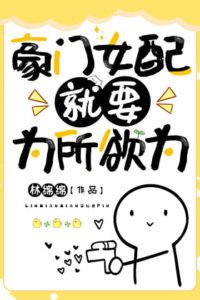
The Wealthy Villainess Can Do Whatever She Wants
+Add to Custom List
Genres:
Novel Info

Summary

... Read More

Chi Shuang is a beautiful but mediocre actress who has spent nearly a decade in the entertainment industry. Despite her looks securing her roles, she lacks the drive to excel and has always viewed acting as a means to financial comfort rather than a passion. She meets Liang Qian, a wealthy heir from a powerful family, who pursues her with intense devotion. After two years of dating, Liang Qian proposes, and Chi Shuang accepts, planning a grand engagement banquet. She is financially secure, having invested wisely in real estate, and plans to retire from acting to open a restaurant with her cousin.

One week before the engagement, Liang Qian goes on a yacht trip with his childhood friends to celebrate a business deal. Chi Shuang receives a call from Meng Huaiqian, Liang Qian’s closest friend, who sounds distressed and asks her to come to the hospital. When she arrives, she learns that Liang Qian has fallen into the sea and is missing, presumed dead. The official story is that Liang Qian died saving Meng Huaiqian during a conflict with a disgruntled employee. Chi Shuang is devastated, oscillating between grief and rage. She blames Meng Huaiqian for Liang Qian’s death, feeling that her fiancé chose to save a friend over his own life, and she harbors deep resentment toward him.

As days turn into weeks, Liang Qian remains missing. Meng Huaiqian, consumed by guilt, begins to care for Chi Shuang, hiring psychologists and ensuring she is comfortable. Chi Shuang rejects his pity, venting her anger on him through verbal abuse. Despite her hostility, Meng Huaiqian persists, believing it is his duty to protect the woman Liang Qian loved most. He visits her home, brings her food, and tries to assist with her restaurant project, but she consistently drives him away.

Chi Shuang decides to open a restaurant, a venture Liang Qian had financially supported. When Meng Huaiqian learns her entertainment contract has expired and she is struggling with career decisions, he offers to help her sign with a top agency or start her own talent company. Chi Shuang refuses, stating she wants to retire. Meng Huaiqian, misinterpreting her silence, continues to insert himself into her life, sending expensive gifts and helping with manual labor at the restaurant. His presence becomes a constant source of irritation for Chi Shuang, who sees him as a living reminder of her loss.

During a dinner with colleagues, Chi Shuang overhears gossip about her and Liang Qian. Furious, she records the conversation and forces the gossiping actress to apologize publicly. This act marks a shift in her behavior; she stops suppressing her anger and begins to lash out more freely. That night, she drinks heavily and breaks down crying. Meng Huaiqian, who has been waiting outside her home, enters to find her in distress. Instead of leaving, he stays, makes her food, and tends to her needs, enduring her coldness without complaint.

Meng Huaiqian’s friends discuss Liang Qian’s estate, noting that he left no will. They plan to give Chi Shuang money secretly, but Meng Huaiqian insists on handling her affairs himself. He believes that only he can properly care for her, given his unique connection to Liang Qian. Chi Shuang, realizing Meng Huaiqian’s stubbornness, decides to test him. She agrees to let him “take care” of her but sets impossible demands, such as delivering specific street food from across the city at night. Meng Huaiqian complies without hesitation, driving through traffic to fulfill her requests.

The story explores the complex dynamic between Chi Shuang and Meng Huaiqian. She hates him for surviving when her fiancé died, yet she also relies on his presence as a outlet for her grief. Meng Huaiqian, trapped by guilt and duty, finds himself increasingly drawn to Chi Shuang, not just out of obligation to Liang Qian but because of her raw, unfiltered emotions. He contrasts with Liang Qian’s polished perfection, offering a different kind of devotion—one that is clumsy, persistent, and unconditional.

As the restaurant nears opening, Chi Shuang’s attitude toward Meng Huaiqian shifts slightly. She continues to curse him, but the venom loses some of its edge. She acknowledges that he is the only one who stays by her side despite her abuse. Meanwhile, Meng Huaiqian faces pressure from his father, who warns him not to let his guilt destroy the family business. Meng Huaiqian remains resolute, prioritizing his promise to Liang Qian over his family’s expectations.

The narrative sets the stage for a deeper exploration of grief, loyalty, and the blurred lines between love and obligation. Chi Shuang is left to navigate her future without Liang Qian, while Meng Huaiqian struggles to atone for a death he did not cause. Their relationship evolves from pure hostility to a complicated coexistence, where anger and care become intertwined. The story ends with Chi Shuang preparing for her restaurant’s opening, with Meng Huaiqian still present in her life, waiting for a sign that she might eventually accept his help.

Latest Release
DateGroupRelease
2026-08-11shanghai fantasy c83
2026-08-11shanghai fantasy c82
2026-08-11shanghai fantasy c81
2026-08-11shanghai fantasy c80
2026-08-11shanghai fantasy c79
2026-08-11shanghai fantasy c78
2026-08-11shanghai fantasy c77
2026-08-11shanghai fantasy c76
2026-08-11shanghai fantasy c75
2026-08-11shanghai fantasy c74
2026-08-11shanghai fantasy c73
2026-08-11shanghai fantasy c72

Community Reviews

Rating(4.4 / 5.0, 6votes)
5 stars
2(33%)
4 stars
3(50%)
3 stars
0(0%)
2 stars
0(0%)
1 stars
0(0%)

Popular reviews

... Read More
The recurring motif in this section is how power operates through politeness. Meng Huaiqian never raises his voice. Never threatens directly. He says things like "I believe you understand the saying 'three strikes and you're out'" and "I may take measures that are less... gentle"—and both of these are delivered in the same calm, even tone you'd use to discuss the weather. That's the real horror of this character. He's not cruel in an obvious way. He's cruel the way a glacier is cruel—slow, inevitable, and completely indifferent to what it destroys. The Liu Hongkang scene is the perfect example. This man is on his knees, begging, talking about his nephew's sick child, and Meng Huaiqian's response is to fasten his cufflinks and ask "is there anything else?" The indifference IS the message. He's not enjoying this. He's not even angry. He's just... done. Two strikes have already been given. The third will be final. But here's what I keep thinking about: who gave Liang Qian his strikes? Because the text makes it clear that Liu Hongkang's brother only turned to mutual destruction because Liang Qian had already pushed him there. And now Meng Huaiqian is doing the same thing to Liu Hongkang, just more efficiently. The cycle continues. The ruthless inherit the earth, and they do it with better manners.
... Read More
There's this one moment that just stuck with me. Meng Huaiqian is in his office at the top of Aolong Group tower, and the text says: "Aolong Group towered above the city, and from Meng Huaiqian's office, one could overlook half of Beijing. The oppressive atmosphere was suffocating." Just that. That's all the author gives us and it does SO much work. You can feel the height, the coldness, the isolation. He's literally above everyone and everything, and the city below looks small from up there—which is exactly how he treats the people who come begging at his door. Then you cut to Chi Shuang's restaurant, "Chi Zhong Xiaoyuan," right by the lake, with people already coming to take photos before it even opens. Her cousin is dabbing sweat off her face with a tissue because Chi Shuang is afraid of heat and already glistening from a short walk. It's such a grounded, human scene—sweat, tissue, nervous rambling about security—compared to the marble-and-glass coldness of Meng Huaiqian's world. The contrast between these two spaces tells you everything about these two characters without a single line of dialogue. One man overlooks the city from a tower; one woman sweats walking from her car to her restaurant. And yet they keep ending up in the same room, circling each other, with a dead man's shadow between them.
... Read More
This book has me absolutely unhinged over the whole Liang Qian situation and I need to vent. So Chi Shuang and Jiang Shiyu are talking and Jiang Shiyu drops this theory that Liang Qian is actually lucky because now he's frozen in time at twenty-eight, perfect, never getting fat or bald or boring, and Chi Shuang will forever remember him as this idealized ghost. And the worst part? Jiang Shiyu is RIGHT. The text literally says: "How could a living person compete with the dead? It was impossible." I kept reading and my chest was actually aching. Because Chi Shuang DID have feelings for him. Not the dramatic, tragic, "I died for you" kind—she's very clear about that, like, "he died saving Meng Huaiqian, not me, I'm being GENEROUS by not dating for a year"—but also she's clearly affected. The stagnation period in a relationship is the worst, she says, and she can't even look at her suitors because she compares them all to Liang Qian and loses interest instantly. And then there's Meng Huaiqian, who is the reason Liang Qian died, sitting in his office checking his phone every twenty seconds, unable to admit he's in love, while also secretly protecting Chi Shuang without telling her. He arranged everything. She has no idea people are watching over her. That is either the most romantic or the most manipulative thing I've ever read and I genuinely cannot decide which. The tragedy is that all three of them are trapped by this dead man. Liang Qian died and somehow he's still running the show.
... Read More
Okay so I need to talk about Meng Huaiqian because this guy is fascinating in the most infuriating way. The narration literally says he "simply couldn't be bothered to lie" and then clarifies it's not because he's honest—it's because "you insignificant people aren't even worth the effort of me making up a lie." I literally laughed out loud. That is such a Meng Huaiqian thing to be. He doesn't even pretend to be a good person, he just operates on pure, unfiltered disdain for pretense. And then the shoebox scene—Chi Shuang falls right into his trap and he's just sitting there radiating smugness. He knows she knows. He knows she's furious. And he doesn't care. That's their whole dynamic, isn't it? He provokes her, she seethes, and somehow they keep circling each other like magnets that can't decide whether to attract or repel. But what really got me was the phone-checking detail. Rong Kun clocks him looking at his phone ten times in twenty minutes and Cheng Yue is like "you're in love" and Meng Huaiqian's entire mental process just... stops. "Meng Huaiqian's mind stilled." That's it. That's the whole reaction. He doesn't even argue with it. He just goes silent and thinks about Liang Qian checking his phone fifty times a minute back in the day. The parallel is devastating and he knows it. Also the Liu Hongkang scene—this man drops to his knees and Meng Huaiqian's response is basically "is there anything else?" while fastening his cufflinks. Not a flicker. Not even anger, just pure bureaucratic indifference. He's not a villain twirling a mustache, he's something worse: a man who has made empathy into a choice and consciously opted out.
... Read More
I need to talk about the Liu Hongkang confrontation because this is where the author really pulls the rug out from under you. On the surface, this is a simple scene: desperate man begs powerful man for mercy, powerful man refuses. But the stakes are layered in a way that makes your stomach drop. Liu Hongkang's brother betrayed Liang Corporation, got his brother killed (Liang Qian died stopping him), and now Liu Hongkang is begging for his life while kneeling on the floor of a man who could erase him with a phone call. What makes this scene so tense is that you kind of... understand Liu Hongkang. His nephew is sick. His brother was manipulated. He has no options. And yet—the text reminds us through his own thoughts that if Liang Qian hadn't been so ruthless back then, his brother would never have gone this far. The victim's victim is still a victim, but the original wound was inflicted by the very system Meng Huaiqian now protects. And Meng Huaiqian? He's protecting Chi Shuang, yes, but he's also protecting the empire Liang Qian died for. The conflict isn't just man-vs-man, it's memory-vs-progress, grief-vs-power. Every time Meng Huaiqian says "I do not wish for anyone to disturb her," you wonder: is he doing this for Chi Shuang, or is he doing this because he can't bear a world where Liang Qian's death meant nothing? The stakes here aren't just about one man's freedom. They're about whether love, guilt, and loyalty matter in a world run by men who fasten their cufflinks while others beg.
See all reviews

Characters

See all characters

Custom lists

See all custom Lists