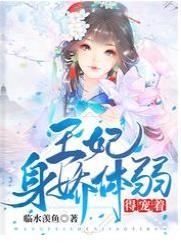
The Weak and Delicate Princess is Pampered
+Add to Custom List
Genres:
Novel Info

Summary

... Read More
Ye Yun, a top-tier Elixirist from a mysterious 21st-century organization, awakens in the body of a sickly noblewoman who shares her name. The original host, the legitimate daughter of the Protectorate Duke, had died of rage after discovering her betrothed, Crown Prince Mo Heng, in an intimate embrace with a palace dancer. Upon inheriting this new life, Ye Yun immediately recognizes the Crown Prince as unworthy and resolves to annul their engagement. Using her knowledge of medicine and her understanding of court dynamics, she manipulates the situation to gain the Empress Dowager's intervention, successfully dissolving the alliance while maintaining her family's dignity. During her recovery, Ye Yun encounters Mo Qingchen, the Emperor's younger brother and a figure of immense power and aloofness. Unlike the Crown Prince, Mo Qingchen is physically imposing, exceptionally handsome, and carries a hidden, severe internal injury that has plagued him for years. Ye Yun, relying on her expertise as an Elixirist, diagnoses his condition merely by touching his wrist and offers a precise prescription for his cure. In exchange for this life-saving treatment, she boldly demands a romantic relationship with him, a proposition that surprises the typically reserved prince. Despite his initial coldness, Mo Qingchen is intrigued by her audacity and unconventional nature, eventually accepting her terms and gifting her a precious jade pendant as a token of their connection. As Ye Yun begins to rebuild her health and navigate the complex social landscape of the Imperial Capital, she faces opposition from rivals such as Su WanYing, a woman who harbors ambitions to become Crown Princess. The Empress hosts a Hundred Flowers Banquet, an event designed to showcase noble ladies and potentially fill the vacant position of Crown Princess. Ye Yun attends not only to assert her independence but also to locate rare medicinal ingredients, specifically Snow Spirit Grass, which she believes the Empress possesses. During the banquet, she is confronted by Su WanYing and other noblewomen who mock her frail health and lack of talent. However, Mo Qingchen and the Emperor intervene, silencing her critics and publicly acknowledging Ye Yun's presence. The Emperor, aware of the growing bond between his brother and Ye Yun, encourages Mo Qingchen to pursue the relationship seriously. Throughout these events, Ye Yun balances her dual identity as a modern medical expert and a fragile noblewoman, using her wit and knowledge to secure her position while gradually healing both herself and the man she has chosen.

Latest Release
DateGroupRelease
2026-08-11shanghai fantasy c49
2026-08-11shanghai fantasy c48
2026-08-11shanghai fantasy c47
2026-08-11shanghai fantasy c46
2026-08-11shanghai fantasy c45
2026-08-11shanghai fantasy c44
2026-08-11shanghai fantasy c43
2026-08-11shanghai fantasy c42
2026-08-11shanghai fantasy c41
2026-08-11shanghai fantasy c40
2026-08-11shanghai fantasy c39
2026-08-11shanghai fantasy c38

Community Reviews

Rating(4 / 5.0, 9votes)
5 stars
4(44%)
4 stars
1(11%)
3 stars
4(44%)
2 stars
0(0%)
1 stars
0(0%)

Popular reviews

... Read More
The central symbol of this entire passage is fragrance — or more precisely, the subversion of fragrance. In traditional narratives, perfume and scent are associated with femininity, beauty, allure. Ye Yun takes that expectation and weaponizes it. The “delicate fragrance” that intensifies into “rich aroma” is how she kills. The assassins think they're hunting a sickly, helpless woman, but the very thing that seems delicate is what defeats them. There's also the candle imagery — Mo Qingchen burning intelligence reports by flickering candlelight, the Su family plotting by candlelight, Ye Yun refining elixirs by candlelight. Three different candlelit scenes showing three different kinds of power being exercised in shadows. And then the carriage itself becomes a symbolic space — it's where Ye Yun transforms from assassin-slayer to vulnerable girl, where Mo Qingchen transforms from calculating prince to terrified lover. The carriage moves them away from the public spectacle of violence into private intimacy. Power and vulnerability occupying the same enclosed space. The fragrance lingers without dissipating, just like the political tensions that will keep haunting this relationship.
... Read More
Okay so this whole assassination arc is actually really well-constructed when you think about it. You've got multiple factions moving pieces simultaneously — the Su family plotting in their secret chamber, Mo Qingchen burning intelligence reports by candlelight, Ye Yun casually refining elixirs like she's not about to be murdered. The narrative cross-cutting between these three threads is what makes the tension work. Each scene ends on a little cliffhanger that pulls you forward. But the real plot twist? Ye Yun already KNEW they were coming. She'd been refining poison elixirs specifically for this moment. When she crushes those translucent pills and the fragrance hits, it's not desperation — it's preparation. The assassins thought they were hunting a sickly young miss, but they walked into a trap she'd been setting for days. And the way she just casually orders their deaths afterward? “Just a bunch of vermin, no use keeping them alive.” Cold. Efficient. The plot didn't just subvert expectations, it made you question everything you assumed about Ye Yun's character. She's not some damsel waiting for rescue. She's been playing 4D chess while everyone else thought they were playing checkers.
... Read More
"If it looks good, why didn't you look a bit longer? Just a quick glance—did you really see clearly whether it looks good or not?" I am SCREAMING. Ye Yun's dialogue is absolutely phenomenal because she says things that are simultaneously playful, provocative, and completely unapologetic. She's not playing the demure palace lady role at all and that's what makes her so fun to read. And Mo Qingchen's responses are perfectly calibrated — he's always slightly flustered but never lets it show completely. His line "That dress looks good on you" is so understated and dry, and then Ye Yun immediately calls him out on not looking long enough. The dynamic between them is pure gold. But honestly, some of my favorite dialogue comes from the Empress Dowager. She's basically the ultimate gossip auntie: "Yun'er, tell me, what's going on between you and him?" And then later: "Well then, how do you find him?" "Since you think he's nice, do you also like him?" She's so direct and warm and completely uninterested in palace etiquette when it comes to her Yun'er. The contrast with the Empress Su Yuning's cold, calculated dialogue is striking. Su Yuning's lines are always layered with meaning — "Matters of affection cannot be forced, Your Majesty. You may rest assured. The Crown Prince and I share the same sentiment—we are both pleased about the dissolution of the engagement" — which is Ye Yun being perfectly polite while also making it clear she's moved on and the engagement dissolution was mutual. Noble Consort Liu Li is also a delight: "What the Crown Prince does not desire may have already caught the eye of someone else." She's dropping hints like a pro.
... Read More
Okay can we just talk about the jade pendant for a second because this is the most telling detail in the entire chapter and I am OBSESSED. So Mo Qingchen had this jade pendant that the Empress Dowager gave him — which was originally the late Emperor's gift meant for his future wife, by the way, which is already giving me major secondhand embarrassment on behalf of everyone involved — and he literally just gives it to Ye Yun. To Ye Yun. And then when the Emperor asks him about it, he's all like 'she helped me with a matter and she said she liked the jade so I gave it to her.' Bro. You couldn't come up with a better excuse than that?? The Emperor literally calls him out on it: 'what could a delicate girl like Yun'er possibly help you with?' And Mo Qingchen just... doesn't answer. He changes the subject. Classic. But here's what really gets me — Ye Yun wears it to the banquet like it's nothing, and Su WanYing notices it immediately. The whole power dynamic shifted without anyone saying a word. That pendant was supposed to be a future princess consort's token and now it's hanging off Ye Yun's waist at the Empress's own banquet. I love how casually she's weaponizing Mo Qingchen's affection without even trying. And then Mo Qingchen's reaction when Su WanYing was mocking Ye Yun — he didn't just defend her, he absolutely annihilated her with one sentence about her being a 'collateral branch daughter.' That's not just protection, that's claiming territory. The Emperor noticed this too, obviously. He kept smiling about it but I could tell he was deeply amused.
... Read More
The dialogue in this section is actually really sharp when you pay attention to who's speaking and how. Ye Yun's voice is consistently layered — she's always performing, even when she's being genuine. When she tells Lingzhi “There's no need to hide the truth among our own people, but we must exercise restraint in front of outsiders,” that's Ye Yun being strategic about her own image. She wants to seem like a dabbling hobbyist, not a lethal poison master. But then with Mo Qingchen? Her dialogue shifts completely. “Wang Ye, you're not at all like your usual composed and steady self” — she's teasing him, reading his anxiety, turning his worry into intimacy. The coachman's line “Miss, there's something unusual about our route back to the residence today” is such a small moment but it tells you everything about the Protectorate Duke's Residence's capabilities. They're protective without being overbearing. And Mo Qingchen's dialogue is famously sparse — “Afraid. Very afraid.” That's it. Three words that carry more weight than any monologue could. The author trusts the subtext. You don't need grand declarations when three words can make a character dissolve into tears.
... Read More
There's something so cinematic about the opening of this chapter. Ye Yun choosing the moon-white dress, Lingzhi helping her into it, and then stepping out of the carriage to see Mo Qingchen also in moon-white. The author doesn't go overboard with description but every detail lands: "As expected of the man she had her eye on—he was truly handsome." And then Mo Qingchen's perspective: "When Mo Qingchen saw Ye Yun in her moon-white dress, simple yet radiant, standing under the sunlight, she seemed even more dazzling, making it hard to look away." I love that they both notice each other's outfits without saying anything about it. The silent acknowledgment is so much more powerful than any dialogue. And then Ye Yun deliberately points it out — "we're both wearing moon-white today, Wang Ye. Don't you think this means we're kindred spirits?" — which is such a bold, playful move that completely catches him off guard. The palace setting itself feels alive too. The early morning emptiness before everyone arrives, the long corridor walk, the Palace of Everlasting Joy with the Empress Dowager emerging from the inner chamber — it all has this layered, breathing quality. And then the Hundred Flowers Banquet in the Imperial Garden with all the nobles, the seating arrangements, the tension between the Empress and Ye Yun. The author paints these spaces in just a few brushstrokes but you can see everything. The contrast between the quiet, almost intimate palace corridor scene and the crowded, politically charged banquet is really effective storytelling.
See all reviews

Characters

See all characters

Custom lists

See all custom Lists