The Villain Is Too Cute - Reviews

The Villain Is Too Cute
+Add to Custom List
Sort
Add review
... Read More
The stakes in this chapter are brutal and I mean that in the best possible way. On the external level, Yin Minglu is fighting for survival — literal survival. No money, no home, no recognition from either family, hunted by public opinion. The variety show scene especially raises the stakes because it's not just about him being miserable privately; it's about having his reputation systematically destroyed in front of millions of people. Every question from that host chips away at whatever dignity he had left. "The host's tone was very sharp and his tone was relentless, as if he wanted to scrape off the skin of the original owner under the spotlight." This is public execution by words. But the INTERNAL conflict is where this story really lives. Who is Yin Minglu when nobody will accept him? He's been rejected by the family that raised him AND the family he was born into. His childhood friend — his BAMBOO B AMBAMOO — calls him cold-hearted. What do you do when every person you've ever loved looks at you and sees a thief? The stakes keep rising too. First it's just social media hate. Then it's being barred from his home. Then it's the entire entertainment industry using him as a hot topic to boost their ratings. Each escalation raises the question: how much can one person take before they break? And the brilliant part is — he doesn't break. He channels it. He takes every insult, every rejection, every moment of humiliation, and he turns it into fuel. The group extra work, the game company, the determination to repay those who helped him — these aren't just plot devices. They're acts of defiance. The tension never lets up because the question is never "will he recover?" It's "what will he become after this?" And that's a much more interesting question.
... Read More
"In the midst of poverty, the original owner, Yin Minglu, tried to go home, but he was not allowed to enter the house three times." - THIS LINE HIT ME SO HARD I HAD TO PUT THE BOOK DOWN. Like. Like WHAT. Eighteen years of being their son and they won't even let him in the door? And his biological parents? Nothing. Not a peep. Meanwhile the girl gets all the warmth from both sides. The bamboo bamboo buddy literally accuses HIM of destroying someone's life, as if he had any choice in the matter. He was a BABY when this happened. A swaddling infant. And the entire world treats him like he stole someone's life on purpose. This is the part that made me actually angry on his behalf. It's not just the material poverty — it's the emotional isolation. He has no one. No family on either side. No friends who stick around. The only people helping him are old classmates who feel sorry for him. The scene where he's eating instant noodles in his rental, his face all haggard with red swollen eyes that makeup can't fix... that's not just visual description, that's pure emotional devastation packed into a few sentences. But then — and this is why I'm not writing this off as pure angsty garbage — he doesn't break. He finds gratitude for the small help he gets. He vows to repay people one day. He starts counting his meager earnings like it's something to be proud of. There's a tenderness in the way he records every yuan. That's the emotional core that makes this character worth rooting for. He's not asking for pity. He's just trying to survive with dignity. And honestly, that's so much more powerful than any grand revenge fantasy ever could be.
... Read More
Let's be real—the first commission ending was satisfying, sure. But this new one? This is where things get dangerous. The text literally says the score will 'naturally come out on top' because Xia Ming isn't just helping one client—he's 'changing the fate of other people by the way.' That phrase should terrify you. It means his actions have consequences beyond anything he can calculate. And look at what's at stake for Yin Minglu: not just his money or his status, but his entire identity, his relationship with the people he called family, and potentially his survival. He's been publicly humiliated, kicked out, and reduced to eating boxed lunches while strangers gossip about his downfall. But here's what keeps me up at night—the stakes aren't just Yin Minglu's. The text mentions 'transform the plane world' and saving 'this plane that should have been trapped.' We're talking about entire realities hanging in the balance. And the system itself seems almost nervous about Xia Ming's success, rushing him to pick up the next commission. Why the urgency? What happens if he takes too long? The gossiping extras outside the film city represent something bigger—they're the chorus, the witnesses, the evidence that this story has already become public knowledge. Everyone knows. The whole world is watching. And Xia Ming is walking into a situation where the real treasure has been found, the fake young master has been exposed, and a girl from a third-class background is suddenly the center of attention. The collision course between these characters is going to be explosive. I genuinely cannot wait to see what happens next.
... Read More
Okay so this whole child-swap subplot has been simmering under the surface for chapters and now it's finally coming to a head. I am literally vibrating with satisfaction watching An Meijun's carefully constructed lies start to crack open. She thought she could play both sides—keep her actual daughter suffering while letting the swapped son live like a prince in the Yin family—but of course that never was going to work. The story is structured so perfectly here: every chapter peels back another layer of her deception until there's nowhere left to hide. What really caught me off guard (in the best way) was how the narrative gives us access to An Meijun's internal calculations. She's not some cartoon villain—hearing her justify beating Yin Minglu because her own biological daughter 'needed more care' because she was 'delicate as a medicine jar' is genuinely chilling. The author doesn't let us forget that this woman harmed a child out of pure selfishness, not some twisted sense of maternal love. That line about Minglu being healthy-boned while her real daughter was sickly? That wasn't affection—it was resource allocation. She was deciding which child deserved her energy like she was splitting a budget. And then the An family's reaction? Peak chaos. Her father literally calling her a 'pig's brain' for ruining everything is the comedic relief we needed after all that darkness. The plot keeps shifting between genuine tension and this darkly funny family dysfunction. I've re-read the scene where she tries to go to the kindergarten multiple times—the staff actually held their ground and refused to release the child without proper documentation. That detail matters because it shows the outside world finally pushing back against her entitlement.
... Read More
Okay so let me just say — this plot twist hit me like a truck. I thought Yuan Feng was the untouchable prince here, right? Like, yeah, he got banished to the countryside but come on, the guy literally sees through EVERYTHING. His stepmother and half-brother think they outsmarted him by planting this girl who stalked him around and then spread those ABSOLUTELY TERRIBLE rumors? About an abortion? At his age? In middle school? That's diabolical. That's not just mean, that's calculated to DESTROY him. And here's the thing that really gets me — the betrayal wasn't even the worst part. It was watching him see the beautiful girl who ruined his life just HUGGING his twelve-year-old half-brother. Like, these two were literally KISSING in front of her after everything she did. The audacity. The sheer gall. And Yuan Feng? He saw it all. He witnessed the proof of their conspiracy with his own two eyes. But what I loved was how the plot circles back. These two idiots thought they were so clever, right? They didn't realize something crucial — that their 'beloved' father is actually one of the most mediocre, easily manipulated men in the entire Yuan family. The father thinks he's running things? Please. The whole family operates on his ego, not his authority. Yuan Feng understands this completely. He watches his father show off to his wife and children but have zero real power. It's almost funny if it weren't so tragic. The structure here is brilliant because the author lets us IN on Yuan Feng's thoughts while keeping us guessing about whether he'll actually fall for this trap. And when he does? When he realizes he was careless? That's when the real story begins. Because now we know what his weakness is — he won't fight women. And someone exploited that. That's a character flaw that makes him human, not some invincible protagonist who can't be taken down. The plot works because it makes him VULNERABLE. And then — and THIS is where I almost spit out my tea — after everything, after the beating scene that somehow became 'dark material' for that film crew (which is weirdly meta), after all the scheming and betrayal, he ends up in this countryside with the one person who ACTUALLY wouldn't betray him. The little idiot who calls him stinky. Who doesn't play games. Who just exists without malice. The plot brings him to the one person who matters, and I'm HERE for it. The author also does something clever with interweaving — all these events weren't random. The stalking, the rumors, the photo evidence, the school punishment, the betrayal reveal. They're ALL connected. Every single one targeted Yuan Feng's specific weakness. This wasn't sloppy villainy; this was PRECISE. Someone studied him. Someone knew exactly which buttons to press. That's the kind of plotting that makes you want to immediately re-read the earlier chapters with new eyes.
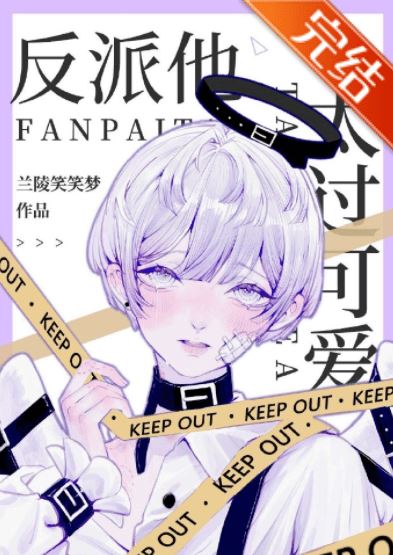
... Read More
Can we just take a moment for the relationship between Yuan Feng and the little idiot (Yin Minglu)? Because this is genuinely one of the most touching dynamics I've read, and it gets buried under all the scheming so easily. When the kid secretly pokes Yuan Feng's waist during billiards, Yuan Feng's first reaction is just pure exasperation — “You little rascal! Don't you know a man's waist can't be poked so casually!” — but then he immediately realizes something is wrong when the kid whispers in his ear. The shift from annoyed older brother energy to “pupils shrank instantly, face turned blue and white” is so well done. He goes from playful to deadly serious in one beat. And the backstory they share? He told the kid a modified Cinderella story in the countryside because he was bored with no internet, and now the kid took it seriously enough to run and report on the stepmother's schemes. That kid listened, believed him, and acted on it. That is trust. That is family. Meanwhile, Yuan Feng and his brother Yuan Jing have this weird, performative relationship where they're constantly acting around each other. “The two brothers had half of the same blood flowing in their bones.” They mimic each other's movements so perfectly that the confrontation over money looks like actual bullying to anyone watching. But it's Yuan Feng using that shared history as a weapon — he knows exactly how to play his brother because they've been playing each other their whole lives. “After years of pretending, obedience has become an instinct.” That description of Yuan Jing is heartbreaking. He hates what he's forced to do but his body obeys anyway. This isn't just a villain sibling subplot — it's a portrait of someone trapped in a performance they can't escape.
... Read More
The way this sequence moves is really well-crafted and I want to break down why it works. It starts IN MEDIALAS res—literally mid-panic with the class leader desperately trying to get everyone changed and located. There's urgency, scattered dialogue, people running around. You're thrown into the chaos alongside the characters with zero exposition. Good. Very good. Then the broadcast kicks in and the pacing slows down to this almost cinematic parade description. The host's voice gives it a formal rhythm, and suddenly we're getting these rich visual moments instead of frantic energy. The tempo shift mirrors what's happening on screen—they've gone from backstage panic to performing under the spotlight. After that, we cut to Yin Yunqiu's internal moment, which is quieter, slower, almost meditative. This is the author hitting the brakes deliberately to make you feel something before revving the engine again. And then—BOOM. Day two hits and suddenly we're in highlight-reel mode. Five thousand meters. Javelin record. Jumping surpassing athletic students. Three days of nonstop dominance. The pacing here accelerates like a montage, compressing time and building Yin Minglu's reputation through rapid-fire achievements rather than lingering on any single moment. The structure here is basically: chaos → performance → reflection → domination. Each section serves a different emotional purpose and the transitions feel natural, not rushed. The author knows exactly when to slow down and when to sprint.
... Read More
The pacing of this passage operates like a pressure cooker with a deliberately loose valve. It begins quietly—with An Meijun's internal debate about whether to sacrifice herself for her daughter. The prose lingers. We sit with her. We feel the weight of her fear. Then, almost casually, the author introduces the newspaper. A physical object on a dining table. A medium that feels analog, old-fashioned, deliberate. The contrast with what follows—a mobile game, viral, instantaneous, everywhere—is structural genius. The escalation is masterful. First: the newspaper photo. Second: the rumors about Yin Yunqiu's marital status. Third: the revelation that his son is a cultural phenomenon. Fourth: the game itself, described in such immersive detail that you can almost feel the screen in your hands. Fifth: the final blow, delivered not through dialogue but through a visual detail—the game icon bearing her son's face. The author refuses to rush. Each revelation is given breathing room. The result is a passage that doesn't sprint to its emotional climax—it crawls there, and by the time you arrive, the weight of every preceding sentence makes the ending unbearable. The final image—An Meijun dropping her phone after seeing the icon—isn't dramatic. It's barely a gesture. And that's exactly why it lands.
... Read More
'He cried seeing it, this appearance made many viewers feel that he was a hypocrite.' I need to talk about how cruel the original owner's relationship with his mother became in those final months. He trusted her. He came home after the show and told her what was happening — the strange eyes, the peeping, the someone in his bed. And what did she do? She listened to her new husband redefine his trauma as 'fear of losing his mother.' She sent him away to the show like it was a solution. There's a line that says the original owner 'couldn't carry the burdens on his shoulders' and everyone disagreed with him. But he was twelve. What十二-year-old is supposed to carry? The text says he 'weep[ed] silently' — that image of a kid crying alone because nobody believes him is just... I can't. And then after he dies, Lin Shuwu finally 'realizes something.' What did she realize? That she failed him? That Han Shihao manipulated her? It doesn't matter — he's already dead. She picks up a fruit knife, stabs the man, and follows her son. That's not justice, that's guilt crashing through her all at once too late. The irony is suffocating. Han Shihao spent five years winning her trust, got her to abandon her dead husband, brought her child into a toxic environment, and she never once connected the dots. Her love was weaponized against her son. Now whoever is in Yin Minglu's body knows all of this. They want to 'help the child save his life and fulfill his wish.' But the wish was probably just to have a mom who would've believed him. That's the emotional core here and it's devastating.
... Read More
Yin Yunqiu is such a complicated dad. On one hand, he's this ruthless businessman who measures everything in contracts and material guarantees. He literally thinks love is something you can't secure, so you settle for money and fairness. "He can guarantee the long-term relationship between his family members, but he cannot guarantee love." Ouch. That's not just a character line—that's a worldview. But then look at how he treats Minglu. He explains the agreement word by word to a toddler. He notices the pen is too heavy and drops it. He remembers the character "Lu" has too many strokes for a child who probably can't even write his name. And when the kid runs off to get red clay and presses those bright red handprints? Yin Yunqiu's reaction is just: "...His child is really smart." That's it. No grand speech. Just quiet appreciation. This man who deals in contracts is being disarmed by a four-year-old's thumbprint. And An Meijun—ugh. She's such a terrible mother but also kind of pathetic. She lied for two years, switched a baby, and yet when she comes home she's already putting on a performance: ironing her hair, changing clothes, pretending she never left. The maid even tries to warn her and gets shut down. The scene where she burns her thigh with hot porridge and then immediately covers her lie by saying "I told the kitchen to make it" while still claiming maternal credit? Some people are truly incapable of stopping the performance, even when the curtain is coming down.
... Read More
I need to talk about An Meijun because honestly she is the most tragically stubborn person I have ever encountered and I respect it She turned down SUITORS for FIFTEEN YEARS. Fifteen. Years. Waiting for her daughter to return to the Yin family so she could become the rightful Mrs. Yin. She's thirty now, her options are shrinking, and men pursuing her are basically the clearance section of the dating market—widowers, broken men, penniless handsome types who can offer love but not stability. And she still says no. Her own parents want to cut her off and she doesn't flinch. Why? Because she believes her daughter deserves that life. That recognition. That belonging. But here's the thing that gets me—the photo. Yin Yunqiu took a picture of the award ceremony, and in the center is the smiling youth, and slightly behind, out of focus, is An Meijun's daughter in a black dress, fake smile, trophy in hand, fading into the background. An Meijun SAVED that photo. Not because she wanted to remember the moment, but because she saw the injustice. She noticed what everyone else missed. Her eyes welled up thinking her daughter doesn't even know she's switched at birth—if she did, would she still have that fake smile, or would it finally be real grief? The stakes here aren't just emotional, they're identity-level. What happens when the girl in black finds out she was never meant to be in the frame? What does Yin Minglu do when he realizes his biological father's love has boundaries he didn't know existed? And Chu Run—ruthless mentor, secret fan, man who pushes himself to be worthy of a child's admiration—what role does he play when the whole carefully constructed world starts cracking? The confrontation at Capital First High School is apparently coming. I am not ready. Nobody is ready.
... Read More
The contrast between the two worlds in this passage is everything. On one side you have the rural setting — wheat-color skin, clear springs, flowing water, fields, village life. The author describes it almost reverently, calling out the natural beauty that exists outside the city. On the other side you have Han Shihao's world — large-screen TVs, comfortable soft sofas, the calculated cruelty of wealthy people who treat humans as assets. These aren't just different settings, they're different moral universes. And the fact that Luo Cuihua is being broadcast from one into the other, turned into content for people like Han Shihao to consume, adds this whole layer of commentary about class and exploitation that the author doesn't even have to state directly. The visual details are cinematic too — Han Shihao watching the screen, the child turning his head with rosy lips and bright eyes filling the frame, the phone conversation with background noise suggesting a busy campus street, Lin Shuwu walking down the corridor catching fragments of conversation. Every scene is framed like a movie shot and I can see exactly how this would translate to screen.

Leave a comment

You must be logged in to leave comments. or
