The Villain Is Too Cute - Reviews

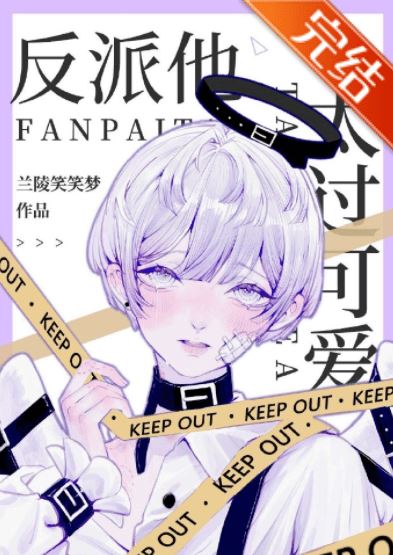
The Villain Is Too Cute
+Add to Custom List
Sort
Add review
... Read More
Let's talk about An Meijun for a second, because this chapter completely strips away whatever facade she's been maintaining. The way the narrative shows us her internal monologue is almost comically revealing—she's so busy calculating how to frame herself as the caring mother that she forgets her actions don't match her words. She had sent out invitations, planned a honeymoon, and was already rehearsing her success story. And then one shopping bag turns it all into ash. What's fascinating is how both characters handle the confrontation differently. Yin Yunqiu is cold, methodical, almost clinical in how he presents his case. He doesn't yell or threaten—he just states facts and then walks away. That's far more devastating than any angry outburst. Meanwhile, An Meijun is grasping, frantic, trying every emotional angle she can think of. She grabs his suit, she talks about the child's psychological development, she even references how children from single-parent families tend to become introverted. It's all manipulation, and the text makes that clear without ever saying it outright. But here's what I keep coming back to: Yin Minglu himself. This three-year-old who understands exactly when cartoons are being used as a distraction tool. Who eats two extra bowls of porridge because he senses the atmosphere has shifted. Who pretends to enjoy the show while quietly watching his mother get dismantled. That child is surviving in a house where the adults are treating him like furniture, and yet he's more perceptive than anyone giving him credit for. The relationship between Yin Yunqiu and his son also redefines itself in these pages. He's resolved to either find a nurturing stepmother or raise Minglu himself. Neither option involves An Meijun, and that final decision—to prioritize the child's actual needs over social convenience—is what makes him a fully realized character rather than just the handsome, wealthy husband archetype we usually see in these stories.
... Read More
Okay so let's talk about how this whole An family situation is just peak karma and I cannot stop thinking about it. An Jun absolutely deserved everything that happened to him. He spent all that time flaunting his brother-in-law's name, acting like he was some big shot, and now his own classmates are humiliating him at a car wash. That scene where they're whistling and dangling car keys in front of him? Brutal. The writer basically wrote it so beautifully—the same arrogance that got him there is what makes his downfall so satisfying. And then there's Yin Yunqiu, who I have mixed feelings about. He was completely cold to An Meijun, just dismissive, but honestly? She tried to exploit him for money in a really underhanded way. She didn't come clean about the debt from accepting gifts from other men. So I get his reaction, even if it's harsh. The fact that he immediately called someone to have her removed shows he's done playing nice. And what's interesting is Yin Mingqin—the one who actually seems to care. She's wondering where An Meijun has been, making mistakes at the piano because she's genuinely worried. That's a relationship worth watching, I think. The way the original owner would have An Meijun sign contracts on their behalf, and now An Jun's family is doing the exact same thing to An Meijun—it's like the universe is playing musical chairs with victimhood and privilege. The whole family dynamic is so toxic. Parents who signed away their daughter's future without asking her, a son who blamed her for everything, and now they're all forced to work together to pay off the consequences. It's messy and honestly kind of horrifying in how realistic it feels.
... Read More
Can we just appreciate that the author gives the netizens this incredible collective voice? They're basically a Greek chorus but with phones and zero chill. Every single comment feels like it could be pulled from a real Douyin or Weibo thread. 'Emmmmm this girl has a cold face'—that casual 'emmmmm' is such a specific internet register. And then the commenters start sharing their own life stories like it's a group therapy session: the girl whose mom hid her pregnancy, the college student whose family only surrounded the brother, nobody took her to campus. These aren't just reactions; they're confessions. The narrator's voice during the broadcast segments is cold and clinical—everything 'exquisite scenery with a clear sky' and 'granary above the Yellow River' sounds like it was written by a documentary crew trying not to offend anyone. But Xia Ming's whisper to Minglu? 'I'm sorry, I'm sorry, in this life I will never let down your trust'—that's raw and unguarded. The contrast between the polished broadcast voice, the chaotic netizen voice, and Xia Ming's fractured inner voice creates this weird polyphonic texture. The author's own narrative voice is observant without being judgmental, which makes the reader do the judging. And those footnotes? '[1] The Chinese form of Oppa or elder brother'—breaking the fourth wall like that to explain a cultural term is such a translator's move that reminds you this is a constructed text. It keeps you aware of the frame.
... Read More
This chapter raises this question that won't leave me: are these kids actually the problem, or are they the evidence? The entire premise of 'The Metamorphosis' is built on the idea that wealthy second-generation kids have behavioral problems that need fixing. But the more I read about Xia Ming and Yin Minglu, the more I wonder who actually needs metamorphosis here. Xia Ming isn't rebellious because he's spoiled — he's withdrawn because his parents divorced and remarried and he views the new family as 'evil people with bad intentions.' That's not a discipline problem, that's a loyalty conflict. He's protecting whatever's left of his original family unit by rejecting the new one. Yin Minglu isn't naive because he's stupid — he's isolated because his mother literally never let him go outside. She was a famous beauty who married rich and then disappeared from public life, raising her son in a bubble. The question 'How could anyone never have seen a butterfly?' is hilarious on the surface but horrifying underneath. A child who's never seen a butterfly because his parents were too afraid he'd be kidnapped. The stakes here aren't about whether these kids will 'reform' on a TV show. The real stakes are about whether their families will ever honestly confront what they've done. The media already knows Yin Minglu's family — 'only a pair of an orphan and a widow was left behind.' That image of a grieving mother and her sheltered son is heartbreaking. And the most unsettling part? The chapter doesn't resolve any of this. It just presents the facts and lets us sit with the discomfort. The netizens are still arguing. The kids are still on the show. Nothing is fixed. And that uncertainty is what makes the conflict feel so real — because these aren't story problems with clean solutions, they're human messes.
... Read More
This chapter operates on two completely different tempos, and the switch is razor-sharp. The first four-fifths of the text moves at a deliberately leisurely pace—we are literally walking through a supermarket with these characters. The author takes time to describe Yin's outfit, the crowd's reactions, the philosophical digression about why ordinary people obsess over the private lives of the wealthy. This is all deliberate padding, but it is GOOD padding. It builds atmosphere. It makes us feel like we are actually there in that crowded department store, hearing the whispers, seeing the sunflower-headed crowd turning to watch the father and son pass by. The famous line about everyone looking "just like a dazzling sun shining into a sunflower bush" is the kind of image that makes you slow down and appreciate the prose. But then, in the final quarter, the pacing accelerates dramatically. We get the Jiang couple's internal monologues, the daughter's health reveal, the son's uncanny recognition of the villain character—and it all compresses into a handful of paragraphs. The chapter essentially transforms from slice-of-life romance into something with actual narrative momentum. That ending is a cliffhanger disguised as casual observation. The text cuts off mid-thought about Jiang Shi holding his daughter, and the unfinished quality is intentional. It leaves us hanging, needing to know what happens next, what this strange familial pull means. The author knows exactly how to lull you to sleep and then slap you awake.
... Read More
'Even if he escaped, they would be caught back and they would plainly show him in front of the audience as a joke.' I need to sit with that sentence for a minute. This isn't just a reality TV show, this is a trap. The kid signed a DEATH CONTRACT in his stepfather's name. His own family handed him over to people who were GENUINELY HAPPY to see him fail. And if he tried to quit? They'd drag him back and make his suffering ENTERTAINMENT. The stakes here are absolutely horrifying when you think about it. This kid has never walked a mountain road alone. He's twelve. He's from a wealthy family where a nanny probably wiped his face after he fell. And they're putting him in a situation where exhaustion equals humiliation on national television. The program crew isn't neutral — they're ANTAGONISTS wearing producer badges. But what really gets me is the comparison trap they set up. They PRE-EDITOR the rural kids' hardship so the city kid looks worse by contrast. This is manufactured suffering designed to make one specific child look like garbage. And the original owner took it — crawled up the mountain in tears, fell multiple times, face covered in mud, calling for his mom. Every stumble was content. Every tear was a rating point. Now Han Shihao has woken up in this body and he's already facing the mountain climb. The reader knows what happens if he follows the original path — three months of this, public destruction, return home broken, and eventually suicide. He has to change the script from MOMENT ONE. There's no warm-up period. The clock is already ticking and the entire country is watching. The tension here is insane because we KNOW the original outcome and we know this kid is trying to prevent it. Every step up that mountain isn't just physical — it's existential.
... Read More
This section starts slow—heavy on description, heavy on internal thought, sitting in a room with people who don't know how to be around each other. The author takes their time establishing the atmosphere: the cold stares, the crossed arms, the awkward silence. It's deliberate. You're supposed to feel that tension building, that uncomfortable stillness of people trying not to offend each other while also not caring at all. Then BAM. Stomach growl. The pacing shifts instantly. Everything that was static becomes kinetic. Cuimiao springs into action, Yin Minglu nods eagerly, Yuan Feng gets flustered. The scene explodes from a painting into a movie in one sentence. After that, the author pulls back again—we go into Yuan Feng's head, learning about the other guests, his preconceptions, his prejudices. It's a nice rhythm: tension, release, deeper tension, release. The chapter ends on an unresolved note with Yuan Feng's cruel words still hangin' in the air, which is exactly the right place to stop. You want to keep readin' because you need to see what happens next, but the author isn't rushing to give you answers. The transitions are smooth too. We move from third-person observation of the scene into Cuimiao's hopes, then into Yuan Feng's analysis of Yin Minglu, then back to dialogue. It's a lot of POV shifts in a short space but it never feels confusing because each perspective reveals something new about the same situation. Smart structural choices.
... Read More
I need to talk about the relationship between Yin Minglu and the photographer because this is genuinely one of the most interesting dynamics unfolding here and it's so quietly powerful. At the start, the photographer has clearly been briefed on this kid — told he's arrogant, spoiled, sensitive since his mom remarried, basically the poster child for ruined urban upbringing. He arrives ready to film a cautionary tale. But the longer he spends with Yin Minglu, the more the script falls apart. And what's beautiful is that the photographer doesn't become hostile when this happens — he becomes genuinely invested. 'He wanted to know more about the back-story of this child.' That's not a TV producer anymore, that's a human being who encountered someone who didn't fit his categories. The original owner's parents are mentioned only through Yin Minglu's retelling, but they're terrifying in their absence. They treat their own son like a fragile asset — 'the one and only fool son of the rich man' — imprisoned at home under the guise of protection, convinced the world is full of kidnappers and bad guys. There's this horrific realization hitting me: the people who were supposed to love this child most have been the ones who imprisoned him. And Yin Minglu, inhabiting this body, is trying to navigate a world where his 'family' built him a gilded cage. I'm also struck by how the photographer represents the audience's gaze. He's watching this kid through a lens — literally and figuratively — and slowly realizing the image on the screen doesn't match the person in front of him. That's a relationship about perception itself, about how we're trained to see certain kids as problems and others as heroes based on nothing more than where they come from.
... Read More
Okay so the handkerchief thing is WHAT. Like, I get that Yin Jiyu is being protective over his little brother, which is sweet and all, but the way he zeroes in on that cologne scent? Immediate suspicion mode activated. "There was a faint coffee aroma in the air, along with a subtle men's cologne scent on the handkerchief. It was well-known that Yin Minglu never used cologne." Bro really saw a single detail and his entire brain went to conspiracy theory territory. And then he just... drops it with that ambiguous "Is that so?" Like he's NOT going to press it NOW but he's definitely making a mental note to investigate everyone in his brother's orbit. The protectiveness is there but it's also kind of suffocating, you know? Meanwhile Yin Minglu is just over there like "why is everyone treating this like a crime scene??" He calls it a gift from his idol but refers to the person as a "friend" because... vibes? Yeah that's not innocent behavior right there. And then there's Jiang Mingqin throwing herself at Yin Jiyu with the dry cleaning excuse. Obviously. We all see it. The narrative even tells us straight up that she knows Yin Jiyu is her cousin and she's STILL trying to get close. Some people are relentless.
... Read More
Okay so can we just talk about how Xia Ming is basically unraveling at the dinner table while everyone else is just eating? Like the contrast is insane. Yuan Feng is complaining about the food, Luo Cuihua is doing her twisted expressions, and Xia Ming is just locked in this absolute stare-down with a twelve-year-old kid who's happily eating vegetables like nothing's wrong. The author does something really interesting here with the relationship dynamics. On the surface, Xia Ming is supposed to be this distant relative's child who was asked to look out for Yin Minglu. But the text keeps undermining that explanation — Yin Minglu himself notices it. He thinks Xia Ming is acting guilty, like he's trying to apologize for something without actually saying what it is. And then there's the whole thing with Lin Shuwu. When Xia Ming mentions that Aunt Lin asked him to take care of Minglu, the narrative quietly drops that in the original plot, these women had zero relationship. They were both rich wives in the same circle but never communicated. So either Xia Ming is making this up on the spot, or... something else is going on here. What really gets me is how the other kids react. Yuan Feng's line about whether the Xia family owes the Yin family millions is hilarious but also pointed. He sounds almost jealous, which is funny because he's jealous of someone being nice to a kid? The subtext is everywhere. And Yin Minglu — that moment when he hears about his mom and his eyes just light up like he found the most precious toy in a shop window, but he's too scared to reach for it? That's not just cute, that's devastating. It tells you everything about what kind of childhood this kid had without the author having to explain it directly. I keep thinking about the dinner scene and how the food itself becomes this weird metaphor. The text literally says he's eating like the vegetables are something hard to find in the world. Meanwhile Xia Ming is watching him with this choking sensation in his throat because in his past life, he didn't understand any of this. He didn't see the signals. He didn't reach out. The boy asks about mom — 'Mo...mom?' — and the text cuts off right there. I'm sitting here like what happened next? But honestly, the fact that it cuts off is kind of perfect. Some moments are too heavy to finish describing.
... Read More
Okay I need to stop and just talk about Lin Shuwu asking her son if he likes Uncle Han. THE AUDACITY of that question coming from a mother who has been completely consumed by her own heartbreak. And the kid? He says no immediately. Then she asks about divorce and he nods like... like he's been waiting for this moment. The text says his face changes because mentioning 'that man' makes him unhappy. UNHAPPY. Not scared. Not terrified. Just unhappy. That's a child who has been emotionally starved his entire life. And then Lin Shuwu internally monologues about how SHE ignored her son's cries for help in the previous timeline? HOW IS SHE STILL READING?? This woman is so self-absorbed even her guilt is selfish. She thinks she's doing better this time but she's still treating her son like a prop in her redemption arc. Meanwhile Yin Minglu (the reincarnated soul) is the only one actually paying attention to the boy's needs. There's this whole layer of maternal failure that the original owner represents, and Lin Shuwu keeps repeating those same patterns while thinking she's different. The CP dynamics are also wild - Han Shihao's porn photos with that teenager who resembles the original owner? That's not just scandal material, that's psychological warfare. I am NOT okay.
... Read More
'When she raised her head again, her expression was soft and harmless.' I literally had to put the book down after that sentence. There's something about this chapter that made my chest ache in the strangest way. It's not because of romance or heartbreak — it's because of loneliness. Jiang Mingqin has built herself this entire empire of control, of calculated moves, of stolen spotlights, and the text keeps showing us that she is profoundly alone in it. Think about it. She's standing on stage, wearing this revealing black dress, swaying under the lights, and her thought isn't 'I feel beautiful' or 'I feel alive.' It's 'I wanted all eyes to be on her, to be all about her, with no room for anyone else.' That desperation — that need to be the sole center of attention — that's not confidence. That's a wound. And the contrast! During the day she's 'innocent and pure,' and at night she's this 'sexy fairy' commanding every gaze. But the moment she's done performing, when she's exhausted and pale and her partner has to support her... that's when Chen Gongzi shows genuine concern. 'Are you okay?' His tone is softer, showing 'genuine worry for the girl's resilience.' And she — she pretends to be vulnerable. 'I'm fine, just need a little rest.' She's performing even when she's not performing. But the most emotionally devastating moment in this entire passage is when she slips into that dark corner where no one can see her and smiles. 'Self-satisfied.' That's what the text calls it. But reading between the lines, it's also desperate. She needs to believe she won. She needs that satisfaction to exist, even if it's manufactured, because without it — without having beaten Yin Minglu, without having captured Chen Gongzi's attention — what would she actually have? I keep thinking about her internal calculation: she abandoned her piano plan because a senior school beauty had professional-level skills. She chose Latin dance because she could win there. Every decision is strategic. Every emotion is calculated. But somewhere underneath all of that — somewhere in the part of her that asked 'Where is Yin Minglu? Why haven't I seen him?' — there's a part that still can't stop looking at him. Even after everything. Even in her victory. Is that love? Is that hatred? Or is it something worse — something she can't even name?

Leave a comment

You must be logged in to leave comments. or
