The Villain Is Super S*xy - Reviews

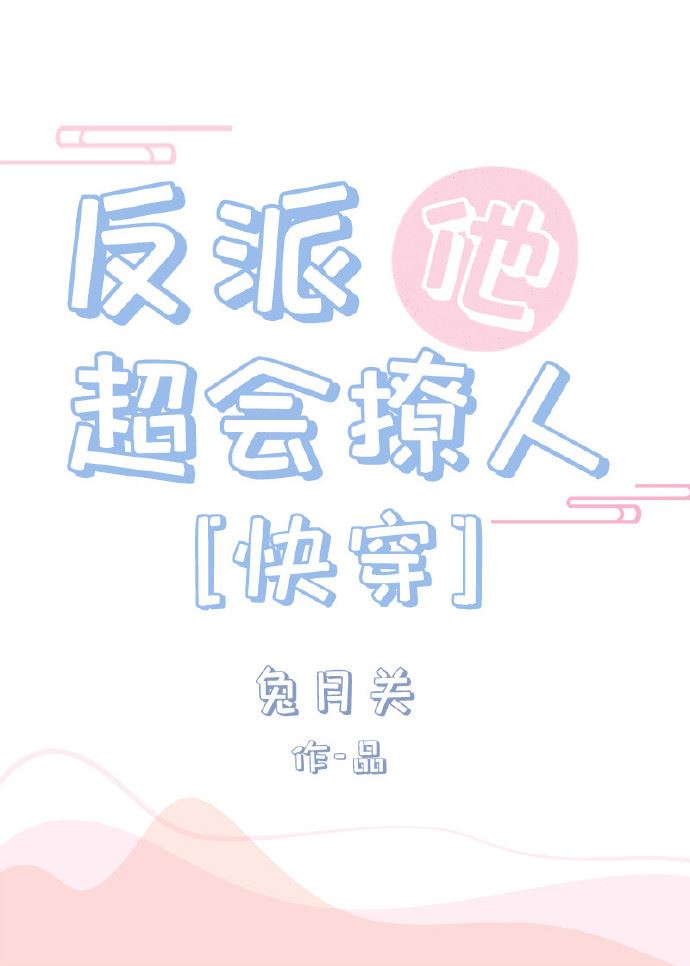
The Villain Is Super S*xy
+Add to Custom List
Sort
Add review
... Read More
The stakes in this passage are layered like an onion and I mean that as the highest compliment. On the surface, it's a public confrontation: Xie Lang vs. Su Jingxuan, with Zhu Yunsen entering as the deus ex machina. But dig deeper and the stakes become about power, identity, and survival. Su Jingxuan is trying to navigate a dangerous entertainment industry while hiding his true relationship with one of its most powerful men. Every interaction with Xie Lang is potentially lethal to his mission. When Xie Lang starts accusing him of climbing into Director Xu's bed and implying hidden rules were exchanged, that's not just mean-spirited—those are career-destroying accusations in this world. What makes the conflict so tense is that Su Jingxuan is clearly capable of handling himself. He sneers back at Xie Lang. He asks pointed questions that trap Xie Lang into digging his own grave. But he also needs backup, and Zhu Yunsen delivers exactly when it's needed most. The physical stakes are real too—Xie Lang's grip was so hard Su Jingxuan's wrist was red. And emotionally, the text explicitly says the original owner's feelings turned to "ice and disappeared," which tells us this conflict has deep personal history beyond just this scene. But the greatest shift in stakes happens with the reveal. Once Zhu Yunsen declares Su Jingxuan is his "aunt," the entire power structure of this scene inverts. Xie Lang goes from aggressor to someone who has deeply offended the most dangerous person in the room. The bodyguards and assistant director's collective internal screaming confirms it—we all feel the stakes just skyrocketed. And then Zhu Yunsen's decision to move Su Jingxuan into his house immediately? That's the story saying: the conflict isn't over, it's escalating, and now they're playing on harder mode. Which is exactly the kind of cliffhanger that makes you immediately open the next chapter.
... Read More
GU QIUYU ENTERS THE ROOM AND I WILL NOT BE OKAY. The way Su Jingxuan just looks at him and decides 'sure, I'll steal your role' with a lollipop in his mouth?? The absolute audacity. I LOVE IT. This confrontation is so good because on the surface it's a typical rival-meets-rival moment, but there's so much MORE underneath it. Gu Qiuyu doesn't understand WHY Chen Ziyan (Su Jingxuan) opposes him—he only sees jealousy and competition. Meanwhile Su Jingxuan knows the ENTIRE plot and knows that Gu Qiuyu only got this opportunity because of Xie Lang's backing. He's not jealous; he's actively dismantling a rigged system. And that exchange where Gu Qiuyu sneers 'the acting circle doesn't need aging male models' while Su Jingxuan just sits there smiling with his lollipop? The power dynamic is SO interesting here. Gu Qiuyu thinks he's the alpha in the room because of his connections, but Su Jingxuan is completely unbothered because he holds information that Gu Qiuyu could never comprehend. The stakes? Huge. If Su Jingxuan fails this audition, he loses his chance to get close to Xie Lang, and the whole mission falls apart. But if he succeeds, he's not just taking a role—he's humiliating the original protagonist in front of everyone who matters in the industry. This is what peak tension looks like.
... Read More
I need to talk about Su Jingxuan because this kid is EVERYTHING. Like, picture this—he's walking around acting all cocky, everyone's giving him side-eye, and then a literal monster comes charging at them and he calmly asks for a gun like it's no big deal. The fact that he's only got FIVE BULLETS in a .500 S&W Magnum and he still manages to slow down a high-level zombie is genuinely impressive. But what I love most isn't the action—it's his attitude AFTER. "I'm Bian Zhaokun's son." HE JUST SAYS IT. No apology, no humility, just pure unfiltered confidence. And the description of him raising his chin and flashing that smug smile is adorable as hell. "That little appearance was exactly like an arrogant little fox." I am deceased. The way the whole group's attitude toward him shifts from contempt to genuine respect is so satisfying to watch. Xue Zhen especially—this guy who was clearly suspicious and dismissive earlier is now tousling Su Jingxuan's hair and praising his marksmanship. That character growth in just a few pages! But then Shu Wenzhe... oh man. The guy with a gun in his hand who REFUSES to aim or shoot, just staring pale-faced at the approaching monster, prepared to flee into his space at any moment. Xue Zhen notices this and feels "a bit displeased." There's something underneath that—I wonder if there's past history there? Some betrayal or unspoken tension between these two that the author is hinting at but not spelling out? And then Anan's situation at the end, begging to be killed rather than turning... the emotional whiplash from the celebration to that heartbreaking request is brutal.
... Read More
This is where the thematic depth kicks in. Su Jingxuan looks at that check from the Xie family — originally meant as a breakup fee, a symbol of the original owner's trauma and sacrifice (he donated a kidney after all) — and decides NOT to use it. Instead, he calls it his 'hard-working money' and invests it. The symbolism is rich: rejecting the role of victim, refusing to be bought off, turning poison into power. 'Money is not everything, but money can do many things sometimes.' This line captures the entire philosophy of the protagonist — he understands that background and status aren't just handed to you, they're built. The old house, the lack of elevator, the far commute — all symbols of the original owner's vulnerable position. But Su Jingxuan isn't vulnerable. He's calculating, patient, and ready to play the long game. The stock market becomes his weapon, his path to becoming someone who can stand equal to Zhu Yunsen rather than below him.
... Read More
Su Jingxuan's dialogue here is absolutely gold. He doesn't have the original owner's timid energy — he's bold, direct, almost shameless in his pursuit. 'Sir, please wait a moment. Can you tell me your name? I will apologize for the collision just now...' and then he just keeps going, offering business cards, dinner invitations, all while looking pitiful and anxious. It's such a natural mix of desperation and strategy. The narrative voice describing his approach as 'very positive' and 'anxious and pitiful' captures the tone perfectly. And Zhu Yunsen's responses are so minimal — just 'Zhu Yunsen' and then 'good' — that contrast makes Su Jingxuan's verbose approach even funnier and more endearing. The bodyguards' internal commentary about 'flirting and seducing' being 'too obvious' and 'very clumsy' is also hilarious narration from the side characters.
... Read More
The dialogue here is surprisingly sharp for the genre, and I want to talk about why. Take this exchange: "Who just touched me?!" — that single line from Su Jingxuan carries so much weight. It's not just a question. It's the sound of someone drawing a line after infinite violations. The brevity makes it devastating. Then Chen Ziyan's antagonist delivers this absolutely vile speech: "you have to be self-aware when you enter this circle, don't play with that set of hypocrisy, don't tell me that you don't know what the meaning of today's dinner is?" This dialogue does double duty — it establishes the character as confidently predatory while simultaneously explaining the entire power structure of this world in one pompous paragraph. The translation carries that entitled, slippery quality perfectly. But the dialogue that really stuck with me is Su Jingxuan's cold offer: "Okay, you want to play, right? I'll play with you guys today." That's not a threat in the traditional sense — it's a promise. And the way he delivers it, with that sneer, shows he's not bluffing. He's an experienced survivor who happens to be tired of prey behavior. The begging dialogue from the young masters afterward is gloriously unhinged — "Brother Chen, spare my life, don't hit me, woo..." — and it works because it mirrors their earlier arrogance so perfectly. The author uses dialogue as a mirror here, showing how quickly power shifts when the victim stops playing along. Narrative voice-wise, the omniscient narrator does a great job of staying close to Su Jingxuan's perspective without over-explaining. There's a dry, almost wry quality to passages like "A person with no background, he's just a little star, even if he's disabled, he can't dance" — the narration understands the injustice even when the characters in-world don't.
... Read More
"Then you can settle the score with me after he's dead." — holy shit. I actually gasped out loud when I read that. Su Jingxuan just... deleted Xie Lang's number and went back to eating snacks like nothing happened? The plot machinery here is so ruthless. Let me break down why this chapter sequence hit different: First we get the emotional devastation between Xie Lang and Gu Qiuyu (the wrist-cutting, the silence in the car), then we CUT to Su Jingxuan watching it all unfold from the shadows, already three moves ahead. That's not just a twist—that's a whole narrative strategy. The author sets up this apparent villain (Chen Ziyan/Su Jingxuan) who slaps an innocent idol, lets the internet tear him apart, and then—BOOM—drops the photo bomb at the very end revealing he's secretly involved with Zhu Yunsen. The structure here is basically a Russian nesting doll of reveals. Every time I thought I understood the power dynamics, the author yanked the floor out. And the fact that the “Battle of Desires” movie becomes weaponized as part of this scandal? That's not filler—that's the author threading the entertainment industry plot into the personal drama. Everything connects. I love it.
... Read More
"Young Master Xiao Chen has a severe blood clotting disorder, so everyone needs to be careful. Absolutely don't let Little Morning Master get injured; even a tiny wound could have serious consequences." Lu Jinwen said all of this with a gentle smile while secretly planting seeds of both sympathy and suspicion. And Su Jingxuan's response? Pure gold: "Becoming Teacher Fran's disciple is my wish, and I will definitely work hard. However, Sister Lu, please don't get too close to me. My health is not good, and the bacteria on a normal person's body can easily cause a severe infection for me. I'm truly sorry." He basically told her to stay away while making it sound like a medical necessity. And then he coughed and put on a mask like it was nothing. The performative politeness as a weapon - I cannot get over how good this is. The narrative voice itself is also doing a lot of heavy lifting. The surveillance report at the beginning reads like actual transcripts, deadpan and clinical. Then it shifts into the competition scenes with this almost documentary-style observation - noting camera angles, audience reactions, the subtle shifts in attention. The author doesn't just tell you what's happening, they frame it like you're watching footage. Which makes sense given how many layers of observation exist in this story. And the humor! It's dry and dark and comes out when you least expect it. Like when the reporter hastens their speech after the mouse-shattering incident. You can literally hear them sweating through the screen.
... Read More
I need a minute. Just... give me a moment. The lap scene. THE LAP SCENE. Let me just process this. "His hands circled around the slender waist of the person on his lap, taking in the faint fragrance on him. A smile curved on his lips, indicating his good mood." Do you understand what is happening right now?? This man is holding someone captive, has sealed their abilities, and yet when he decides to sit them on his lap during a weeks-long road trip through zombie-infested territory, he is GENTLE. He is ATTENTIVE. He is SMILING. And the other guys in the group are FUMING because apparently letting your enemy-hostage-sit-on-your-thigh is a level of favoritism that crosses a line even in the apocalypse. The subordinate teases Su Jingxuan saying "You better behave, kid. You're tender and juicy. If you're not obedient, our boss might have a good time with you" and the group reacts with this weird mix of satisfaction and injustice. SU JINGXUAN'S FACE TURNS RED. RED. FROM HUMILIATION AND EMBARRASSMENT while being cradled like a woman by the very man who captured him. I am deceased. Absolutely deceased. What makes this even more intoxicating is the power imbalance. Xue Zhen knows Su Jingxuan is intelligent enough to understand he can't escape—his abilities are sealed, and going through zombie hordes without them would be suicidal. So the captivity is partly real, partly performative, and partly an excuse for Xue Zhen to keep him CLOSE. That's not hostage-taking, that's romantic escalation disguised as strategy. The fact that Su Jingxuan nods "wisely" like he understands the game too? Chef's kiss. These two are playing some serious double-bluff and I am HERE FOR IT.
... Read More
There's a symbol running through these chapters that I can't stop thinking about: the key. It starts as a literal object — the key to the laboratory. Su Jingxuan dangles it teasingly, then swallows it. But what does it really represent? Freedom. Choice. Agency. By making himself the container of the key, he's saying that escape is no longer an option for anyone — not the captives, not the rescuers outside, not even Xue Zhen. And yet, paradoxically, this act of total control creates the conditions for something unexpected: trust. Xue Zhen, who could theoretically manipulate Su Jingxuan into giving up the key at any moment, doesn't. Why? Because the relationship has shifted. Control doesn't equal coercion when there's genuine rapport underneath it. The key becomes a test — not of physical security, but of whether trust can survive when power imbalances are this extreme. Then there's the blood. Blood as medicine, blood as currency, blood as the thread connecting the living to the dying. Shu Wenzhe's blood suppresses the zombie virus. Chai Changlin's blood is slowly being replaced by it. And Bian Zhaokun's tears — barely contained, barely human — are the price of loving someone who's slipping away. Blood connects everything here: science and love, survival and sacrifice, the clinical and the sacred. The recurring question beneath it all: how much of yourself do you lose when you're fighting to save someone else? Su Jingxuan is losing pieces of himself every day — his patience, his morals, his sense of safety — and he keeps going anyway. That's the core theme, isn't it? Not whether the cure will work, but what we become in the pursuit of it.
... Read More
What strikes me about the dialogue here is how few words it takes to destroy someone. Take Wang Rengui's first response: 'Young Master, although I was promoted by your second uncle...' It's perfect bureaucratic deflection — polite, qualified, designed to slide off any surface. And Yan Junfeng's reply is equally surgical: 'Retirement? If my information is correct...' No anger. No raised voice. Just facts arranged like weapons. But the line that lives in my head now is Su Jingxuan's rejection of the head pat. He doesn't say anything. He just says, 'Sorry, he also had his own cleanliness standards. He was a principled tasker, and these things belonged to the original owner.' That last sentence — 'belonged to the original owner' — is a knife. It means: this body, this life, these boundaries — none of it is yours. You inherited a person, not a possession. And Xiaochen's line about Mr. Frand: 'Brother Yan, I admire Mr. Frand the most. Becoming his apprentice is my biggest wish.' On the surface, it's ambition. But read it alongside the plagiarism backstory, and it becomes something else entirely. This is a boy who was almost erased from a competition, and now he's trying to erase himself from the Yan family's shadow by stepping into someone else's light. The narrative voice itself is worth noting — it's close third person, sitting inside Yan Junfeng's head but never fully trusting it. The narration occasionally pulls back, offering observations like 'Yan Junfeng felt an indescribable discomfort' that feel almost clinical. Like the author is watching Yan Junfeng the way Yan Junfeng watches Su Jingxuan: interested, fascinated, and slightly afraid of what he might find.
... Read More
The worldbuilding in these chapters operates on two completely different frequencies and that is what makes it so immersive. On one hand, we have the intimate, almost claustrophobic world of the QQ conversation, the blue and white chat bubbles lighting up a dark room, the typing indicators appearing and disappearing, the panic of watching someone type and type and then stop. This is modern, immediate, relatable. The computer screen becomes a window into another world, literally and figuratively. Then the scene shifts to the Song family, and the author takes us from that digital space into something grander. 'The Song family was not just a formidable force for the Yan family but also a giant in the entire upper-class society. It could no longer be described as an affluent family; it was a complex and deeply rooted aristocratic family. The Song family had its influence in business, politics, and the military. Inherited from the Qing Dynasty to the present, it was a true aristocratic family.' This paragraph does enormous work. In a few sentences, we understand the power structure of this world. The Song family is not just rich, they are institutional. Their influence spans military and political domains and it goes back centuries. This is not a startup dynasty, this is a bloodline. The birthday banquet preparation scene is particularly vivid. 'Including choosing and changing outfits, understanding and memorizing various taboos of the Song family, and ensuring a proper appearance at the event.' The details matter here. This is a world where a single misstep at a banquet could cost you everything. The tension between the digital intimacy of the QQ scenes and the rigid formality of the aristocratic world creates a contrast that makes both feel more real. And then Su Jingxuan, having just finished this elaborate online manipulation, opens the official website of Yan Group and submits a jewelry design. The transition from virtual to physical, from messages to architecture, from observation to participation, is seamless and intentional. The world feels lived in, layered, and dangerously elegant.

Leave a comment

You must be logged in to leave comments. or