Summary

... Read More
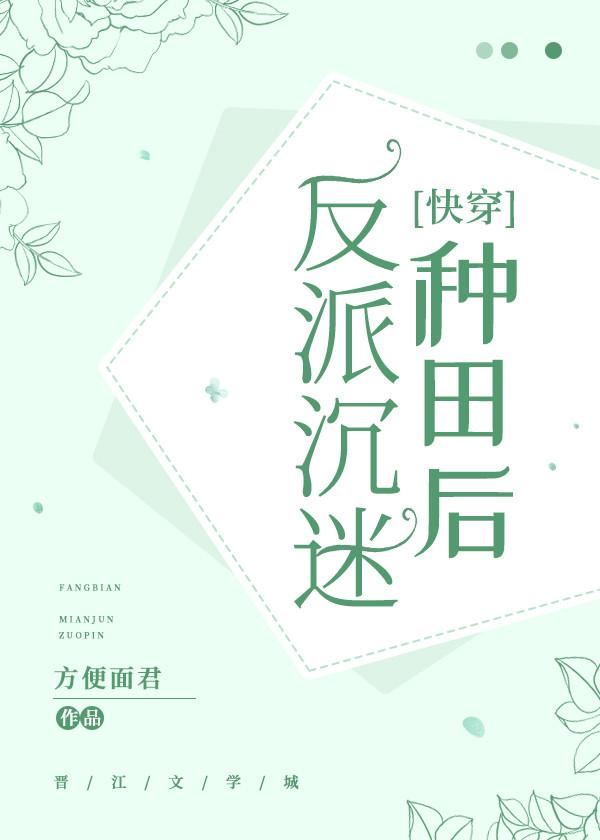
Zhong Qi Yuan is a host from the Main God Space, an entity responsible for maintaining stability in small worlds. After being exiled to a barren dimension for over four thousand years due to her excessive effectiveness as a villain host, she is re-employed by the new Lord God and bound to Assist System 01. Her mission is to correct a derailing small world where the 'son of luck,' Zhong Chu Yuan, has been pushed off her destined path by a reborn antagonist. Originally, Zhong Chu Yuan was to become an empress who guided her husband Shi Xuanwei to rule wisely, but the reborn Zhong Que Yuan stolen her destiny, leading to Zhong Chu Yuan's transformation into an evil concubine and the eventual collapse of the dynasty.

Zhong Qi Yuan arrives in the body of a thirteen-year-old Taoist nun at the humble home of Meng and young Zhong Chu Yuan. She discovers Meng suffering from untreated low blood pressure and the family in poverty due to the neglect of their absent father, Zhong Zao, a chief secretary who favors his concubines and illegitimate children. Rather than following the system's recommended path of directly confronting the reborn antagonist, Zhong Qi Yuan chooses a different approach: she focuses on stabilizing the family's material conditions first. She treats Meng's illness through traditional medicine and physical training, then travels to collect overdue rent from tenant farmers who have been exploiting the widows.

At the farmhouse, Zhong Qi Yuan demonstrates ruthless pragmatism. She calculates precise debts, exposes the tenants' hypocrisy, and forces them to kneel and beg for mercy. When the primary tenant, Shu Shuang, flees to avoid payment, Zhong Qi Yuan reports him to authorities and reorganizes the land distribution. She uses her savings from the Taoist temple to fund agricultural improvements, purchasing seeds for diverse crops including cash crops and medicinal herbs. Her actions attract attention, and she encounters Yun Cong Wan, who appears to be a system auditor assigned to monitor her.

Zhong Qi Yuan's father, Zhong Zao, receives letters of abuse and public embarrassment when debt collectors pursue payments for Zhong Qi Yuan's agricultural investments. Rather than submitting, Meng gains confidence under her daughter's guidance. Zhong Qi Yuan orchestrates a situation where Zhong Zao must use official funds to build an irrigation canal that benefits their fields, further humiliating him while securing resources for her agricultural empire. Throughout these events, Yun Cong Wan observes with detached curiosity, occasionally intervening only when Zhong Qi Yuan's 'blackening' tendencies threaten world stability.

The story follows Zhong Qi Yuan's systematic cultivation of the eighty acres of land, her establishment of trade networks, and her gradual improvement of Meng's health and status. While the original plot required Zhong Chu Yuan to endure hardship before rising to empress, Zhong Qi Yuan's interventions alter the trajectory significantly. The reborn antagonist's schemes are undermined not through direct confrontation but through the strengthening of the protagonist's foundation. Zhong Qi Yuan maintains her characteristic indifference to moral expectations, treating the small world as a simulation to be optimized rather than a reality to be emotionally invested in. Her methods combine ancient agricultural knowledge with modern managerial efficiency, creating a power base that will eventually intersect with the political ambitions of Shi Xuanwei and the regional warlord Shi Hong.

As spring planting commences, Zhong Qi Yuan faces the challenge of balancing her mission objectives with her personal interest in infrastructure development. The system grows increasingly anxious about her unpredictable behavior, while Yun Cong Wan continues her assessment from a distance. The narrative establishes a conflict between traditional fate and deliberate intervention, with Zhong Qi Yuan determined to prove that the 'son of luck' can achieve greatness through practical support rather than destined suffering alone.

Latest Release
DateGroupRelease
2026-09-26knoxt c23
2026-09-26knoxt c22
2026-09-26knoxt c21
2026-09-26knoxt c20
2026-09-26knoxt c19
2026-09-26knoxt c18
2026-09-26knoxt c17
2026-09-26knoxt c16
2026-09-26knoxt c15
2026-09-26knoxt c14
2026-09-26knoxt c13
2026-09-26knoxt c12

Community Reviews

Rating(3.9 / 5.0, 112votes)
5 stars
32(29%)
4 stars
41(37%)
3 stars
38(34%)
2 stars
1(1%)
1 stars
0(0%)

Popular reviews

... Read More
Okay so I need to talk about this journey south because the worldbuilding just went from 'small county' to 'oh wow this is a whole country with real problems' and I am here for it. The scene where they cross the Huai River hit me different. On both sides you've got liquor shops, markets in chaos, curfew basically doesn't exist, flags swaying everywhere—it's ALIVE. The author just casually paints this picture of a place that's bustling but also desperate, and it makes you feel like you're actually standing on that ferry watching everything unfold. I love when a story does that without info-dumping. But then the next moment—BOOM. Floating households stopped outside city gates because they don't have household pendants. Skinny women waiting for slave traders. Men carrying goods just to earn enough for food. These images are NOT soft. The author doesn't even give us a narrator reaction, just presents it coldly, which somehow makes it hit harder. Zhong Chu Yuan feels frustrated and powerless and honestly? So did I reading it. And the way the geography maps onto the social problems is genius. Suizhou under Xuanwu Governor, then Huanian Governor's territory, then the Yangtze and all these different rules piling up. Every boundary they cross isn't just a line on a map—it's a new set of problems, a new way the government fails people. The central plains fleeing military disasters and excessive taxes, flooding south, and the south can't absorb them all. It's a whole system breaking and the characters are just walking through the cracks of it. I also love that Zhong Qi Yuan gives Zhong Chu Yuan the Taoist robes. The visual of her disguised as a priest, carrying a temple pendant, moving through checkpoints—that's such a specific, vivid image. You can SEE her in those old clothes, pretending to be someone she's not, and it ties into the whole theme of identity and survival. The court's relaxed management of temple households is the one loophole that lets them through, and that detail feels like it came from a real historical context, not just made up for plot convenience. This world feels lived-in. It has rules, it has suffering, it has people trying to navigate impossible systems. And the author doesn't shy away from showing us the ugly parts. That's what made this journey chapter so memorable for me—the sense that the world is BIG and COMPLICATED and not everything has neat answers.
... Read More
There are some really interesting thematic threads woven through these chapters that I think deserve attention, particularly around the idea of creation versus destruction and what it means to truly have power. The central irony of this whole setup is staggering. On the surface, Zhong Qi Yuan is cast as a villain - someone who causes trouble, disrupts fate, threatens the protagonist group. But when you look at what she actually does, she's the most constructive force in the entire story. She diagnoses her mother's illness. She prepares new medicine. She wants to optimize the mission efficiently. Her crime, essentially, is competence. Her backstory as an infrastructure developer in a barren space for 4,000 years isn't just flavor text - it's thematic armor. She spent millennia turning nothing into something, building civilizations from scratch. And now she's being told to play by someone else's rules, to let fate unfold without interference, while all her instincts scream that she could do better. The barren space was her canvas; this world is her canvas too, and she's tired of waiting for permission to build. The herb-gathering scene is quietly symbolic. Zhong Qi Yuan picking through medicinal herbs, preparing a new prescription, treating her mother's body like a system that needs optimization - it's the same impulse that drove her to develop infrastructure. She sees problems and fixes them. She's a healer in the literal and metaphorical sense, even as the system brands her a villain. Then there's the Mother God Space itself as a symbol of bureaucratic control over fate. The Lord God, the auditors, the mission systems - it's all a kind of cosmic bureaucracy that wants stories to follow prescribed patterns. Zhong Qi Yuan represents chaos not because she's evil, but because she's creative. She can't help but improve things. The system fears her because her nature is to rebuild, and rebuilding inevitably means tearing down what's already there. The contrast between Zhong Chu Yuan's innocent question about marriage and the adult world of coups and assassinations that the system describes is also thematically rich. Childhood innocence versus the violent machinery of fate. The question hangs there: who gets to decide what story should be told, and what happens when someone who's spent four thousand years building refuses to play along? I keep thinking about that line where Meng watches her daughter in the courtyard and thinks "she seems to be outside of this world." Maybe she is. Maybe that's the whole point.
... Read More
I just finished chapter 80 and I need a minute because the pacing in this section is absolutely wild. One moment you're watching Zhong Qi Yuan and her sister orchestrate the most satisfying village-level revenge scheme ever — the fire, the ghost fire, the magistrate covering it up, the Lin family head haunted by divine retribution — and then boom, you're thrust into an entirely different political thread involving Zhong Zao, the governor's wife, and a marriage proposal to the Yun family. Let me explain why this works so well. The first half (chapters 77-79) is tight, kinetic, and incredibly satisfying. Every beat lands: the money problem, the creative solution, the charity stunt, the fire, the ghost fire cover-up. It reads like a heist movie where everyone wins. Then chapter 80 pivots hard into court politics and arranged marriages, introducing new characters (Shi Xuanwei, Zhoug, Zhong Guan) and a completely different set of stakes. The transition isn't jarring though — it's connected through the Zhong family itself. We learn that Zhong Zao (who is clearly related to our protagonists) is now trying to pull Meng and her daughters into the capital for political reasons. The pacing shift mirrors the story expanding its scope. What started as a village-level survival story is now feeding into larger political currents. My only complaint? I didn't get enough time with Zhong Qi Yuan and Chu Yuan before the narrative yanked me away. But then again, the cliffhanger with the Zhong family member coming after them kept me scrolling. Author knows exactly what she's doing.
... Read More
I need to talk about something that genuinely caught me off guard in these chapters. Amidst all the system drama and meta-narrative shenanigans, there's this incredibly quiet, tender moment between Meng and Zhong Qi Yuan that I cannot stop thinking about. Meng watching her daughter from the window, picking herbs, looking pale and thin but still somehow gorgeous - this is a mother taking in the sight of a child she hasn't seen since she was six years old. The text says Meng "got up and saw through the window that there was a long and thin figure in the courtyard carefully picking out the herbs." She doesn't call her immediately. She watches. That small detail of a mother observing from a distance, memorizing the sight of her grown daughter, hit me harder than any dramatic confrontation could have. Then Meng calls out "Yuan'er" - and Zhong Qi Yuan responds with "Mother, what's the matter?" Simple, warm, natural. This woman who the system describes as a terrifying villain who might wipe out the protagonist group, who casually suggests removing half the cast to streamline the plot, comes home and her first instinct is to make sure her mother's medicine is effective. The moment where Meng tells her to rest first because she just came back - that's such a specific, real maternal gesture. The kind of thing that happens in millions of households worldwide. And Zhong Qi Yuan's reply, "I'm not tired," with the explanation that she's used to working and wants to get things done quickly - that's the voice of someone who defines herself through productivity, who probably hasn't allowed herself to just BE in a very long time. The neighbor gossip scene with little Zhong Chu Yuan is also emotionally affecting in its own way. This six-year-old, the future "son of luck," has no idea about the cosmic forces maneuvering around her. She's just happy her sister is back. "That was her sister. She had no other family besides her mother! When she said that, she smiled brightly and was extremely happy." There's something achingly pure about that. She's the emotional anchor of this whole family, and she doesn't even know it. What strikes me most is how the story balances these intimate family moments against the larger narrative of systems, missions, and Auditors. The emotional core isn't romance or friendship - it's the complicated, beautiful bond between a mother who let her daughter go and a daughter who came back anyway. And honestly, that's what makes me want to keep reading. Any story that can make me feel this way about a transmigration villain is doing something right.
... Read More
'Mother is asking what you think about him as a man, not his condition.' I am absolutely deceased. Cong Wan literally just spent five minutes diagnosing someone's deficiency syndrome, anemia, bad eating habits, tea addiction, and the Yun family's approach to tonics — like she was writing a medical case study — and her mother is over here like 'I meant romantically, sweetie.' And Cong Wan's response? She genuinely doesn't understand why everyone keeps bringing this up. 'Didn't you treat him? Did you have no contact with him during his treatment?' She treated him, observed his character as a patient, noted the Yun family's hospitality, and considers that the full picture. The woman has zero interest in romantic analysis because romance is not the framework through which she processes the world. Then the system trying to explain the mission parameters and Cong Wan just shutting it down with 'Okay, stop. I'm about to throw up' after hearing about the original female lead becoming a wise empress who taught women to read the Training of Women... The sheer commitment to not being that character is impressive. She's rejecting the entire archetype with a laugh. The dialogue throughout these chapters has this wonderful texture where characters speak in completely different registers. The third prince's calculated politeness versus Cong Wan's bluntness versus the system's increasingly desperate commentary. Each voice is distinct and the contrasts create genuine humor without anyone trying too hard.
... Read More
I need to talk about how smoothly this chapter moves because the author is clearly working with a very refined sense of rhythm at this point. It opens with a relatively quiet scene - Zhong Qi Yuan running deliveries, Zhong Chu Yuan learning, the sisters' business growing organically. This is the calm-before-the-storm establishment beat, and it's handled without any drag. Every sentence either advances character or worldbuilding. No filler. Then we get the pivot - Zhong Guan returns to Bianzhou, and suddenly the pacing accelerates. His internal monologue is essentially a rapid-fire dismantle of everything he thought he knew. Meat every day. Tai Chi making his mother look thirty. Herbs worth a thousand yuan. Villagers praising them instead of pitying them. The author stacks these revelations one after another like dominoes, and by the time Zhong Guan is describing his own confidence being crushed, the pace has picked up significantly. But then - and this is where I think the chapter truly excels - it pivots again into Zhong Que Yuan's POV and goes into full strategic mode. The pacing slows down deliberately here. We get a backstory dump on Yun Ding, his rise from poverty to general, his relationship with the emperor, the succession politics. This isn't info-dumping for the sake of it - it's worldbuilding that Zhong Que Yuan is actively using as ammunition. The reader learns this information at the exact moment the character is weaponizing it, which makes the exposition feel organic rather than forced. The chapter ends on this note of mounting tension - Zhong Que Yuan has her plan, we know the plan is built on sand, and the next chapter is presumably going to set everything in motion. It's a perfect structural beat. The author understands that sometimes the most exciting thing in a story isn't action - it's the moment right before the trap springs, and everyone except the reader thinks they're safe. One small note: the transition from Zhong Guan's scene to Zhong Que Yuan's internal monologue could have been smoother with a chapter break or a clearer temporal marker. But honestly, the emotional clarity of the pivot makes up for any structural friction.
See all reviews

Custom lists

See all custom Lists