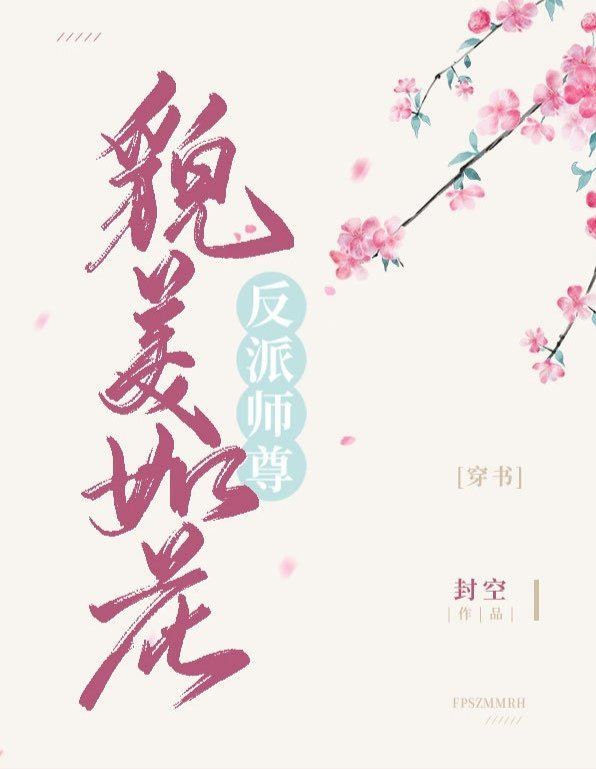
The Villain Couple's Daily Grind
Novel Info

Summary

... Read More

Mu Zhaoran, the Holy Maiden of Nanrong, spends a sleepless night awaiting news of the battle between the Heavenly Dao Palace and the Gu King Yanluo. When cultivators breach the palace, her shadow guard Mingling attempts to flee with her, but Mu Zhaoran betrays her, revealing she has allied with the Heavenly Dao Palace. The rebel prince Mu Yinyi arrives with the Sword Venerable Yun Xiaoyang, who kills Mingling. Mu Yinyi reveals that Yanluo is not yet dead but is critically wounded. He then exposes that Mu Zhaoran survives the Heavenly Dao Palace’s Devouring Spirit Seal only because Yanluo has been secretly feeding his own life force to a Heart-Link Gu inside her. Despite her betrayal, Mu Yinyi declares her a criminal destined for execution, citing her past crimes and corruption.

At the public execution, Mu Zhaoran is cast into a cauldron of poisonous gu insects. She witnesses Yanluo’s broken body nearby, realizing she had woven a lock of her hair into a tassel on his zither, unknowingly sealing his fate. As she suffers, Ye Lizhi, the woman Mu Zhaoran had tortured into a miscarriage years prior, appears. Ye Lizhi reveals that Mu Yinyi saved her life, exposing his long-standing betrayal. Overwhelmed by pain and regret, Mu Zhaoran dies in Yanluo’s arms, her soul witnessing the inner monologues of readers criticizing her character as a brainless, vicious trope.

A system awakens Mu Zhaoran, informing her that her world is a novel and she is the doomed female supporting character. To avoid eternal damnation, she must accept rehabilitation and return to the past to atone for her sins. She agrees and is sent back to the day she departed Nanrong for the Heavenly Dao Palace. Upon waking in her younger body, she immediately recognizes General Ye Rong, who will later usurp the throne and kill her parents, and suppresses her urge to kill him. The system assigns her first mission: ensure Ye Lizhi, the female lead, safely reaches the palace, reversing her past obstruction.

On the journey, Mu Zhaoran forces Ye Lizhi into her carriage, ignoring the protests of Ye Lizhi’s half-sister Ye Lingyan. Throughout the trip, Mu Zhaoran struggles against her innate hatred for Ye Lizhi, which triggers painful soul marks whenever she harbors malicious thoughts. She learns that Ye Lingyan had previously betrayed her by providing false evidence against her, while Ye Lizhi’s suffering was manufactured by their family’s cruelty. Mu Zhaoran resolves to protect Ye Lizhi to cleanse her karmic debt, even as she plots to neutralize the threat of General Ye Rong using a blood-bound clay doll, a tool previously used by Yanluo.

Latest Release
DateGroupRelease
2026-08-11shanghai fantasy c20
2026-08-11shanghai fantasy c19
2026-08-11shanghai fantasy c18
2026-08-11shanghai fantasy c17
2026-08-11shanghai fantasy c16
2026-08-11shanghai fantasy c15
2026-08-11shanghai fantasy c14
2026-08-11shanghai fantasy c13
2026-08-11shanghai fantasy c12
2026-08-11shanghai fantasy c11
2026-08-11shanghai fantasy c10
2026-08-11shanghai fantasy c9

Community Reviews

Rating(4.1 / 5.0, 9votes)
5 stars
4(44%)
4 stars
2(22%)
3 stars
3(33%)
2 stars
0(0%)
1 stars
0(0%)

Popular reviews

... Read More
The pacing here is absolutely relentless and I mean that as the highest compliment. The chapter starts with Mu Zhaoran already dead, in the gu cauldron, and within pages she's reliving her entire life, accepting the system's deal, getting branded with karmic seals, and then—BOOM—she's back in her ten-year-old body on the ritual altar. The transition is so smooth you almost miss how massive a narrative leap just happened. What I love most is how the author uses the system's voice as a pacing tool. Every time Mu Zhaoran gets too emotional, too swept up in rage or grief, the system interrupts like a bucket of ice water. It's almost comedic in its cruelty, but it keeps the narrative from becoming melodramatic. The chapter ends on a perfect hook too—she spots Ye Lizhi standing at the very back, unnoticed, and the system drops the mission: "get along with her." But then there's this whole scene with Ye Rong and Ye Lingyan that adds another layer of tension before we even get to the female lead. The author is playing 4D chess with pacing here, layering conflict after conflict without letting the reader breathe for a second.
... Read More
Okay so let me just say—this premise is absolutely brilliant and I am HERE for it. A vicious female supporting character gets a second chance because readers are tired of that trope? That's meta storytelling at its finest. The system doesn't just wipe her slate clean though, which is what I love. The karmic lotus seals—"one sin, one stroke"—that's a plot device that's going to drive the WHOLE story. She literally has to go back and fix every terrible thing she did. And the best part? The system dangles the carrot of a new life with a new husband, someone other than Yanluo. After everything she went through with that poison-ridden Gu King, that's the real payoff. But here's what's got me theorizing: the system says her "origin of guilt" is the day she left for the Heavenly Dao Palace. That means the rebellion she showed there—the tantrum, the resentment toward her parents—was the first crack in her moral compass. Everything after was just spiraling from there. The plot structure here is so smart because it's not just a simple redemption arc. It's layered. She's carrying the memory of her death WHILE trying to live a different life. That dramatic irony is going to create SO many tense moments. I can already picture scenes where she knows something terrible is about to happen and has to decide whether to intervene or follow the script.
... Read More
I need to talk about this ending scene because it DESTROYED me. Mu Zhaoran literally just tried to murder someone with a ghost army, and the very last thing she sees before being forced out of the possession is Yun Xiaoyang helping Ye Lizhi. He doesn't even look at her. He doesn't know it's her. And yet—her heart still races. Her body still reacts. She calls it disgusting. This is the kind of character detail that makes you sit with a book for hours staring at the wall. Let me also mention Ye Lizhi for a second because her arc in this chapter is incredible. She's Ye Rong's daughter, treated like trash in her own home, and when she sees her father about to be killed by Mu Zhaoran's ghost, she literally throws herself between them. Not because she likes Mu Zhaoran. Not because she's naive. But because despite everything Ye Rong has done to her—despite him choking her, calling her shameful, forcing her mother—she still can't watch him die. That's not weakness. That's complicated, painful, human loyalty. And then there's Mu Zhaoran's relationship with her own hatred. She vows this time she won't fail, she'll strike first by any means necessary... and she still fails. The tragedy isn't just that Yun Xiaoyang stopped her. The tragedy is that she's trapped between who she was, who she wants to become, and who her body apparently still wants.
... Read More
There's so much thematic depth packed into this passage that I need to sit with it. The central symbol is obviously the karmic lotus, but the author subverts it immediately when Mu Zhaoran points out it has too many petals—it's basically a chrysanthemum now. That's not just comedic relief. It's a statement about how her sins have MULTIPLIED beyond the original framework. The lotus is supposed to be pure, Buddhist, symbolic of enlightenment rising from mud. But her version is grotesque, overgrown, distorted. That's what karmic debt looks like when it's been accumulating for a lifetime. Then there's the Heaven-Bearing Mirror, which Mu Zhaoran casually compares to her father's imperial seal that she used to crack walnuts with. The sacred vs. the mundane, the political vs. the personal—that tension runs through everything. And the most devastating symbol is probably the forced sunlight. The elders literally tore open the sky to make a sunny day for a ceremony that a child didn't want to attend. How much of Mu Zhaoran's life has been like that—forced into roles, forced into paths, the world manufacturing beauty around her while she chokes inside? The black swallowtail butterflies at her death are another symbol I can't stop thinking about. Butterflies usually mean transformation, rebirth. But these butterflies are eating her alive. The system offers her a different kind of transformation—one where she gets to choose. But the question hanging over everything is: can someone who was written to be evil actually change, or is the story itself fighting against her?
... Read More
The imagery in this passage is absolutely Cinematic. Let me just start with the gu cauldron death scene—Mu Zhaoran waving her blood-soaked hands, black swallowtail butterflies drawn to the scent of blood, their powder accelerating the decay of her flesh. That is GORGEOUS in the most horrifying way possible. The author clearly understands that beauty and horror can coexist. And then there's the flashback to her childhood ceremony, which is a COMPLETE tonal shift. The forced sunlight! The three elders using their spiritual power to tear open the clouds, and the Great Elder coughing blood into her sleeve while pretending everything was fine. "Yao Gu is incompetent. This is all I can do—to help ensure your path forward is bright, accompanied by blossoms." That line broke me. The contrast between the radiant, golden ceremony and the fact that it was artificially manufactured, that the elders were literally dying to make it look perfect for a child who just wanted to stay home—that's worldbuilding that doesn't need exposition dumps. You can feel the weight of tradition, the political pressure on Nanrong, the sacrifice everyone made for this one girl who couldn't care less. The Heavenly Dao Palace as an institution that demands submission from kingdoms, the Heaven-Bearing Mirror as a symbol of that power—everything feels lived-in and real.
... Read More
Okay, let me just say—this chapter is a MASTERCLASS in tension escalation. Mu Zhaoran sneaks out at night, draws a cursed talisman at a mass grave, summons over a hundred ghost bandits, and nearly succeeds in killing Ye Rong. And then—BAM—Yun Xiaoyang shows up like some kind of celestial intervention and ruins everything. The structure here is so tight. You have the quiet dread of her entering the graveyard, the visceral horror of the ghost army forming, the brutal battle scene, and then the emotional gut-punch at the end when she realizes her body still betrays her feelings. The plot doesn't just move forward; it spirals. Every layer of her plan gets stripped away. First the ghost bandits are useless, then she has to absorb them to become a giant ghost warrior, then she's about to land the killing blow, and then—Yun Xiaoyang. The author is playing 4D chess with this narrative. And that ending? Where she's crying in her bed, calling her own feelings "disgusting"? That's not just a failed assassination. That's the plot confirming that her past-life trauma and her present circumstances are locked in an impossible loop. She keeps running into him. She keeps failing. And the story is building toward something massive here.
See all reviews

Characters

See all characters

Custom lists

See all custom Lists