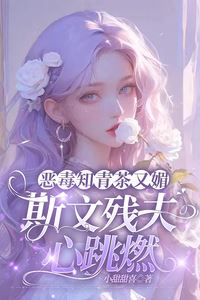
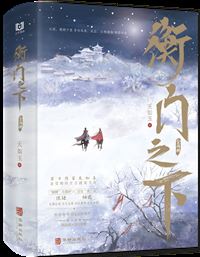
The Vicious Educated Youth Tea Tempts Again, The Refined Widower's Heart Ignites
+Add to Custom List
Genres:
Novel Info

Summary

... Read More

Meng Luosheng was once a pampered young lady from a prominent political family in the capital, but her world collapsed when her parents, brother, and grandfather were arrested for political crimes. Sent down to a remote rural work point in March 1972, she endured brutal farm labor, leech-infested paddy fields, and constant harassment from local men. Her only comfort was her childhood friend Wang Xiaoli, the daughter of a subordinate. Their survival depended on mutual support in a place where food was scarce and dignity was fragile. During this period of hardship, Meng Luosheng encountered Xu Qingyan, a wheelchair-bound young man from a local village. Xu Qingyan had been paralyzed in a human-made accident and viewed himself as a living corpse, having attempted suicide multiple times due to despair. Meng Luosheng was the first person to treat him with genuine kindness and equality, lifting his wheelchair off him when he fell and offering him food prepared by his mother. Her gentle demeanor and refusal to pity him became a lifeline for Xu Qingyan, igniting a deep, obsessive love in his heart.

However, Meng Luosheng’s situation deteriorated rapidly. Harassed by a lecherous villager and pressured by local matchmakers, she faced the constant threat of sexual violence and public humiliation. Xu Ziyi, a scheming villager who desired her, manipulated the crowd to accuse her of being a "rightist" and lying about having a fiancé. To protect Meng Luosheng from being labeled a counterrevolutionary and sent to a cowshed, Xu Weiliang, the ruthless brigade leader and Xu Qingyan’s father, intervened. He publicly announced that Meng Luosheng was already engaged to his son, Xu Qingyan, and set a wedding date for her eighteenth birthday. Forced into a corner, Meng Luosheng accepted the engagement, not out of love, but as a strategic move to secure her safety and stability. She approached Xu Qingyan and confessed her "despicable" intentions, admitting she was using him to bind her life to his. Surprisingly, Xu Qingyan, blinded by devotion, accepted her confession without hesitation, viewing her manipulation as an act of love.

The engagement transformed their dynamic. Xu Qingyan, driven by a desire to provide for Meng Luosheng, agreed to falsify accounts for his father’s illegal business operations, compromising his moral principles for the first time. He secured Meng Luosheng an accounting job and arranged for Wang Xiaoli to become a schoolteacher, lifting both women out of the most grueling field labor. Despite the outward appearance of a romantic union, the relationship was built on a foundation of deception and power imbalance. Meng Luosheng maintained emotional distance, viewing Xu Qingyan as a stepping stone to survive the countryside and eventually return to the city. She suppressed thoughts of her former fiancé, Lu Mingyuan, and resolved to avoid having children to prevent future entanglements. Meanwhile, Xu Qingyan’s mother, Chen Xiue, disapproved of the match due to Meng Luosheng’s superior social background and feared the inevitable heartbreak when Meng Luosheng returned to the city. She warned her son that their families were not matched, but Xu Qingyan remained steadfast, willing to endure any pain as long as he could be with her.

As the wedding date approached, tensions simmered beneath the surface. Xu Weiliang viewed Meng Luosheng with suspicion, warning his son that she might be using him and threatening consequences if she betrayed his trust. Xu Qingyan, however, remained oblivious to the dangers surrounding him, convinced that his love was sufficient to sustain their future. Meng Luosheng, meanwhile, plotted her next moves, considering applying to Worker-Peasant-Soldier University but realizing her class background made it impossible. She accepted her confinement to the countryside for the time being, focusing on maintaining her facade of a devoted bride. The story concludes with Xu Qingyan falling ill with a fever, dreaming of Meng Luosheng, while she prepares for a marriage that is simultaneously her salvation and her prison, unaware that the fragile peace she has constructed is destined to shatter when her past resurfaces.

Latest Release
DateGroupRelease
2026-08-11shanghai fantasy c9
2026-08-11shanghai fantasy c8
2026-08-11shanghai fantasy c7
2026-08-11shanghai fantasy c6
2026-08-11shanghai fantasy c5
2026-08-11shanghai fantasy c4
2026-08-11shanghai fantasy c3
2026-08-11shanghai fantasy c2
2026-08-11shanghai fantasy c1

Community Reviews

Rating(3.5 / 5.0, 4votes)
5 stars
0(0%)
4 stars
2(50%)
3 stars
2(50%)
2 stars
0(0%)
1 stars
0(0%)

Popular reviews

... Read More
So this pacing is... interesting. It's not rushing anywhere, which I initially thought would bore me, but the tension is built so quietly that I can't look away. Chapter 1 opens with this devastating line: "I struggled to climb out of hell, trying to control the darkness in my heart, unconditionally believing everything you said—Xu Qingyan?" And then it just... goes back to the beginning. Five days into the countryside. Nothing dramatic happening yet. Just cold paddy fields and leeches and aching waists. But here's the thing—the author knows something I don't. That opening line is a promise. We know something terrible is going to happen to this relationship. We're just watching the slow motion of how they get there. The scene transitions are masterful. Meng Luosheng helps Xu Qingyan → she refuses his gifts → she gets attacked → she helps Wang Xiaoli → they go to the clinic → Xu Qingyan finds out → his sister appears → he threatens her. All in seven chapters, and it feels like a lifetime. The clinic scene is where the pacing really shines. It's almost comedic—Xu Xiangshan humming in his rocking chair, charging ten cents for medicine, then yelling at his grandson for being too generous. It's a moment of breath, of warmth, before the text drops another bomb: "A phoenix, no matter how fallen, is still a phoenix." And then it cuts to Xu Rong'er demanding money. The tonal whiplash is intentional. The author is showing us that for some people, survival is about enduring physical hardship, and for others, it's about enduring the people around them. The text ends mid-sentence on Xu Qingyan's thoughts, which is a classic cliffhanger move. I need to know what he was thinking. I need to know what happens next. This pacing is dangerous—it makes you think the story is slow when it's actually just building pressure.
... Read More
Okay, let me just say this: the dynamic between Meng Luosheng and Xu Qingyan is absolutely gripping and I need to talk about it. On the surface, he's the one who's broken—wheelchair-bound, self-harming, convinced he doesn't deserve happiness. She's the one who seems fine, always smiling, always gentle, always saying the right things. But the more I read, the more I realize the opposite is true. She's the one surviving. She's the one who lifted his wheelchair off him like it was nothing, who ran away from attackers without looking back, who spent her last yuan on medicine for her friend. Meanwhile, he's cutting his wrist because he can't feel alive anymore. And the Xu Rong'er situation? Ugh. She's so openly hostile—calling Meng Luosheng fake, scheming, hypocritical—and yet here's the thing: she might be right about the surface behavior. Meng Luosheng does keep everyone at arm's length. But Rong'er is so blinded by her own jealousy that she can't see her own ugliness. She demands money from her brother like it's his job, and he just says no and she walks away with that fake smile. The hypocrisy goes both ways, honestly. But what really gets me is Xu Qingyan's line: "You're not worthy, and you don't have the right." He's protecting someone he barely knows from his own sister. That's not just gratitude—that's devotion. And Meng Luosheng? She refuses his eggs, refuses his help, refuses to let him in. She's building walls so high I can barely see them from here. I keep waiting for one of them to break. Just once.
... Read More
I need to talk about this one scene because it haunts me. Xu Qingyan is pinned under his wheelchair, stones cutting into his chest, and he's thinking about dying. Really dying. And then this voice comes from above—gentle, heavenly—and Meng Luosheng just... lifts him up. Like it's nothing. She squats in front of him, apologizes for the physical contact, and says: "All done, Comrade, goodbye for now." And then she just leaves. Like a mountain spirit. No expectation of gratitude, no desire for connection, just pure selfless action. And what does he do? He cuts his wrist afterward because the pain makes him feel alive. He can't process that someone saw him at his absolute worst and helped him without asking for anything in return. His whole worldview is shattered and he doesn't know what to do with it. "Better a short pain than a long one"—that's his mother's line, and it applies to so many things in this story. The pain of wanting someone you can't have. The pain of being trapped in a body that won't work. The pain of watching your world burn around you. But Meng Luosheng—she's the one who's really enduring the long pain. Five days into countryside labor and she's already changed. Her hands are cut, her body is broken, but she's still smiling at people, still helping Wang Xiaoli, still refusing to let anyone see her crack. The emotional labor of pretending to be okay when you're not okay is its own kind of torture. And the way she talks about her fiancé Xing Ran—"His favorite things were bullying her, teasing him, and mocking her"—and yet she still thinks of him with warmth? That's not love, that's trauma bonding. Or maybe it's just the last piece of her old life she has left. I'm not crying, you're crying.
... Read More
There's so much going on beneath the surface of this text and I can't stop thinking about it. The title itself—"Those Years I Loved You Most"—is already a eulogy. We know this love story is over before it begins. The opening line about struggling out of hell sets the tone for everything: this isn't a romance, it's a survival story that happens to involve romance. Xu Qingyan calls himself "rotten bones." He sees himself as half-man, half-ghost, a living death. And the imagery throughout reinforces this—darkness, blood, cold, paralysis. He was a victim of human-caused violence (the accident), just like everyone else in this story. The political upheaval didn't just take their families and their homes; it took their bodies and their sense of self-worth. But Meng Luosheng is the moon. "She was gentle and beautiful, like the bright moon in the sky." The moon doesn't create its own light—it reflects. She's surviving by reflecting warmth onto everyone around her while remaining cold and distant herself. The moon is beautiful but untouchable. It watches everything but participates in nothing. The grandmother's line about the phoenix is the key to understanding the whole story: "A phoenix, no matter how fallen, is still a phoenix. Ordinary people can't reach that height." This is about class, yes, but it's also about the invisible barriers between people who have suffered differently. Xu Qingyan can see her height even when she's fallen. Rong'er can only see her as a threat. And the eggs—the eggs he throws away because she won't accept them? That's the entire relationship in miniature. He offers what he has. She refuses it. He destroys it rather than let it go to waste. How many times will this cycle repeat? This story isn't about love. It's about what happens to people when everything they were is taken away, and whether they can find each other in the wreckage.
See all reviews

Characters

See all characters

Custom lists

See all custom Lists