The Top Efficiency Cultivator - Reviews

The Top Efficiency Cultivator
+Add to Custom List
Sort
Add review
... Read More
This chapter is absolutely obsessed with the concept of face and reputation in cultivation society. Let me count—there's the public ranking system, the contribution points, the sect tokens that announce victories and defeats for everyone to see. Everything is quantified and displayed for the whole community to judge. But here's what I find fascinating: Xiao Qi has the option to save face by claiming he won. He literally considers this! 'If I say I won at the Qi Refining Ninth Layer, my little junior sister, Senior Brother Xu, and the master who passed on the techniques will all ask me at least three rounds of questions about my cultivation. Explaining my cultivation issue will take at least an hour and a half.' The bureaucracy of maintaining appearances is so well depicted here. Then Lin Shuang offers him an out—'you should just say you admit defeat later, because today we don't fight against women'—and he can't even take it. He's too proud, too embarrassed, too invested in his image to accept the grace offering. So he has to publicly proclaim his defeat and drop from third place to fifth in the rankings. The deeper theme here is about authenticity versus performance. Lin Shuang doesn't care about the performance at all—she's just fighting, sweating, breathing heavily, completely unbothered by how she looks. Meanwhile, Xiao Qi is so trapped in his identity as the top three outer disciple that losing to someone ranked 18,000th shatters his entire worldview. His sword wrapping ceremony at the end is essentially a funeral for his old self-image.
... Read More
I love that this chapter has absolutely zero world-ending stakes and it's still incredibly engaging. Let me explain. The external conflict is basically: three people need to choose cultivation techniques within a limited time and Lin Shuang is really good at this while the other two are... less so. Meng Zi is distracted by shiny expensive things. Huangfu Yuan is quietly suspicious about something. And there's this undercurrent of 'why hasn't Lin Shuang entered the inner sect in ten years?' that's bubbling below the surface like a pressure cooker that hasn't quite exploded yet. The tension isn't about life and death—it's about competence anxiety. Meng Zi genuinely can't understand how Lin Shuang is advancing so fast when she supposedly wasn't cultivating seriously before. Huangfu Yuan seems to suspect something but doesn't push. The stakes are personal, not apocalyptic, and that's refreshing. What makes it work is the uncertainty around Lin Shuang herself: we know she's capable (the hexagon build, the speed) but we don't know her full history. Every time the narrative teases information about her past and then pivots to something trivial—like the VIP content being locked behind spiritual energy verification—I feel that itch. The author is playing a long game with information withholding and it's paying off. Not a single scene feels wasted.
... Read More
Lin Shuang's dialogue in this chapter is absolutely unhinged and I need more of it immediately. "It's all Senior Brother Xu Rui's fault. He just deceived me into using my full strength a moment ago, using the method of provocation to ignite my long-suppressed competitive spirit." BRO. You just activated 87 Dantians and she's laying the blame on him like he tricked her into a workout?? The self-awareness is next level. And then after she decimates him: "Senior Brother, warm-up's over." Casual. Like she didn't just end a fight. The humor here isn't in big jokes—it's in the gap between how serious everything feels and how casually she delivers the punchline. Xu Rui trying to maintain his dignified senior brother act while three strands of his hair get sliced off and he's left standing there muttering "my damn competitiveness"? The contrast between his earnest cultivation disciple energy and her chaotic troll energy is comedy gold. Even the side characters' reactions do heavy lifting—Zhao Keran going full diary mode with "only two words that Senior Sister often says in her sleep, damn it—" is the perfect button on the whole scene.
... Read More
The olfactory symbolism in this passage alone could fill a thesis. The master's lips are described as "red and vibrant as oleander flowers" — oleander is beautiful, poisonous, and commonly planted as ornamental landscaping. Translation: this person is radiating danger while appearing decorative, and anyone who gets too close will be poisoned. Meanwhile, Lin Shuang pulls down her sleeve to cover a faded scar. Faded. Not fresh. This isn't a wound she just received — it's an old one she's been hiding for a while, one that speaks to a history we haven't fully seen yet. The Heart Examination itself is the ultimate symbol of this world's central question: can you trust outward appearance? The sect is terrified of evil cultivators who LOOK righteous but practice dark arts. And Lin Shuang — who looks like a normal outer sect disciple but is literally investigating her own death from beyond whatever state she's in — is the human embodiment of that fear. Even the library scene works on a symbolic level. Books flying everywhere as she submerges herself in research, the on-duty disciple slipping and falling — knowledge here is chaotic, unstable, and dangerous. The pursuit of truth isn't a clean academic exercise; it's messy and humiliating and requires you to literally dive into a pile of scrolls. "Rumors say this evil cultivator has slain eighteen powerful demons and is now wanted." Rumors. The truth is always buried under rumor in these texts. And Lin Shuang is digging.
... Read More
There are so many symbols layered in this chapter that I want to unpack. First, the half-human half-snake totem that Meng Zi carries and caresses. A totem — something meant to represent identity, lineage, power — and it's serpentine. Snakes shed their skin. They're associated with transformation and hidden danger. Meng Zi holds this totem while talking about Lin Shuang's wasted potential, completely unaware that she's anything but wasted. Then there's the wooden plaque — an object meant for recording official notices, punishment, or sect business — repurposed as a vessel for secret care. The most administrative, bureaucratic item becomes an act of love. And the IOU card. One hundred and two tears, valued at ten twenty spirit stones. Emotion reduced to transaction. But is it really a transaction? Or is it the only language this world allows for expressing care? Everything here operates in code. Lin Shuang codes her cultivation speed as laziness. Meng Zi codes his protection as strictness. Xiao Bai codes his devotion as silence. Even the communication stone between Lin Shuang and Xiao Qi gets interrupted by blade wind — connection literally sliced apart by external force. The recurring motif is that nothing is what it appears to be on the surface. People wear disguises, objects carry hidden messages, and the truth is always buried beneath performance. 'Not knowing anything is the best.' That might be the thesis statement of this entire chapter.
... Read More
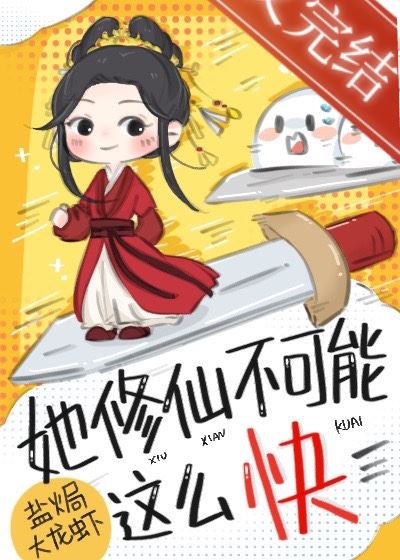
I laughed out loud at the "Returning Sword Technique" chanting scene. You know the one—"First level, return instead, two qi in the elixir field are nowhere to be found." It's so absurdly funny and yet somehow perfect. Lin Shuang pulling out a blackboard, going word by word, making three hundred people recite in unison—it's the kind of scene that makes you feel warm inside because she's just... doing the work. No drama, no speechifying. Just showing up and teaching. But the part that actually got me was the ending. Meng Zi, sitting in the thatched hut, wiping his wooden totem, calling the whole thing "boring." Huang Fuyuan beside him, face pale, coughing, swallowing pills, looking out the window whenever Lin Shuang's voice comes through. They could have joined in. Meng Zi has a Rank B-equivalent technique himself—"Thirteen Blades of Mountains and Seas"—and Huang Fuyuan's alchemy skill could have helped even more people. But they didn't. They chose to watch. To let her lead. And I think that's the emotional core of this whole passage. It's not about power or strategy or even the trial itself. It's about three people who carry so much responsibility, so much capability, choosing to step back and let someone else shine. Meng Zi's reaction—eyes turning red, stepping back, then aggressively shouting "The rest of you, learn knife techniques from me!"—that's not just competitive pride. That's admiration masquerading as frustration. He's watching Lin Shuang do something he couldn't have imagined, and his first instinct is to elevate everyone else too. "Learn from me. All of you. I'll teach you too." The fact that the system narrates the three hundred youths' emotional response—"moved in their hearts," feeling guilty for not understanding, wondering if they still qualify to seek the Dao—this is the author showing us that mentorship isn't just about knowledge transfer. It's about making people believe they're worthy of belief. And Lin Shuang, with her willow branch and her patient voice and her "I'll say it again"—she's not just teaching sword techniques. She's teaching three hundred people that they matter.
... Read More
This chapter takes place in what feels like a bazaar or trading hall inside Zhenchuan, and the way it is described makes the whole place feel alive in a way most cultivation novels never achieve. There are shelves. Hundred treasures shelves. Miscellaneous treasure shelves. Jade slips with waist tags that need scanning. A junior sister named Zhao Keran who knows exactly how formidable her senior sister is and reacts accordingly by dancing her legs and hands like a golden retriever waiting for a command. The worldbuilding detail that got me was the part about Zhenchuan not only opening every ten years but occasionally opening mid-cycle for disciples who have a Transmission Leaf and reach the right cultivation level. That single sentence tells me so much about the mechanics of this world — it is not a fixed trial, it has rules within rules, and access itself is layered. The deeper you go, the more the system changes. And then there is the challenge system above the thousandth level, where stronger disciples hunt weaker ones who have obtained rare treasures. The red list. The waist badge deductions. Caves that can be taken. This is not just a training ground — it is a simulation of the brutal outside world, designed to teach disciples that possession without protection is a death sentence. Huang Fuyuan literally says this out loud: "This is also a simulation of the outside world." But the most vivid image for me is the ending — the rest area, once empty, now crowded with disciples who cannot break through and are lurking above the thousandth layer, eyes fixed on the three of them. I could picture this like a camera panning slowly across a room full of predators. The tea tables. The shifting gazes. The silence before the strike. It was cinematic without being overwrought.
... Read More
I keep coming back to how the author builds this world through spatial logic rather than exposition dumps. Zhenchuan isn't just a trial—it's a physical vertical world where your level literally determines your distance from everything. Cave 300 was one ring closer, cave 800 is five rings away, and the woman in pink explains that above level 6000 you need Core Formation. That's not a sidebar—it's woven into the cave sales pitch. The whole economy of the place is visible: spirit stones for cave rentals, contribution points, a marketplace run by a pink-robed woman whose vein pops when she gets dismissed. And then there's the lunchbox moment—Lin Shuang pulling out a checkered cloth, three bowls, three plates, three pairs of chopsticks from a mustard seed bag. This is a cultivator's lunch setup that feels simultaneously ceremonial and deeply practical. The world feels lived-in because even the mundane details (a tomato-shaped hourglass, spirit tea, Qi-blocking pills arranged in smiley faces) carry the weight of a culture that has built routines around cultivation. It's not fantasy cosplay; it's a society.
... Read More
On the surface this reads like a lighthearted cultivation comedy. But underneath, every scene is weighted with stakes that keep tightening. The woman in pink warns them: 'There may be casualties. For ordinary disciples with low combat power, I wouldn't recommend going any further.' She's not being dramatic—she's stating the reality. Beyond level 600, only advanced Foundation Establishment cultivators go. Beyond 6000, Core Formation. These aren't abstract numbers; they're death thresholds. Lin Shuang, who is visibly struggling just to maintain her pace at 841, is pushing toward elite inner disciple status—a goal she states casually during lunch, almost as an afterthought. But the casualness is the point. She's not announcing a grand dream; she's stating a target the way someone might state they're hungry. Meanwhile, Meng Zi is the one who grasps the full scope of what they're attempting. His chopstick diagram isn't just explanation—it's awe mixed with dread. He's circling the base-to-one-third section and realizing how much farther they have to climb, how many more life-threatening levels sit between them and their goal. The tension isn't in battle scenes here; it's in the gap between what these three can handle and what the mountain demands.
... Read More
I have to address the medicine chest. Lin Shuang pulls out this transparent, multi-layered square box with LABELED compartments—Emergency and Detoxification, Chronic Symptoms, Spiritual Qi and Sea of Consciousness Restoration, Satiety Speed Enhancement and Beauty Maintenance—and moves through it so fast she doesn't even need to look. This is such a small detail but it tells us SO MUCH about this character without a single line of exposition. She's prepared. She's methodical. She probably spent actual time organizing her gear while everyone else was just stuffing random bottles into bags. And then there's the worldbuilding around the trial system itself—the real-time projections that outer disciples can watch, the spirit stones you spend to access them, the caves on different levels, the way everyone from Zhao Keran to random junior disciples is commenting on what's happening like it's live sports. The detail about Wuxing's Blood Elixir being "sealed with red clay" and the Red Lotus Powder being "infused with the fragrance of Spirit Tea" —these tiny sensory details make the alchemy world feel tangible. You can almost smell the medicines. And the humor of a trial that randomly assigns things like "fallen into the demonic path" and "love crisis" as medical emergencies is genuinely funny worldbuilding. This isn't just a generic cultivation setting, there's personality in it.
... Read More
Every time I think this is just a lighthearted cultivation roommate story, the text slaps me with something that makes me reconsider everything. The scar. The disappearances. The fact that Lin Shuang's current body is technically not the one she chose. Let me start with the scar—a three-inch wound running from Lin Shuang's left chest, down her left arm, to her pinkie finger. Seven years old. Fatal. The original owner died from it. But after Lin Shuang transmigrated into this vessel, it 'miraculously healed.' What does that mean? Is this body special? Is her transmigration truly accidental? Or is there something about her—about WHO she was before—that made this wound meaningless? The hundred deaths are another symbol I can't shake. They're mentioned almost casually, buried in Lin Shuang's observations like background noise. But they represent institutional failure on a staggering scale. A sect that loses over a hundred people and treats it as 'news.' The system is broken, and Lin Shuang—someone who apparently has deep knowledge of this world—has chosen to stay inside it anyway. Then there's the cultivation system itself as metaphor. The 80-20 rule, the timed cultivation cycles, the optimized routes—Lin Shuang treats spirituality like a logistics problem. There's something almost haunting about that. She's a transmigration survivor who learned to optimize survival itself. Every shortcut, every efficiency hack, every streamlined route is a testament to someone who understands that in this world, waste equals death. The lion-dog talisman named 'Xiao Ai' is another symbol I keep turning over—a servant AI in a cultivation setting, literally 'little love.' It serves, it reminds, it recharges. It's domesticated technology in a world of magic. What does that say about how far this civilization has come, or what it's willing to accept as normal?
... Read More
I need to talk about how this book weaponizes its own tone against you. It wants you to laugh, it wants you to relax, and then—quietly, almost politely—it reveals that the entire world is on fire and everyone except one person seems fine with that. The external conflict is layered like an onion made of suspense. On the surface: a new disciple trying to survive her first day of grueling tasks. Moderate stakes, relatable struggle, we've all been there. Then: the disappearances. Over a hundred dead or missing cultivators near Biquan Mountain, and the sect's response is a morning news bulletin between zither music and sect announcements. The indifference IS the horror. But the REAL stakes are personal, and they come wrapped in silence. Lin Shuang's scar. Her transmigration. The fact that she observed her roommate's sleeping position and decided, on a scientific basis, that Zhao Keran was 'easy to get along with'—which somehow makes her protection of that roommate feel MORE dangerous, not less. Because if the world is this deadly, why is this overwhelmingly powerful woman investing in someone so seemingly ordinary? The suspense architecture here is brilliant. Every chapter ends on a note that recontextualizes everything. Zhao Keran runs out happy, using a shortcut map Lin Shuang gave her, while behind her a news broadcast details another corpse. The reader is screaming internally while the protagonist is literally sprinting toward her tasks. That dramatic irony is chef's kiss. And what are the actual stakes if this goes wrong? Lin Shuang has survived a fatal wound, witnessed endless deaths, and built a comfortable routine in a hostile world. If something threatens that—her secret, her roommate, her hard-won peace—we're not talking about plot inconvenience. We're talking about catastrophic disruption of someone who has already lost everything once. That makes every quiet moment unbearable to read because we KNOW what's coming.

Leave a comment

You must be logged in to leave comments. or
