The Sweet, Soft Beauty of the Island-Stationed Big Shot [Era Novel]
+Add to Custom List
Genres:
Novel Info
  • Author:
  • 溯時
  • Status:Ongoing

Summary

... Read More

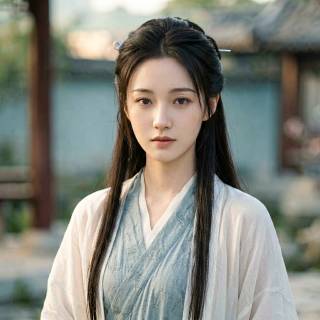
In the autumn of 1973, within the staff compound of the Ancheng Metallurgical Plant, eighteen-year-old Ning Qiao lived a life of sheltered indulgence. Frail since birth and protected by her parents, Director Ning Zhiping and Chang Fangze, and her older brother Ning Yang, she was accustomed to a comfortable existence far removed from the hardships faced by her peers. Her life in the compound was marked by gentle interactions with neighbors and children, and a close, affectionate relationship with her newlywed sister-in-law, Jiao Chunyu. The family dynamic was harmonious, with neighbors gossiping about Ning Qiao’s beauty and the likely match with Lin Guangmin, the son of the plant’s director, Lin Dechao. However, this tranquility was shattered when an official notice arrived requiring Ning Qiao to be sent to the countryside as an educated youth. The policy left no room for refusal, and the family’s initial attempts to secure medical exemptions failed because Ning Qiao’s condition, while delicate, was not severe enough to warrant a certificate.

The news plunged the Ning family into distress. Ning Yang and Jiao Chunyu, along with their parents, scrambled for solutions. Ning Yang initially suggested that Ning Qiao marry quickly, as married individuals were exempt from the countryside assignment. This idea sparked a fierce debate within the family. Chang Fangze was initially opposed, fearing for her daughter’s youth and safety, but the reality of the harsh conditions described by Ning Qiao’s friend Yang Qingqing—backbreaking labor, isolation, and potential danger—terrified the family. They learned that Ning Qiao was likely to be assigned to a remote border region, a prospect that filled her parents with dread. The family’s internal conflict intensified as they weighed the dangers of rural life against the uncertainties of marriage. Ning Qiao herself, though gentle, showed a surprising pragmatism, accepting the situation and even helping to pack, though her fear of the unknown was palpable.

As the family debated, Lin Guangmin, who had long harbored feelings for Ning Qiao, saw an opportunity. His mother, Yu Cuiman, though disdainful of Ning Qiao’s frailty and the Ning family’s perceived lack of urgency, agreed to the match to secure a daughter-in-law for her son. The Lin family, leveraging their superior status, approached the Nings with an ultimatum: marry quickly and accept their terms regarding betrothal gifts and dowry. Chang Fangze and Ning Zhiping were offended by the Lin family’s arrogance and the implication that they were desperate. The situation reached a breaking point when Ning Zhiping, seeking a way out, revealed that Ning Qiao already had a childhood betrothal arranged with the grandson of his late comrade-in-arms, Jiang. This revelation stunned the Lin family, who had expected the Nings to beg for the match. Meanwhile, far away on Qingping Island, Battalion Commander Jiang Heng received a letter from his grandfather urging him to honor the betrothal. Jiang Heng, initially indifferent and busy with military duties, was reminded of the promise made decades ago.

The narrative shifts between the political maneuvering in the metallurgical plant compound and the military life of Jiang Heng. Ning Zhiping’s claim of a pre-existing betrothal served as a strategic shield against the Lin family’s pressure. The Lin family, humiliated and furious, withdrew their proposal, leaving the Ning family in a state of limbo. Ning Qiao, unaware of the full extent of the political maneuvering, remained focused on her impending departure. Her mother, Chang Fangze, began to prepare for the worst, while Ning Yang struggled with his protective instincts. The story highlights the tension between individual desires and the rigid structures of the era, where personal fate was often dictated by policy and family connections. Ning Qiao’s character is portrayed as resilient yet vulnerable, navigating a world where her beauty and status offered little protection against the sweeping changes of the time. The arrival of Jiang Heng’s response to his grandfather’s letter introduces a new variable, suggesting that the childhood betrothal may not be merely a fictional excuse but a destined connection that could alter Ning Qiao’s path.

The climax of this section involves the confrontation between Ning Zhiping and Director Lin Dechao. Ning Zhiping firmly rejects the Lin family’s terms, citing the existing betrothal. This act of defiance marks a turning point, as it shifts the power dynamic within the compound. The Lin family’s attempt to use their influence to secure a marriage for their son is thwarted by the Ning family’s unexpected counter-move. As the dust settles, Ning Qiao is left to await the outcome of her fate, with the countryside assignment still looming but now complicated by the prospect of marriage to Jiang Heng. The story ends with a sense of anticipation, as the characters on both sides—the Nings in the city and Jiang Heng in the military—begin to move toward a resolution that will determine Ning Qiao’s future. The narrative underscores the themes of family loyalty, social hierarchy, and the impact of historical policies on individual lives, setting the stage for the next chapter in Ning Qiao’s journey.

Novel Items

More
Food
Ning Qiao's favorite cookies that Jiao Chunyu stood in line to buy. Only four were left at the bakery. They were wrapped in oil paper. Ning Qiao shared them with her family, giving two to her parents, one to Jiao Chunyu, and half to Ning Yang.
Material
Used to seal doors and windows against the freezing cold. Those without oil paper were instructed to buy some from Xiao Yu's place immediately.
Item
Yao Chuanjiang's bicycle, which he uses to give Yao Qingqing a ride home and to the cooperative. This is a valuable possession in the story's setting, representing both transportation and status. He parks it quickly at the cooperative and unties the meaty bones from the handlebar.
Clothing
Bought by Liang Yue for 6 yuan, representing one-third of her monthly teacher salary of 18 yuan. She wore it proudly on the supply truck back to the compound.
Document
An official notice received by the Ning family requiring Ning Qiao to go to the countryside. Despite the policy regulations making it unavoidable, Ning Zhiping and Chang Fangze were deeply worried about their frail daughter enduring such conditions.
Honor
Certificates awarded to Ning Zhiping and Chang Fangze by the factory for being exemplary in family and marital conduct.
Latest Release
DateGroupRelease
2026-08-11shanghai fantasy c26
2026-08-11shanghai fantasy c25
2026-08-11shanghai fantasy c24
2026-08-11shanghai fantasy c23
2026-08-11shanghai fantasy c22
2026-08-11shanghai fantasy c21
2026-08-11shanghai fantasy c20
2026-08-11shanghai fantasy c19
2026-08-11shanghai fantasy c18
2026-08-11shanghai fantasy c17
2026-08-11shanghai fantasy c16
2026-08-11shanghai fantasy c15

Community Reviews

Rating(4.1 / 5.0, 14votes)
5 stars
6(43%)
4 stars
3(21%)
3 stars
5(36%)
2 stars
0(0%)
1 stars
0(0%)

Popular reviews

... Read More
This section had me hooked from start to finish. The way the narrative bounces between the Ning family's marriage panic and Jiang Heng receiving that letter? Perfect. One minute you're in the middle of Chang Fangze desperately clinging to Lin Guangmin as a solution, and then BOOM - we're on Qingping Island with Comrade Luo trying to intercept mail. The pacing never drags. And that moment when Ning Zhiping drops the childhood betrothal bomb in Director Lin's office? I literally gasped. The tension builds so naturally - first the desperation, then the Lin family's arrogance, then the counter-strike. Jiang Heng writing that letter with the pen pausing, feeling like he's done this before, that sense of déjà vu is such a good structural choice. It creates this invisible thread connecting past and present without slowing anything down. The chapter ends on Chang Fangze's fading smile about the Jiang family tragedy, which is such a quiet, aching note to leave on after all that drama.
... Read More
The pacing in this section is really well controlled. The author starts with an intimate one-on-one confrontation between Lin Guangmin and Ning Qiao, and that scene is tight and efficient. No wasted words. Then it expands outward—the Jiang siblings, the compound gossip, the family dinner, the packing, and finally the public confrontation with Yu Cuiman. Each scene is shorter than the last but the emotional stakes keep climbing. I think what's clever is how the author uses different narrative voices to cover the same events. The Jiang siblings' perspective gives us a completely different view of Jiang Heng than we've seen before—he's a responsible older brother who went on a special mission to meet his future wife. The compound gossip gives us the community's view, which is full of assumptions and half-truths. The Ning family dinner gives us the intimate emotional core. And Yu Cuiman's confrontation brings the external conflict to a head. The transitions between these scenes are smooth. There's no jarring shift from the quiet rejection to the loud gossip—it feels like the story is naturally expanding its scope. The cliffhanger ending with Yu Cuiman's accusation is perfect because it leaves us wanting to know what happens next. Will Chang Fangze defend herself? What will Ning Qiao think when she hears about this? The author is really good at knowing when to cut a scene short and when to let it breathe. The dinner scene could have gone on longer but it ends at the right moment. The gossip scenes are brisk and efficient. And the final confrontation has just enough detail to feel real without dragging.
... Read More
There's this one image in this chapter that I can't get out of my head. Jiang Heng looking out the military vehicle window as Ning Qiao's figure gets smaller and smaller, but her gaze never wavers. The text says it's 'achingly familiar' to him—like every time he left for a mission before, she'd seen him off the same way from the military compound in Qing'an. Goodbye after goodbye. Reunion after reunion. That single line hit me like a truck. It's not just a farewell scene, it's a whole lifetime of separations and returns compressed into one moment. The setting details throughout this section are what make it feel so lived-in. You've got the compound at its liveliest after dinner, people strolling in the yard, aunties giving approving smiles at the young couple. The state-run restaurant where Jiao Chunyu points out they could grab spicy beef noodles. The 28-inch bicycle that Ning Yang and his wife ride together—she sitting on the back, arms around his waist. These aren't just background details, they're the texture of this whole world. It feels like a specific time and place, not some generic Chinese novel setting. The mother-daughter scene at the end is where the atmosphere really shifts. The autumn night carrying a slight chill, treetops creaking in the breeze outside the window. Chang Fangze packing medicine, writing down herbal prescription instructions, reminding her daughter not to tough it out if she's sick. The domesticity of it—the fact that this is the last night they'll spend together before Ning Qiao leaves for the island—creates this quiet, aching tenderness. And then Ning Qiao asking 'Will you sleep with me tonight?' like she's still a little girl. The whole scene just radiates this bittersweet warmth that stays with you.
... Read More
I keep thinking about this detail: Jiang Heng offering to hand over his bankbook to Ning Qiao. On the surface, it's just a practical gesture—a guy proving he's financially responsible and transparent. But dig a little deeper and it's actually about something much bigger. In this era, in this society, a man's bankbook isn't just money. It's his independence, his autonomy, his trust. By offering it to her, he's essentially saying 'I have nothing to hide from you. You are my priority.' And then there's the mother's medicine. Chang Fangze packing herbal prescriptions, writing down brewing instructions, reminding her daughter to take care of herself. These small domestic objects—the bankbook, the medicine, the written instructions—become symbols of love in a language that doesn't rely on grand declarations. The whole novel seems to operate on this frequency: love expressed through action, through preparation, through the careful packing of a suitcase. The photo of Ning Qiao that arrives at the Jiang compound is another powerful symbol. The three siblings haven't even met their future sister-in-law, and yet this photograph becomes this tangible connection to someone they're about to welcome into their family. Jiang Guoguo standing on tiptoe to see the photo, the older brothers immediately interested once they hear 'sister-in-law'—it's a whole new family being imagined before it even exists. And the ending image of Ning Yang arriving at the compound at dawn, taking a deep breath to compose himself because 'his sister's marriage was a happy occasion—he couldn't wear a gloomy face.' That's the whole theme right there. The tension between personal emotion and social expectation. Between what we feel and what we're supposed to perform. The Nings are a family that loves deeply but also knows how to hold it together in public. That duality runs through everything in this story.
... Read More
I'm still thinking about that family dinner scene. You know how sometimes authors write these moments and they feel fake, like they're trying too hard to make you cry? This one doesn't feel fake at all. The whole table is full of good food, everyone's pretending to be happy, and you can feel the weight underneath it all. Ning Yang is being all protective and saying things like bring her right back if something feels off, and then his sister-in-law Jiao Chunyu has to smack him for saying divorce out loud. The family is laughing but the parents aren't really smiling. Chang Fangze looks at her daughter and just remembers her as a little girl. That's the moment that got me. It's so simple and so devastating. Ning Qiao notices the mood shifting and deliberately doesn't cry because she knows if she starts, everyone will. She's protecting her family even as she's leaving them. And then there's the packing scene with Chang Fangze filling suitcase after suitcase, and the aunties telling her not to bother because the husband's family will buy her things. And Chang Fangze's response—she's still part of ours. That line is everything. It's a mother saying you will never be forgotten just because you're getting married. The romantic element with Jiang Heng is handled so interestingly because we barely see him. Ning Qiao has only seen a photo of him from when he was a teenager and read his letters. Those letters were word by word sincere and powerful. She's marrying a stranger but she trusts him based on what she's read and what her father has said. It's not a typical romance setup and that's what makes it compelling. There's this underlying tension throughout—the fear of the unknown, the sadness of leaving home, the hope that this arranged marriage will work out. It's bittersweet in a way that feels very real.
... Read More
The pacing in these chapters is honestly masterful. Let me walk you through how the author moves us from one emotional register to another without it feeling jarring at all. We start with what's basically a romantic comedy setup—Jiang Heng meeting the parents, the dad cooking his specialty dishes, the whispered comments from Ning Qiao and her sister-in-law. There's even a comedic beat with Ning Yang missing the whole thing and then frantically trying to make up for it. The tone is light, almost breezy. You're smiling at how the whole compound is basically ganging up to approve this guy. Then—bam. The goodbye scene. The mood shifts from warm comedy to something more tender and bittersweet. Jiang Heng leaning out the window, veins showing on his hand, watching Ning Qiao's figure disappear. The narrative pulls back to show us that this isn't their first goodbye, it's part of a pattern. Goodbye after goodbye. Reunion after reunion. The pacing slows down here, deliberately, making us sit with the emotion. After that, we get the mother-daughter night scene, which is quiet and intimate—almost a quiet storm of emotion. And then the author cuts to the Jiang siblings, who are being loud and chaotic and completely unaware of what's happening. This contrast is brilliant. It gives us breathing room after the heavy emotional beats, while also building anticipation for when they'll learn about the wedding. The chapter ends with the Ning family's sleepless night and the early morning departure preparations. The pacing here accelerates slightly—we're moving toward the departure, and there's this underlying tension of 'what happens next?' It's a perfect setup for the next section of the story.
See all reviews

Characters

See all characters

Custom lists

Oops…There is nothing here.