The Substitute Awakens - Reviews

The Substitute Awakens
+Add to Custom List
Sort
Add review
... Read More
The stakes are existentially high from page one. Yan Heqing isn't just facing eye surgery; he's facing annihilation of his selfhood and likely his life, all for a brother who might not even know he exists (or so it seems). The external conflict is clear: Yan Heqing vs. Lu Muchi, the powerful captor vs. the trapped victim. But the internal conflict is even more intense. He's grappling with the horrifying realization that his entire life has been a plot device. Does he fight? If he signs, he loses his eyes and possibly his life. If he doesn't, what happens? The author ramps up the tension by having him sit in a calm coffee shop, signing a contract, while his mind races through a timeline of abuse. That juxtaposition of mundane action and life-threatening consequence is thrilling. The 'cliffhanger' isn't just about what he signs; it's about whether he'll break the cycle. The threat from Lu Muchi is immediate and personal: 'even if I want you dead, you'll die.' The stakes are total control over another human being. And the tragedy is deepened by the fact that Yan Heqing has Stockholm Syndrome—he loves the very person hurting him. This internal conflict makes the external stakes harder to navigate. Can he resist when part of him wants to please his abuser? The suspense is gripping because we know the 'original' plot ends in his death, so every choice he makes now is a defiance of fate. Will he find a loophole? Will he turn the tables? The reader is left hanging on the edge of their seat, needing to know if this 'substitute' can become the main character of his own survival story.
... Read More
This chapter is a masterclass in escalating tension and I need to unpack why it works so well. On the surface, Yan Heqing is bargaining for his phone. A stupid, trivial object. But the real bet here is so much higher—he's essentially saying: give me access to my family again, and in exchange, I'll go along with whatever you want. Lu Muchi thinks he's in control. He thinks he can use this information as leverage forever. But Yan Heqing knows something crucial: the same weapon loses effectiveness if used repeatedly. "He needed to find a stronger one." This line alone is chilling because it means Yan Heqing is already planning his next move while standing half-dead in a car at dawn. And then the stakes multiply. Because now we're introduced to Lu Lin—Lu Muchi's most feared uncle AND Lin Fengzhi's first love. Let that sink in. One person who connects to both protagonists through completely different emotional histories. An uncle by blood to the blackmailer. A first love by romance to the blackmailed. This isn't just a character; this is a narrative landmine waiting to detonate. What Yan Heqing stands to lose is everything—his brother, his identity, his chance at reclaiming a life stolen from him. What Lu Muchi stands to lose is even more terrifying: the complete destruction of the relationship he's been obsessively pursuing. If Lin Fengzhi discovers not only that he was adopted and had a twin, but that the man who manipulated him slept with his own blood brother's sibling... the fallout would be apocalyptic. "If Lin Fengzhi were to regain his memories and realize that Lu Muchi had slept with his biological brother…" The author trails off here deliberately. We're meant to imagine the worst possible outcome and it is BRUTAL. How much longer until this detonates?
... Read More
The pacing here is a masterclass in mounting dread. It starts slow and grounded: an 18-year-old in a coffee shop, signing a contract, a lawyer leaving. The prose is relatively calm, mimicking the mundane reality Yan Heqing thinks he's living in. But the author drops the bombshell almost immediately—the memory of the novel flooding in. The structure then shifts into a rapid-fire montage of the book's timeline ('At 5 years old... At 18... At 19... At 20... At 21...'), ticking down the years like a countdown to execution. This accelerates the pace significantly, compressing his entire tragic arc into a few sentences to show how inescapable it feels. Then, just as you think it's over, we cut to the present moment of violation in the flashback—the doctor examining the abused body, the demand for 'Water,' the hopelessness. The narrative then snaps back to the coffee shop bathroom scene, where Yan Heqing physically reacts (vomiting) to this terrifying realization. This oscillation between the 'plot' (the novel's narrative) and the 'reality' (Yan Heqing's current experience) creates a dizzying, unstable rhythm that mirrors his psychological state. The cliffhanger ending—he's about to sign his death warrant on his birthday, and the text cuts off mid-thought about his brother—is chilling. It forces you to read on, desperate to see if he breaks the script. The transition from the sterile lawyer meeting to the bloody, visceral horror of the abuse is jarring by design. It works.
... Read More
The pacing in these chapters is genuinely masterful. It starts with violence — the shoe heel crushing Zhao Huilin's hand, the shoulder throw, the slap — all in rapid succession, and then it just... stops. The bodyguards leave, the parents retreat to their room, and suddenly it's just Yan Heqing and Lu Muchi in a room with an open door and cold wind. That transition from chaos to silence is where the real tension lives. Lu Muchi playing with his lighter, waiting, watching Yan Heqing's face — that's slow-burn done right. And then the police arrive, which should be the relief moment, and the author denies it so cleanly. The officers leave within paragraphs and we're right back where we started, except now Yan Heqing has lost something worse than freedom: he's lost the illusion that rules apply to him. The cliffhanger with 'I have a condition' and the wind cutting through his thin clothes at the very end? That's a masterclass in leaving the reader with no choice but to keep going.
... Read More
'The front door was open, and the cold wind kept pouring in. Yan Heqing stood still, his frail body appearing as though it could be knocked over at any moment by the wind.' I keep coming back to this image. It's not just atmosphere — it's literally the external world mirroring his internal state. Open door, cold wind, fragile body. The whole scene is designed to make you feel exposed and claustrophobic at the same time. The dappled streetlamp light splitting his face in half later is doing the same work visually — one half visible, one half hidden. And then you've got the wet spot on Yan Feng's pants. A twelve-year-old peeing himself from terror while his stepmother tries to comfort him. The domestic horror of that detail alongside the predatory threat of Lu Muchi creates this unbearable texture. Every surface in these scenes feels loaded. The scattered bills on the floor, the cigarette being ground into the floor, the lighter clicking — nothing is neutral. This world doesn't have neutral objects.
... Read More
I am genuinely unsettled by how normalized all of this is. Yan Heqing is seventeen-eighteen, malnourished (181cm, only 102kg—underweight and they're STARVING him), living in HALF a balcony, and his family is casually discussing selling him for five million a year like it's a business transaction. Which, honestly, it is. But here's what keeps me up at night: Yan Shengbing actually RAISED HIS HAND to slap Yan Heqing. Not threatened—actually swung. And Yan Heqing CAUGHT the slap. First time ever fighting back. That single moment shifted something fundamental in their power dynamic, and the father didn't even register it. The family is so used to treating him as invisible property that they don't realize when he stops being compliant. The stakes escalate SO smoothly. First it's just emotional abuse, then physical violence, then they're literally putting a price tag on his body. And Lu Muchi's entrance—showing up at midnight with cash flying around like confetti—raises the stakes to a whole new level. This isn't just exploitation anymore; it's approaching something darker. The question isn't whether Yan Heqing will escape; it's what version of himself he'll become if he does. Also, the strawberry scene? He's eating fruit his family won't let him have, alone in his tiny room, saying 'Sorry, little brother. This time, I want to taste the flavor of strawberries too.' That little apology to Lin Fengzhi—whatever happened to them—is sitting in my chest like a stone.
... Read More
I'm not okay. I repeat, I am NOT OKAY. The emotional triangle in this book is absolutely devastating and I have been sitting here staring at my ceiling for twenty minutes after reading this chapter. Let me just process this for a second. Lu Muchi is OBSESSED with Lin Fengzhi. He slept with him. He's blackmailing him. But now—NOW—he learns that Yan Heqing is Lin Fengzhi's biological twin brother who was separated from him as children. The man he's been pursuing, the man whose life he's dismantling, shares a blood bond with someone else in this entire story. And thatsomeone else has been right under his nose the whole time. But the part that absolutely wrecked me is Yan Heqing's side of this. He watched his twin brother grow up in a family that could provide him, got adopted away, lost his memory, and had NO IDEA who he really was. Meanwhile Lu Muchi was there, knew the truth, and chose to exploit it. Yan Heqing says he needs to find Lin Fengzhi and... what? Reconnect with him? Protect him? The text never spells it out and that uncertainty is killing me. "A person who appears only a few times but appears through the whole story." This line about Lu Lin hit me so hard. The first love of Lin Fengzhi's life. The uncle Lu Muchi fears most. Someone who haunts this narrative like a ghost even though they're barely physically present. What does that mean for the emotional future of this story? Who is this person and what role will they play when Lin Fengzhi finally remembers everything? I need answers. I need this book to continue immediately.
... Read More
The central theme here is identity versus destiny, wrapped in the metaphor of sight. Yan Heqing is being forced to donate his eyes to save his twin brother, the 'true' protagonist. His eyes are literally and symbolically taken away because they belong to the 'wrong' person in the story's hierarchy. He is a 'substitute,' a copy, and in this world, copies have no right to their own attributes. The novel within the novel acts as a symbol of fate—a pre-written script that dictates suffering. However, the one-sentence summary 'If there's no light, be your own light, illuminate yourself!' suggests a rebellion against that determinism. It's about agency. By realizing he's in a novel, Yan Heqing gains the first spark of his own light: awareness. His eyes, which reflect his soul and his future blindness, become the battleground. The 'bright red' spots on Lu Muchi's bathrobe symbolize the violence embedded in their twisted love story. The 'crystal chandelier' represents the superficial beauty and wealth of the Lu family that hides rot and abuse. Even the rain in the coffee shop could symbolize cleansing or tears—the world trying to wash away the sin, or the protagonist's inner grief. The theme of 'Stockholm Syndrome' is explicitly mentioned, which is crucial. It explores how trauma bonds can be mistaken for love, and how a character can be psychologically trapped even before physical chains are applied. Is Yan Heqing's love for Lu Muchi real or programmed? The ambiguity challenges the reader to question the nature of affection in oppressive dynamics. The 'light' he must become is his own will to survive, independent of the narrative's demand for his sacrifice.
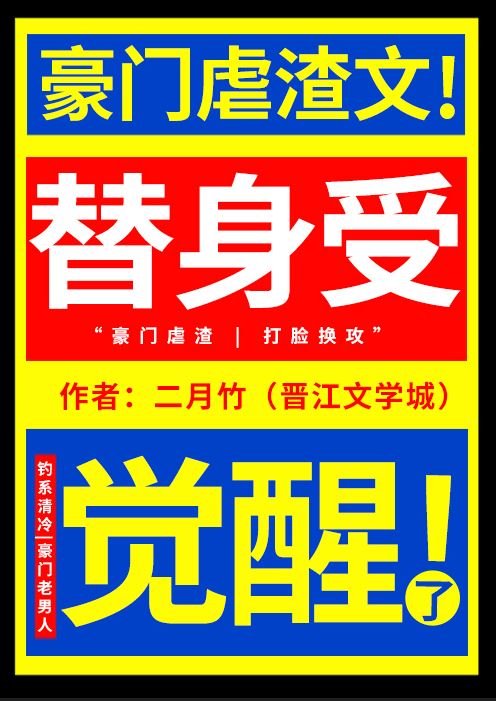
... Read More
Okay, the pacing in these chapters is intentionally glacial, and I think that's doing heavy psychological work. Look at how the author structures the morning scene: Yan Feng tries to step on Yan Heqing's foot, fails, gets hurt, gets pushed out the door by his mother who doesn't even look at him. Then BACK to the adults discussing money like Yan Heqing isn't in the room. The narrative keeps circling back to him observing, eating, being ignored—and that's the POINT. We feel his isolation through the pacing itself. Then BAM: midnight scene. Lu Muchi appears, cash flies, 'come with me.' The tempo shifts dramatically, almost violently. It's like the author finally lets the tension explode after carefully building pressure for pages. The flashback insertion works too—dropping us into that first meeting (Mercedes in the campus, 'three million a year, sleep with me') right after the midnight visit. It reframes everything we just read. Lu Muchi didn't just randomly show up; he's been pursuing this since day one, and Yan Heqing had NO idea how to stop it. The chapter ends on that same note of unresolved dread. Yan Heqing says 'You've got the wrong person' and the text literally cuts off mid-sentence. Not a cliffhanger with fireworks—just abrupt, incomplete, like the story itself is out of breath. Which feels very on-theme.
... Read More
enjoyed the read but felt I was left hanging.  will there be a sequel?
... Read More
The varsity players were sitting in a corner, glancing at us while they fixed their things. I was looking back at them, finding the good-looking Mr. Oh number 12. When I finally saw him, I immediately ran across the gymnasium where Yeonra unnie was.

Leave a comment

You must be logged in to leave comments. or
