Summary

... Read More

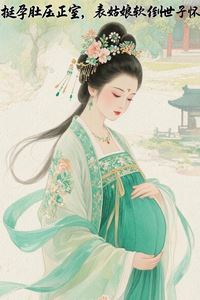
Shen Ningsi, a doctoral graduate in agriculture from the twenty-second century, awakens in the body of a pregnant woman in the Great Zhao Dynasty. The original host, also named Shen Ningsi, had married Gu Hong, who was conscripted into military service shortly after their wedding. Left alone with three children from her husband's previous marriage, she faced extreme poverty and a severe drought. While desperate for food, she is assaulted by a bandit from Heiyun Village, but is rescued by her stepson, Gu Xiuwu. In the ensuing chaos, Shen Ningsi goes into labor and, using modern medical knowledge, delivers twin babies herself in a mountain hollow. Initially, the children, particularly the hostile Gu Xiuwu, resent her as an intruder who degraded the family for a bag of sand disguised as grain. However, Shen Ningsi asserts authority, teaching the children survival skills and bonding with them through care and protection.

With the village suffering from a year-long drought and water sources dried up, Shen Ningsi employs her scientific knowledge to create water through atmospheric condensation. She digs pits, places containers within them, and covers them to collect moisture, producing clean water for her family. When villagers demand repayment for water her children had previously taken, she promises to return it with interest within three days. Her eldest son, Gu Xiuwen, takes the initiative to present the water production method to the local government official, Fan Xing, in exchange for protection and grain supplies. This decision is strategic, as Shen Ningsi recognizes that their vulnerable position requires the backing of authority to prevent exploitation by local gangs and desperate neighbors.

Their success attracts the attention of Haozi, a treacherous villager who colludes with the Heiyun Village bandits. Haozi and the Third Boss of Heiyun Village raid Shen Ningsi’s home, beating Gu Xiuwu and kidnapping Shen Ningsi, Gu Yun’er, and the twins. They take the family to the bandit stronghold, where the Three Bosses demand she demonstrate her water-making ability. Shen Ningsi complies, buying time by proving her value to the bandits. Inside the stronghold, she learns that Heiyun Village is a lawless enclave where children are often abandoned or killed due to scarcity. She gains the trust of a fellow captive woman who lost her child, vowing to share her knowledge to save others from such fate.

Meanwhile, Gu Hong, now a general known as Gu Shacai, leads a relief mission. His soldiers, including loyal subordinates Sanyazi and Zhao Xianxing, rush to Wanning Village upon receiving news of the kidnapping. Sanyazi, having memorized the village layout, infiltrates Heiyun Village and rescues Shen Ningsi and the children, posing as a bandit. He brings them to the outskirts where Gu Hong’s forces are gathering. General Gu Hong arrives with his army, intending to crush Heiyun Village. The story concludes with the reunion of the family and the imminent military strike against the bandits, setting the stage for Shen Ningsi to secure a safe future for her children while leveraging her unique skills in this harsh new world.

Latest Release
DateGroupRelease
2026-08-11shanghai fantasy c116
2026-08-11shanghai fantasy c115
2026-08-11shanghai fantasy c114
2026-08-11shanghai fantasy c113
2026-08-11shanghai fantasy c112
2026-08-11shanghai fantasy c111
2026-08-11shanghai fantasy c110
2026-08-11shanghai fantasy c109
2026-08-11shanghai fantasy c108
2026-08-11shanghai fantasy c107
2026-08-11shanghai fantasy c106
2026-08-11shanghai fantasy c105

Community Reviews

Rating(3.7 / 5.0, 6votes)
5 stars
2(33%)
4 stars
0(0%)
3 stars
4(67%)
2 stars
0(0%)
1 stars
0(0%)

Popular reviews

... Read More
The pacing here is actually really tight when you think about it. We go from father-son tension (fast, dialogue-heavy) to the quest for food (building mystery) to the actual discovery (climactic) to the political fallout (expanding stakes) to the moving scene (character development) - all in what feels like a single chapter block. What works is that the author doesn't let us rest between beats. Just when Gu Hong is being a jealous dad, Shen Ningsi pivots to asking about dry climates. Just when we think the potato search is over, she reveals she's looking UNDERGROUND. Just when Fan Xing arrives to gloat, Gu Hong shuts him down. The scene transitions are smooth but the energy never drops. The cliffhanger structure is also smart. Each mini-arc ends with a question or tension point: Will they find the potatoes? Will Fan Xing believe them? Will the villagers accept help? Will Gu Hong and Shen Ningsi's relationship shift? The author knows exactly when to pull the rug out from under us. But there's also breathing room - the moving scene with the villagers helping, Gu Xiuwu calling out Gu Hong's jealousy, Sanyazi trying to mediate. These moments give us space to process the bigger plot developments while deepening character relationships. The pacing isn't just fast - it's varied, which is harder to pull off. One thing I'd note: the transition from the discovery to Fan Xing's arrival feels slightly rushed. We go from 'found potatoes!' to 'here's fifty dan per mu yield' to 'let's move houses' pretty quickly. But honestly, the emotional beats land well enough that I didn't mind the speed.
... Read More
I need to talk about this one moment. The horseback scene. Shen Ningsi has never ridden with anyone before, and Gu Hong literally wraps his arm around her waist to keep her steady. She's breathing hard from the climb, and he's just... there. Solid. Warm. And then he says 'Just call me ye.' That's it. That's the moment. Not some grand declaration, not a dramatic confession - just an intimate nickname offered in passing while they're galloping toward a hilltop. The fact that she hesitates and calls him 'Lord soldier' instead shows she's not ready for that level of closeness yet. But the reader knows. The reader is SCREAMING. What kills me is Gu Hong's internal monologue. He's convinced she's faithfully mourning him even though she doesn't remember what he looks like. Meanwhile she's just trying to save a village from famine and he's over here writing wedding vows in his head. The miscommunication is painful and funny and somehow romantic all at once. And Fan Xing trying to taste the potato while Gu Hong is having a full meltdown about sharing his discovery? That's not just comedic - it's protective. He's not mad because Fan Xing is rude, he's mad because this is HIS achievement to share with HIS people. Shen Ningsi notices this and defuses it by saying she only wanted to show off in front of Fan Xing, not him. BOOM. That line makes Gu Hong's anger vanish instantly because she's essentially saying 'you're my person, I don't need to perform for others.' The CP chemistry is built through these tiny moments - the way he watches her when she's working, the way she reads his moods, the physical proximity on the horse. It's slow burn done RIGHT.
... Read More
The stakes in this section are deceptively simple on the surface - they need to find food in a famine - but the author layers them so effectively that every scene crackles with tension. On the external level, we have the literal stakes: people are eating tree bark and roots, the Gu Family Army is exhausted, and time is running out. But the internal stakes are where it gets interesting. Gu Hong is fighting his own jealousy, his confusion about Shen Ningsi's feelings, his role as both soldier and... whatever this is becoming between them. He's protective to the point of irrationality - refusing to let Fan Xing taste the potato, getting angry that villagers are helping instead of resting. The father-son conflict adds another dimension. Gu Hong feels betrayed that Gu Xiuwen has 'been won over' by Shen Ningsi, but he can't even articulate that he's actually just lonely and afraid of losing his place in her life. Meanwhile Gu Xiuwen is just... defending the person he cares about. Classic misalignment. And Shen Ningsi herself is under pressure - she's claiming she can feed everyone in one month, not two. That's a promise that either makes her a savior or a fraud. The risk of failure is enormous, not just for the villagers but for her credibility and safety. What really raises the stakes is the community's response. When people threaten suicide to give gifts, when they compete to help move houses, when they hear hoofbeats at night and feel HAPPY - this isn't just a famine story anymore. It's about what happens when hope becomes tangible. The conflict isn't just survival versus death - it's despair versus faith, and the potato is the fulcrum.
... Read More
The imagery in this section is genuinely cinematic. Let me paint you the scene: rain-moistened earth, a mountaintop where even wild grass has been eaten, and Shen Ningsi stamping her foot on the ground like she's testing for something invisible. The author doesn't just tell us it's dry - we FEEL it through the description of cracked land with stubborn weeds clinging to survival. But the real standout is the night digging scene. Sky darkening, Shen Ningsi lighting a torch, sifting through soil with her hands while Gu Hong orders everyone to be quiet. The torchlight would be casting these wild shadows, her face probably smudged with dirt, completely focused. And Gu Hong watching her the whole time - that's the visual that sticks with me. The village setting is also well-realized. Wanning Village isn't just a backdrop - it's a place where people are so desperate they've eaten all the edible plants, where the Gu Family Army is exhausted from defending but still showing up to help move furniture. The former village chief's residence becoming their new home feels earned, not handed to them. And the gifts! The Yellow Pear Wood Canopy Bed during a famine year is such a specific, vivid detail. It's not just 'people gave gifts' - it's this elaborate piece of furniture that someone clearly treasured, offered as thanks. The fact that people threatened suicide to stop Gu Hong from returning it shows the depth of their gratitude. That's worldbuilding through action, not exposition. The author understands that famine isn't just a plot device - it's an environment that changes everything. People move differently, value different things, and the landscape itself becomes a character in the story.
... Read More
Okay so this whole arc about finding potatoes is actually brilliant plotting. Think about it - Shen Ningsi comes into a famine situation with future knowledge, and instead of just handing out solutions, she makes us WAIT for the discovery. The tension builds from the moment she starts asking Gu Hong about dry climates and cracked earth. That scene where she's sifting through soil with a torch late at night? Chef's kiss. But what really sold me is how the potato discovery becomes this catalyst for EVERYTHING else. It's not just food - it's hope, it's political capital, it's what makes the villagers start seeing her as someone worth protecting. Fan Xing literally can't walk out of that courtyard straight. The author uses this one discovery to unlock the entire relief effort. The father-son tension between Gu Hong and Gu Xiuwen is also solid subplot work. It's not resolved, it's not even really addressed - Gu Hong just gets sour because his son has been 'won over' by Shen Ningsi. Classic jealous dad energy but with military rank. And then there's the running joke about Sanyazi getting kicked whenever he says anything useful. The plot moves forward while these character dynamics simmer underneath. I also loved how Shen Ningsi plays the system - she deliberately underreports the yield (says fifty dan when it's actually four thousand jin per mu) because she knows unpredictable factors will come up. That's smart plotting that shows she's not just a knowledge-dumping protagonist but someone who understands politics and human nature.
... Read More
There's a line that really got me: 'All things in nature are interconnected and mutually restraining. The natural world leaves a thread of vitality for everything.' This isn't just plot exposition - it's the philosophical backbone of the entire story. The potato itself is such a rich symbol. It grows underground, hidden, when everything above ground has been consumed. It's humble, unglamorous, but it saves lives. Shen Ningsi sees what others can't because she understands that nature always leaves a way out - you just have to know where to look. That's basically the thesis statement for the whole narrative. Gu Hong's reaction to this philosophy is telling. He's a soldier who's 'countless times staked his life to charge forward precisely because he believed Heaven would never leave one with no way out.' When Shen Ningsi articulates something that aligns with his deepest conviction, he doesn't argue - he just orders the digging. That moment of alignment between them is huge, even if neither fully acknowledges it. The gifts from the villagers are another layer of symbolism. They're giving away heirlooms, threatening suicide to ensure their gratitude is accepted - this is a community that has nothing but still wants to give. It mirrors the potato itself: value that isn't immediately visible, worth that requires faith to recognize. And Shen Ningsi's refusal to accept the gifts initially? That's her understanding that true help shouldn't create dependency. She's not here to be thanked - she's here to change the system. The canopy bed represents everything she's trying to move beyond.
See all reviews

Characters

See all characters

Custom lists

See all custom Lists