Summary

... Read More

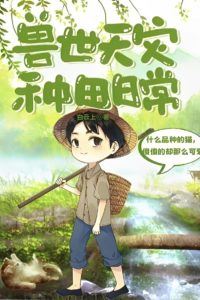
Ran Qi is the youngest son of the Ran family, a powerful private nutrient solution manufacturer on the Capital Star. Despite his noble lineage, he possesses an E-level physical and mental quality, rendering him physically inadequate for the military mech corps. His two older brothers hold prestigious military positions, while Ran Qi was only admitted to the Capital Star's First Military Academy through his father's financial influence, landing him in the Service Department, a wing for students with inferior physiques often mocked as 'miscellaneous.' At school, he faces constant humiliation from Zhang Shuo, a fourth-year mech student from the rival Zhang family, who belittles Ran Qi's weakness and academic failures. Unable to defend himself physically, Ran Qi accepts a challenge from Zhang Shuo to compete in , a highly immersive holographic game based on restored Blue Star civilization data. The game offers substantial real-world rewards, including a strength-enhancing potion that could potentially improve Ran Qi's low physical rating.

Upon logging into , Ran Qi discovers a critical anomaly: he has retained his character from a previous life in the twenty-first century, where he was a professional gamer. Although his level and attributes have been reset to one, he retains his complete skill tree, max-level life skills, and a massive warehouse of high-grade materials and equipment. He awakens as a Priest named Bai Ran, a profession he initially regrets due to its low attack power, but soon realizes the advantage of having all skills unlocked and a hoard of resources. With his hidden attribute 'Super Lucky Star' intact, his luck in obtaining rare items is exceptional. He teams up with his best friend Gu Le, who plays as an archer named Cola, and meets Feng Tian, a beta tester with a good-natured personality, as they begin their journey from the novice village.

Ran Qi quickly establishes his dominance not through combat stats, but through economic and social leverage. He learns that the interstellar population has lost the knowledge of cooking, having survived on synthetic nutrient solutions for centuries. Utilizing his twenty-first-century culinary knowledge, Ran Qi creates Scallion Pancakes, a new B-grade recipe that provides significant stat bonuses. The game system recognizes this as an original development, awarding him World Fame and physical exchange tickets. He sells the pancakes at a premium in the Trading Market, rapidly accumulating wealth and rising to the top ten of the server's wealth rankings. His success attracts attention, and he demonstrates his capability by defeating a group of red-name player bandits who attempted to rob him and Feng Tian, using high-grade magic scrolls stored in his inventory.

As Ran Qi levels up, he enters dungeons with a team including Feng Tian, Traceless Wind, Flower Iris, Ba Ge, and Yuena. During a dungeon clear, a dispute arises over a dropped recipe. Yuena and Ba Ge attempt to manipulate the item distribution after failing to win a dice roll, leading to a conflict where they accuse Ran Qi and his friends of cheating when he refuses to hand over the item. They post a bounty on Ran Qi's head in the world channel, attempting to ruin his reputation and have him killed. Ran Qi counters by posting a higher bounty for killing Yuena and Ba Ge and shares video evidence of their behavior to clear his name. The story follows his rise from an academic outcast to a influential figure in the game, leveraging his past-life expertise and unique advantages to change his fate both within the virtual world and in the eyes of his peers.

Latest Release
DateGroupRelease
2026-09-26knoxt c101
2026-09-26knoxt c100
2026-09-26knoxt c99
2026-09-26knoxt c98
2026-09-26knoxt c97
2026-09-26knoxt c96
2026-09-26knoxt c95
2026-09-26knoxt c94
2026-09-26knoxt c93
2026-09-26knoxt c92
2026-09-26knoxt c91
2026-09-26knoxt c90

Community Reviews

Rating(3.9 / 5.0, 389votes)
5 stars
118(30%)
4 stars
121(31%)
3 stars
149(38%)
2 stars
1(0%)
1 stars
0(0%)

Popular reviews

... Read More
Okay so let me just say this immediately: the author is a absolute menace when it it comes to subplots because everyone kept thinking the real conflict was the Zergs and nope nope nope it was always going to be the humans turning on each other and I was fully caught off guard by that twist. Here's what's brilliant about the structure. The Zerg attack starts as the main threat, right? Han Xiao's team is fighting for survival, the energy stones get stolen, the Queen calls the swarm back and suddenly everyone's scrambling. It feels like a classic alien invasion set piece, you know the drill. But then the real pivot hits and it's not some big dramatic reveal, it's just these two teams making a cold, pragmatic calculation and deciding to betray their temporary alliance. The Blue Team and Yellow Team just look at each other, do the math, and go 'you know what, screw the rest of you, let's just fight each other for the last spot.' And honestly? It makes total sense in-universe. They're exhausted, the Imperial Star kids have fresh energy, why would they throw their lives away against a team that's already topped up? But here's where the author really gets me. The narrative doesn't treat this as a betrayal at all. There's no moral drama, no 'how could you?' It's just presented as smart tactics. That's such a refreshing take on competition arcs. The story understands that in a tournament setting, survival and advancement aren't about loyalty, they're about winning. And the fact that the author lets us sit with that uncomfortable realization without judging the characters for it? Chills. Then immediately after the political maneuvering settles, we cut to... dinner. Just a complete genre shift from survival competition to domestic comedy and I honestly didn't know how to process it. One minute it's 'everybody's trying to kill each other for a quota spot,' the next it's 'who's bringing the chili powder?' The tonal whiplash is real but somehow it works because the stakes had already been established, so now we get to breathe. What I'm still chewing on though is the narrative economy here. How does the author manage to compress an entire tournament arc's worth of setup into these chapters without it feeling rushed? The team eliminations, the energy stone mechanic, the shift from external to internal conflict, the resolution—all of it flows in a way that doesn't feel like the author is padding word count. Every scene pulls double or triple duty. I want to ask though: is this pacing sustainable for the national league arc that's coming, or is the author going to start coasting on momentum? Because right now I'm fully invested and the cliffhanger with the kitchen door shutting is doing absolutely no favors for my sleep schedule.
... Read More
So the dungeon run structure here is honestly really satisfying. First attempt was a total waste of loot due to Ran Qi's curse of terrible RNG—got copper coins, which is both hilarious and slightly tragic. Then they come back, do it properly, and suddenly he pulls a Mid-Tier Enhancement Crystal? That's the whole joke of the chapter right there. The author is playing with reader expectations in a really fun way. The combat encounters themselves have good escalation too. First the ogre with its simple but punishing sweep attacks, then the Dark Blood Elf which layers on mechanics—bleeding debuffs that stack to lethal, and a self-destruct countdown that forces the team to interrupt or wipe. That's two distinct boss fights with two different puzzle-solving approaches, and neither one feels repetitive. What I love is how the rescue quest actually affects the gameplay. Because they took the NPC rescue side mission, the NPCs won't follow orders during the boss fight—they just grab weapons and immediately get hit by sweeping attacks. So the team has to compensate. That's a real consequence to their choice, not just flavor text. It makes the story feel coherent and the mechanics meaningful. And then the speedrun achievement—the Lightning Speed clear under 20 minutes, followed by the challenge dungeon with an SSS rating in 19:42—gives this nice progression from 'we survived' to 'we dominated.' The pacing of those two runs bookending each other works really well narratively.
... Read More
Let me just say this first: the dialogue in this chapter is sharply character-coded and I appreciate that so much. Each speaker has a recognizable voice, and the contrast between groups is almost comical. Zhang Shuo's crew's banter is pure competitive bro energy. Watch how they talk to each other: 'Brother Shuo, Night Owl's team is seriously amazing!' 'Well, of course. That's why they're called the number one team in the entire server.' 'The Mech Department guys are useless,' Zhang Shuo sneered. 'But the Service Department is even worse. That loser Ran Qi—who knows if he's even hit level 25 yet?' 'Hahahaha!' This isn't just generic villain dialogue. The rapid fire, the instant laughter, the casual cruelty—it feels like a real group of guys who have rehearsed these power dynamics in their heads a thousand times. And Zhang Shuo's voice is distinct: forced compliments to his own group, sneering at everyone else, ending with 'I swear, I'm gonna teach Ran Qi a lesson!' Which is exactly the kind of empty threat someone makes when they know they can't actually follow through. Meanwhile, Night Owl's team dialogue is spare but loaded with subtext. 'Anyone interested in the recipe? Speak up if you want it.' That's it. No grand speech about fairness or teamwork—just a simple offer and trust that the right person will raise their hand. The guild chat exchanges are wonderfully mundane and realistic, especially Flower Iris asking for time to gather gold and Night Owl casually agreeing to hold the recipe. This is how real gaming communities actually communicate. The tournament host's dialogue serves a different purpose entirely—formal, expansive, world-building through exposition—but even here the author avoids making it sound like a textbook. 'The first team to breach the Zerg nest and capture the base will be crowned champions!' has energy. It sounds like someone actually announcing something important to a crowd. And the narrator's voice throughout? It's observant but never intrusive, stepping back at the right moments to let the dialogue carry the scene. The moment when the lackeys piece together the Plume Ink connection—the internal realization without explicit narration telling us what they're thinking—is handled with restraint. Just dialogue and action, and the implication lands perfectly.
... Read More
Okay so the combat scene in this chapter is absolutely cinematic and I need to unpack why. The setting is a randomly assigned virtual desert — vast, barren, filled with swirling yellow sand and a sandstorm that obstructs visibility. On paper, this sounds like a generic battlefield. But the author uses the environment to create genuine tension because the desert does two things simultaneously: it provides NO cover (no obstacles, no hiding spots) while the sandstorm OBSCURES vision. So you have a situation where both fighters are blind but also completely exposed. There's nowhere to run and nowhere to hide. That's a nightmare scenario and the author knows it. The mecha choices alone tell a story. Zhang Shuo, who normally prefers high-offense machines, switches to the defensive X3 — a clear sign he's already losing confidence before the match starts. Han Xiao abandons his usual style for the Y17, a speed-focused model. Both characters are making uncharacteristic choices, which immediately signals to the reader that something is different about this fight. And then there's the visual of Han Xiao's mecha vanishing. The text says: 'While the human eye couldn't track him, machines could — his speed was simply too fast. Combined with the sandstorm's interference, this created an effect that made him appear nearly invisible.' I read that passage three times. It's not just describing speed — it's painting a picture of a ghost in a sandstorm, a predator moving so fast that reality itself can't keep up. The desert becomes a canvas for something almost supernatural. What I love most is how the environment reflects the psychological state of the combatants. Zhang Shuo feels 'an overwhelming sense of suffocating fear' — and the suffocating sandstorm mirrors that internally. The barren landscape has no mercy, and neither does Han Xiao.
... Read More
You know what got me? Not the epic battle or the mecha gear or even the torture plotline — it was THREE WORDS. The author describes the girls' reaction to that skeptical boy as follows: 'their gazes were not filled with anger, rather… sympathy.' That's it. That's the whole moment. But it hit me so hard because it's such a specific, human detail. These girls aren't angry at him for being rude — they feel BAD for him because they know exactly what's coming. They know about Senior Han. They've seen it before. And this poor kid has no idea he's about to be emotionally obliterated. It's funny but also kind of tender, you know? Like, the fandom energy in this world is genuinely passionate and protective. These girls care about their senior so much that seeing someone disrespect him makes them feel sorry for the disrespectful person rather than hostile. That's a whole different vibe from the usual 'how DARE you' reaction and it says something beautiful about the community around these characters. And then there's Wu Huan himself. On the surface he seems completely indifferent — yawning, slippers, baby face, acting like this massive competition is below him. But I keep thinking about whether that's genuine nonchalance or a mask. Someone who fights at this level, who carries themselves with that quiet confidence, who chooses OLD lightweight armor on purpose despite everyone assuming he's weak… I feel like there's something behind his eyes that he's not showing anyone. Maybe he's been hurt before. Maybe 'No Happiness' isn't just a funny name translation, maybe it's something heavier. The Sa Wei dynamic is interesting emotionally too. He's clearly frustrated and humiliated by Wu Huan's attitude, and that anger drives his fighting style. But underneath the rage, there's also this raw determination — these freshmen fought through millions of applicants to be here and they're tired of being seen as lesser. That desperation to prove yourself, that fire in your chest when someone looks down on you… I've felt that. It makes me root for him even though logically I know Wu Huan is gonna win. I just want to know more about these people. Who is Senior Han? What happened to Ran Qi? Why does Wu Huan seem to carry so much silence inside him? The emotional threads here are pulling at me in all directions and I need to keep reading.
... Read More
I need to talk about Night Owl's dialogue because the man barely speaks and somehow says more than everyone combined. His total word count in this entire chapter is roughly: "Don't worry," "Of course," "No, it didn't hurt," "Ready for the next scenario?" and "The four of you should leave the team." That's it. And yet he is the most compelling character in every scene he's in. How is that even possible. Compare that to the others. Gu Le is all exclamation points and recognition lore dumps. Soul Chaser is confidently thumping his chest. Ran Qi is screaming, blushing, and asking if he hurt someone's hand. But Night Owl? Calm. Measured. Every line serves a purpose. The best example of his voice in action is probably this exchange: "Sorry!" Ran Qi blushed furiously... "Did I hurt you?" "No, it didn't hurt." Night Owl chuckled softly before asking, "Ready for the next scenario?" That chuckle. That's not in the dialogue tags but it's in the prose and it carries so much weight. Night Owl isn't mad. He's not awkward. He's amused — and he immediately pivots to the next scenario like the hand-holding was no big deal. But it WAS a big deal. He just won't admit it out loud. The system announcements are also doing interesting work. The Earthquake scenario's introduction is genuinely well-written for a "game system" voice — it establishes stakes, rules, and consequences in one paragraph. "Three violations will result in removal from the dungeon." That's a clear threat that raises tension without any emotional manipulation. And Ran Qi's internal monologue about Night Owl wanting to pat his head? That's the narrative voice at its most playful. The author switches between third-person omniscient and something closer to Ran Qi's subjective experience, and it keeps the tone light even during the most terrifying scenes.
See all reviews

Custom lists

See all custom Lists