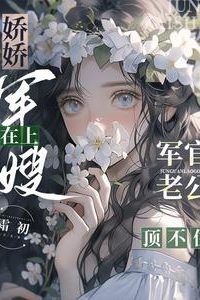
The Spoiled Military Wife Reigns Supreme, Her Officer Husband Can’t Take It
+Add to Custom List
Genres:
Novel Info
  • Author:
  • 霜初
  • Status:Ongoing

Summary

... Read More

Ye Muqi, a seven-star executive chef from the modern era, dies in a taxi accident and transmigrates into the body of a twenty-year-old girl in 1980s China. The original host, Ye Muqi, was a spoiled and naive daughter of a steel factory worker and a cotton mill employee. Desperate to marry a soldier named Rong Jingchen who had rejected her, she staged a scandalous public scene that ruined her reputation and forced him to agree to the marriage. When he returned to his military duties, she jumped into a river in despair after a year of his absence. Ye Muqi awakens in a hospital, learning that her husband is returning home soon. She discovers she possesses a supernatural supermarket space filled with modern ingredients and a spiritual water source, which she plans to use to build a new life.

Rong Jingchen arrives early with his mother, Yin Lan. Initially, he views his wife as a dramatic and shallow woman, but he is surprised by her sudden maturity and restraint. Ye Muqi, determined to avoid the original host’s mistakes, hides her true identity and culinary skills. She impresses the family by cooking an exquisite meal using ingredients from her space, shocking everyone who remembers her previous kitchen disasters. Rong Jingchen, feeling guilty for abandoning her and recognizing her efforts, invites her to join him at the military base in Beijing. Ye Muqi accepts, seeing it as an opportunity to escape her gossipy hometown and utilize her cooking talents in a larger city.

Conflict arises with Ye Huihui, Ye Muqi’s cousin, who harbors jealousy and hidden resentment. It is revealed that Ye Huihui pushed the original host into the river, not out of accident, but malice. Ye Muqi confronts her cousin, exposing the truth and throwing her out of her home. Ye Huihui attempts to sabotage the marriage by following Rong Jingchen and slandering Ye Muqi’s character, claiming she is incompetent and dramatic. Rong Jingchen firmly rejects her accusations, defending his wife’s honor and warning Ye Huihui never to speak ill of her again. Meanwhile, Yin Lan notices Ye Huihui’s suspicious behavior and discreetly informs Ye Muqi’s mother, Xia Ying, leading to a quiet family decision to cut ties with the toxic relative.

As Ye Muqi prepares to leave, her parents lovingly pack her belongings, unaware of her spatial abilities. She spends her remaining days cooking for her family and solidifying her relationship with Rong Jingchen. Their interactions grow more comfortable, with Rong Jingchen beginning to appreciate her competence and kindness. The story concludes with Ye Muqi ready to depart for the military district, leaving behind her past trauma and the jealous cousin, while Rong Jingchen looks forward to building a genuine partnership with her. The narrative sets the stage for her rise in the military community through her culinary skills and her evolving marriage.

Latest Release
DateGroupRelease
2026-08-11shanghai fantasy c45
2026-08-11shanghai fantasy c44
2026-08-11shanghai fantasy c43
2026-08-11shanghai fantasy c42
2026-08-11shanghai fantasy c41
2026-08-11shanghai fantasy c40
2026-08-11shanghai fantasy c39
2026-08-11shanghai fantasy c38
2026-08-11shanghai fantasy c37
2026-08-11shanghai fantasy c36
2026-08-11shanghai fantasy c35
2026-08-11shanghai fantasy c34

Community Reviews

Rating(3.8 / 5.0, 9votes)
5 stars
2(22%)
4 stars
3(33%)
3 stars
4(44%)
2 stars
0(0%)
1 stars
0(0%)

Popular reviews

... Read More
What I love about this section is how the stakes keep escalating without a single raised voice. On the surface level, the conflict is simple: will these two actually make this marriage work or not? But the author layers so many smaller conflicts on top of it. Ye Huihui is a living, breathing threat—not because she's dangerous, but because her jealousy is unpredictable and she's already shown she's capable of causing harm (the river incident is looming in the background). Every time she appears in these chapters, there's this underlying tension that something could snap. Then there's the social stakes. The whole town knows about the divorce rumors. If Ye Muqi and Rong Jingchen actually do divorce, it's not just a personal failure—it's public. The gossiping neighbors, the factory workers, everyone has an opinion. And Xia Ying weaponizes this by loudly announcing to everyone she meets that her daughter is going to the military district with her son-in-law. That's not just pride—that's a strategic move to shut down the divorce narrative before it can gain traction. The internal conflicts are where it really gets interesting though. Rong Jingchen is fighting his own expectations—he came back prepared for a tantrum and got a calm, competent wife instead. That dissonance has to be unsettling for someone who's spent months convinced their marriage is failing. And Ye Muqi is dealing with the imposter syndrome of being a seven-star chef in a body that apparently once burned down a kitchen. Every interaction is a tightrope walk for both of them. The military district trip is the next major pressure cooker, and I am genuinely anxious about what's going to happen when they're alone together for an extended period. The stakes feel real because everyone has something to lose—reputation, relationship, self-image. And the author hasn't rushed any of it. They're letting the tension build naturally, which is honestly rare.
... Read More
I need to talk about how this whole batch just flies by. You start with this domestic, almost slice-of-life scene—cooking noodles, shower timing, a little awkward marital tension—and then suddenly you're walking through Beijing streets, meeting neighbors, visiting a shop, and by the end an old lady collapses in a breakfast restaurant. The transition from the house to the next morning is seamless. No jarring chapter breaks that make you go wait, what just happened. Ye Muqi wakes up, Rong Jingchen is already gone, she explores, meets the military wives, walks to the shop, heads to the city. It's like the author knows exactly when to keep things moving and when to slow down. The pacing in the city exploration section is particularly well done. She's not just walking around for no reason—every stop serves a purpose. The clothing shop establishes the economic reality (3.50 yuan for one outfit?!), the street market shows her entrepreneurial brain kicking in, and then the breakfast shop scene shifts the whole tone. What really works is how the author doesn't rush the old woman's collapse. It builds naturally—Ye Muqi enters, notices the shop is empty, sees the old woman wiping tables, notices she looks unsteady, and THEN she falls. The tension creeps up slowly instead of hitting you out of nowhere. The only thing I'd say is that the military compound exploration section could have been slightly tighter, but honestly, the world-building matters here. You need to feel how isolated and self-contained this compound is before Ye Muqi ventures into the bigger city.
... Read More
I need to talk about the breakfast shop scene because it completely shifted the energy. One moment you're reading about a woman browsing clothes and thinking about opening a stall, and the next—old lady collapses. My heart actually dropped. What makes this work so well is the stakes feel immediate and real. Ye Muqi isn't a doctor. She's making a judgment call—low blood sugar, not a heart attack, right?—and she has to act fast with whatever she has. The chocolate from her space becomes this crucial lifeline, and for a few paragraphs there, you're genuinely wondering if the old woman is going to be okay. "Hypoglycemia might seem mi..." and the chapter cuts off right there. Of course it does. The author knows exactly how to leave you hanging. But beyond that immediate tension, there's this underlying conflict about survival in this era. The old woman is working alone, skipping meals, barely holding on. Ye Muqi is planning to start a business with limited capital in a competitive environment. Even her romantic life has low-key stakes—she's navigating a marriage with a man who's clearly devoted but whose world (military life, base duties) keeps pulling him away. The gossip about her being ugly is another thread of social conflict simmering in the background. People in the compound already have opinions about her, and she has to prove herself without making a scene. It's all these small, daily stakes that add up to something really compelling. I'm now desperately waiting to see what happens next with that old woman and whether Ye Muqi will end up running that breakfast shop after all.
... Read More
"You're my wife." How could he let his wife pay? What would people think of him? I literally screamed when I read this. This man is so aggressively traditional it's almost comedic but also kind of endearing? Like, the author has built this character who seems cold and distant on the surface but every single action reveals he's actually… paying attention? He noticed that Ye Muqi's cooking changed. He watched her compare tomatoes. He's been quietly processing this new version of his wife while pretending nothing is different. And Ye Muqi is honestly so much more interesting than the original host. The seven-star chef energy she brings to a simple soy sauce shopping trip is hilarious. She's treating this like a professional ingredient research mission while Rong Jingchen is over there just confused about why soy sauce has different flavors. The contrast is gold. But what really got me is the Ye Huihui character. She's not even a proper antagonist—she's just this sad, cramping, jealous mess trailing behind them like a ghost. The scene where she watches them walk home in the sunlight and thinks they look like a good match, then immediately snaps out of it because her pride won't let her admit it? That's not a villain. That's someone who's genuinely lost and doesn't know how to process it. The mother-in-law dynamic is also surprisingly healthy. Yin Lan is clearly rooting for them, orchestrating situations where they have to interact, and when Ye Muqi actually cooks well, she's genuinely delighted rather than competitive. That's rare in these kinds of stories. Most MILs are either villains or obstacles, but Yin Lan is just… a mom who wants her son to be happy and happens to be a little schemy about it.
... Read More
I need to talk about the family moments because they are where this book actually lives. Not the romance—though that's building nicely—but the family warmth that surrounds it. Xia Ying making that five-page packing list. Five. Pages. The woman clearly wants to go herself but instead is channeling all that maternal energy into preparing her daughter for a trip she can't take. And Ye Muqi's reaction—she could tell her mom it's unnecessary, she could roll her eyes, but she just sighs and says 'Alright then.' Because she understands. That's not the original host's personality at all, and that's what makes the transmigration so effective. The new Ye Muqi sees her mother's love and chooses to receive it gracefully instead of fighting it. Then there's the scene with Lin Yanhong. She's covered in construction dust, feeling inferior next to Xia Ying who's all bright and radiant with her shopping bags, but Xia Ying doesn't flinch. She greets her warmly, notices her concern is genuine about Ye Muqi, and just… connects. No drama, no passive aggression. Just two women being honest with each other. And then Lin Yanhong going home and telling her family the news with genuine happiness? That's the kind of wholesome community energy that makes you want to live in this town. But the emotional peak for me was Ye Huihui's perspective. The physical pain mixing with her emotional pain, the jealousy she can't control, the way she slams her chopsticks down and storms off. It's pathetic and it's painful and you kind of understand why she's like this even as you watch her make herself miserable. The author isn't giving us a cartoon villain—they're giving us a person who's hurting and taking it out on the wrong target.
... Read More
There's this line that hit me hard: "Sure enough, in every era, it's easiest to make money off women and children!" And it's not just a casual observation—it's the thesis statement for everything Ye Muqi is about to do. The whole chapter is really about women finding their place and power in a constrained society. Ye Muqi arrives in this military compound where everyone knows everyone, where gossip travels fast (remember, people already think she's ugly), and instead of shrinking away, she starts mapping out her future. She's assessing the market, calculating costs, thinking about where to set up shop. The old woman in the breakfast shop is another layer to this. She's alone, she's working past breakfast hours, she's skipping meals because running a small business leaves no time for anything else. There's something almost prophetic about Ye Muqi finding her right then—like the universe is showing her what happens when you don't plan ahead. And the chocolate scene! Ye Muqi pulls out chocolate from her secret space to save the old woman. This tiny moment connects everything—her hidden resources, her compassion, her awareness that this era is hard on ordinary people, especially women who are trying to survive on their own. The military compound itself is symbolic too. It's a world within a world—insulated, traditional, governed by its own rules. Ye Muqi is an outsider entering this space, and her journey from not knowing where the front gate is to confidently walking through Beijing streets mirrors her larger arc of finding belonging and independence simultaneously.
See all reviews

Characters

See all characters

Custom lists

See all custom Lists