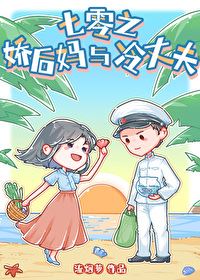
The Soft Stepmother and Her Cold Husband (70s)
+Add to Custom List
Genres:
Novel Info

Summary

... Read More

Su Ting, a twenty-eight-year-old office worker and freelance comic artist in the twenty-first century, dies after falling asleep in a taxi following an exhausting overtime shift. She awakens in the body of Yuanshen, a twenty-year-old woman in 1974 China, who has just married He Dongchuan, a battalion commander stationed on Pingchuan Island. Yuanshen is a widow with a six-year-old stepson, He Yan, and her marriage was the result of a manipulative scheme where she faked drowning to force He Dongchuan into wedlock. Although He Dongchuan provided financially, he remained emotionally distant, and Yuanshen’s obsessive pursuit of his affection eventually curdled into resentment, which she later took out on He Yan. This abuse warped the boy’s character, leading to a tragic future where he imprisoned his stepmother after her husband’s death. Su Ting, aware of this original plot from a novel she read, resolves to alter the timeline by treating He Yan with genuine kindness and maintaining emotional distance from He Dongchuan.

Upon transmigration, Su Ting initially struggles with despair over losing her modern life, but she quickly adapts by leveraging her knowledge of the era’s impending reforms and her new identity’s financial assets. She possesses over a thousand yuan in savings and valuable ration tickets, a significant fortune in the 1970s. Rather than wallowing, she begins to spend strategically on household goods and snacks, aiming to build a comfortable life. Her first major interaction with He Yan involves a trip to the Supply and Marketing Cooperative, where she purchases enameled basins and soap to establish hygiene boundaries, and later shares bananas with him, breaking his defensive exterior. She also confronts Yu Hongzhi, a malicious neighbor who had previously sown discord between Yuanshen and He Yan, by warning the boy about her manipulations before Yu Hongzhi can act.

Su Ting’s primary goal is survival and avoiding the tragic fate of the original character. She recognizes that her marriage to He Dongchuan is loveless and plans to divorce him once the political climate allows, likely after the Cultural Revolution ends and college entrance exams are reinstated. To secure her independence, she decides to return to her former profession as a comic artist. She travels to the city alone to buy drawing supplies and study popular comic magazines at the Xinhua Bookstore, facing rude salespeople but persisting in her quest. She invites He Yan to accompany her on future trips, carefully rebuilding trust after accidentally frightening him by mentioning Yu Hongzhi’s suggestion to abandon him. He Yan, initially guarded and suspicious, begins to soften as Su Ting demonstrates consistent care and honesty, such as buying him snacks and explaining her actions logically.

The narrative explores the social dynamics of the military compound, where Su Ting interacts with other military wives like Qiao Yan and Chen Shaomei, gaining insight into the limited employment opportunities for women on the island. She observes the gossip and judgment directed at her by neighbors like Wang Lixia, who criticize her spending and perceived laziness. Despite these social pressures, Su Ting remains focused on her long-term plan: to raise He Yan well, ensure his future success, and eventually secure her own freedom through creative work and potential higher education. The story sets the stage for Su Ting to navigate the challenges of the 1970s while rewriting the destiny of the male protagonist, He Yan, from a vengeful prisoner to a well-adjusted individual, all while maintaining her own autonomy in a restrictive era.

Latest Release
DateGroupRelease
2026-08-11shanghai fantasy c58
2026-08-11shanghai fantasy c57
2026-08-11shanghai fantasy c56
2026-08-11shanghai fantasy c55
2026-08-11shanghai fantasy c54
2026-08-11shanghai fantasy c53
2026-08-11shanghai fantasy c52
2026-08-11shanghai fantasy c51
2026-08-11shanghai fantasy c50
2026-08-11shanghai fantasy c49
2026-08-11shanghai fantasy c48
2026-08-11shanghai fantasy c47

Community Reviews

Rating(3.7 / 5.0, 41votes)
5 stars
12(29%)
4 stars
9(22%)
3 stars
15(37%)
2 stars
5(12%)
1 stars
0(0%)

Popular reviews

... Read More
The pacing in this batch is honestly impeccable and I need to explain why. We open with Su Ting doing something that seems like filler—going shopping at the Supply and Marketing Cooperative. But it's not filler at all. It establishes her new philosophy in action. She's spent her life saving for a house she barely lived in, and now she's buying bananas at three cents a pound and not feeling guilty about it. This scene does so much character work in so few paragraphs. Then we cut to dinner, and the pacing slows down for this quiet, almost domestic moment with He Yan. The banana scene has this gentle rhythm—Su Ting offering, He Yan refusing, Su Ting insisting, him finally trying it, eating three of them secretly. It's unhurried and warm. And then—bam—we get the dream sequence. This is where the author could have dragged, but instead the dream does double duty: it's funny (her becoming a balloon and popping) and it reveals her deepest fear about this new life—that she'll just waste it. Then the next morning hits fast. He Yan knocking, her getting ready, the wardrobe details, the hair braiding. And just as we're settling into this cozy rhythm, Chapter 5 drops us into the canteen and Yu Hongzhi appears. The transition is seamless because the canteen was already established as where Su Ting plans to eat. The author never lets us get too comfortable before introducing the next threat. That's skilled pacing. The tension builds without ever feeling rushed.
... Read More
Okay, so this opening bit about the rice is actually genius plot setup. He Dongchuan drops this line about the rice being coarser than the canteen's, and it's clearly a test — he's probing whether she's really the same person. And Su Ting's response? She doesn't even try to play along. She just... owns it. Like, her whole philosophy of 'I transmigrated, the original person is gone, I'm not pretending to be someone else' is such a sharp turn from what I expected from this genre. Usually the transmigrator is either trying to blend in or slowly revealing themselves. Here, she's just like 'nope, I'm not eating this rice and here's why.' The tension between them is building so naturally too — he's suspicious, she's hiding the truth but refusing to fake a personality. And then the haircut scene? That's a visual plot beat that does double duty. He goes from scruffy to handsome, and it's not just description for description's sake — it's the moment the power dynamic shifts. She can't deny attraction anymore. I kept re-reading that part where she thinks 'Danger!' and I just laughed out loud. The author is playing with us, making us root for this awkward, honest couple instead of the usual dramatic misunderstandings.
... Read More
There's this one line that keeps haunting me: 'Being unable to eat what she wanted or having to force herself to eat things she didn't want would be pure suffering.' It's about rice, sure, but it's really about authenticity. Su Ting is transmigration-adjacent to the concept of the 'original person' — she arrived, and 'the original person ceased to exist.' That's such a clean, almost philosophical statement about identity. She refuses to perform the role the book assigned her, and the rice is just the first tiny rebellion. Then there's the beard. He Dongchuan shaves it off and literally transforms — not physically, he was always handsome, but Su Ting couldn't see it through the beard. The beard was a mask, and when it's gone, she's forced to confront her own attraction. Meanwhile He Yan calls Su Ting 'Mom' for the first time, which is another kind of transformation — not cosmetic, but emotional. The whole story seems to be asking: what happens when people stop performing and start being real? The military wives envying Su Ting because her husband is handsome — that's surface-level desire. But Su Ting's internal war about whether she can 'resist temptation over the next three years' — that's the real theme. She's not just fighting attraction, she's fighting the script the novel wants her to follow.
... Read More
The dialogue in this section is deceptively simple. On the surface it's just family conversations about food and cooking. But the subtext? The subtext is EVERYTHING. Let's talk about He Yan first, because this kid is a NATIONAL TREASURE. His conversation with He Dongchuan about why asking 'do you miss me' would scare Mom is the most innocent yet profound exchange in the entire chapter. He Yan doesn't understand adult embarrassment. He doesn't get why his mom would be 'scared' to ask something so simple. And He Dongchuan—this tough military man—can't even explain it. He just says 'you'll learn it eventually.' The father and son sharing this moment of not-understanding a woman's feelings is genuinely funny and sweet. Then there's Su Ting's dialogue with He Dongchuan about the food. 'It's fine.' 'You ate less today than yesterday.' 'But I ate more than before.' This is two people who used to communicate through performance and now communicate through... facts. Direct, almost clinical observations that somehow carry more warmth than any grand declaration ever could. The narrative voice itself is doing something really interesting here. It's close to Su Ting's perspective but not trapped in it. We get her thoughts about her knife skills being criticized, her corporate-thickened skin helping her withstand the humiliation, her daydreaming about applying for a vegetable cutter position at a State-Owned Restaurant. The humor is dry, self-deprecating, very modern despite the period setting. And He Dongchuan's internal monologue—'Was he really unnecessary here?'—delivered with that signature neutral expression. The contrast between what he thinks and what he says is where the character's depth lives. He never says 'I'm happy you're not desperately in love with me anymore.' He just cooks dinner.
... Read More
I need to talk about He Yan and He Dongchuan's bedtime conversation because it absolutely wrecked me. The whole setup — He Yan secretly peeking out the window when neighbor kids played, pretending he didn't miss his dad anymore because he was 'too disappointed' — this kid is carrying so much emotional weight and the author doesn't even need to spell it out. And then He Dongchuan, this stoic military man, sitting on the edge of the bed asking 'what changed?' and He Yan just whispers 'I think Mom has started to like me.' I literally gasped. Not because it's dramatic, but because it's so honest. This kid just wants his family to be happy, and he's the only one who's noticed Su Ting actually changing for the better. The mother's subplot with Chen Xiaoman pushing for He Yan to come to Pingchuan Island adds so much depth too — she understands her son well enough to know that 'as long as Su Ting treats He Yan well, he couldn't remain indifferent forever.' That's not just plot machinery, that's genuine emotional intelligence from a mother who's been watching her son suffer in silence. And Su Ting? She's just... trying. She doesn't know how to be a wife or a mother figure, but she's not faking it either. The CP chemistry is building so slowly and naturally, and I'm already obsessed.
... Read More
There are two symbols in this batch that keep circling back and I can't stop thinking about them. The first is the banana. On the surface it's just a fruit He Yan has never tasted—a luxury item from the south that represents the relative abundance of island life compared to the capital. But it's also a test. Every time Su Ting offers He Yan a banana, she's offering connection. And every time he accepts it, even reluctantly, he's accepting her. The locked cabinet is interesting too—it's boundary-setting, yes, but it's also protection. She's protecting him from himself, from overeating, but she's also creating a system of trust where he knows he'll get one in the morning. The second symbol is the dream sequence, specifically the balloon. Su Ting inflates like a balloon and pops against the ceiling. What is this saying about her fears? She's worried that this second chance at life will just make her lazy, that she'll gain weight—literally and metaphorically—by doing nothing. The modern life she dreamed of (eating, sleeping, watching TV) becomes a nightmare of stagnation. But here's the thing: the dream is wrong. She's not stagnating. She's shopping, she's interacting with He Yan, she's planning her days. The balloon pop is her anxiety speaking, not reality. And then there's the dressing table she hits her head on—another symbol of bumping into the rough edges of this new world. She's adjusting, literally and figuratively. The recurring theme beneath all of this is about letting go. Letting go of frugality, letting go of the need to win someone over, letting go of the original owner's mistakes. "Who knew which would come first, an unexpected event or tomorrow?" That line is the thesis statement of the whole book, isn't it?
See all reviews

Characters

See all characters

Custom lists

See all custom Lists