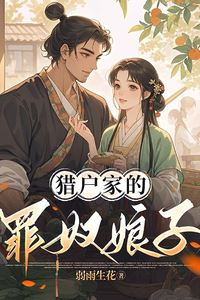
I need to discuss the dialogue in these chapters because the way characters speak reveals everything about who they are, and the author is not holding back.
Let me start with Madam Qin. Her dialogue is absolutely perfect. "You're nothing but a bought slave, and you dare block your master's mother?" This line does so much work. It establishes her class consciousness, her entitlement, her complete inability to see Qinghe as a human being. And then: "If you don't, I'll tell my son to sell you." The threat is casual, almost bored. She doesn't need to raise her voice because she's used to getting what she wants. Her dialogue voice is sharp, dismissive, and deeply racist in its assumption that a convict slave has no right to exist in her son's space.
But the most interesting dialogue comes from Qinghe. When she speaks to Madam Qin, she's polite to the point of being dangerous. "Auntie, I've only just arrived and don't know you personally. If you need to take something, it would be best to wait until he returns." She's using courtesy as a weapon. Every word is carefully chosen to sound respectful while actually blocking her entry. This is the dialogue of someone who has spent their entire life navigating dangerous social situations. She knows exactly how to speak to a superior without showing fear.
And then there's Qin Xiao. His dialogue is sparse but devastating. "Mother, what exactly are you doing? What has my Qinghe done to offend you?" The way he says her name—"my Qinghe"—is a claim, a declaration, a boundary. He's not asking why she hit Qinghe. He's asking why she hit HIS Qinghe. The possessive pronoun changes everything.
His line to Madam Qin about the red envelope and the change of address is dialogue gold. "As for serving tea, that's a custom for daughters-in-law. Mother, have you prepared the red envelope and the change of address that come with accepting one?" This is him turning her own logic against her. She's demanding traditional respect? Fine. Let's talk about the traditional requirements for that respect. The dialogue is witty, sharp, and deeply satisfying. I laughed out loud.
The most powerful dialogue moment is probably the quietest. Qinghe says to Qin Xiao: "I'm sorry. I upset your mother and caused an argument between you." And his response: "There's no need to mind her. What you did today was exactly right." Six words. Six simple words that validate everything she did, everything she is, everything she's been through. He's not just saying she was right. He's saying he sees her. He heard her. He approves of her.
The narrative voice also deserves praise. The author uses free indirect discourse beautifully—blending Qinghe's thoughts with the narration so seamlessly that we're inside her head without any clumsy tags. When she thinks "Perhaps that was for the best" about him not touching her, we feel her relief and her confusion simultaneously. The narrative voice is intimate, observant, and emotionally precise.
One dialogue technique I want to highlight is the use of silence. Qin Xiao doesn't speak much during the confrontation, but when he does, it lands. The author understands that what characters DON'T say is often more powerful than what they do. His silence before appearing, his silence after catching his mother's wrist, his silence when giving Qinghe the pheasants—these moments of wordless communication speak volumes about his character and his relationship with Qinghe.