Summary

... Read More
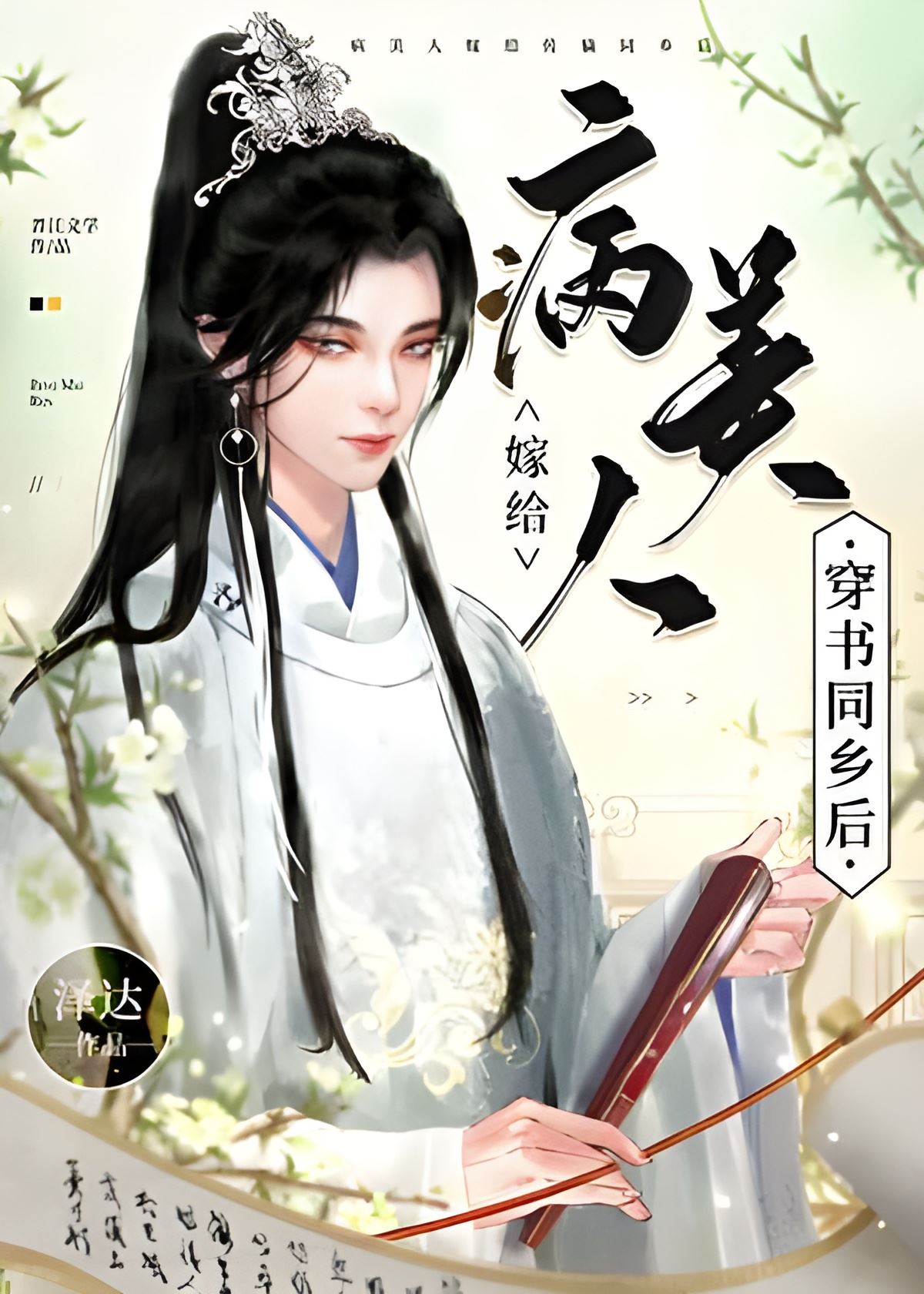
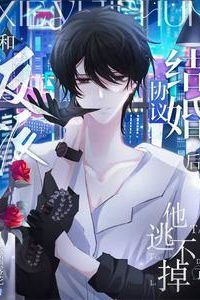
Shen Ziqin is a twenty-one-year-old modern corporate worker who transmigrates into the body of a sickly young heir in the Great Qi Dynasty. The original character was a marginalized figure in a noble household, bullied by his stepmother Madam Luo and half-brother Shen Minghong, who scheme to strip him of his title. The Marquis of Yin Nan secures an imperial edict marrying Shen Ziqin to Prince Qin, Chu Zhao, a powerful but politically disgraced general. This marriage is a calculated move by the Marquis: since taking a male main consort forfeits succession rights, Shen Ziqin will lose his heir status, allowing Shen Minghong to inherit the title.Unlike the original character, the transmigrated Shen Ziqin remains calm and sharp-tongued. He quickly recognizes that Prince Qin is also a victim of the Emperor’s political maneuvering. The Emperor spreads rumors of Chu Zhao’s cruelty to undermine his reputation, using the marriage to neutralize a military threat while simultaneously forcing Chu Zhao to relinquish his claim to the throne. Shen Ziqin decides to accept his fate pragmatically, focusing on maintaining a low profile and avoiding the consummation of the marriage to preserve his independence.During a rare outing, Shen Ziqin discovers that Great Qi possesses advanced technology, including rubber goods and syringes, hinting at a previous transmigrator who lived as a divine doctor. Upon returning home, he is visited by Chu Zhao, who has come to inspect his future spouse. Chu Zhao, perceptive and courteous, confronts the Marquis and Madam Luo on behalf of Shen Ziqin, exposing their neglect and asserting his authority. The two men establish a mutual alliance based on shared political vulnerability and a desire for a peaceful existence. Chu Zhao proposes a marriage of convenience, promising Shen Ziqin material comfort and protection in exchange for loyalty if he ever gains imperial favor. Shen Ziqin agrees, relieved by the prince’s straightforwardness.At a flower-viewing banquet hosted by Duke Dingguo, Shen Ziqin and Chu Zhao interact with other key figures, including the frivolous Third Prince Chu Jinxu, the talented artist Zhou Danmo, and the novel’s original protagonist, Bai Junxing. Shen Ziqin finds himself unexpectedly drawn to Bai Junxing’s brilliance and virtue, though he attributes this admiration to professional respect rather than romantic interest. Chu Zhao misinterprets Shen Ziqin’s fascination as romantic attraction and offers support, unaware of the transgressive nature of his ally’s feelings. The chapter ends with the couple navigating social expectations, united by a secret pact while publicly maintaining the facade of a political arrangement.
Latest Release
DateGroupRelease
2026-09-26knoxt c86
2026-09-26knoxt c85
2026-09-26knoxt c84
2026-09-26knoxt c83
2026-09-26knoxt c82
2026-09-26knoxt c81
2026-09-26knoxt c80
2026-09-26knoxt c79
2026-09-26knoxt c78
2026-09-26knoxt c77
2026-09-26knoxt c76
2026-09-26knoxt c75

Community Reviews

Rating(4 / 5.0, 350votes)
5 stars
119(34%)
4 stars
112(32%)
3 stars
119(34%)
2 stars
0(0%)
1 stars
0(0%)

Popular reviews

... Read More
This is the kind of scene that makes you forget to breathe. Chu Zhao is standing at the base of Yuzhou's walls with thousands of troops behind him, but the reader knows something crucial he doesn't want anyone to know: he has no tiger tally. He CANNOT summon reinforcements. If Cao calls his bluff and refuses, Chu Zhao is literally bluffing with empty threats and maybe a few hundred men against a fortified city. The stakes are literally life and death, and the author makes you feel every second of that uncertainty. What's terrifying is how calm Chu Zhao appears. "Having reached Yuzhou, the hot blood from the long journey gradually cooled, and his emotions settled considerably." He's playing the long game, masking desperation with imperial authority, and the prose keeps emphasizing how small his actual force is compared to what he's claiming. The garrison commander is there but presumably not fully loyal. Magistrate Cao has held this position for years—he knows the terrain, the defenses, the people. And yet Chu Zhao wins. Not through force, but through superior information and psychological warfare. He KNOWS the consort and princess aren't at the estate. He KNOWS Cao is already panicking. He uses Cao's own paranoia against him. The moment that sealed it for me was when the subordinate runs up gasping: "P-Prince Qin's consort and the princess aren't at the estate at all!" That single line destroys Cao's entire strategy. Without hostages, without leverage, without justification—he's exposed. His hands and feet go cold. His years of careful positioning mean nothing. And then Chu Zhao, who has been perfectly composed the entire confrontation, orders arrests like he's been expecting this outcome all along. The question that haunts me: did Chu Zhao know the conspirators were in Yuzhou before he arrived, or did he deduce it from the evidence? Either way, the tension never drops. It only tightens. The narrative holds its breath from the first horse approaching the gates to the last official being pointed at for arrest, and I swear I was reading in one continuous exhale.

... Read More
Let me just say this out loud: the narrative voice in this passage is absolutely lethal. Not the dialogue between characters—I'm talking about the NARRATOR'S voice. The way the author writes outside of character speech is pure comedy writing, and it deserves its own category of appreciation. Consider these gems: "Sunlight broke through the clouds, but it couldn't illuminate the guards' defeated hearts. It could only pass through the windows to brighten others." What. A. Line. This is lyrical prose deployed as a comedic weapon. The guards' hopes are dead, and the author gives us a full poetic sentence about sunlight before casually dropping the punchline. This is the narrative equivalent of a comedian setting up a joke with elaborate stage direction before delivering the one-liner. And the guards' dialogue? Perfectly calibrated to their intelligence level. "Huh?" "N-nothing happened?" "I'm not deaf, am I?" These aren't deep philosophical questions—they're the exact way bickering coworkers talk when their expectations get crushed. The repetition of "Hmm?" from different guards is almost musical in its absurdity. But the real voice work happens in Hei Ying's rationalization: "Perhaps the sounds were too quiet... On their wedding night, the prince and marquis deliberately made more noise so the eunuchs by the door could hear clearly. Last night they didn't need to put on a show, so they might have finished very gently." This is logic so beautifully flawed that it's impressive. The guards go from absolute defeat to renewed hope in approximately four sentences because one person reframed the evidence. That's not just funny—it's a commentary on how desperately people want certain outcomes to be true. The author's voice here has this wonderful range: it can be genuinely poetic, deadpan observational, and full-on farce, all within the same passage. That's skill.
... Read More
Okay so let me just say—the transition from morning comedy into that nightmare sequence was NOT prepared for. One second we're dealing with Chu Zhao finding an inappropriate storybook in the carriage (funny, lighthearted stuff), and then suddenly Shen Ziqin's dreaming about his gambler father from the modern world and the tone just PLUMMETS. Like, I was chuckling at Zhou Danmo getting the silent treatment and then BAM, emotional damage. What I love about how this plot twist is handled is that it's not some random scary moment—it's deeply tied to who Shen Ziqin actually is. The author didn't need to dump exposition about his backstory. We learn about the abuse, the liquor bottle scene when he was ten, the neighbors helping him pay school fees—all through the nightmare itself. That's efficient storytelling. The gambling father gripping him in the dream while wearing a short-sleeved shirt in an ancient palace? That visual contradiction screamed 'this is trauma from another life bleeding through' without any heavy-handed explanation. And then the wake-up—Chu Zhao calling him gently, the cold sweat, the question 'Nightmare?' and Shen Ziqin's body finally relaxing because it was real. The relief I felt? Off the charts. Also, the fact that Shen Ziqin's first instinct upon waking was to push away the memory and pretend nothing happened? That tells you SO much about his character without a single line of narration about it. The only thing I'd say is that the cliffhanger ending ('He'd only g...') left me slightly frustrated, but I also understand why—the pacing works better when we don't get a full resolution of the nightmare right away. It hangs over the next chapters.
... Read More
Can we just stop and appreciate the absolute domestic fluff in this chapter because I am not okay. Chu Zhao showing up to supervise Shen Ziqin's bedtime is already peak couple energy, but then Shen Ziqin finishes his book, stretches out completely relaxed, sleeve slips down revealing his pale arm, and Chu Zhao has been WATCHING him the entire time. THE AUDACITY. I literally gasped. This is the kind of quiet, intimate moment that hits different—no grand confessions, no dramatic declarations, just one person watching another person feel safe enough to fully relax. And Shen Ziqin's reaction! The immediate drop of his hand, sitting up straight like nothing happened—that's not just embarrassment, that's someone who's been hurt before and doesn't know how to process tenderness without getting flustered. Meanwhile Dongning just walks into this conversation and immediately senses the vibe shift, excuses himself. The guy's got survival instincts. "This conversation had definitely moved beyond what a child should be hearing!" — I cannot with this side character providing commentary. Also the whole dynamic with Xiao Zhen smiling his two-layered smile while watching his young master get supervised? The man is thriving. Shen Ziqin internal screaming while outwardly being all proper and polite is my favorite flavor of comedy.
... Read More
I have to talk about this scene with Lord Cui because it is honestly one of the most human moments I have read in a long time. The father-son dynamic between Lord Cui and Cui Qingshan is layered in ways that go beyond just "spoiled brat gets punished." Lord Cui comes across as both ridiculous and genuinely sympathetic, which is a rare balance to strike. What struck me most is how Shen Ziqin handles him. That moment where Shen Ziqin finishes his tea and just... sits there in silence while Lord Cui panics is masterful character work. He is not cruel, exactly, but he is absolutely unyielding. And when Lord Cui keeps using the "he is just a child" excuse, Shen Ziqin literally points at himself and says I am twenty-one, then points at Dongning and says he is six, and asks how old your son is. The author does not need to say more because the reader gets it immediately. Cui Qingshan is twenty-six years old. The audacity of calling him a child is almost impressive in its incompetence. But here is what I found even more interesting: Lord Cui is not entirely wrong about parental love. When he says in every parent eyes their children are always children no matter their age, there is a genuine ache behind those words. He truly loves his son. He has spent the whole day running between officials, offering bribes, getting rejected, and now he is desperate. The tragedy is that his desperation makes him look even more foolish, which only compounds his son's situation. And Shen Ziqin, who pretends to be physically unwell as an excuse to dismiss Lord Cui, is revealing himself as someone who understands political theater completely. He uses illness as a shield and a weapon simultaneously. The author shows us that Shen Ziqin is not just intelligent but also strategically manipulative in ways that go beyond simple cleverness. He knows exactly how to make Lord Cui feel powerless without ever raising his voice. The relationship between Shen Ziqin and Dongning is also worth noting. Dongning genuinely cares for him, worrying about whether he should call the imperial physician. It shows that despite everything, there is real warmth in this household, even if it exists alongside calculation and political maneuvering.
... Read More
The dialogue in these chapters is a masterclass in what's NOT said. Chu Zhao: "I'm just giving you a gift, it doesn't mean anything else, don't overthink it." Shen Ziqin's actual response: "Hm? I wasn't overthinking at all." The gap between those two moments is where the entire romance lives. Shen Ziqin genuinely doesn't get it. He takes the words at face value and chirps back with polite gratitude while Chu Zhao's soul briefly leaves his body. But then there's the stuff that IS said, and it lands so much harder because of everything underneath it. When Shen Ziqin explains why he acted without consulting Chu Zhao—"I was afraid you'd think my methods were too ruthless and vindictive"—that's not just plot exposition. That's a man telling his prince, in the most honest way he knows how, that he values his judgment above all else. And Chu Zhao's reply is barely two sentences: "There you have it." But the subtext is an ocean. It's validation, it's intimacy, it's the quiet understanding that they're the same kind of monster working toward the same goal. The narrative voice itself is also doing a lot of work here. It slips into Chu Zhao's head so seamlessly that you forget it's third-person limited. His internal commentary—"The prince treats me well-out of sincere regard for his strategist. I get it, I do!"—reads like someone narrating their own delusion in real time, and it's HILARIOUS.
See all reviews

Custom lists

See all custom Lists