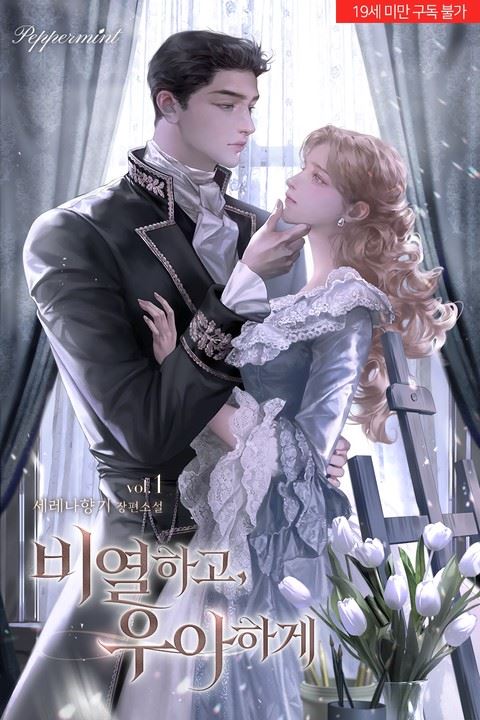
The Secret of the Playboy Prince
Novel Info
  • Author:
  • Status:Ongoing

Summary

... Read More
Belnez Adraena, a lower noblewoman from the rural province of Flerosa, relocates to the imperial capital of Kraem with the primary objective of securing a advantageous marriage to cement her family's social standing. She enters a four-year relationship with Ramon Matias, a capital noble, though the union is characterized by emotional distance, unilateral effort on Belnez's part, and eventual infidelity. Following the discovery of Ramon's affair, Belnez ends the relationship and attends a performance at the Concertratium opera house alone. During the intermission, she encounters Prince Erpesto Hasmin Bechenia, the empire's second prince, who is widely recognized as a notorious libertine and playboy despite his former reputation as a prodigious genius. Initially intending to reject his invitation to dinner, Belnez changes her mind, driven by a desire to indulge in hedonistic escape rather than return to loneliness after her breakup.The two proceed to a luxury hotel restaurant, where Erpesto, using the alias Ermin Hapestto, displays extensive knowledge of Belnez's hometown, creating a sense of genuine connection. Following the meal, they retire to a hotel room. Belnez initiates a physical encounter, expecting a transient and purely sexual interaction based on Erpesto's public reputation. However, the experience is intense and emotionally resonant for both parties. The次日 morning, Belnez departs without explanation, returning to Flerosa to live a quiet life away from the capital. She struggles with guilt and confusion, having developed feelings for Erpesto despite knowing his nature, and confides in her childhood friend Lotte about her distress regarding the playboy who captured her attention.Days later, while Belnez is sitting by the Celeste River, Erpesto unexpectedly appears in her rural hometown. He reveals that he overheard her conversation with Lotte, in which Belnez expressed a desire to find a kind, honest country man to marry. Erpesto offers to change his lifestyle, learn farming, and relocate to Flerosa permanently to win her affection. Belnez rejects this proposal, clarifying that she values emotional connection over physical intimacy and does not wish to continue a hollow relationship. She confesses that she likes him but cannot trust his reputation as a serial womanizer. Erpesto counters this by asserting that he fell in love with her at first sight and seeks a serious, marital relationship rather than a casual affair. The story concludes with Erpesto demanding to know why Belnez finds it impossible to accept his declaration, highlighting the fundamental conflict between his established public persona and his genuine, albeit unproven, devotion to her.

Latest Release
DateGroupRelease
2026-10-03dusk blossoms c14
2026-10-03dusk blossoms c13
2026-10-03dusk blossoms c12
2026-10-03dusk blossoms c11
2026-10-03dusk blossoms c10
2026-10-03dusk blossoms c9
2026-10-03dusk blossoms c8
2026-10-03dusk blossoms c7
2026-10-03dusk blossoms c6
2026-10-03dusk blossoms c5
2026-10-03dusk blossoms c4
2026-10-03dusk blossoms c3

Community Reviews

Rating(0 / 5.0, 23votes)
5 stars
0(0%)
4 stars
0(0%)
3 stars
0(0%)
2 stars
0(0%)
1 stars
0(0%)

Popular reviews

... Read More
What if Erpesto had JUST stammered a little? What if he'd shown even a hint of nervousness instead of performing this flawlessly scripted romance? That question haunts me. The stakes here are SO layered. On the surface, it's a simple romantic conflict—will she believe he's sincere? But underneath, there's the entire political machinery: the succession crisis that forced Erpesto to become a playboy, the threat of Ramon scamming Belnez out of her dowry and potentially ruining her life, the weight of an empire resting on someone who might not be fit to rule. And the personal stakes? Erpesto had watched her from afar for two years, convinced he was in love, only to finally confess and accidentally scare her away because he was TOO GOOD at pretending. The tragedy of it! He spent all this time and emotional energy crafting the perfect approach and it backfired because perfection IS the problem. Every time he tried to protect her—stepping in to stop Ramon, lying to the court about the playboy rumors—he was making things harder for his own happiness. The tension in that carriage scene when he says "I hope my effort of coming all the way here was not in vain"—you can feel the actual fear in his voice, even though he's trying to sound playful. He was gambling everything on that moment. And thank god it paid off.
... Read More
Let's talk about Erpesto's dialogue because the author is playing this beautiful double game with him. On the surface, every word he speaks to Belnez is measured, polished, almost rehearsed. He asks about her hometown with this practiced warmth. He gives this speech about Flerosa trees and golden flowers that sounds like it came straight out of a guidebook. Even his name change to "Ermin Hapestto" and his offer to go by "Er" feels like he's constructed an entire persona. But then the wine hits and suddenly his dialogue breaks. He starts STUTTERING. His sentences fragment. He can barely form words when she kisses him. "Mi, Miss Belnez! Be... Belnez... Bel... Ah...!" And later, when he thinks she might actually want this for real, he goes from smooth operator to a man who can't string a coherent sentence together. The shift is so sharp it made me laugh out loud. "Come to think of it, I haven't even asked your name yet, Miss." - said with this gentle curiosity that feels so genuine, and then later we learn he memorized every fact about her entire hometown from a book. Which means some of his "spontaneous" warmth was probably researched, and some of it might actually be real. The man is so layered I can't tell where the performance ends and Erpesto begins. Belnez's internal voice though? Chef's kiss. Her dry, sarcastic commentary running parallel to these deeply romantic scenes is exactly the tone this book needs. 'Is sex really such a blessing, something to be so happy about?' I died.
... Read More
I need to talk about Belnez because this character is a total mess and I am HERE for it. Like, on the surface she's this refined noblewoman from the countryside who came to the capital to make connections. But dig deeper and she's been performing her entire relationship—not just pretending to like opera and horse racing, but literally pretending to enjoy physical intimacy with someone she found repulsive. "That bastard was so unimpressive that she couldn't even feel he was inside, yet he was unjustifiably confident." — THIS LINE. I actually had to stop reading and process this. The writer isn't shy about showing us exactly what Belnez endured for four years. She changed her appearance, studied trends she didn't care about, attended events she hated—all to maintain a relationship that was fundamentally empty. And the moment she meets Erpesto? Everything flips. She notices his golden hair "melted and poured out of pure gold," his sapphire eyes, those lips that are almost cruel in their beauty. The description goes on and on because the writer is showing us how Belnez's rational mind is being completely overpowered by attraction. It's terrifying and hot and completely human. But what really fascinates me is the power dynamic. Erpesto sits down, asks permission (which is surprisingly respectful), and immediately reads her emotional state. He notices she's upset, apologizes for his happiness, and when she insists she's fine, he picks up on her hesitation about saying no. This man is PERFORMING kindness while also being genuinely attentive. Is he manipulating her? Probably. Does it matter? Also probably not right now. The relationship between them is already charged with so many unspoken things. She knows his reputation. He doesn't seem to recognize her. She's vulnerable and lonely. He's confident and charming. And yet—when he offers his handkerchief and touches her hand, the description makes it feel almost sacred, not predatory. That's the writer's skill.
... Read More
I read through this and wow—the pacing is absolutely relentless in the best way. Let me walk through how the author controls the reader's heartbeat across these chapters. It starts slow but heavy. We open with Belnez already in crisis mode, teeth grinding, face twisted. The writer gives us just enough backstory about the breakup to understand the wound but not so much that we drown in exposition. We learn Ramon cheated, they were together four years, she made sacrifices, he was neglectful—it all comes through her internal monologue naturally, almost like she's processing it in real-time. Then—the entrance. Erpesto walks in and the pacing SHIFTS. Suddenly there's dialogue, movement, tension. The author uses short, punchy exchanges between them that accelerate the scene. "Excuse me, Miss." "Ah, yes." "Please, have a seat." Each line lands like a beat in a song. But here's where the pacing gets really clever: the opera itself. The writer uses the performance as a pressure valve. After the initial encounter, we get a brief window into Belnez being moved by the opera—her emotional release through tears. This gives us a breath before the next escalation. And then—the handkerchief scene. The touch. The invitation. Each action comes faster and harder. His hand overlapping hers. The warmth. The words: "Would you grant me the honor of sharing a meal with you?" The pacing here is breathless because Belnez's own thoughts are racing. What I appreciate most is how the internal monologue acts as both accelerator and brake. When she's calculating whether to accept, the thoughts come fast and fragmented. When she's imagining her lonely night versus a passionate one, the sentences flow more smoothly. The rhythm of her thinking matches the rhythm of the scene. This is how you control reader engagement. Every paragraph earns its place. Every scene transition feels inevitable.
... Read More
There are SO many layers beneath this seemingly straightforward romance opening. Let me unpack what I think the writer is really exploring. First—THE PERFORMANCE. Belnez has been performing her entire life. She studied city trends to avoid embarrassing her lover. She pretended to enjoy horse racing she hated. She faked pleasure in bed. The opera house is literally where she's come to witness ARTIFICIAL emotion—singers pretending, actors pretending—and she's about to enter a situation where she'll be performing again, this time with a man whose entire reputation is built on performance and seduction. The emptiness of seat beside her is massive symbolism. That seat was reserved for Ramon—the man who betrayed her. Its absence represents everything she lost: four years of dedication, the future she imagined, the illusion that her sacrifices mattered. When Erpesto takes that seat, she's literally letting a stranger occupy the space where her betrayal used to sit. The handkerchief—white, pure, offered in a moment of vulnerability—is another rich symbol. It's both practical (she's crying) and intimate (he notices, he offers). When their hands touch, it's the first genuine human contact she's experienced since realizing she was being betrayed. Ramon never noticed her tears; Erpesto does. "Her emotions had been thoroughly soaked by rain seeping into the cracks in her heart"—this metaphor of emotional permeability is brilliant. The breakup didn't just hurt; it made her porous, vulnerable, open to new experiences in ways she wasn't before. And the ending of this excerpt—her internal debate between loneliness and passion, between dignity and desire—echoes the central theme: what does a woman owe herself after spending years owing everything to someone else?
... Read More
Let me just appreciate how atmospheric this opening is. The Concertratium opera house in Kraem—the largest and most famous in the entire Bechenia Empire. The writer paints this space so vividly that I felt like I was sitting in that audience next to Belnez. "Before a performance, the opera house was always pleasantly abuzz." That opening line sets the entire tone. You can hear the whispers, the rustling of dresses, the anticipation. But then—CRASH—we cut to Belnez's internal storm. The contrast between the cheerful crowd and her gloomy shadow hanging over green eyes is STUNNING visual writing. And the physical description of Erpesto entering? Pure cinema. Even with his hat low and glasses on, his handsomeness breaks through. The way Belnez's resentment vanishes and her eyes sparkle "as if the stage had already opened and the lights were pouring down"—that comparison to the opera itself is genius. Her emotional state mirrors the theatrical environment. The opera performance inside the story is another layer I love. Belnez gets so immersed she forgets about Erpesto entirely. When she's crying at the climax, it's not just tears from the story—it's her grief about Ramon, about four wasted years, about her loneliness. The stage direction is described as "experimental yet all wonderful" and the actors' singing as "flawless." But more importantly, the writer uses the opera as emotional amplification. When the curtain falls and lights come up, Belnez is disoriented—"as if she had forgotten how to stand." That's not just post-opera euphoria; that's emotional overwhelm. And then Erpesto's white handkerchief appears in her vision like a plot device made literal. The contrast of white fabric against her tear-stained face is such a cinematic image. The world feels alive because every detail serves emotion. The empty seat beside her, the cancelled reservation, the dimming lights—all of it tracks with her inner state.
See all reviews

Custom lists

See all custom Lists