The Secret Affairs of the Knight Who Will Become Emperor
+Add to Custom List
Genres:
Novel Info
  • Author:
  • Status:Ongoing

Summary

... Read More

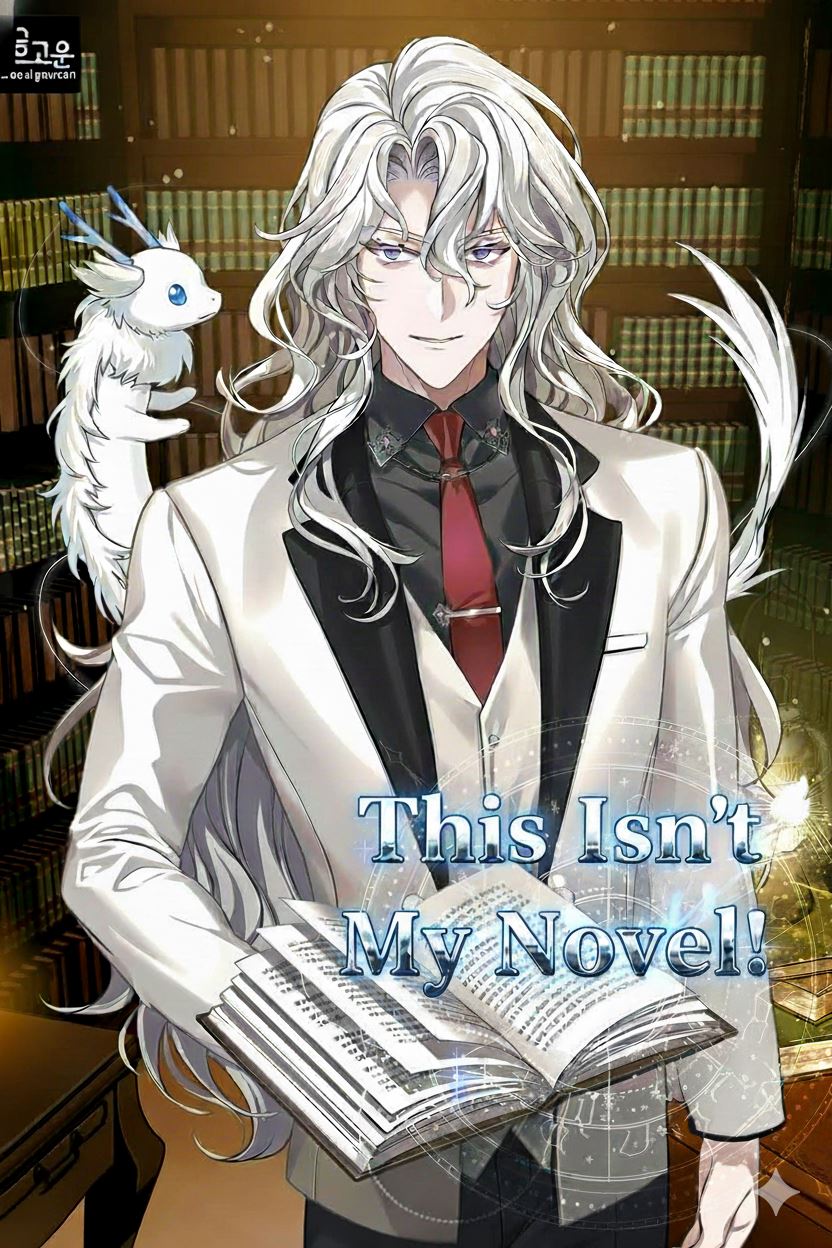
Ibris Hainard is a Grand Swordmaster and the ascetic leader of a revolutionary army seeking to overthrow the corrupt Emperor of the Sernaia Empire. Despite his noble intentions and political ambition, he harbors a deep, unspoken desire for Emmerin Shaunt, the daughter of Duke Shaunt, a high-ranking noble who supports the imperial throne. Their social statuses are vastly different, and Ibris believes such a romance is impossible, confining his longing to vivid, lustful dreams where he can possess her without consequence.

The narrative begins with Ibris drifting into a lucid dream while walking through the knights' corridor. In this dream, Emmerin appears willingly, smiling and embracing him. He initially attempts to resist, reminding himself that she is a princess far above his station. However, when she initiates intimacy and calls him by his nickname, his restraint shatters. Believing it is merely a dream, he fully indulges his desires, leading to an intense and passionate sexual encounter in his private quarters. Throughout the night, Ibris confesses his love, believing Emmerin reciprocates these feelings within the safety of the dream world.

However, the perspective shifts to reveal that this was not a dream but a carefully orchestrated reality. Emmerin had requested her father, Duke Shaunt, to use powerful sleep magic to make Ibris believe he was dreaming. Duke Shaunt’s motivation was purely political: to protect House Shaunt from the impending purge by the revolutionary army. By ensuring Emmerin conceived Ibris’s child, the Duke created a binding hostage situation, hoping Ibris would spare his family due to paternal instinct. Emmerin, who genuinely loves Ibris, agrees to the deception despite the moral compromise, viewing it as the only way to be with him. After Ibris falls asleep, exhausted from their intimacy, Emmerin quietly slips away, leaving him to wake alone.

Three months later, the revolutionary army launches its final assault on the imperial palace. The emperor is captured and sentenced to a brutal execution for his tyranny. During the aftermath, Ibris learns from the court mage that the night with Emmerin was reality, manipulated by Duke Shaunt’s magic. Initially conflicted about how to proceed politically, Ibris decides that House Shaunt must be spared because Emmerin is pregnant with his child. This decision forces a political alliance between the revolutionary leader and the former pro-emperor duke.

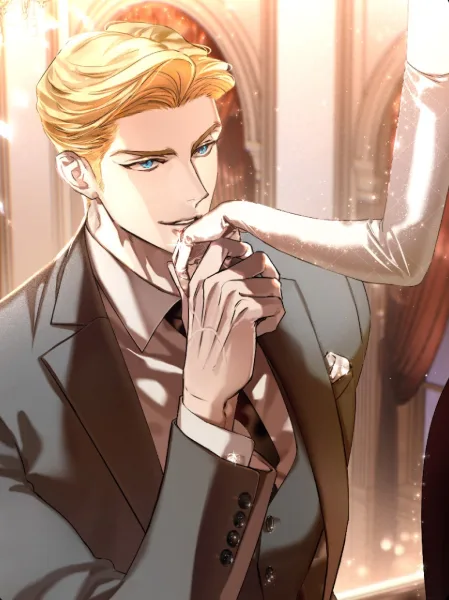
With the emperor removed, Ibris needs a figurehead to sit on the throne to maintain stability, as the empire requires the divine bloodline of the imperial family to ensure prosperity. The logical choice is the First Prince, who was exiled decades ago. Duke Shaunt, knowing the secret location of the First Prince, uses this information as leverage. He proposes a contract: he will reveal the prince's whereabouts only if Ibris agrees to marry Emmerin and take the throne. Ibris accepts these terms, not merely for political convenience, but because his feelings for Emmerin remain strong. He declares that he wants to marry her quickly to protect her reputation and their unborn child.

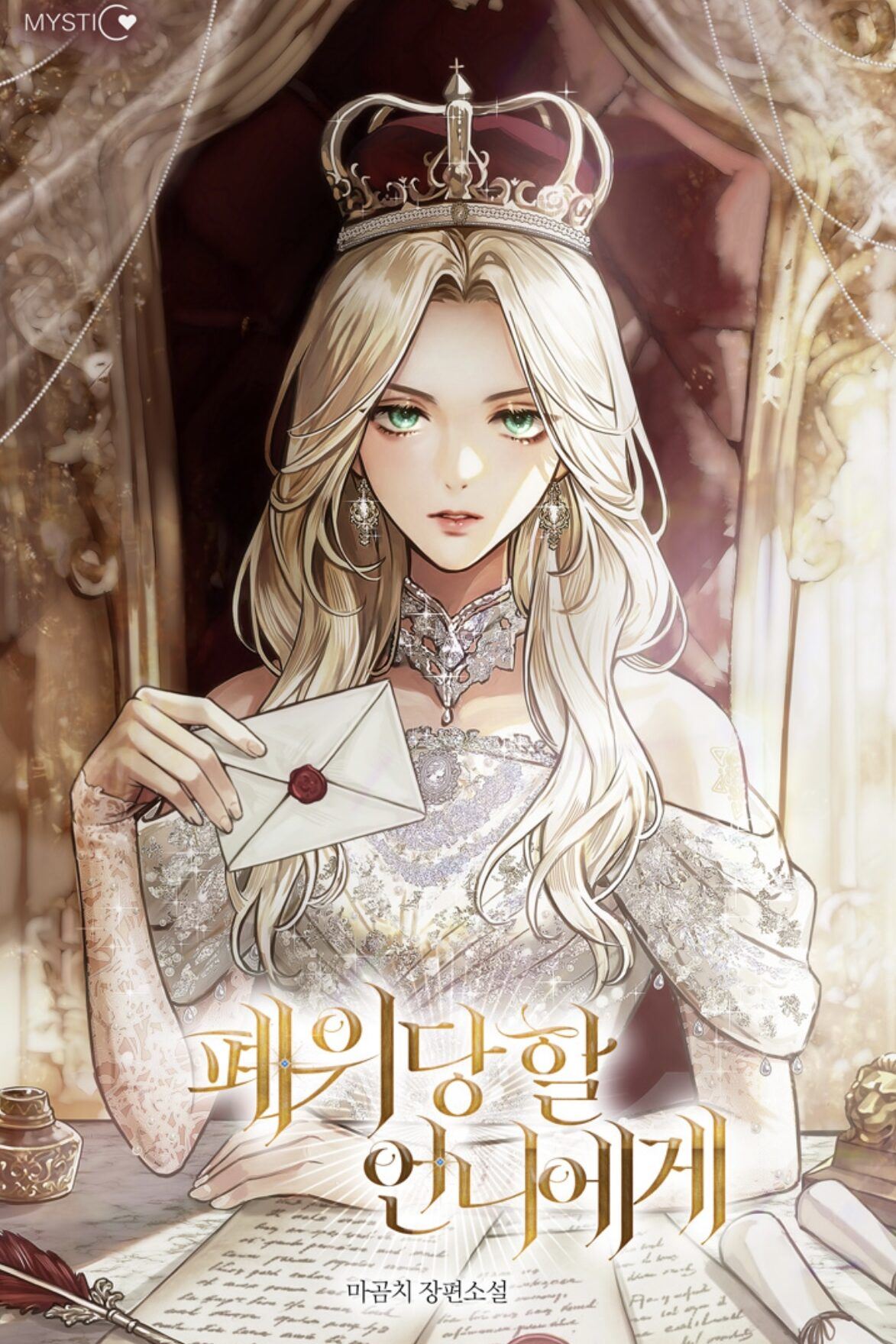
When Emmerin learns that Ibris has come to her father's estate, she rushes to meet him, hoping for a reunion based on love. Instead, she finds herself treated as a political bargaining chip by her father, who urges her to seduce Ibris further to ensure House Shaunt's survival. Emmerin is devastated, believing Ibris no longer loves her and sees her only as a vessel for his heir. She accepts the marriage proposal to avoid making their child a bastard, masking her heartbreak with compliance.

As they travel to Ibris's estate, the dynamic between them begins to shift. Ibris reveals that despite the deception, his love for her has not cooled. He explains that her running away convinced him it was a dream, as a real person of her status would never have rejected him. He expresses his desire to care for her and hold a wedding that allows her to choose her own guests, showing a tenderness that contradicts the political contract. Emmerin, touched by his words, begins to hope that their future might be genuine. The story concludes with the couple traveling together, their relationship moving from political obligation toward a potential romantic reconciliation, set against the backdrop of a regime change that places Ibris one step closer to the throne.

Latest Release
DateGroupRelease
2026-10-03dusk blossoms c52
2026-10-03dusk blossoms c51
2026-10-03dusk blossoms c50
2026-10-03dusk blossoms c49
2026-10-03dusk blossoms c48
2026-10-03dusk blossoms c47
2026-10-03dusk blossoms c46
2026-10-03dusk blossoms c45
2026-10-03dusk blossoms c44
2026-10-03dusk blossoms c43
2026-10-03dusk blossoms c42
2026-10-03dusk blossoms c41

Community Reviews

Rating(0 / 5.0, 26votes)
5 stars
0(0%)
4 stars
0(0%)
3 stars
0(0%)
2 stars
0(0%)
1 stars
0(0%)

Popular reviews

... Read More
"Do you like my arm that much, Emmerin?" "I like it because it's Ibris's arm. I wouldn't touch anyone else's arm like this. I wouldn't even want to." STOP. The confidence here is EVERYTHING. Emmerin doesn't just say "I like it" — she explains WHY, and she does it with such absolute certainty that it lands like a punch to the chest. This is a woman who has spent her whole life being told what to do, how to behave, where to stand — and in this moment, she is making a CHOICE. An intentional, deliberate choice. And she's stating it out loud. Ibris's dialogue is equally sharp. "Your lewdness knows no bounds." "You're lovely, Emmerin. Your voice, your body, your heart that's fallen for me — everything is beautiful." He FLATTERS but he also CHALLENGES. He pushes her to speak, to feel, to be honest. The way he speaks to her is so distinctive — languid, teasing, commanding — and it's clear that NO ONE else gets this version of him. And then the sudden shift at the end: "So the First Prince's whereabouts are still unknown." Cold. Direct. Professional. Same man, completely different energy. That's masterful voice work right there. The author has given each character a distinct personality that shifts contextually without losing core identity. Ibris goes from lover to leader and back again, and it never feels forced because we UNDERSTAND the man underneath both roles.
... Read More
Okay can we talk about the SENSORY WRITING in this passage though? Because the author does NOT miss. From the very first line — "suppressed at Duke Shaunt's house felt like a nightmare now" — you immediately understand the atmosphere. This isn't a warm, cozy home for Emmerin. It's claustrophobic. It's cold. And that sets the stage for everything that follows. Then there's the tea preparation scene. The domesticity of it — Emmerin saying "The tea is all prepared" in such a matter-of-fact way, Ibris responding with that warm laugh — it creates this bubble of normalcy that makes the rest of the world feel further away. Like, in this room, right now, nothing else matters. Just tea and touch and skin against skin. And the descriptions! "His silver hair. The vivid ocean-blue eyes shining between those strands." That visual is SO specific and so vivid that I could draw it from memory. The way the light catches his features, the contrast between his refined clothing and the raw physicality of the moment — it reads like a film director's shot list. You can SEE this scene. The golden-hour warmth of the office, the servants quietly leaving at Ibris's command, the way Emmerin's dress becomes part of the imagery — it's all meticulously crafted. Then the WHIP-FAST cut to the cold morning light, the knight kneeling, the political tension. The contrast in atmosphere alone tells you volumes about the world this story exists in. Comfort is temporary. Power demands attention. And Emmerin and Ibris's private sanctuary is just that — private, temporary, and deeply precious.
... Read More
I need to talk about the stakes in this passage because they're SUBTLE and I LOVE IT. On the surface, this is a romance scene. But underneath? Everything is precarious. Emmerin's entire arc up to this point has been about breaking free from suffocation — from her family, from society's expectations, from being treated as an ornament. But the moment she finds freedom, the narrative immediately reminds us: the world doesn't care about your happiness. Enter the First Prince subplot. A missing royal. A trusted knight receiving bad news. Political tension simmering just beneath the surface of Emmerin and Ibris's private moment. The stakes here aren't just "will they get together" — they clearly already have. The stakes are: CAN they stay together? Can they protect what they've built against a world that's actively working against them? The First Prince's disappearance isn't just background noise — it's a ticking clock. Something is coming, and when it does, Emmerin's freedom, Ibris's position, everything they've built could be threatened. What makes this so effective is that the author doesn't announce the conflict. They let you sit in the warmth of the intimate scene, then gently open a crack in the door to let the cold air in. You feel it — that subtle dread, that sense that peace is temporary. And honestly? That's what makes me NEED to keep reading. Because I'm not just invested in whether they're happy — I'm invested in whether they SURVIVE being happy.
... Read More
Okay, so Ibris is not your typical stoic knight. Underneath that cold exterior? He's absolutely losing his mind over Emmerin. The fact that he keeps reminding himself "this is a dream" while simultaneously being the most attentive lover in the scene tells me everything. He's not just lust-driven — he genuinely treasures her. "Even if this was a dream relationship, he would be taking Emmerin's precious purity." That line hit me differently. He could be rough, he could take whatever he wants in a dream, but he chooses gentleness because it's HER. But then there's Emmerin, and oh boy. She's playing a completely different game. "No, I can't let my guard down too much." She knows the entire scenario was orchestrated by her father. She's pretending to be enchanted when she's actually fully aware. Yet... she truly likes him. That contradiction is delicious. She watched him from afar, jealous and burning, and now she has him right here but has to pretend it's magic. Their dynamic is basically: he thinks he's fantasizing about a goddess who would never notice him, while she's the one who engineered this entire encounter. The irony is so thick I could cut it with a sword.
... Read More
The symbolism here is layered and I can't stop thinking about it. Light and darkness aren't just visual elements — they represent knowledge and ignorance. Ibris enters through darkness (not knowing the truth) and Emmerin emerges from light (she knows exactly what's happening). He's literally walking through uncertainty while she's radiant with secret knowledge. Then there's the recurring motif of dreams versus reality. Throughout the scene, Ibris keeps asserting "this is a dream" as if saying it makes it less real. But Emmerin's perspective reveals that the dream IS reality — just manipulated reality. The question the text keeps asking is: does the source of an experience matter if the feelings are genuine? Ibris choosing gentleness despite having dream-permission to be rough is symbolic of his true nature. He could violate in a dream because there are no consequences, but he chooses tenderness anyway. That says everything about who he is. The sword imagery ties back to his identity as a knight — those same hands that grip a blade are the ones learning to touch Emmerin gently. Weapon and caress, violence and love, existing in the same hands.
... Read More
I need to talk about Ibris first. This guy just... looked at Emmerin and said all of that? Even though she deceived him, even though she ran away, even though her father was his political enemy? He held back his anger and still chose her. And when she asked 'Why are you doing all this for me?' and he just went quiet for a moment before answering—that silence meant everything. Then he said 'Even though I was deceived, I want to do this for you.' That line wrecked me. And Emmerin, oh my god, she thought he hated her so much that she was prepared to accept anything. She kept sobbing because she thought she was despicable for being happy about being bound to him by contract. But Ibris—cold, calculated Ibris who just secured political power—also just lost his ascetic demeanor entirely and got completely carried away with her in that carriage. The shift from 'Lord Ibris' to 'Ib' when he asked her to call him that? Chills. Actual chills.
See all reviews

Custom lists

See all custom Lists