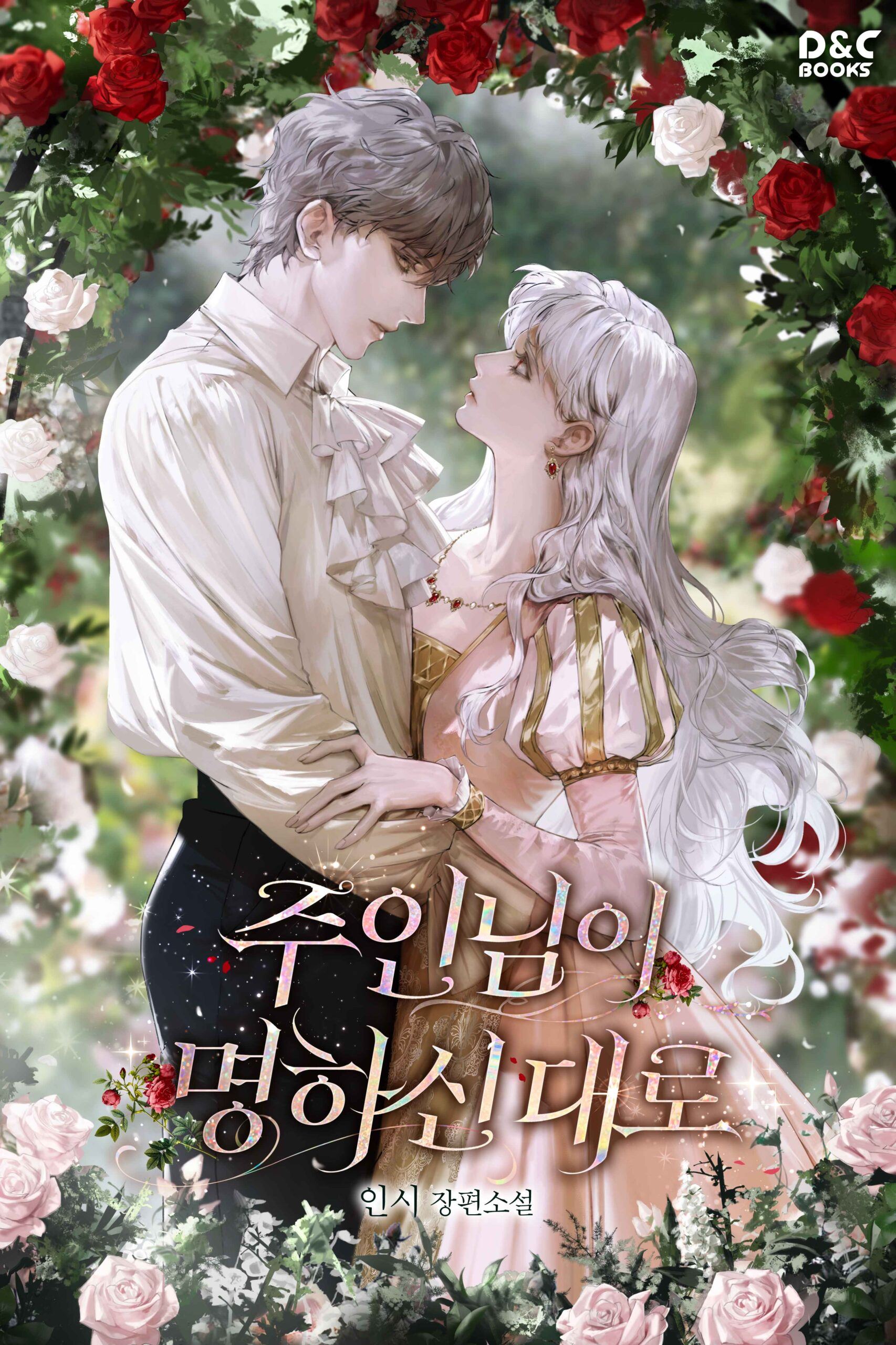
The Season Where My Wife Stayed
+Add to Custom List
Genres:
Novel Info
  • Author:
  • Status:Ongoing

Summary

... Read More
Yoo Ji-an grew up in a modest household after her mother died when she was young. She took on responsibilities early, caring for her sick grandmother and younger sister Jimin, who had a weak heart. Her father, Yoo In-hwan, worked as a firefighter and instilled in his children the values of duty and compassion. Eight years before the main story, a massive fire broke out at a university building. In-hwan entered the blaze to save others and died heroically, along with several other firefighters including Ji-an's uncle Jae-hyung. At the funeral, Woo Se-hyeon, the man In-hwan had saved, appeared with visible injuries. He later proposed a marriage contract to Ji-an: he would cover all medical expenses for her grandmother and sister, but in return, she would become his wife.Three years into the contract marriage, Se-hyeon has recently been promoted to CEO of W Electronics. Publicly, they appear as a devoted couple, with Se-hyeon frequently expressing his love for Ji-an in social settings. However, privately, their relationship is strained. Se-hyeon has grown increasingly cold and distant, spending most nights at his office or in hotels. The tension stems from a misunderstanding: Se-hyeon believes Ji-an has been secretly meeting with Yang Jin-hee, his father's mistress and the mother of his half-brother Se-jun. In reality, Ji-an was coerced by Yang Jin-hee, who revealed that Ji-an's older brother Yoo Jung-ho has been taking money from the family for three years. Yang Jin-hee holds this as leverage over Ji-an, threatening to expose the brother's crimes if she does not comply with her demands.The situation escalates when Ji-an overhears Yoon-young and other wealthy women disparaging her at a post-celebration gathering. They claim Ji-an married Se-hyeon for status, trading her father's life for social elevation. Hurt and isolated, Ji-an confides in Ahn Seong-rim, Se-hyeon's maternal grandmother, who lives in isolation in an annex. Seong-rim is the only source of genuine warmth in Ji-an's life. Meanwhile, Ji-an's brother calls demanding money, threatening to go to Se-hyeon if she does not pay 200 million won by Friday.Ji-an gathers her courage and requests a divorce from Se-hyeon, hoping to escape the suffocating arrangement. To her surprise, he agrees but sets a condition: if she does not conceive within six months, he will grant the divorce. He explicitly states that if she does get pregnant, she will lose custody of the child permanently. Desperate to prove her innocence and escape Yang Jin-hee's control, Ji-an accepts. She asks one favor: for the next six months, Se-hyeon should treat her as a loving husband would, even if it is just an act. Se-hyeon agrees, insisting she manage birth control carefully to avoid pregnancy during this period.The narrative flashes back to eleven years prior, showing Ji-an's happy childhood with her father. It details the day of the fire, her anguish at losing him, and the moment Se-hyeon first appeared at the funeral. Back in the present, Se-hyeon begins to change his behavior, acting affectionately toward Ji-an in ways that confuse her. He insists she choose his clothes and engages in intimate moments, though his motives remain unclear. The story ends with Ji-an caught between hope and suspicion, while Se-hyeon watches her closely, still harboring doubts about her loyalty and intentions.

Latest Release
DateGroupRelease
2026-10-03dusk blossoms c86
2026-10-03dusk blossoms c85
2026-10-03dusk blossoms c84
2026-10-03dusk blossoms c83
2026-10-03dusk blossoms c82
2026-10-03dusk blossoms c81
2026-10-03dusk blossoms c80
2026-10-03dusk blossoms c79
2026-10-03dusk blossoms c78
2026-10-03dusk blossoms c77
2026-10-03dusk blossoms c76
2026-10-03dusk blossoms c75

Community Reviews

Rating(0 / 5.0, 35votes)
5 stars
0(0%)
4 stars
0(0%)
3 stars
0(0%)
2 stars
0(0%)
1 stars
0(0%)

Popular reviews

... Read More
The hands. Every time I re-read this, the hands keep appearing. Ji-an's hands clutching her phone in the hospital. Her hands clutching Se-hyeon's coat. Their hands intertwined "only moments ago" before the call shattered everything. The pain patch on her ankle is another kind of wound nobody talked about — she hides it, he notices it anyway. And the grandmother's death mentioned casually as if it's background noise in Ji-an's life while she's drowning. I think the central symbol here is the performance of marriage. Three years of standing beside him every night, taking his jacket, being exactly where he expects her to be — until one phone call reveals that all of that was a script she's been following. The phrase "as if she had been at his side from the very beginning, as if this spot had always been hers" — that's not romantic, it's tragic. It means she's been performing this role so long she may have forgotten where the performance ends. And Se-hyeon's realization hits him at the worst possible moment: when she's finally showing cracks, he's the one who put them there.
... Read More
I need to talk about how the author uses physical space to make you FEEL what Ji-an is going through, because it's actually incredible. The opening image of Seoul's nightscape gliding past the hotel window — that's the first hint that something is moving too fast, that everything is outside of her control. She's literally watching the city scroll by while she sinks into thought, and that sets the tone for the entire chapter. She's a passenger in her own life right now. Then you have the banquet hall itself: glittering, suffocating, full of people who are all performing happiness and philanthropy while secretly gossiping about the woman in the dress that isn't hers. The chandeliers, the champagne trays, the marble floors — it's all rendered with enough detail that you can practically hear the heels clicking. And those heels! Oh my god, the shoes. The author keeps coming back to them like a motif. New shoes, high heels, red and raw skin splitting open. By the time the heel SNAPS in the corridor, I was physically wincing. It's such a perfect symbol for Ji-an's entire situation — she's been put in something that looks beautiful from the outside but is actively destroying her, and she's expected to keep smiling through it. The contrast between the warm, crowded banquet hall and that cold, empty corridor is genius. When Ji-an escapes to the corridor, the air hits her "like ice" and for the first time she can breathe. But even there, she collides with Gyu-eun. There is no safe space for her. Not at the party, not in the hallway, not anywhere. The world itself seems to be conspiring against her comfort, and yet it's described so vividly that you're not angry at the author — you're trapped right alongside her, and that's masterful storytelling.
... Read More
Beneath the plot of toxic stepmothers and arranged marriages lies a deeper critique of performance itself. Everyone in this chapter is playing a role: Yang Jin-hee performs “mother,” the chairman performs “benevolent patriarch,” the friends perform “carefree bachelors,” and Se-hyeon performs “dutiful son” while internally burning. But the most potent symbol is the pink rubber gloves. Tucked into the kitchen worker's back pocket like a secret weapon, they represent the invisible labor that keeps this glittering world running. She's pale from shock, trembling, yet she immediately puts on the gloves and returns to the mountain of dishes. Her trauma is temporary; her exploitation is permanent. Contrast that with the marriage profiles—neat, photogenic, biographies stripped of soul. Both are forms of packaging humans for consumption, one for domestic servitude, the other for dynastic alliance. And then there's the father's remark about “use protection” and “new half-siblings”—a grotesque joke that lays bare the biological imperative driving this entire farce. The family isn't built on love; it's built on reproduction and control. Se-hyeon's repeated invocation of his dead mother (“My mother's been gone for decades”) isn't just grief; it's a rejection of replacement. Every woman Yang Jin-hee tries to force into that title is an affront to the real mother, whose memory Se-hyeon guards like a sacred text. The faint sense of familiarity he feels with the kitchen worker? It might be the first time someone sees him not as a Woo heir, but as a person—and that terrifies him more than any confrontation. He walks away because connection threatens the armor he's spent twenty years building. The chapter ends not with a victory, but with another woman bending over dirty dishes, and Se-hyeon disappearing into the corridors of a house that's never really his. That's the real tragedy: not the coffee spilled, but the clean floors that will never stay clean.
... Read More
'It's... really not like that.' That's her entire defense. Three years of marriage and her go-to line is basically the vocal equivalent of a shrug. She has no words for him because every real explanation would make things infinitely worse. The dialogue here is doing something really clever—it's showing you how powerlessness strips language away. But then throw in the brother's voice and it's completely different register. 'Well, who else am I supposed to ask? When I've got a rich little sister like you.' That line is so casually cruel it doesn't even feel performed. It's just greed with a pulse. And the way he pivots from fake warmth to outright threat without any transition—'Just get the money ready, alright?'—that's the voice of someone who has never once considered another person's feelings as a factor. Se-hyeon's dialogue is mostly cold cuts: 'You're getting desperate, aren't you?' 'Just get out. I'm tired.' But the one line that gets me is 'Even after three years, I still love her just as much.' He says it to punish her, but it's also the most honest thing either of them has said. He's using Jin-hee as a weapon and somehow still wounded by her. That's not bad writing—that's actually messy in a human way. The narrative voice itself is almost clinical when describing Ji-an's internal state, which makes the moments where she breaks feel earned. No purple prose, no over-explaining. Just facts that accumulate into grief.
... Read More
Okay so this whole contract marriage setup is giving me major emotional whiplash and honestly I'm here for it. The way the author weaves in the flashback to Ji-an's father dying—it's not just trauma dumping for drama points. It's specifically designed to show us WHY she craves genuine connection. When she asks him to pretend they're truly in love for six months, it's not some grand romantic gesture. It's a terrified girl who lost her father asking for proof that she could be loved without conditions. The parallel between Se-hyeon showing up at her father's funeral wrapped in injuries and now showing up in her bedroom in a coat—that's not coincidence, that's the plot thickening in the best way. And don't even get me started on that line 'as long as you don't get pregnant.' Chilling. Absolutely chilling. The divorce contract hanging over their heads like a sword of Damocles while these moments of near-intimacy keep happening? Masterclass in dramatic irony. She wants real love; he's already negotiating escape routes.
... Read More
The settings in this excerpt aren't just backdrops—they're emotional barometers. Start with Yang Jin-hee's office: five profiles laid out like résumés for human livestock, complete with photos and neatly organized biographies. The narrator calls it “absolutely laughable,” but the real horror is how casual the cruelty is. This woman isn't some cackling villain; she's a corporate-mommy figure running a bridal catalog for a son who didn't ask for any of it. And then she throws coffee in Se-hyeon's face. Not a dramatic splash—a half-empty cup, Splat. Domestic violence as a workplace incident. The author doesn't dramatize it with lightning or shattered glass; just the wet suit, the simmering glare, the cold reply of “Ma'am.” That understatement is genius. Later, the private club hallway is described as quiet, exclusive, with staff bowing politely. But it's in that sterile, sanitized space that Vice President Choi—grey-haired, belly distended from years of drinking—grabs a kitchen worker's wrist like she's merchandise. The marble floor becomes a stage for two kinds of humiliation: the woman's terror, and Se-hyeon's reluctant intervention. And then the final scene shifts to the restaurant kitchen—a mountain of dirty dishes, a floor manager scolding like a hawk, and those pink rubber gloves tucked into the woman's back pocket. The contrast is devastating: above stairs, billionaires play matchmaker with human profiles; below, working women scrub plates while being harassed by middle managers. The world feels alive because every location has a class texture. The chairman's office is cold power; the club is performative leisure; the kitchen is sweat and survival. And Se-hyeon moves through all of them like a ghost, untouched but staining everything he enters.
See all reviews

Custom lists

See all custom Lists