Summary

... Read More

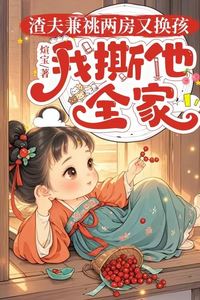
Chi Yu, a modern university student with a low tolerance for alcohol, wakes from a hangover to find herself transmigrated into the body of a woman with the same name in the novel After the Calamity, I Took My Sister-in-law as My Wife. In the original story, this Chi Yu was a cannon fodder character who died after giving birth to a stillborn child, eventually going mad and believing her sister-in-law Zhuang Zilan’s posthumous child was her own. However, as Chi Yu processes the original owner’s memories, she discovers the truth is far darker. Her husband, Qi Mingyu, a xiucai scholar, has been secretly maintaining two households. He and his widowed sister-in-law Zhuang Zilan have been lovers for some time. The original Chi Yu did not give birth to a stillborn; instead, Zhuang Zilan provoked her into premature labor and then stole the living baby, claiming it as her own posthumous child. The entire Qi family, including Qi Mingyu’s parents, conspired to hide this theft.

Upon realizing her situation, Chi Yu immediately confronts her abusive mother-in-law, Madam Shen, who demands money and attempts to beat her. Chi Yu, whose original body possessed martial skills from her hunter upbringing, fights back, injuring Madam Shen and binding her. She then storms into Zhuang Zilan’s room and retrieves her son, confirming his identity through a distinctive Chi family birthmark. When Qi Mingyu’s father, Old Man Qi, demands the child back, Chi Yu refuses, declaring her intent to divorce and return to her natal Chi family. That night, utilizing a mysterious spatial ability that allows her to transport objects she is familiar with, she strips the Qi household bare, taking all their valuables, furniture, and even roof tiles, leaving the family with nothing but the clothes on their backs.

The next morning, the theft is discovered, and Zhuang Zilan, now exposed as a fraud since she never actually gave birth, collapses and injures herself. Chi Yu sits at the gate, publicly accusing the Qi family of adultery and child theft, drawing a crowd. Qin Mu, a feared man in the county known for his violent reputation and a friend of Chi Yu’s nephew Chi Ye, arrives to protect her. He had come after Chi Ye sent a message regarding Chi Yu’s premature delivery. Qi Mingyu returns from the county academy and attempts to control the situation, but the arrival of Chi Ye and the rest of the Chi family shifts the balance of power. The Chi men, numbering over twenty and armed for a fight, surround the Qi household, forcing the Qi patriarch to intervene.

Chi Qiao, Chi Yu’s elder sister who has also transmigrated and gained ten years of age, leads the female members of the Chi family. A former lawyer in her past life, she confronts the Qi elders with sharp eloquence and physical force. She beats Madam Shen and Zhuang Zilan, extracting confessions. Old Man Qi attempts to take all the blame to protect his son Qi Mingyu’s scholarly reputation and future exam prospects, claiming the scheme was his alone. However, Chi Ye forces Qi Mingyu to swear an oath on his scholarly title that he was unaware of the plot. Qi Mingyu refuses, confirming his complicity. The conflict escalates as the Chi family demands justice, the return of Chi Yu’s dowry, and a formal divorce. The story concludes with the Chi family asserting their dominance over the disgraced Qi household, setting the stage for a legal and social reckoning that will dismantle the Qi family’s status while Chi Yu prepares to raise her son away from her abusers.

Novel Items

More
Item
A rope used by Chi Yu to bind Madam Shen tightly after subduing her. She also used Qi Mingyu's socks as a gag stuffed into Madam Shen's mouth.
Item
A pillow resting by the bedside that Chi Yu grabbed and hurled at Madam Shen as her first act of defiance after learning the truth about her situation.
Item
Zhao Xiuye grabbed a broom from the side and hit Jiang Mingxia multiple times on the back after Li Shanshan called her a big bad guy. She was tired from hitting and dropped the broom.
Item
A long bench that Jiang Mingyue deliberately moved toward Luo Mingzhong's feet to drive him away. After the argument, she wrapped it with oilcloth and carried it home.
Manual
The novel that Chi Yu transmigrated into. In the original story, Qi Mingyu and Zhuang Zilan secretly loved each other, endured disasters together, and eventually married. Chi Yu was the cannon-fodder first wife who went mad after a stillbirth.
Item
A dish Chi Yu missed from her modern life, mentioned among her regrets upon transmigration.
Latest Release
DateGroupRelease
2026-08-11shanghai fantasy c68
2026-08-11shanghai fantasy c67
2026-08-11shanghai fantasy c66
2026-08-11shanghai fantasy c65
2026-08-11shanghai fantasy c64
2026-08-11shanghai fantasy c63
2026-08-11shanghai fantasy c62
2026-08-11shanghai fantasy c61
2026-08-11shanghai fantasy c60
2026-08-11shanghai fantasy c59
2026-08-11shanghai fantasy c58
2026-08-11shanghai fantasy c57

Community Reviews

Rating(4.2 / 5.0, 13votes)
5 stars
6(46%)
4 stars
4(31%)
3 stars
3(23%)
2 stars
0(0%)
1 stars
0(0%)

Popular reviews

... Read More
The stakes in this section are layered in a way that keeps escalating, and I love that. At the surface level, it's a rescue mission — Chi Yu is in danger, the baby is premature, they need to get out. But then it becomes a legal and social confrontation: the Qi family schemed to steal her child and frame Zhuang Zilan as the mother. Then it becomes a physical conflict when Chi Qiao starts slapping and kicking. Then it becomes a financial stakes issue when they discover Chi Yu's dowry and everything prepared for the baby has been stolen. Each new revelation raises the question: what else are they hiding? What makes the conflict feel real is that everyone has something to lose. Chi Yu risks her life and her child's life. Qi Mingyu risks his scholarly career and social standing — that's why he can't bring himself to swear innocence. Old Man Qi risks his authority as patriarch but is willing to sacrifice his reputation to protect his second son's future. Zhuang Zilan risks her life, which is why she's so quick to fold under pressure. And the Chi family risks a full-scale clan war by showing up with twenty armed men. The suspense is maintained brilliantly through the ambiguity around Qi Mingyu. Is he guilty or innocent? The text gives us just enough evidence for both interpretations — his father's desperate protection of him, his own hesitation when challenged to swear, but also no direct proof of his involvement. That uncertainty is what makes you keep reading. You're not just waiting to see if Chi Yu gets justice, you're waiting to find out the truth about the man who was supposed to be her husband.
... Read More
Okay so I need to talk about Chi Dahu because this guy is genuinely one of the most well-written elder brother figures I've read in a while and it's honestly refreshing. Let me set the scene: his little sister Chi Yu just showed him a literal magical pocket dimension with a stream and farmland, and what does he do? He doesn't lose his mind. He doesn't demand she prove it again. He looks at the barren land and immediately starts thinking about crop rotation and irrigation. "This place seems different from the outside. It's bright, but there's no sun, no wind or rain. Can crops really grow here?" Bro. He's processing the fact that his sister has a grotto-heaven and his first thought is agricultural productivity. That's not shock—that's Chi Dahu at his core. This man has been the pillar of this family, the one holding everything together, and even when confronted with the supernatural, his brain goes straight to: how do we use this to survive? And then the money scene. When he takes out three hundred taels for disaster prep and tells his sister to keep the other two hundred for the baby, saying "Even among brothers, accounts must be settled clearly"—that line hit me so hard. He's not taking her money as charity. He's borrowing it. He will repay it. Because that's who he is. He's the type of person who would rather starve than owe someone. The dynamic between him and Chi Qiao is also *chef's kiss*. She's clearly different now—sharper, more calculating—and he notices it but doesn't call her out. He just... accepts it. When Chi Yu tells him about the space and says "Sister-in-law has been there," his reaction is basically: if my wife isn't freaked out, I'm not either. That's trust. That's partnership. That's a marriage that's actually healthy. I also love how the text handles the boundary between men and women. Chi Dahu stands at the door when entering Chi Yu's room because "even though Chi Dahu regarded Chi Yu as his daughter, he still felt somewhat uneasy." But then Chi Qiao tugs at him: "Why stand so far away? Xiao Yu isn't going to eat you!" And he comes in. It's such a small moment but it shows he cares about propriety while also knowing when to prioritize family over rigid rules. The whole family structure here is fascinating. Chi Erxiong and Chi Sanbao follow Chi Dahu "blindly" according to Chi Qiao's observation, which means whatever he decides, the rest of the family falls in line. That's power without arrogance. That's leadership earned through years of being the reliable one. And the scene where he comes out and immediately sends Chi Deng to neighboring counties to buy grain while his uncles handle Anping County? Strategic. Efficient. No drama, no hesitation. This man is built different. I just—how does a character get this good without any pretense? He's not a mysterious brooding figure or a hidden genius. He's just... a good person who happens to be competent. In a genre full of overpowered MCs, sometimes you just want someone who can manage a household and stay calm when his sister shows him a magical dimension. Chi Dahu is that someone and I am here for it.
... Read More
I'm not going to lie — I got genuinely emotional during this section. Not the big dramatic crying kind, but that quiet ache in your chest when you read something that just *lands*. It was when Chi Yu, half-conscious in the rain, hears her sister's voice and manages to whisper "Big Sister" before passing out. That's it. That's the whole moment. Two words, and the author made me feel the weight of seven months of suffering, of being alone in a hostile household, of carrying a premature baby while being hunted by your own family-in-law. The fact that Chi Qiao says she heard those two words "clear as day" and that certainty is what makes her heart ache even more — it's such a tender detail. And then there's the relationship between Chi Qiao and her two sisters-in-law, Huang Dani and Chen Xiaomai. The text tells us these two always treated Chi Yu "like a precious pearl in the palm of their hand," and honestly that line made me soft. In a story full of betrayal and scheming, having characters who genuinely love someone without any agenda underneath it is refreshing. They come along not for glory but because they couldn't stay behind while their little sister suffered. The emotional contrast with Madam Shen is almost comedic in how badly written her villainy is. She shows up with a swollen face claiming Chi Yu beat her, and Chi Qiao's response is basically: you're lying and I'm about to prove it. The slap that follows — the one that knocks Madam Shen down and makes her spit out a tooth — is cathartic in the best possible way. Sometimes you just need to see a bully get what's coming to them, and the author delivers that moment with zero restraint.
... Read More
I need to talk about Chi Yu's emotional arc because the way she tells her "dream story" to Chi Dahu is genuinely devastating and I'm not even going to pretend I didn't get choked up. Let me walk through this. She's in confinement after childbirth—already physically vulnerable, already recovering from what was clearly a traumatic birth. And then she tells her brother about a dream where she died. Not just died, but died believing her child was stillborn, died being told she was unlucky, died being told her fate brought misfortune to everyone she loved. "They said I was an unlucky person who couldn't even bear a child properly. They also said I had a fate that brought misfortune to my loved ones—first killing my own parents, then my child." And then she describes watching Zhuang Zilan's child die during the exodus and only then realizing—that was HER child. The one she'd been grieving. The one she'd given all her dowry to before she died in the dream. The text says: "Every time I saw Zhuang Zilan's child, I thought of my own, and my heart ached unbearably." Unbearably. That word does so much work here. What makes this scene hit even harder is that Chi Yu is performing. She's telling a story that's partly true and partly fabricated to convince her brother, but the emotions she's channeling—the grief, the betrayal, the maternal love—are real. She's drawing from the original host's memories, from the pain that this woman felt before Chi Qiao took over. And yet she's also genuinely suffering because she *is* a mother now, and the idea of losing her child is not abstract to her. The moment where Chi Dahu roars "What a load of bullshit!" is perfect. He's not just reacting to the story—he's reacting on behalf of his sister, on behalf of every person who ever let someone tell them they weren't good enough. His Xiao Yu is "the most blessed person in the family." That's his truth, and he's not letting some dream or some Qi family member change it. But then Chi Yu leans into Chi Qiao and the text says her face is "paler than before." Is it the performance? Or is it the real exhaustion of a woman who just survived childbirth and is carrying the weight of impending disaster and her sister's secret? Probably both. And that ambiguity is what makes the emotional writing here so good. The line that got me the most though: "Before I passed, I gave all my dowry to that child." A mother's love. Even in a dream that may not be real, even when she doesn't know the child was swapped, she gives everything she has to the baby she thinks is hers. That's the kind of instinct that transcends reality. That's the kind of love that makes you believe in grotto-heavens and second chances. And then the resolution—she doesn't stay in victim mode. She takes action. She raids the Qi family's assets. She plans for disaster. She brings her family into the space. The grief doesn't disappear, but it gets channeled into something productive. That's not just good storytelling—that's a fundamentally healthy emotional arc.
... Read More
Okay, I need to talk about Chi Qiao because this woman is absolutely *something*. Like, in her modern life she was a lawyer, and you can literally feel that energy radiating off every page. When she shows up at the Qi household gate and sees her sister collapsed on the threshold, the way she immediately shifts into command mode — delegating tasks, taking charge, not panicking — it's incredibly satisfying. But what really got me was the moment Chi Yu whispers "Big Sister" before fainting. That single exchange, two words from Chi Yu and suddenly all of Chi Qiao's fury has a target. She's not just fighting for justice, she's fighting for her little sister who she practically raised after their parents fell ill. The sibling bond between them is the emotional backbone of this whole scene, and it's written so naturally without being overwrought. Then there's the Qi Mingyu situation, which is where things get really messy. Old Man Qi tries to paint him as completely innocent, kept in the dark the whole time. But Chi Ye calls him out directly — makes him swear on his scholar title that he knew nothing. And he can't do it. He hesitates. That hesitation says everything. Is he actually innocent, or is he just smart enough to stay silent? The text leaves it ambiguous in a way that makes me want to keep reading desperately. Meanwhile, Zhuang Zilan immediately throws everyone under the bus the second a dagger appears near her face. Classic survival instinct, but also kind of pathetic when you think about it — she was complicit in harming a pregnant woman and now she's begging for mercy like a coward. The power dynamics in this scene are fascinating: the Chi women are violent and decisive, the Qi men are all talk until pushed, and Old Man Qi is a cunning old man who tries to sacrifice himself strategically to save his bloodline.
... Read More
The travel permit system alone is enough to make this world feel lived-in. Let me just quote the details because they're gorgeous: "Male or female, exact age, body build, face shape, whether you have moles, who's accompanying you—all of it has to be recorded. Most importantly, it states your destination, whether you're bringing cattle or horses, whether they're male or female, what color they are, and how many days you'll be gone before returning." What. A. Detail. This isn't just worldbuilding for the sake of it—this is worldbuilding that creates conflict. The permit system isn't a backdrop; it's a cage. You can't flee the coming calamity because the state won't let you. That's how you turn a historical setting into genuine tension. And the Chi Family Hollow itself—the hunters, the barren soil, the two or three small vegetable plots per household, the rice and flour coming from selling game. This is a community that survives on the edge, not by choice but by geography. When the calamity hits, they're already one bad winter away from desperation. The author is setting up a pressure cooker and then turning up the heat. The space is another layer I want to talk about. It's not some generic storage dimension—it's THEIR house. The same house from before transmigration, now sitting on a barren wasteland. There's something deeply haunting about that image: the sofa where Chi Qiao collapses, the table with steaming dishes, the door that opens not to their old neighborhood but to endless empty land. It's a home without a home anymore. The physician's hall, the rented courtyard on the west side of the city, A Ye's friend's house next door—these locations feel specific and real. You can map this world in your head. The mountain hollow, the city, neighboring Anning County where Physician Li comes from. It all connects. And the visual of Chi Yu being jolted awake by hunger, alone in a room, with Madam Shen coldly informing her the baby was stillborn? That scene is cinematic. I can see it. The dim light, the empty cradle, the woman who doesn't care whether she lives or dies. The author doesn't need fancy descriptions—just the right details at the right moment.
See all reviews

Characters

See all characters

Custom lists

Oops…There is nothing here.