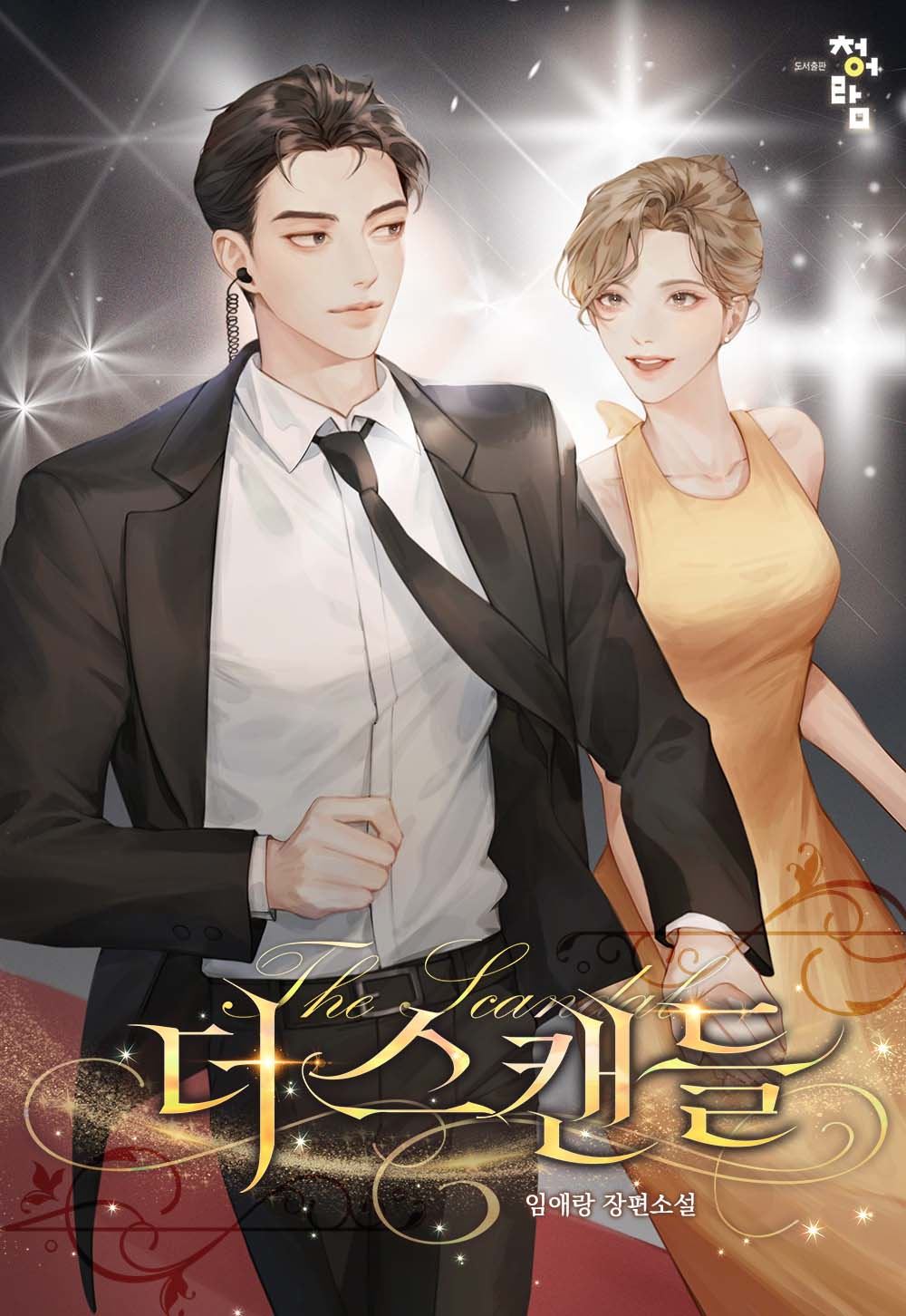
The Scandal
Novel Info
  • Author:
  • Status:Ongoing

Summary

... Read More

Yoo Hari is a rising actress in South Korea who, despite her growing fame and wealth, lives in a modest villa and carries a faded handkerchief she received from a soldier six years prior. Her life takes a dangerous turn when she receives death threats scrawled in red paint on the wall of her home. The threat is not isolated; shortly after, lipstick-written warnings appear on her car in an underground parking garage, escalating her fear. Despite the danger, Hari insists on continuing her work schedule, driven by a deep sense of responsibility to her colleagues and a refusal to be paralyzed by fear. This insistence leads her to a commercial shoot where she separates from her security detail and becomes trapped in a studio bathroom stall. The attacker plays a recording of further threats and cuts the lights, triggering Hari’s severe claustrophobia stemming from childhood abuse at an orphanage. She is rescued by Cha Jisang, her newly assigned bodyguard, whom she realizes with shock is the same soldier who saved her from coercion six years ago.

Six years earlier, Hari was a twenty-year-old aspiring actress who was lured into a room salon under the false pretense of an audition. There, she faced Executive Director Kim Yeonghun of the Chayoung Group, who intended to force her into sexual submission as a gateway to her career. When she refused and attempted to escape, she was chased down and physically assaulted. Just as she lost hope, Cha Jisang, then a UDT/SEAL operative, intervened. He neutralized her attackers with military precision and protected her from the powerful men she had encountered. Although he refused any reward, including a gold bracelet she tried to give him, he offered her stern advice. He urged her to remain pure, to succeed on her own merits without taking shortcuts, and to avoid places like that. Hari, deeply moved by his integrity and strength, memorized his name and unit, vowing to send him one hundred letters to express her gratitude.

The present-day reunion changes the dynamic between them. Jisang is now a professional bodyguard assigned by Chacha Entertainment, the conglomerate that acquired Hari’s agency. He remains distant and professional, referring to her strictly as "Ms. Yoo Hari" and maintaining a clear boundary between employer and employee. However, Hari is openly affectionate and relieved, recognizing him immediately. During their first night together in her cramped apartment, she asks him to stay for safety, and he agrees, though he treats her with the protective but emotionally reserved demeanor of an older brother figure. He suggests she move to a safer location, which prompts Chacha Entertainment to arrange for her to relocate to a high-security townhouse in Hannam-dong, a prestigious neighborhood. The company insists that Jisang live with her as part of a live-in protection detail.

The core conflict extends beyond the immediate physical threat. The antagonist is linked to the powerful Chayoung Group, suggesting that Hari’s refusal years ago to sell her body to Kim Yeonghun has made her a target for revenge. The stalking and threats are calculated attempts to force her out of the industry or break her spirit. As Hari settles into her new, luxurious home, the contrast between her current safety and her past trauma highlights her resilience. She continues to cling to the handkerchief as a talisman of her connection to Jisang, viewing him as her moral anchor and the ideal man she aspires to be worthy of. Meanwhile, Jisang struggles with his hidden feelings, aware that his past with her and his current duty complicate their relationship. He is determined to protect her from the shadows while keeping his personal emotions in check, knowing that the enemy is still watching.

Story direction moves toward the deepening bond between Hari and Jisang as they navigate the siege-like existence caused by the stalker. Hari’s determination to continue her career clashes with Jisang’s protective instincts, creating tension that eventually forces them to confront their true feelings for one another. The narrative also explores the corruption within the entertainment and chaebol circles that threatened Hari years ago, setting the stage for a confrontation where Jisang must use his combat skills not just for protection but to dismantle the network targeting her. Hari’s growth is central; she must evolve from a passive victim of circumstance into an active participant in her own safety, learning to trust Jisang not just as a savior but as a partner. The unresolved mystery of how the stalker found her and the full extent of the plot against her remains a looming threat, driving the suspense forward as they prepare for the next attack.

Latest Release
DateGroupRelease
2026-10-03dusk blossoms c32
2026-10-03dusk blossoms c31
2026-10-03dusk blossoms c30
2026-10-03dusk blossoms c29
2026-10-03dusk blossoms c28
2026-10-03dusk blossoms c27
2026-10-03dusk blossoms c26
2026-10-03dusk blossoms c25
2026-10-03dusk blossoms c24
2026-10-03dusk blossoms c23
2026-10-03dusk blossoms c22
2026-10-03dusk blossoms c21

Community Reviews

Rating(0 / 5.0, 40votes)
5 stars
0(0%)
4 stars
0(0%)
3 stars
0(0%)
2 stars
0(0%)
1 stars
0(0%)

Popular reviews

... Read More
I need to talk about this one exchange because it's deceptively simple and it's going to haunt me. After the car window incident, Hari is chewing her thumbnail, trying to steady herself. Jisang looks at her and says: "You seem a little inflexible." Just that. Not "are you okay?" Not "do you need help?" "You seem a little inflexible." And Hari smiles wryly and brings out THE handkerchief. The one she's been carrying around. And ties it around his stained wrist. And says: "I'm finally returning this." And the narration goes: "It was the worn, faded handkerchief she had treasured so carefully. The handkerchief belonging to the man who had become her salvation, which she had carried with her every day with the hope of someday giving it back." That single line—"You seem a little inflexible"—carries so much weight because it's Jisang recognizing something about her that she won't admit to herself. She pushes through fear. She refuses to cancel the shoot. She buries her trauma and keeps smiling for the crew. She won't let her emotions affect the people working for her. And he sees it. He called her out on it gently, almost frustrated, like watching a foolish child refuse help. And then there's the bathroom rescue scene where his dialogue is almost comically sparse: "You're in there, right." "It's alright now. Take a breath and stay calm." "Don't cry." "Stop crying and listen to my voice." He literally doesn't know that telling someone not to cry makes them cry more. The text notes this! "Telling someone not to cry always makes them cry more. Jisang kept saying it anyway, not knowing that." The author's voice is so restrained. The dialogue does the heavy lifting without ever feeling theatrical. Every line feels like something a real person would say.
... Read More
The pacing in these chapters is a masterclass in escalation. Let me walk through it because the author does something really clever here. It starts SO casual. A bear giveaway to a stray kid. Mango sorbet at an open-air café. Light, breezy, vacation vibes. The reader is relaxed. Then — BAM — the Seong Hyemi comment lands and the temperature drops. Jisang goes cold. Small tension spike. Then Hari feeds him sorbet. A kiss. Not even a real one, she calls it 'practice.' But the energy has shifted. You can feel it. Next scene: the swimming lesson. Strict Jisang. Frustrated Hari. Wine by the pool. She snaps at him, regrets it immediately, starts CRYING. This is the emotional low point — and it's perfectly placed because we've been riding this sweetness and we NEED a dip. The author knows exactly when to make us uncomfortable. His apology comes in: 'I'm the type of person who can't do moderation.' Then the kiss that pulls her into the pool. Then the conversation about wanting more. Then the confession. Then the surrender. Every beat follows the one before it like dominoes. There's no filler. No dragging. The chapter ends with her being carried to her room and... well, you know. The breathless quality of the prose during the intimate scenes mirrors exactly what the characters are experiencing. Short sentences. Fragmented thoughts. You can feel her heartbeat matching the rhythm of the writing. I stayed up way too late reading this. No regrets.
... Read More
Okay, I need to talk about the letters. Because everything in these chapters orbits around that one image—six hundred words, a hundred letters, and a boy who never wrote back. Or did he? The reveal that he might have received them all and simply didn't know how to respond is thematically massive. It reframes Hari's entire understanding of her own past. All those years of thinking she was ignored, thinking her feelings were invisible—that's not abandonment, that's a boy who was overwhelmed by a responsibility he didn't know how to handle. The bracelet scene is referenced here too, that pinky promise they made. 'Promise me that you'll only walk the right path. That you won't set foot in a place like this again, and that you'll succeed on your own terms, with your head held high.' That moment, years ago, became the moral compass for her entire life. And now she's sitting in her tiny apartment telling him she's scared of her bank account, that she doesn't understand wealth, that she just feels this place suits her. She's living the promise. She hasn't taken shortcuts. She's succeeding honestly. And when he calls her a 'successful actress,' it's not just recognition—it's validation that her entire moral framework has held up. But there's another layer here that keeps haunting me. That flashback at the end—twenty years old, the room salon, the low-cut gown, the promise of an audition that was actually a trap. The woman who nearly got exploited is the same woman writing those letters to a boy she saw once. Her vulnerability isn't a weakness—it's consistent. She's always been someone who reaches out, who trusts, who believes in people even when they don't deserve it. The industry tried to consume her, and instead she chose art. The man she loved didn't respond, and instead she chose to keep trying. That persistence is the real theme here. The apartment itself is symbolic too. Thirty square meters. Old. Shabby. But decorated with care, with light, with intention. It's the physical manifestation of Hari—someone who hasn't let her circumstances define her worth. Jisang's question 'Then why are you still living somewhere like this?' isn't criticism. It's bewilderment at a woman who has every reason to live in luxury but chooses modesty instead. She's more than deserving of somewhere better, he tells her, and she is. But the deeper truth is that she hasn't forgotten where she came from, and that humility is part of what makes her genuine in a world that the text explicitly calls 'brutal.' The PD's internal monologue says it best: 'She was the last remaining piece of genuine purity in this world.' Whether that's a compliment or a tragedy depends on who's saying it, but either way—it's the central question the book keeps asking. Can purity survive in this industry? Can it survive in a relationship where one person holds all the power? Can it survive when the boy you loved never wrote back?
... Read More
The setting in this section is absolutely dripping with atmosphere, and I need to appreciate how the author uses location to mirror the emotional journey. It starts at a photo shoot with the concept of "a holiday with a first love"—which is already incredibly meta since Hari is essentially living that fantasy in real time. The infinity pool overlooking the sea, the evening lights going off at nine, the resort buzzing with other couples on what's apparently a honeymoon destination. Everything about this place is designed for romance, and the author makes sure we feel it. The pool villa scene at night—warm water, private, the resort lights coming on at midnight—that's pure cinematic. I could see every frame of it. The white bikini choice, the water flicked playfully between them, her wet hair stuck to her cheeks while he tucks it behind her ear. These aren't just romantic beats; they're sensory details that make the scene breathe. Then there's the beach pub brunch the next day. Forty-degree heat, sweat making their clasped hands damp, the long row of shops stretching along the beach filled with couples. Hari noting that she can't walk around like this back in Korea—no mask, no sunglasses, just freedom—adds this bittersweet contrast to the paradise they're in. The fact that the icon of an era who has luxury brands begging her to wear their products is genuinely thrilled by a three-thousand-won rattan hat and a five-thousand-won bracelet from a street stall? That detail crystallizes everything about who she really is beneath the fame. The shooting game stall under the blazing sun, the thick dust on the plastic wrapping around the stuffed bear prize—it's all so tactile and specific. This world feels lived-in, not staged.
... Read More
Let's be real for a second: the dialogue in this section is where the story actually lives. It's not just functional; it's character-specific, layered with subtext, and sometimes devastating in its plainness. Take Gwak Sanggu. His early lines are smooth, almost paternal: “Did you say you wanted to earn a lot of money and help the children?” That sounds caring, right? Until you read the next beat—he's using her own empathy as a lever. Then the mask slips, and his dialogue becomes all clipped threats: “You should know your place. How dare you talk back.” The shift is so sharp it feels physical. Hari's voice, meanwhile, starts as fragmented and desperate (“I, I don't want to… Let me go.”) but gains a brittle clarity by the end. When she tells the soldier about her mother and the bracelet, she's not performing vulnerability; she's stating facts, and that's when her dialogue finally catches up to her courage. But the standout is the soldier. His lines are so distinct I could pick them out in a crowded room. “You talk a lot.” “Pathetic excuses for human beings.” “Don't show your pain to just anyone.” Each one is a full paragraph of attitude in three sentences. He's not warm, he's not polite, and yet his dialogue carries more integrity than anyone else's in the chapter. Even his silence speaks—like when he hands her the handkerchief and doesn't fill the quiet with false comfort. The author doesn't use dialogue to explain themes; the themes emerge from what characters refuse to say. That's craft. I also loved how Hari's chatter after being rescued (“Thanks to you, I'm safe.”) sounds exactly like someone trying to outrun trauma with words. It's natural, almost annoying in its realism, and it makes the soldier's curt responses even funnier and more poignant. This section wouldn't work if the voices weren't this finely tuned.
... Read More
The dialogue in this section is deceptively simple. On the surface it's everyday conversation—cooking, eating, light teasing—but underneath every line is carrying weight that has nothing to do with its literal meaning. Take this exchange: 'I'm fine. I'm not really thinking about it.' 'I spent a long time in the military. I can't stand watching someone go without food.' 'So sit down.' Three lines. One of them is a command. None of them are about food. He's saying: I won't let you disappear. She's saying: I don't deserve this. He's saying it again with more force. This is how these two communicate—through action disguised as instruction. And Hari's voice! It's so distinct. She has this quality of speaking honestly even when she shouldn't. 'Would you rather not have me here?' 'N, no. I'm very happy about it!'—the panic in that reflex answer is so real. She catches herself immediately ('Oh no') but the damage is done. She said what she meant before her filter could stop her, and that's the most Hari thing ever. The narratorial voice is also doing a lot of work here. It stays close to Hari's perspective, filtering everything through her body—her breathing, her pulse, the way she swallows when she's distracted, the moment her cheeks go scarlet. The prose doesn't just tell us what she feels; it makes us feel it physically. 'Hari flinched so hard she nearly jumped out of her skin.' We're not observing her fear. We're inside it. One line that stays with me: 'Because of nothing more than that small gesture, Hari lay awake the entire night.' The narrator summarizes an entire night of overthinking in one sentence. That's the author's voice at its best—condensing mountains of emotion into the slimmest possible frame.
See all reviews

Custom lists

See all custom Lists