The Sand Bride - Reviews

The Sand Bride
+Add to Custom List
Sort
Add review
... Read More
The worldbuilding in these chapters is SO quietly devastating and I think a lot of people are gonna gloss over it because they're too distracted by the horror happening inside the tent. Look at what the author does with the setting. The captives are walking through an endless desert—scorching sun, sandstorms, insufficient water, people falling ill and getting abandoned. Markers appear and suddenly everyone realizes: destination is Gharyam. A kingdom that has never been conquered. Foreign soldiers die in those final desert stretches before the gates. Ignorance would have been better. That line hit me like a truck—because it reframes everything. These people didn't choose this. They didn't even know what they were walking toward. Then contrast that with Karzhen's world. He hunts animals for sport in the middle of a death march. He drinks blood-spattered liquor. He takes his victims during the day now, not just at night. The bandits are so comfortable in this hostile environment that Esther—the captive—closes her eyes and hunches her shoulders when animals are killed, not just because she's afraid of what Karzhen will do to her afterward, but because even the sporting violence around her is part of the same landscape of death. The temporal displacement is also masterful. Sunset when he drags her in. Night when she checks the sky. Hours have passed that she can't account for. Time itself has been weaponized against her—she has no sense of when things start or end, only that she endures until they stop. And that final line about her body being sticky with heat, pressing stinging eyes, trying to catch her breath—it's rendered so viscerally that I physically felt exhausted reading it. The desert outside, the tent within, the captivity in between. Every layer of this world is designed to strip a person down.
... Read More
"The flowers will wither soon…… I hope I can return before then." That line from Bianca has been rotting in my brain ever since I read it. On the surface it's just... a sad metaphor about beauty fading. But everything about this story is about bodies as currency, about young women being traded and consumed and discarded. The flowers aren't just about beauty—they're about the temporary nature of value in a world where girls are selected, used, and then either died or forgotten. Esther's markings—red and blue scars across her chest and neck—are described almost clinically by Greta, who reads them like a ledger. How many times has she been used? How much has she endured? The body becomes a document, a record of violations that no one asks Esther to interpret. And Bianca's 'half of my blood'—what does that mean thematically? Is she part of the oppressed AND part of the system? Is that why she helps Esther? Because she understands what it means to be both victim and accomplice? The ambiguity is deliberate, I think. The story isn't interested in neat answers about identity and complicity—it's interested in showing how those things trap you. Every flower in the palace decorations, every petal piled on the towers—it's all temporary beauty covering up permanent cruelty. That's the entire world of this story in a single image.
... Read More
The tension in these chapters is ABSOLUTELY suffocating, and I need to talk about the scene where Esther hides the poison. She receives the poison from her fellow captives during a clandestine midnight meeting below her tent window. She's trembling, scared, hopeful — and then Karzhen wakes up. Right THEN. She frantically stuffs the paper under the blanket, and what follows is probably the most nerve-wracking sequence I've read in a long time. He grabs her, she's sobbing, and the poison is literally NEAR HER WAIST the entire time. "If Karzhen found it, he would see it. He would interrogate her and kill her." Then Hakan walks in. Esther is now trapped between two men, the poison shifting with every movement, and she has to pretend to be the submissive, broken wife while secretly orchestrating an escape plan. The stakes are LIFE AND DEATH for everyone in that camp — not just Esther, but every captive waiting for her signal. And the cruelty of it all is that Karzhen is ALMOST nice sometimes. He tells her to sleep. He stops when she cries. He pats her forehead. Those moments of non-violence are MORE terrifying than the violence because they give false hope — hope that maybe, if she's good enough, quiet enough, obedient enough, she'll survive. And that's exactly how control works.
... Read More
I keep coming back to this one line at the very end: "Her name was Hemor. It meant 'the one who does not cry.'" And I know this chapter cuts off right there, but the author just dropped a BOMBSHELL that recontextualizes everything. We have Esther — trembling, sobbing, begging, unable to stop crying — surrounded by people who expect silence. Karzhen explicitly tells her to stop crying. The captives need her to be strong enough to carry poison and execute an escape. Hakan can't even bear to watch. Nobody gives her permission to GRIEVE. And then Hemor, the sister who "must never show weakness," whose name literally means she doesn't cry — she's being INTRODUCED right after we witness Esther's complete emotional breaking point. The parallel is unbearable. Is Hemor supposed to be the "strong" one? The stoic one? Or is the author showing us that this world demands women suppress their pain so completely that it becomes a NAME? The poison packet itself is another symbol that won't leave me. It's a small piece of paper — insignificant, hidden in clothing, passed between starving captives. But it represents the only weapon Esther has. The most dangerous object in this entire story is something you could lose in your pocket.
... Read More
Karzhen's dialogue is terrifying because it's almost normal. Most of his lines are conversational, even casual—"Quit the dramatics," "Is there anything you want to eat?"—and that's what makes him so chilling. He's not delivering monologues or threats in a theatrical way; he's being almost domestic while doing awful things. There's this one moment where he strokes Esther's head absentmindedly before leaving her tent, and the casual violence of that gesture lives in how lightly he says it. The sisters' advice, "You must never show weakness," repeated like a mantra across three generations of these people—it's short, it's repeated, and it carries so much cultural weight. And Hemor's final line before she dies? "Even if we love, we must not show weakness." That paradox is the most honest thing in the entire book. It's a sentence that contains a whole philosophy of cruelty disguised as survival. The narrative voice itself is worth noting too—unflinching, precise, never sentimentality, never explaining emotions outright. It describes actions and bodies and rarely judges, which somehow makes everything hit harder.
... Read More
The stakes in this section just multiplied and I need to process it. On the personal level, Esther's conflict is razor-sharp: she must survive Karzhen without losing herself. Every interaction is a tightrope. Give him nothing (silence) and he gets angry. Give him something (a false name) and he may reject it. Lie and face terrible consequences. Tell the truth and hand him leverage. The author makes every choice feel impossible, which is exactly how trauma feels in real life—there is no winning move, only damage mitigation. But then the author expands the stakes dramatically. The coronation isn't far off. Greta appears—a different ruler, smarter, more calculating, who “preferred questioning” sacrificial offerings rather than bedding them. She's looking at Esther with “almost containing her glee” because she sees something valuable. This means Esther isn't just fighting for physical survival anymore; she's caught between two powerful figures who view her as either entertainment or intelligence asset. The external conflict (two rulers, a coming coronation, political upheaval) is colliding with the internal conflict (Esther's will to survive, her need to preserve her identity, her bond with Bianca). And the author layers in another conflict: Esther's body is betraying her. After repeated encounters, “her body had grown accustomed, heating up too easily and too fast.” That's not consent—that's physiological response to repeated trauma, and the author writes it with devastating honesty. Her body reacts even when her mind resists. That internal betrayal adds a whole new layer of conflict she has to process. What makes the stakes work is that the author never lets us forget what Esther stands to lose: her name, her body, her friendship with Bianca, her dream of home, her very sense of self. And she stands to gain almost nothing except survival and the distant possibility of freedom. The asymmetry of risk is what makes the tension unrelenting. The coronation mention at the end is a masterstroke—it transforms the personal struggle into something politically charged. Esther's survival is no longer just her own; it's tied to whoever takes the throne, and Greta's interest suggests the new ruler might see Esther as useful. That's both a threat and a potential opportunity, and the author leaves us hanging right there.
... Read More
I don't know how to read this book without feeling like I'm watching someone walk off a cliff in slow motion and being told to sit still and enjoy the scenery. The external stakes are brutal and clear: Esther is a captive in a desert with bandits who kill or abandon the weak. The journey to Gharyam is a death sentence for anyone who can't keep walking. Sandstorms, starvation, exhaustion—these are the baseline threats. On top of that, Karzhen uses her body as his personal property, and resistance means violence. The first chapter alone establishes that she was thrown to the floor, slapped until her lip split, and forced with alcohol and fingers until she could take him. After that night, the text says flatly: Esther stopped believing in God. But the INTERNAL stakes are what got me. Because Esther isn't just surviving—she's maintaining a purpose. "Someday, I'll save my family." This line appears after she's been violated, and it's not hope. It's strategy. She has anchored her entire will to live to a future that may never come. Every time Karzhen finishes and she thinks it's over, every time he decides NOT to take her outside in front of the others, she catalogs it as survival. I survived today. I survived again. The suspense isn't whether she escapes—the text makes it abundantly clear she won't. The suspense is whether she breaks before the desert kills her. And the author keeps raising the temperature: daylight violations now, not just nighttime. Public intimacy forced as punishment. The progression from "he hurts me at night" to "he hurts me whenever he wants" to "he makes me perform degradation as sport" is a ladder with no top. What keeps me reading? The question that haunts me: what happens when the family she's saving turns out to be someone she no longer recognizes? When she survives this and gets home, will she still be Esther?
... Read More
Let's talk about Karzhen for a second because this character is a mess in the best way possible. Here's this guy - king of Gharyam, brutal, warlike, smells like blood even after battle, has these amber eyes that someone describes as looking like a beast's. He grabs Esther by the hair, throws her on the ground, forces her to look at him. "You've got a pretty face. But your behavior…… Tsk." He's immediately dismissive, immediately cruel. But then he asks how old she is. Nineteen. And something shifts. He makes her come closer, hooks his leg around hers, pulls her onto his lap. Not gentle - never gentle - but possessive. He makes her pour him drink after drink and then starts touching her, groping her, and she's terrified. She's shaking. She's crying. And he's like "Am I going to kill you or something? Stop being so annoying." But here's the thing that got me - he notices she knows his name. "How do you know my name?" And she lies, says she heard people calling him that, and offers to pour more alcohol. He says no, she doesn't have to work anymore today. And I just - something in me shifted. Because he's being abusive AND he's giving her a break from work simultaneously. That's not accidental writing. That's a man who wants to torment her and accidentally shows mercy without realizing it. Esther's relationship with him is pure survival mode. She's not thinking about romance. She's thinking about her dead-looking father, her sick mother, the woman who got beheaded in the sand earlier that day. She's seen blood spurt from a severed neck. She's watched people die. And Karzhen threatens to kill her casually - "If you keep annoying me, I might really kill you." And she immediately stops fighting him because fear overrides shame. That moment - when she realizes she's safer complying than resisting - that's devastating. That's the moment their power dynamic gets cemented. But I swear to god, the author is setting up this tragic arc where Karzhen will eventually realize he's falling for her and it'll be too late, and Esther will hate herself for surviving, and that quote about loving your enemy? That's not just dramatic - that's the thesis statement of their entire relationship.
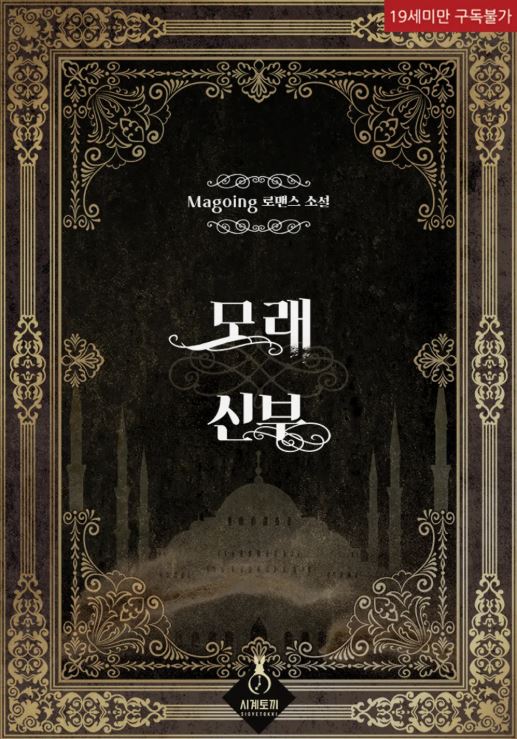
... Read More
There's a sequence where Esther, exhausted and physically marked from the night before, rolls over and looks out the tent window — and suddenly the entire scene shifts. The desert at night. "The clear night sky was dotted with stars like grains of rice, and a crescent moon hung above. The desert sand glowed like silver powder under the moonlight. Occasionally, the wind blew, causing the sand to dance and swirl." I actually stopped reading and just sat with that image. It's so beautiful it hurts, and it's positioned RIGHT AFTER the most violating scene in the book. The author is doing something really deliberate here — this breathtaking, indifferent desert beauty exists alongside Esther's suffering, and for a moment, she forgets her circumstances. "A small sigh of admiration escaped Esther's lips." That word ADMIRATION chills me. She's a captive who finds beauty anyway. Then the captives appear below her window, their faces gaunt, their voices desperate, offering her poison and escape. The framing is incredible: Esther elevated physically (in the tent, above them) but completely enslaved, while those below in the dirt hold the only thread of freedom. The visual composition alone — the moonlight, the sand, the silhouette of starving people against the vast desert — feels like a painting. And then Karzhen wakes up, and the whole atmosphere shatters.
... Read More
Karzhen's dialogue is genuinely chilling because it's so casual. He says things like "Go inside" when he's literally harassing someone in public, and his tone is described as "more grumbling than angry." He treats violence like a minor household inconvenience. But the real mastery is in how the other characters respond. Hakan's lines are sparse, muttered — "What are you doing here?" said twice, first with genuine confusion, second with a resigned sigh. His voice is that of a man who knows exactly what's happening around him and chooses (or is forced) to navigate it. Esther barely speaks at all, which is the point. When she does, it's fragments: "I-I'm sorry…", "I-I can't sleep…", "Please……" Her voice is reduced to apologies and stammers. The author is making a deliberate choice — she has no agency in speech the way she has none in body. But Karzhen's worst line has to be: "Stop being so noisy. Didn't I tell you before I hate hearing you cry?" He's not just silencing her protest — he's treating her grief as an ANNOYANCE. And the narrative frames it matter-of-factly, which is what makes it so unbearable.
... Read More
Okay I need to talk about Hemor for a minute because her story is literally haunting me. The way the narrative opens with her—this fierce, merciless woman who strings enemies' heads in boxes and pierces stomachs with spears—and then underneath all that cruelty there's this quiet devastation of a gardener from the east whose wife and child she murdered just to have him. She brought him back, he lay bedridden dying, and she refused to bury him far away, insisting he rest in her garden where he loved flowers. And then she slit her own stomach and died in front of his grave. That moment when the brothers realize she might have been crying—it broke something in me. Her philosophy that "even if we love, we must not show weakness" isn't wisdom. It's a wound she dressed up as armor. And now Karzhen and Hakan carry that same poison. I kept thinking about how Esther's relationship with Karzhen mirrors Hemor's in this twisted way—both are prisoners of powerful men, both surviving through small acts of defiance. But Esther still has hope, and Hemor didn't. That realization sat heavy after I finished reading.
... Read More
I need to talk about the sarasa flower scene because it wrecked me in the best worst way. So Esther wakes up after… everything… and Bianca is there. Just quietly cleaning her, changing her clothes, smoothing her hair like nothing happened. No judgment. No “how are you feeling?” Just care. Practical, gentle care. And Esther's first thought isn't about the trauma—it's about going home. “When I go back, I'll definitely make bookmarks. If you press sarasa flowers between the pages, the petals change color, you know?” She's talking about *flowers*. About *tea*. About her mother's favorite blend. After losing consciousness from repeated rape, her mind goes to garden paths and pressed petals and hometown earth. That's not escapism—that's survival. Her brain is building a future so she can endure the present. And Bianca? She doesn't say “it'll be okay” or “you'll get out.” She just says “Yes. It's almost time.” Like she believes it. Like she's holding onto the same dream. The way their hair mingles, breaths syncing, painting Donova in their minds… I kept thinking about how rare it is for fiction to show trauma survivors finding strength in *each other* instead of in a romantic partner. Bianca isn't fixing Esther. She's not even offering advice. She's just *there*. A lifeline made of shared memory and silver hair and calloused palms from archery practice. And that moment when Esther closes her eyes and thinks about never going near the border again? About living out her days peacefully? I cried. Not because it was sad—but because it was *hopeful* in the most fragile way possible. Like a candle in a storm. She's not free yet. She might never be. But in her head, she's already home, and that mental escape is what's keeping her alive. The author wrote: “To make it happen, she had to survive above all else.” That single sentence carries the entire emotional weight of Esther's journey. Not revenge. Not rescue. Just… survive. So she can go back to flowers and tea and her parents' arms.

Leave a comment

You must be logged in to leave comments. or
