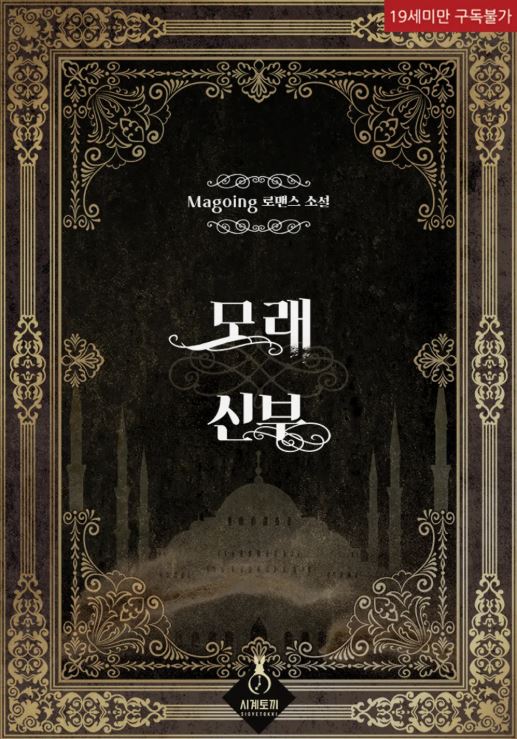
Esther is the daughter of a skilled physician in the prosperous Kingdom of Donova. When her mother falls critically ill, her father accepts a lucrative contract to accompany a merchant caravan across the treacherous desert to the nation of Gharyam, hoping the earnings will secure the expensive medicine his wife needs. Esther, aspiring to follow in her father’s footsteps, insists on joining the journey despite her parents’ fears. However, shortly after entering the desert, the caravan is ambushed by bandits from the Kemut tribe, a warlike people known for their brutality and the harsh survival-of-the-fittest ideology that governs their society.
During the attack, Esther’s father hides her in a carriage filled with merchandise, instructing her to remain silent and still. She watches in horror as the bandits slaughter the merchants and survive. The leader of the bandits, Karzhen, discovers her hiding place. Struck by her unusual beauty and pale turquoise eyes, which contrast sharply with her sandy hair, he orders her to be kept among the captives. As the only surviving woman from her group, Esther is designated as Karzhen’s personal plaything. She is subjected to relentless sexual violence and physical abuse, forced to endure his drunken whims in the desolate desert. Despite the trauma, Esther’s primary motivation remains survival. She clings to the hope of reuniting with her parents and returning to her peaceful life, convincing herself that she must endure until she can escape.
The journey to the capital takes the captives through a region known as the Ring of Hell, where a violent sandstorm kills many of the weaker prisoners. Karzhen, noticing Esther’s fading strength, drags her back from the sand and carries her on his shoulder, a gesture that sparks resentment among the other captives who view her as a collaborator. In the capital of Gharyam, Karzhen’s status as a supreme ruler becomes evident. He raids, kills, and consumes without consequence, embodying the cruelty of his tribe. Yet, despite his rough treatment, Karzhen exhibits moments of twisted possessiveness. He feeds Esther, ensures she is fed, and grows irritated when she cries outside of their intimate encounters, viewing her fear and submission as a form of ownership.
A turning point occurs when the captives reveal a desperate plan to Esther. They provide her with a potent sedative derived from a rare fish, intended to incapacitate the bandits so the prisoners can flee. Esther is asked to administer the drug by drugging the alcohol supply during a feast. However, before she can execute the plan, she encounters a dying fellow countryman who gives her a small glass vial containing a message before passing away. This encounter deepens her resolve but also introduces a new layer of mystery regarding the message’s contents.
As Esther prepares to drug the drinks, Karzhen confronts her. He seems to sense her betrayal, yet his reaction is not immediate violence but a dark amusement. He allows her to proceed, watching her with predatory interest. The narrative shifts focus to Karzhen’s internal conflict; he is beginning to realize that his feelings for Esther extend beyond mere physical gratification. His obsession with her safety and his frustration at her attempts to escape suggest that he is falling in love with his captive, a emotion he struggles to understand and control. Meanwhile, Esther remains trapped between her desire for freedom and the terrifying reality of her dependency on the man who torments her.
The story sets the stage for a complex power dynamic where the captor and the captive are inextricably linked. Karzhen’s sister, Hemor, is revealed to have died by suicide after losing a loved one, a tragic backstory that Haunts the brothers and highlights the emotional repression inherent in their culture. As the plot progresses, Esther discovers that her escape is not merely a matter of physical flight but involves navigating the political and emotional labyrinth of Gharyam’s court. The sedative plan fails or is interrupted, leaving Esther at the mercy of Karzhen’s changing moods. The central conflict evolves from a simple struggle for survival into a tragic romance defined by obsession, regret, and the impossibility of escape from a man who believes he owns her soul.
| Date | Group | Release |
|---|---|---|
| 2026-09-27 | citrus aurora | c53 |
| 2026-09-27 | citrus aurora | c52 |
| 2026-09-27 | citrus aurora | c51 |
| 2026-09-27 | citrus aurora | c50 |
| 2026-09-27 | citrus aurora | c49 |
| 2026-09-27 | citrus aurora | c48 |
| 2026-09-27 | citrus aurora | c47 |
| 2026-09-27 | citrus aurora | c46 |
| 2026-09-27 | citrus aurora | c45 |
| 2026-09-27 | citrus aurora | c44 |
| 2026-09-27 | citrus aurora | c43 |
| 2026-09-27 | citrus aurora | c42 |