Summary

... Read More

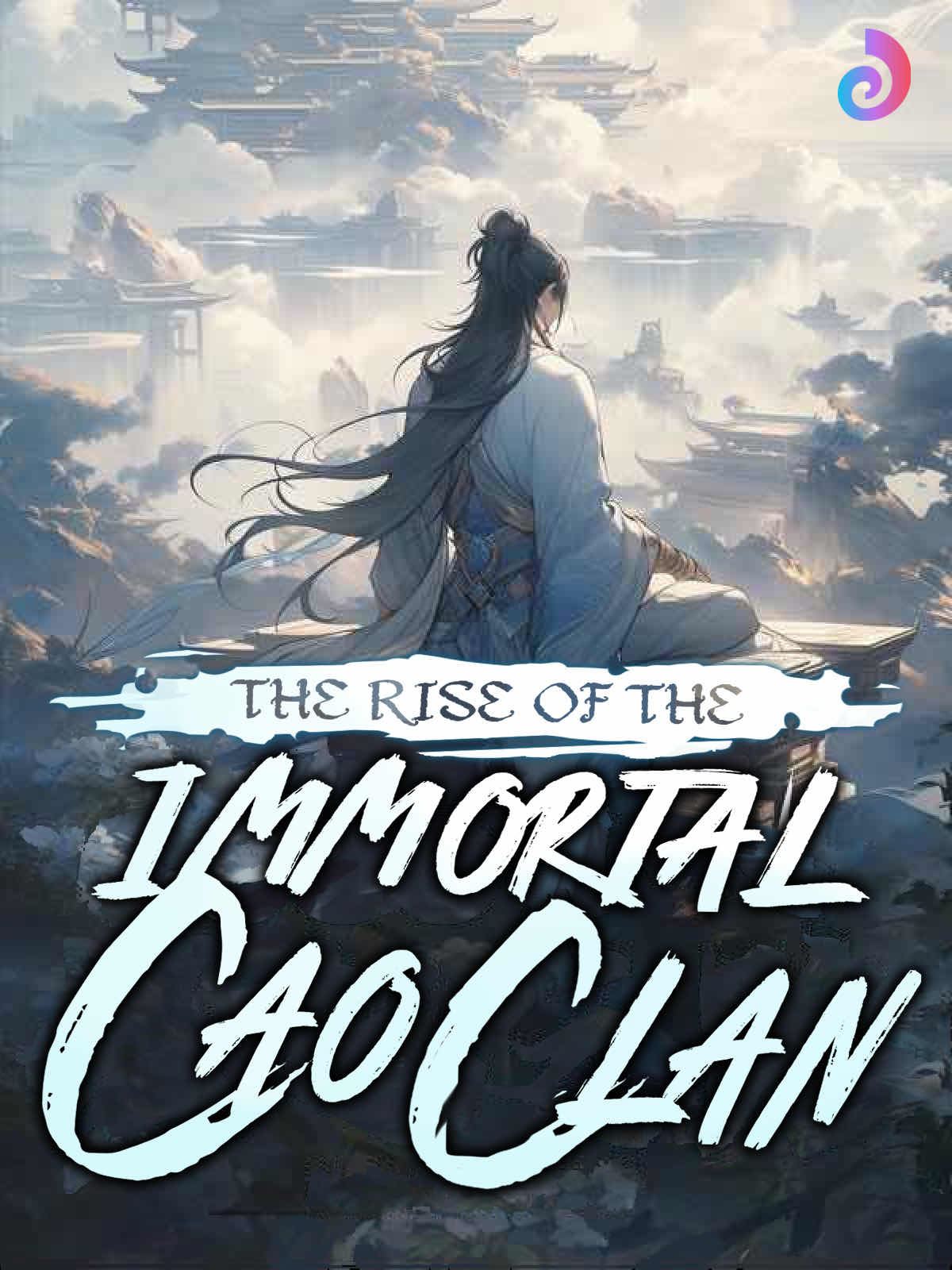
Cao Jingyan is a seventh-generation disciple of the Cao Clan, a cultivation family residing on Qiyang Peak in the Sui Kingdom. Born with five spiritual roots, indicating extremely poor aptitude, he struggled to advance in his early years. After transmigration from Earth, he discovered that an ancient bronze bell from his previous life, known as the Nanli Bell, had followed him into his sea of consciousness. Through painful daily tempering of his divine sense using the bell, he achieved a perception range far surpassing his realm, allowing him to compensate for his mediocre talent and reach the Fifth stage of Qi Refining by age seventeen.

The Cao Clan faces a severe crisis. Financial resources are dwindling due to declining mine outputs and the loss of key personnel. The clan relies on a single elderly Foundation Establishment cultivator, Great Elder Cao Daxian, to maintain its status, but his lifespan is nearly exhausted. With the biannual beast tide approaching in eight years, the clan must produce two new Foundation Establishment cultivators to survive. Lacking sufficient funds to purchase Foundation Establishment Pills, the clan leadership decides to seize one through risky external operations.

To ensure the clan's future and prepare for this operation, the Clan Leader summons three young disciples: Cao Jingyan, the talented but low-aptitude sixth brother; Cao Jingen, a true spiritual root genius; and Cao Yuanzhen, a diligent third-root cultivator. They are assigned five-year missions to different locations. Cao Jingyan is sent to Egret Island, a remote territory tasked with managing spiritual fields. Unbeknownst to his peers, he carries a secret directive from the Clan Leader to liaise with an undercover agent, Ji Bochang, who has been operating in Peng City for nearly two decades to identify opportunities for obtaining a Foundation Establishment Pill.

During his journey to Egret Island, Cao Jingyan travels through Peng City, where he encounters Ye Xia, a wandering cultivator. Suspecting she may be involved in criminal activities after noticing her keen perception, he remains cautious. While boarding a ship to Gourd Island, he is attacked by bandits, including Ye Xia, who reveals herself as an assassin targeting him. Cao Jingyan escapes by jumping into the sea, sustaining injuries in the process. He later encounters Ye Xia again on a reef, where she attempts to kill him to retrieve his storage bag. Recognizing his combat prowess exceeds her expectations, she retreats when her accomplices arrive, allowing Cao Jingyan to flee further into the ocean.

After eight days of drifting and surviving, Cao Jingyan arrives at Egret Island. He is greeted by Cao Yuanmeng, the outgoing supervisor, who hands over the island's management duties. The island contains spiritual fields growing Blue Glow Grass, a fish pond, and various defensive formations. Cao Jingyan settles into a routine of tending the fields and cultivating. He continues his daily discipline of tempering his divine sense with the Nanli Bell, which significantly enhances his talisman crafting abilities and cultivation speed.

Two months into his stay, supply deliverers from Gourd Island arrive, bringing news and a mortal girl named Xiao Ning, offered as a companion to alleviate the isolation of island life. Cao Jingyan declines her services initially but accepts the logistical support. As he integrates into his solitary life, he advances to the Sixth stage of Qi Refining, with his divine sense range expanding to ninety-two zhang. The narrative concludes with Cao Jingyan establishing a stable foothold on Egret Island, continuing his secret investigations while preparing for the clan's impending critical mission to secure a Foundation Establishment Pill.

Latest Release
DateGroupRelease
2026-10-01jadescrolls c271
2026-10-01jadescrolls c270
2026-10-01jadescrolls c269
2026-10-01jadescrolls c268
2026-10-01jadescrolls c267
2026-10-01jadescrolls c266
2026-10-01jadescrolls c265
2026-10-01jadescrolls c264
2026-10-01jadescrolls c263
2026-10-01jadescrolls c262
2026-10-01jadescrolls c261
2026-10-01jadescrolls c260

Community Reviews

Rating(0 / 5.0, 32votes)
5 stars
0(0%)
4 stars
0(0%)
3 stars
0(0%)
2 stars
0(0%)
1 stars
0(0%)

Popular reviews

... Read More
Can we talk about how natural Cao Jingyan's inner voice is? This isn't some stoic cultivation protagonist who never has a human thought. He curses inwardly — "Damn it!" — when his shield breaks. He makes dry observations like "Four are free for me to use" when counting fish fry, completely unfazed, just doing math in his head. After the battle: "I wonder how many spirit stones this entire python could fetch? Two or three thousand, at least—a windfall!" He's literally doing the accounting while still catching his breath. The dialogue — or rather, the near-absence of it — works perfectly here because this is a cultivation novel where most of the interaction is internal. But when he does speak or think in ways that reveal personality, it's sharp. "Vile beast, you're not escaping!" shouted during the fight has that perfect blend of combat intensity and theatrical flair that fits the genre without feeling forced. His post-battle analysis is where the voice really shines though: "Its intelligence was relatively high—it probably sensed my weaker aura and dared to attack; otherwise it would've fled first." This is someone who genuinely thinks about what happened. He's not just victorious and moving on — he's cataloging. The narrative voice treats him like an actual person processing trauma and opportunity simultaneously, and that's honestly rare in this genre. Most MCs would just power up and forget the fight existed five minutes later.
... Read More
On the surface, this section seems low-stakes. No battles, no life-or-death dilemmas, just cultivation progress and budding romance. But the stakes are there—they've just shifted inward. Cao Jingyan's conflict isn't about surviving an enemy; it's about navigating grief without being consumed by it. He's learning to hold two truths at once: Lin Qingran was profound, irreplaceable, and yet life must go on. That's a quiet but intense internal war. Externally, the world is still dangerous. The rumors Cao Wang shares—demonic beasts devouring children, a sect assassination, a missing foundation establishment pill—remind us that safety is temporary. Egret Island might be a sanctuary now, but it's fragile. Jiang Wanning's presence introduces its own stakes. What happens if her feelings are unreciprocated? What if Cao Jingyan never sees her as more than a helpful companion? The emotional risk is real, even if no swords are drawn. And then there's the cultivation stake—the pursuit of immortality. Opening acupoints is progress, but it's also a race against time, against the challenges ahead. Lin Qingran warned him: five spiritual roots mean a hard road. He needs resources, a good body-tempering technique, and a Foundation Establishment Pill. All of that requires venturing out, facing dangers. So the conflict is multi-layered: personal grief, relational uncertainty, and looming external threats. The author doesn't let us forget any of it. Even in moments of peace, there's an undercurrent of tension. That's what keeps me engaged—the sense that calm is borrowed, and the world will soon demand its due. And honestly, that makes the small joys taste sweeter.
... Read More
I need to talk about Cao Jingyan's internal voice because it is genuinely one of the best things about this novel. His inner monologue reads like a stand-up routine where the comedian is also his own heckler. Let me just dump a few lines that absolutely killed me: "If she survives, having taken her belongings, she'll probably come after me, right?" — said while already walking away, which means he KNEW he was going back. "If this were a man, or if she weren't so beautiful, would I save her?" — and then immediately answers his own question with "Damn it, when did I become so indecisive and soft-hearted!" He's narrating his own moral failure in real time and somehow that makes him MORE likable, not less. The dialogue between him and himself is where the humor lives, but it's also where the characterization is sharpest. When he's treating her and muttering to himself — "A bottle of Rejuvenation Pills, over twenty bottles of Qi Condensing Pills — all fed to you. Only one jar of beast blood remains. If you don't wake after it's used up, I'm out of options." — that's not comic relief. That's a man counting his losses while pretending he's fine with it. The narrative voice itself is wonderfully dry. The author doesn't moralize about Cao Jingyan's choices. We're not told whether taking the bracelet was right or wrong. We're just given his thoughts and his actions and left to sit in the discomfort. Even the exposition about qi types and acupoints is filtered through his own confused, speculative thinking — "Could she have shattered her core to enter the Nascent Soul stage? There seem to be no Nascent Soul cultivators in the Sui Kingdom." He's theorizing aloud and the prose never breaks to explain things to the reader directly. Everything comes through his voice. That's rare and it's why I keep coming back.
... Read More
There's something really striking about the structure of this whole section when you zoom out. It opens with Cao Jingyan calculating his timeline — eighteen years old, sixth stage, ten years to Qi Refining completion, Foundation Establishment before thirty. The Nanli Bell is mentioned as aiding his divine sense training, partially offsetting slower cultivation. Then we get the most extended peaceful passage in recent chapters: farming, fishing, the rhythm of life, no fighting, no scheming. Facing the sea, spring blooming with flowers. And then the python arrives. A wounded beast fleeing some unknown enemy, finding refuge in his pond, and the cycle completing itself — the very calm he's been cultivating is what draws danger to his doorstep. But here's the thing: he doesn't just survive. He processes the python. Two hours of careful work. The venom extracted into jade. The blood preserved in jars. The meat salted and dried. The inner core refined. The beast that came to take his life becomes the exact resource that pushes him to the next realm. "A forty-zhang lake, over one hundred fifty zhang deep" — this pond has existed for centuries, nurturing life, and now it's the arena where that life is tested. The bamboo peaches won't bear spiritual fruit for another twelve years. The jujube trees need thirty. Growth here operates on human and spiritual timescales that are almost geological. The python's defeat isn't just a combat victory, it's the ecosystem working exactly as it should — the strong consuming the strong, and the careful surviving long enough to prosper.
... Read More
Dialogue here is doing so much heavy lifting, especially because so much is left unsaid. Lin Qingran's farewell note is formal, almost classical in its phrasing—'Farewell, perhaps forever. We are but passersby to each other.' It sounds like something carved into stone, final and poetic. Then there's Cao Jingyan's silence after reading it. No dialogue at all, just the jade pendant slipping from his hand. That's powerful voice through absence. Jiang Wanning's dialogue is where things get really interesting. She's deferential at first—'This humble one pays respects,' 'This servant greets Lord Yan,' full of proper titles and self-deprecation. But watch how it evolves. By the end, she's saying 'Ning'er will go cook now!' with a smile, dropping the servant language, stepping into something warmer. That shift is all in the dialogue. Cao Jingyan's lines are sparse but revealing. He doesn't ask many questions; he observes, he permits, he occasionally praises. 'Not bad, a little progress.' That's it. But it's everything coming from him. The narrative voice itself is descriptive without being overwrought, letting actions and subtle gestures carry weight. When Jiang Wanning wipes his sweat, there's no dialogue—just the description of her motion. The author trusts us to read the emotion. And when Cao Wang brings up leaving Jiang Wanning behind, the dialogue is functional but layered with subtext—he's testing the waters, gauging his lord's comfort. The humor comes in small doses, like Jiang Wanning's bright 'Lord, I've learned the ‘eggplant stew' you taught me!' It's domestic, it's light, and it feels earned. This story's dialogue isn't about grand declarations; it's about the space between words, the pauses, the unvoiced hopes. And that's why it resonates so deeply.
... Read More
Okay, so this chapter absolutely wrecked me emotionally and then immediately pivoted into wholesome fluff, which I both love and hate. Let's talk about the plot gymnastics here. The night with Lin Qingran is written like a cultivation meets romance epic—"an alternative form of combat," honey-sweet lips, primordial yang and yin merging—it's so blatant about being a sensual, transformative event that I actually blushed reading it. And then she leaves. No warning. A jade pendant and a farewell note that basically says 'good luck, don't miss me.' That's a plot twist that doesn't twist so much as it gently but firmly drops a boulder on your chest. But then—plot pivot! We get two months of growth, introduction of Jiang Wanning, and suddenly we're into a whole new dynamic. It's not all doom and gloom; the story uses Lin Qingran's absence as fuel for Cao Jingyan's cultivation and opens a door to a new character who could become central. That's smart plotting. The departure creates vacuum, and the story immediately starts filling it with daily life, subtle romance, and low-key world-building. I'm curious where the external plot is heading though—we get rumors of demonic beasts, clashing factions, and a sect investigation. Those threads feel underdeveloped right now, but they're dangling there like breadcrumbs. I hope the author doesn't abandon them while the intimate character moments take center stage. Because honestly? The romance and character dynamics are what's keeping me hooked. The plot's doing its thing in the background, but my heart is with these people.
See all reviews

Custom lists

See all custom Lists