The Returned “Jinx” Child Is Actually a True Oracle - Reviews

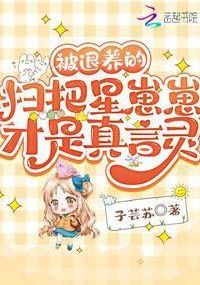
The Returned “Jinx” Child Is Actually a True Oracle
+Add to Custom List
Sort
Add review
... Read More
The stakes in these chapters are layered like an onion and I am emotional. On the surface level, there's the Hong family's baby who will literally die if the crying convulsions continue. That's immediate, visceral, life-or-death stakes that hit you in the gut. But then you layer on the Ling family's economic collapse—the ancient tomb discovery, the Wang family's corporate attack, the capital chain about to rupture. The grandfather telling Ling Yixi to take Xiao Ling Bao and flee abroad for ten years? That's not just plot progression, that's a father accepting that he might lose his grandchildren to save them. And underneath all of that is Ling Yixi's internal conflict— he knows he messed up the name change, he knows the family is doomed, and he's the only one who feels guilty enough to confess. The conflict between the supernatural and the mundane is another layer: Master Huang's ether-drugged rituals versus the family's real-world business problems. Who do you trust when the fortune teller is a fraud and the business rivals are real? The author keeps all these conflicts running simultaneously without any of them feeling neglected. Every scene raises new questions: What's inside the Longevity Lock? Will the Ling family survive? What will happen when the Hong family learns the truth about Master Huang? I am not ready for this to end.
... Read More
There's so much layered meaning in these chapters that I keep finding new details on rereads. Let's start with the most obvious symbol: CLAY. Clay is shapeable. It leaves traces. It can be molded — or it can be used to mold someone else's fate. Pearl uses clay as a weapon against Little Mud, but the SAME clay (mixed with Dou Siyi's blue-purple coloring) becomes the evidence that frames an innocent child. Clay doesn't care who touches it. It just remembers everything. The teachers want Dou Siyi to "shape up" and confess, but they're ignoring the actual shape the clay has taken. The dresses are another powerful symbol. Little Mud wears Pluto and Andromeda Nebula hair ties — celestial, vast, belonging to something bigger than this petty kindergarten hierarchy. Pearl has Earth and Moon — grounded, familiar, limited. When Pearl ruins Little Mud's dress out of jealousy, she's trying to drag something celestial down to her level. But then Yin Xuetong's snow-white dress gets ruined too — and this time, the clay that stains it belongs to Dou Siyi, the girl with no mother, no power, no protection. The dress that represents Yin Xuetong's status and beauty becomes the vehicle for framing the most vulnerable child. The plastic wrap is the final symbol. Pearl tried to hide her evidence, but it was still there. Still visible. Still traceable. You can wrap things up, but you can't make them disappear. And beneath all of this is the class theme — the teachers' internal calculation about which family's money matters more. "A rising star among the capital's elite" versus "a nobody not even worthy of a name." The kindergarten isn't just a setting; it's a microcosm of the entire society this story is critiquing.
... Read More
There's a lot happening beneath the surface of this text, and I want to talk about the symbols because they're doing incredible work. The Longevity Lock. This object opens the entire batch. The Hong family thought it was protecting their baby — it was actually hastening his death. The lock, meant to secure longevity, became an instrument of death. This is the central paradox of the story: things that appear to protect can actually harm, and things that appear worthless can save. Xiao Ling Bao's SpongeBob drawing is the perfect counter-symbol — something that looks like a child's scribble but carries genuine spiritual power. The lock was ornate, expensive, and deadly. The drawing is crude, free, and life-giving. Which one do you think the Hong family ends up framing? Then there's the dress. Pearl's meltdown isn't really about a dress — it's about identity theft on a cosmic level. That white sparkly dress was supposed to be HER thing, the marker of her specialness. When Xiao Ling Bao wears it, it's not just fashion envy — it's the visual confirmation that everything Pearl thought she knew about her place in the world is a lie. The dress is a symbol of status, and its transfer from Pearl's imagined wardrobe to Xiao Ling Bao's tiny frame represents the complete reversal of their fates. And names! This is the biggest theme of all. 'Wang Xiaoni' vs. 'Ling Ziqi' vs. 'Little Mud' vs. 'Xiao Ling Bao.' Each name represents a different identity, a different story being told about the same child. The Wang family named her 'Little Mud' — something worthless, something to be discarded. The Ling family named her 'Ziqi' — a name of elegance and promise. Her uncles call her 'Xiao Ling Bao' — something warm, familial, beloved. And now Yin Xuetong is weaponizing the old name in front of the entire class, trying to drag her back into the mud. The question the text keeps asking is: which name is the true one? And the answer, I think, is all of them — because identity isn't a single thing, it's a layering of stories.
... Read More
The pacing in these chapters is absolutely ruthless and I love it. Let me break down the structure because it's textbook perfect: Chapter opens with Pearl's jealousy — quiet, internal, simmering. We get her resentment about the hair ties, her itching palms. This is the calm before the storm, and it's deliberately slow. The author lets us sit with Pearl's twisted feelings. Then BOOM — she sneaks out during pottery class. The pacing accelerates. She ruins Little Mud's dress. Feels better. Simple cause and effect. But then the story pivots. Little Mud's antler creation becomes the center of attention. The scene shifts to wonder and admiration. For a moment, I thought this was going to be a happy scene. The author lulls you. Then Yin Xuetong's jar gets ruined, she throws a tantrum, runs to the changing room, and discovers HER dress is also destroyed. The pacing snaps back to tension. Everything accelerates from here. The accusation sequence is where the pacing really shines. Teacher Han gives her speech. Silence. Pearl whispers to Yin Xuetong. Dou Siyi is framed. Xiao Ling Bao intervenes. The teachers resist. Dou Siyi breaks down. Xiao Ling Bao reveals the evidence. And then — Yin Xuetong yanking the plastic wrap from Pearl's pocket. The cliffhanger ending is perfect. We don't get resolution. We get the moment of exposure hanging in the air. I immediately wanted to read the next chapter. Also worth noting: the author doesn't rush the emotional beats. Dou Siyi's breakdown gets space. Xiao Ling Bao's trauma response gets space. The teachers' class bias gets space. Nothing feels hurried despite the high tension.
... Read More
The dialogue in this text is remarkable because it achieves something nearly impossible: making three-year-old speech sound authentic while still carrying narrative weight. Let's talk about Xiao Ling Bao first, because her voice is the standout. When she says "No" to Teacher Liu's request to help Yin Xuetong — that single word carries so much. She's not being rude, she's being logical. "Was this really fixing it, and not just making a new one for her?" That's not how a typical three-year-old thinks, but the text establishes she's a genius with adult-level cognition. Her dialogue shifts between childlike simplicity and startling perceptiveness. "The teacher bullied Dou Siyi. The teacher is not a good baby!" — this line is perfect. It's childlike in its framing ("not a good baby") but devastating in its accuracy. Yin Xuetong's dialogue is equally well-crafted: "She's just a little mud herself, of course she's good at playing with mud! Stinky mud! Rotten mud!" The repetition, the escalation, the pure unhinged toddler rage — this sounds exactly like a spoiled rich kid who's never been told no. Pearl's whisper to Yin Xuetong in the changing room — we never hear what she says, which is brilliant. The author trusts the reader to fill in the blanks. The teachers' dialogue is where it gets interesting. Teacher Han's coaxing — "Good children shouldn't interfere, okay?" — has that patronizing adult tone that's instantly recognizable. But then her internal monologue reveals the hypocrisy: "Wasn't Dou Siyi's wealthy relative overflowing with sympathy? Helping pay for a dress shouldn't be a problem, right?" The contrast between what the teachers SAY and what they THINK is where the real dialogue craft lives.
... Read More
The pacing in this batch is absolutely ruthless and I'm here for it. Let me break down why this works so well. Chapter 34 opens with high-stakes supernatural tension — a baby's life hanging in the balance, a death-hastening ghost charm, spiritual power on display. Then it pivots HARD into domestic comedy with the SpongeBob drawing scene. That tonal whiplash is intentional and brilliant. The author doesn't let you settle into one mood before yanking the rug out. Then we get the kindergarten motorcade scene, which is pure spectacle. The parent group chat intercut with the on-site description? That's a structural choice that does double duty — it gives us world-building (the Ling family's reputation, the social hierarchy of the capital) while simultaneously building anticipation for the real event: the child's arrival. And then Pearl's breakdown. This is where the pacing gets really clever. We go from the glamorous, slow-motion entrance of the Ling family to Pearl's car interior meltdown in one sharp cut. The contrast is brutal. One family is being photographed and admired; the other is in a private humiliation spiral. The author uses this juxtaposition to create dramatic irony — we know Pearl saw Xiao Ling Bao, we know she's about to explode, and then we watch her mother try to contain it. The final scene — the kindergarten welcome party — is where everything converges. The teacher's greeting, the decorated classroom, the cake... all of this setup makes Yin Xuetong's interruption hit like a freight train. The pacing here is masterful because the author gives us a moment of peace (the teacher trying to smooth things over) right before the bomb drops. If she'd gone straight from the motorcade to the confrontation, it would've felt rushed. But that brief respite makes the explosion so much more satisfying. One thing I want to flag: the transition from the Hong family scene to the kindergarten preparation felt slightly abrupt. A sentence or two of time passage would've helped. But honestly, the energy carries through anyway.
... Read More
Can we just talk about how vividly this entire pottery class sequence is written? The author doesn't just describe a kindergarten art class — they build an entire world in one room. Let me start with the opening image: Pearl seeing Little Mud's Candy Planet hair ties. Pluto and Andromeda Nebula designs — available only to royal princesses — while Pearl only has Earth and Moon. This ONE detail establishes the entire class hierarchy of this kindergarten without a single exposition dump. The hair ties ARE the worldbuilding. Then the pottery scene itself: "a complex and magnificent antler seemed to come alive, growing out of Little Mud's palm." The imagery here is almost sacred. A three-year-old creating something that stuns adults, teachers, and the principal. The contrast between Little Mud's natural talent and the wealthy children's material offerings (gemstone flying chess, diamond tiaras, actual Porsche toy cars) paints this world in one stroke. The changing room scene where Yin Xuetong finds her dress ruined — "My dress! My most beautiful dress!" — the sensory details are sharp. The gray-black clay patches on snow-white fabric, the wailing, the teachers' panic about compensation. And then the surveillance footage threat hanging over everyone like a sword. The atmosphere shifts from bright and wonderous (the antler creation) to tense and claustrophobic (the accusation scene) to devastating (Dou Siyi breaking down). The author controls mood like a filmmaker controls lighting.
... Read More
Let me just say this: the stakes in this batch went from 'save a baby from a ghost charm' to 'three-year-old social warfare' and somehow the kindergarten scene felt MORE tense to me. How is that even possible? But it is. The external conflict is obvious: Pearl and her mother versus Xiao Ling Bao and the Ling family. But the genius is in how the author layers the conflicts so they compound. Pearl's personal jealousy (the dress, the uncles) feeds into her mother's social resentment (the Wang family's perceived slight). Meanwhile, the Ling family's secrecy about Xiao Ling Bao's origins creates a pressure cooker — everyone in the parent group chat is speculating, and speculation is just unverified conflict waiting to happen. What makes this so gripping is that the stakes are real even though the combatants are toddlers. Yes, it's 'just' kindergarten. But for a child whose entire identity has been stripped and rewritten, for a child who was told she was worthless and is now being celebrated as a treasure, the social landscape of a classroom is EVERYTHING. Yin Xuetong pointing at her and saying 'Aren't you called Wang Xiaoni?' isn't a childish mistake — it's a deliberate act of social violence. She's trying to strip away the Ling family's protection and expose Xiao Ling Bao as the 'Little Mud' the Wang family discarded. And the suspense? The author doesn't let us breathe. We know Pearl is fuming in that car. We know she's already whispered to Yin Xuetong. We know the classroom is decorated and waiting. And then we watch, helpless, as the teacher tries to create a warm welcome atmosphere while the bomb is literally being armed three rows away. The moment Yin Xuetong stands up and points, the tension snaps. The classroom goes silent. The welcome party is ruined. And Xiao Ling Bao — this three-year-old who just warded off evil spirits with a doodle — has to face her first real social battle in front of twenty other children and their teachers. The stakes have never been higher, and they're measured in playground politics. Which, honestly, is exactly how a three-year-old experiences them.
... Read More
I need to talk about the uncles because THIS is the character dynamic that has me absolutely obsessed. Seven brothers, all top-tier in their fields, all completely devoted to this three-year-old girl, and the funniest part? They're competing over who gets called first on her smartwatch. Let me repeat: a three-year-old's emergency contact list has become a battlefield for seven grown men's egos. The text literally says 'a strange sense of rivalry had ignited among the uncles' and I was wheezing. But it's not just comedy — there's real depth here. Ling Xuanyan, the Eldest Brother and current head, is the most restrained but also the most protective. His line 'In our family, such matters are decided by Ling Bao' when Grandpa Ling refuses the Hong family's request for her to recognize the baby as a sibling? That's not just respect for a child — that's a man who understands that true authority means empowering others. And the way he handles the Hong family's request to confront Master Huang? Cold, calculated, efficient. This is a man who runs an empire before breakfast. Then there's Pearl, who is honestly kind of tragic in her own way. She's not evil — she's a spoiled three-year-old whose entire identity was built on being the special one, and now she's watching her 'dead' rival wear a dress her mother couldn't buy her, attended by seven handsome uncles, and her whole worldview is shattering. Her meltdown isn't just tantrum behavior — it's the panic of someone who realizes the hierarchy she thought was permanent is actually a house of cards. And Xiao Ling Bao herself? She's this perfect blend of ancient wisdom and toddler logic. She yawns and says 'Ling Bao is sleepy' when asked to be an elder sister, but then immediately perks up at 'keep tonight's events confidential' because 'if you tell others, it won't work anymore!' The duality of a being who can ward off evil spirits but still operates on toddler motivation is just *chef's kiss*.
... Read More
Let's talk about the dress, because this is clearly not just about a dress. The entire conflict revolves around clothing—Yin Xuetong's dress being smeared with mud, Pearl's favorite dress being torn, Little Mud's dress being the original target. Clothes in this novel seem to represent status, purity, and social standing. The mud on the dress is essentially a stain on reputation, and the Yin family's overreaction shows how obsessed these people are with appearances. But the real symbolism is in who gets blamed. Little Mud is called a 'broom star'—a traditional Chinese term for someone who sweeps away good fortune, essentially a jinx. This is deeply rooted in class prejudice. The Wang family rose to wealth but are still looked down upon by old money families like the Yins. So when things go wrong, they need someone to blame, and the easiest target is the child they've already decided is cursed. The minister's daughter that Pearl is being groomed to befriend? That's pure social climbing symbolism. The author is showing us how these families treat children as currency, as weapons, as scapegoats. The kindergarten itself becomes a microcosm of the adult world—hierarchies, alliances, status games, all played out by people who should know better. Teacher Han's ambition to marry into wealth through her students is the perfect micro-version of the macro-drama happening around her.
... Read More
The atmosphere in these chapters is absolutely *chef's kiss*. Let me paint you the picture: it's night, the Ling family is gathered in tense silence after a disastrous day, and then—BAM—summer rain starts pouring outside. The author doesn't just say "it rained." They make it feel like the weather itself is angry. And then the Hong family arrives with their baby screaming, and the cries merge with the howling wind and torrential rain. "Chilling to the bone" is literally what the text says and I felt it. The imagery of Ling Yixi running across the garden bridge in his soaked clothes, the blurred ink on the name change note, the Longevity Lock that smells like ether and contains a trapped spirit—it's all so vividly rendered. The worldbuilding around the masters and fate-reading is woven in naturally too. Master Huang isn't just a random fortune teller; he's someone who performs rituals with ether to drug babies and keep his reputation intact. The ancient tomb discovery affecting stock prices and family capital chains shows how the supernatural and modern business worlds collide. Every scene has this thick, cinematic quality. I could literally see the rain streaking down the windows, the baby's purple face, Ling Yixi's wet clothes clinging to him. The author knows how to make a setting feel alive and oppressive at the same time.
... Read More
The pacing in these chapters is absolutely ruthless and I respect it. We go from a playground squabble to two women tearing each other's hair out in like three paragraphs. The author doesn't waste time building tension—she just drops you into the chaos and lets it escalate naturally. The scene at the kindergarten is structured like a pressure cooker: kids fight, parents arrive, insults fly, slaps happen, reputations are destroyed. And then right when you think it can't get worse, the Wang family turns on Little Mud instead of addressing their own daughter's behavior. The transition from the public humiliation at the kindergarten to the private family scapegoating is seamless. What's clever is how the author uses the surveillance footage as a pacing device—it's mentioned early, then revisited when the family can't explain the contradiction, which keeps the reader engaged and questioning. And then Ling Yixi's entrance at the end acts as a perfect cooldown after all that chaos. He's calm, measured, and completely unimpressed by the drama around him. The chapter ends on his approval of Little Mud, which gives the reader a moment of relief after the emotional whiplash. It's like the author knows exactly when to hit you and when to let you breathe.

Leave a comment

You must be logged in to leave comments. or
