Summary

... Read More

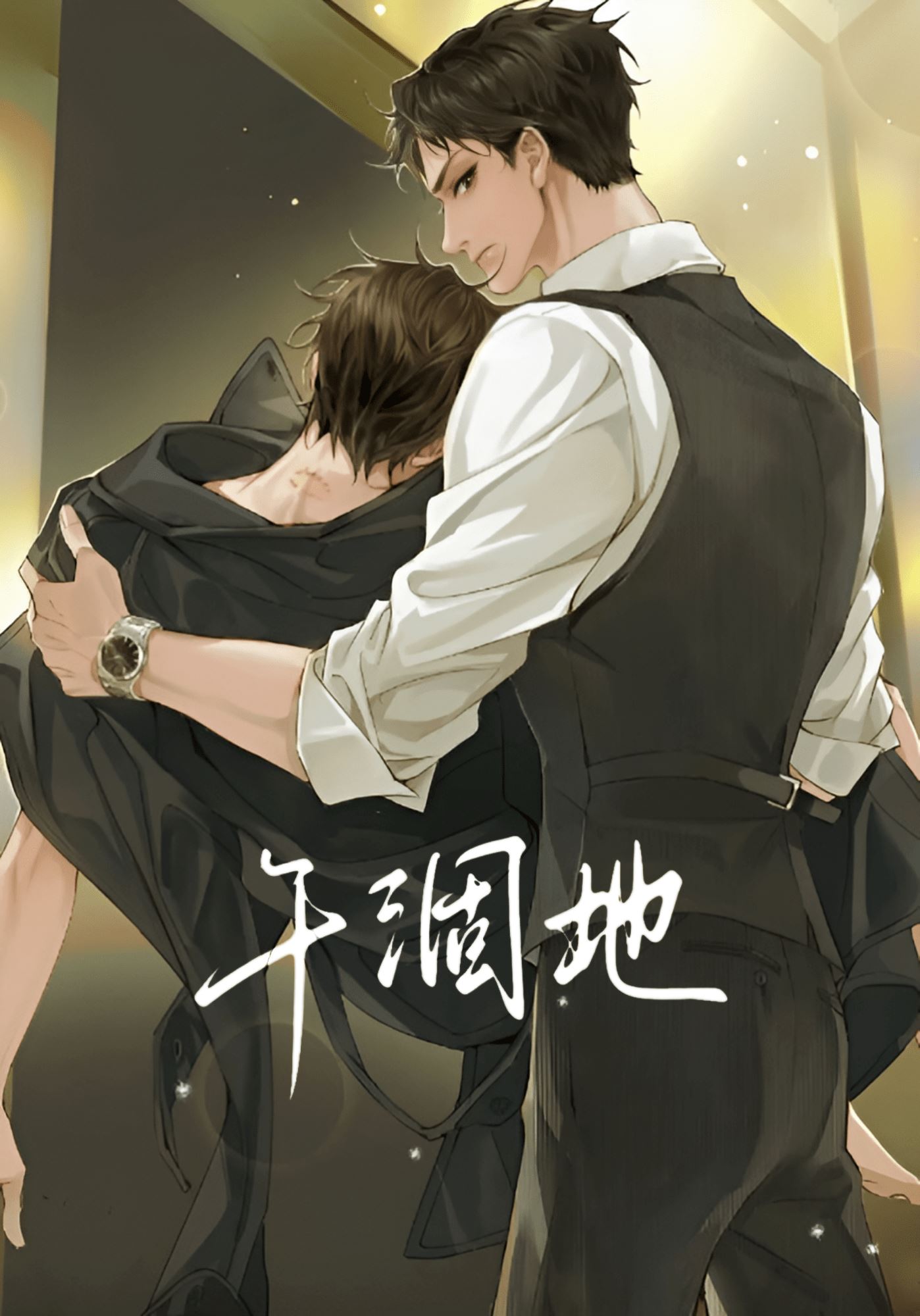
Taisei Kento was a thirty-something salaryman whose life had been consumed by relentless corporate exploitation. For nearly a decade, he endured a grueling routine of working from the first train to the last, often pulling consecutive work streaks that topped twenty days without rest. His existence was defined by a tyrannical boss who screamed orders and a junior colleague who deliberately feigned incompetence to offload duties onto him. Taisei’s diet had deteriorated to packaged jellies, and his social life had completely evaporated. On the night of the twenty-third day of his longest work streak, while climbing the stairs to his apartment in the dead of night, his heart gave out. He died from overwork, leaving behind no significant legacy, no close friends, and no family, only a profound exhaustion that lingered even in death.

Upon passing, Taisei’s consciousness did not vanish into nothingness but instead drifted into a featureless white void. Here, he encountered a figure named Radiel, an androgynous being with black hair tied in a ponytail, dressed in a stiff suit, and possessing a pair of white feathered wings on his back. Radiel identified this location as the space between reincarnations, a transitional realm for souls preparing for their next existence. He confirmed Taisei’s identity and revealed that the circumstances of his previous life—specifically the unfairness of his suffering—were considered an error in the cosmic order. As compensation for a life devoid of happiness, Radiel offered Taisei the opportunity to transfer to another world under his jurisdiction, granting him the power to customize every aspect of his new existence.

Radiel explained that Taisei could be reborn as a baby or retain his current age, with control over his appearance, talents, environment, and social status. The offer was effectively a blank check for a second chance at life. Taisei, still reeling from the sudden revelation, did not ask for wealth, power, or magical combat abilities. Having spent his entire previous life serving others, his only desire was to never work again. He explicitly rejected the offer of vast estates, titles, and opulent mansions, stating that material abundance would only bring new forms of burden and expectation. Instead, he requested a modest, self-sufficient life. He asked for a healthy body, a small house with a garden surrounded by nature, minimal knowledge of the new world to avoid complications, and a wish to appear slightly younger to extend his lifespan.

His specific request for a practical ability to aid in his secluded lifestyle was surprisingly difficult for Radiel to fulfill. The angel翻through his documents, searching for a skill related to vegetable cultivation, but found no standard entry. He noted that such a mundane request was unique and not typically recorded in the database of reincarnation bonuses. After some deliberation, Radiel devised a custom solution, promising Taisei the perfect skill to ensure his quiet, slow life. He instructed Taisei to close his eyes and relax as the transfer began. White feathers scattered around them, and a pure white light enveloped Taisei’s vision, signaling the start of his journey to the new world. The narrative concludes with Taisei being sent away, leaving his traumatic past behind, though the nature of the custom skill remains unspecified as he enters the void of reincarnation.

Latest Release
DateGroupRelease
2026-09-26knoxt c1

Community Reviews

Rating(3.9 / 5.0, 8votes)
5 stars
3(38%)
4 stars
2(25%)
3 stars
2(25%)
2 stars
1(13%)
1 stars
0(0%)

Popular reviews

... Read More
Three chapters, six thousand characters, and the entire premise is established, the protagonist's backstory is delivered, and he's already made his wish and sent off to another world. How does the author fit all of that in without it feeling rushed? The pacing works because the backstory isn't dumped—it's revealed in fragments across the conversation. First we get the overwork death. Then the junior. Then the jelly meals. Then the 23-day record. Each detail drops at a moment when Radiel is asking follow-up questions, so it feels like natural dialogue rather than exposition. The Radiel consultation scene is structured like a reverse negotiation. Every time Taisei rejects a conventional fantasy reward, Radiel offers something bigger. The escalation creates rhythm: mansion—no, fortune—no, servants—no. It's almost comedic in its repetition but the humor never undercuts the sincerity. The only slightly dragged moment is the skill-selection scene where Radiel flips through documents struggling to find a vegetable-growing ability. It's a brief beat of comedy that lightens the mood before the transfer. Smart choice—without it, the whole thing would be too tonally flat. The ending—"Close your eyes and relax. Have a nice life in another world."—lands perfectly. No cliffhanger, no hook for the next chapter. Just a gentle fade-out that matches the story's entire philosophy. The pacing itself is laid-back, and that's the point.
... Read More
On the surface this is a standard reincarnation story. But peel it back and it's a devastating critique of work culture disguised as wish-fulfillment fantasy. The number 23. Twenty-three consecutive days of work without a break. That's not normal加班, that's exploitation. And Taisei's response? He thought about how "strong" humans are. He internalized his own abuse as a testament to human resilience. That's the tragedy the story is really about—not death, but the normalization of self-destruction. The white feathers on Radiel are interesting. Feathers symbolize freedom, ascension, transcendence. But they're on a being who operates like a corporate middle manager with paperwork. The symbolism is tangled on purpose: even the afterlife is institutionalized. Even paradise has HR. "I don't want to work"—three words that should be radical in a genre where protagonists spend their second lives conquering kingdoms. But here they're just honest. The vegetable-growing skill request is the ultimate symbol: not a weapon, not magic, but the ability to grow food peacefully. Self-sufficiency as rebellion. The title of this series (or at least the vibe of it) seems to be: what if the real cheat ability is doing absolutely nothing for the rest of your life? That's not just a comedy premise. That's a philosophical statement about what a good life actually means.
... Read More
I need to talk about how the author makes me genuinely feel for this guy without any romantic subplot or tragic backstory drama. Just... ten years of taking the first train and last train home. Eating jelly because packing real meals felt like too much effort. A junior who fake-incompetenced his way out of work and left Taisei holding the bag. The most devastating line isn't dramatic at all. It's: "I remembered walking up the stairs of my apartment building at midnight on the 23rd day after I broke the record for consecutive days of work, thinking that human beings were quite strong." That's it. That's the emotional climax of three chapters. He's prideful about his own suffering. He's counting his overwork like it's an achievement. And then Radiel just looks at him and says "You haven't had a very good life, have you?" with genuine pity. What gets me is that Taisei doesn't even complain. He just says "No, I haven't" and moves on. The emotional restraint is what makes it hurt. He's so normalized to this level of suffering that the afterlife is the first time anyone has asked him how he actually feels. His wish for a quiet life surrounded by nature and a garden feels like the most emotionally honest thing in fiction right now. Not power. Not revenge. Not love. Just... peace. I'm not crying, you're crying.
... Read More
The opening scene is such a bold choice for worldbuilding. Endless white horizon, unnatural white light going on forever, protagonist lying on his back in an empty void. No sky, no ground, no orientation. Just... absence. "My submerged consciousness suddenly emerged, as if being pulled out from the deep sea." That simile does so much work. It's not just poetic—it tells us his consciousness was drowning in his old life's exhaustion and this white space is the moment of surfacing. The void isn't terrifying; it's relief. And Radiel—oh my god, Radiel. An upside-down face appearing out of nowhere, black ponytail, androgynous features that blur masculine and feminine, stiff suit, and white feathers on his back. The visual contrast between corporate sterility (the suit, the documents, the procedural questioning) and ethereal beauty (the feathers, the upside-down entrance, the pure white light) is immediately establishing tone. This isn't your typical fantasy heaven. There are no pearly gates or clouds. It's more like a bureaucratic limbo—a paperwork-driven transition zone where an angel in a suit processes your death like a civil servant. The aesthetic is minimalist to the point of clinical, which makes it feel eerier and more memorable than any elaborate heavenly palace would. I keep imagining this as a visual panel: just white, white, white, and this sharply dressed winged figure holding files. Cinematic as hell.
... Read More
Okay so this is honestly the funniest subversion of the entire isekai genre I've read in forever. You know the formula: dead salaryman, benevolent angel, OP cheat skill, becomes a hero or a dragon lord. Right? That's what the text sets you up for. Radiel literally says "you can have wealth, honor, whatever you want" and I was fully expecting Taisei to ask for unlimited mana or the Sword of the Gods. Instead he says "I just want to grow vegetables in a small house and never talk to anyone again." And honestly? It's brilliant. The plot doesn't twist for the sake of shock value—it reveals character. Everything we learn about his previous life (the 23-day work record, the jelly meals, the junior who dumped work on him) is specifically calibrated to make his wish feel earned, not comedic. He's not being contrarian; he's exhausted to his bones. What's interesting is the structural irony: the system that usually grants power to ambitious protagonists is here trying to grant him everything except what he actually wants. Radiel keeps pushing toward the conventional fantasy rewards—vast estate, opulent mansion, numerous servants—and Taisei keeps gently refusing. It creates this quiet tension that's more engaging than any battle scene could be. "I promise you a life full of hope this time." That line hit me because hope for this guy doesn't mean power. It means rest. That's the whole joke and the whole point.
... Read More
who is the writer
See all reviews

Custom lists

See all custom Lists