Summary

... Read More

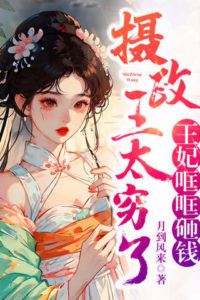
Yu Sheng is the legitimate eldest daughter of the wealthy Yu merchant family in Lizhou. Having spent her youth traveling freely under the doting care of her father, she returns home unexpectedly after receiving an urgent letter. Upon her arrival, she discovers her family in disarray. Her father, Yu Yuan, lies in a coma after being pushed from a balcony during a banquet with Xu Liu, the sixth son of the powerful Liyang Marquis. The conflict originated when Xu Liu attempted to forcibly take Yu Sheng’s younger half-sister, Yu Xuan, as a concubine. When Yu Yuan refused, Xu Liu assaulted him, leaving him critically injured. The Yu family’s uncles and aunts, fearing the marquis’s influence, pressure Yu Xuan to submit to the arrangement to save the family from ruin, while the matriarch is too frail to manage the household.

Yu Sheng, who possesses memories of her previous life in the modern world, immediately assumes control. She rejects her relatives’ cowardice and refuses to sacrifice Yu Xuan. When Xu Liu arrives with armed servants to seize Yu Xuan by force, Yu Sheng physically confronts them, using a silver whip to strike Xu Liu and his men. The situation escalates until Sheng Huaijin, the Shizi of Zhenguogong and a legendary young general, arrives with hundreds of black-armored cavalry. Yu Sheng had previously sent a letter offering ten thousand taels of gold and military supplies from her family’s businesses in exchange for his help. Sheng Huaijin captures Xu Liu and takes him away for investigation, establishing a tentative alliance with Yu Sheng based on mutual benefit.

With the immediate threat neutralized, Yu Sheng moves to consolidate her authority within the Yu household. She demands an audit of the family accounts from her uncles and aunts, exposing their mismanagement and greed. Her relatives, feeling threatened, summon Old Madame Zhang, the stepmother of Yu Yuan, to challenge Yu Sheng’s authority. Old Madame attempts to use traditional filial piety to subordinate Madam Yu and her daughters. However, Yu Sheng counters this by announcing that her father has regained consciousness, a claim designed to destabilize her opponents and assert her role as the acting head of the family, known as Daixing Jiazhu zhi Ze.

Simultaneously, Yu Sheng secures medical aid for her father by summoning the eccentric Guiyi, a legendary physician known as the Ghost Doctor. Ye Feibai and his blind companion A-Mo arrive and successfully save Yu Yuan’s life, though he remains bedridden and requires long-term care. During this time, Liyang Marquis attempts to intimidate the Yu family further by sending a hidden arrow with a threatening note. Yu Sheng forwards this evidence to Sheng Huaijin, strengthening the legal case against the marquis’s son. The narrative establishes Yu Sheng as a capable leader who navigates political intrigue, familial betrayal, and external threats with strategic foresight and decisive action, setting the stage for a broader conflict between the merchant family and the noble house.

Novel Items

More
Document
A letter sent to Yu Sheng bringing news of disaster at home — her father severely injured and in a coma. This letter prompted her to rush back overnight.
Event
A banquet arranged by Yu Sheng's father to meet with Xu Liu and discuss the matter of Yu Xuan's forced concubinage. Instead of reaching an agreement, a conflict erupted on the third floor, resulting in the father being pushed and falling into a coma.
Item
A whip carried by Lin Wan which she uses to threaten Lu Zhengqi and shove him aside.
Document
Yu Sheng requested that Second Uncle and Fourth Uncle help her father draft a petition accusing the sixth son of Liyang Houfu of forcing a commoner into concubinage, causing injury and endangering lives. Her uncles refused, considering it impossible.
Event
The wedding party from Liyang Houfu that was sent to forcibly take Yu Xuan as a concubine. It was reported to have already arrived at the Yu family's doorstep on the third day.
Weapon
Yu Sheng's signature weapon, a long silver whip stained with blood after she whipped Xu Liu and his servants. She wielded it skillfully against the Houfu house guards before handing it to Dicui.
Latest Release
DateGroupRelease
2026-08-11shanghai fantasy c20
2026-08-11shanghai fantasy c19
2026-08-11shanghai fantasy c18
2026-08-11shanghai fantasy c17
2026-08-11shanghai fantasy c16
2026-08-11shanghai fantasy c15
2026-08-11shanghai fantasy c14
2026-08-11shanghai fantasy c13
2026-08-11shanghai fantasy c12
2026-08-11shanghai fantasy c11
2026-08-11shanghai fantasy c10
2026-08-11shanghai fantasy c9

Community Reviews

Rating(3.8 / 5.0, 17votes)
5 stars
2(12%)
4 stars
9(53%)
3 stars
6(35%)
2 stars
0(0%)
1 stars
0(0%)

Popular reviews

... Read More
Let me break down why this passage works so well structurally. The author opens with immediate tension—the hidden arrow, the note, the evidence. Within the first few paragraphs, we know someone tried to kill Father Yu and there's a conspiracy afoot. No slow build, no exposition dumps. Just: something bad happened, here's the proof, what now? Then the pacing shifts beautifully. The Ye Feibai scene is almost comedic in its casualness—dinner questions, appetite comments, lazy stretches—before dropping the emotional bomb about Father Yu's permanent disability. This contrast between light and dark is what keeps the reading experience from becoming monotonous. If every scene were high-stakes tension, you'd burn out. If every scene were calm, you'd lose interest. The transition from the sickroom to the main hall is where the structure really earns its keep. Yu Sheng gets maybe two hours of rest—'Dawn was approaching'—and immediately she's dressed, powdered, and walking into what is essentially a family trial. The author uses her preparation scene (the smoke-purple dress, the simple hairstyle, the maids attending to her) as a breather before the next storm. It's a tactical pause that makes the confrontation hit harder. And that ending—'each spouting what they believed to be perfectly reasonable arguments'—is a perfect structural pivot point. The conflict has escalated to a breaking point, and the reader is left hanging, needing to know how Yu Sheng will dismantle all of them. The chapter doesn't resolve anything; it raises the stakes and then cuts. That's how you keep someone up until 2 AM.
... Read More
Okay I need to talk about the scene where Yu Xuan drapes that outer garment over Yu Sheng while she's asleep by her father's bedside. I literally gasped. This girl stayed up all night feeding her father ginseng soup and medicinal broth, barely resting, and her sister notices and quietly covers her up instead of waking her. The text says 'Let Eldest Sister sleep a little longer' and I just— the sibling bond between these two is so understated but it hits different. No grand declarations, just a towel, a warm cloth, a garment draped over shoulders. That's the kind of family love that actually makes you feel something. And then there's Yu Sheng herself. When Ye Feibai tells her father will survive but be broken—'never be what it was before'—her response is just 'It's enough that he survived.' That's not weakness, that's a kind of fierce acceptance. She's carrying the weight of this entire household on her shoulders and she doesn't crumble. But she also doesn't perform strength for anyone. She just... does what needs to be done. The vigil scene, the dawn light breaking, her rubbing her sore neck—these quiet moments of exhaustion are what make her feel like a real person and not some invincible protagonist. The romantic tension with Ye Feibai is there too, simmering underneath everything. He shows up in a wheelchair pushed by A-Mo, blindfolded, and his first question is about dinner. 'What's for dinner tonight?' Like he's not the guy who just saved her father's life. That nonchalance is so characteristic. And when he says 'You certainly take things in stride'—there's something almost tender in that observation, like he sees her and understands her in a way no one else does. I'm here for it.
... Read More
Let me just say this about Liyang Houfu: these people are TERRIFYING and I love how the story handles the escalation. So here's the situation. Yu Sheng's father is unconscious, barely hanging on. The family is under pressure from Liyang Houfu to accept some kind of fate (sounds like they want Yu Xuan to marry into that family or something equally disastrous). Yu Sheng has already publicly whipped the Houfu's prodigal son and been negotiating with the legendary Sheng family as reinforcements. She's basically declared war on a powerful noble house. And Liyang Houfu's response? Send an assassin to kill a fourteen-year-old girl through a window. The note attached to the arrow says it all: "Be sensible and settle this matter quietly, or else watch out for the lives of your entire family!" This is the moment where the stakes shift from "family crisis" to "literal survival." The threat is no longer about social standing or marriage arrangements. It's about who lives and who dies. But here's what really gets me — Yu Sheng's reaction. She doesn't panic. She doesn't collapse. She assesses the situation with cold clarity: "One strike missed, and they withdrew immediately — clearly, they weren't here solely to kill." She's reading the assassin's intentions in real time. This is a woman who is already carrying the weight of her father's life, her mother's anxiety, her sisters' futures, and the family's reputation — and she's still processing tactical information about an assassination attempt. The author is doing something really smart with the stakes here. On one level, we have the personal stakes — will the father survive? Will Yu Xuan be okay? On another level, we have the political stakes — can the Yu family stand up to a marquis house without being destroyed? And these two levels are feeding into each other. If the father dies, the family loses its patriarch and becomes even more vulnerable. If they submit to Liyang Houfu, they lose their dignity and their autonomy. The arrow scene is the point of no return. There's no going back from an assassination attempt. Yu Sheng now knows that negotiation is off the table — this family will not back down, and Liyang Houfu has revealed they're willing to murder to get their way. What I find most compelling is how the story makes you care about the outcome. It's not just abstract family drama. We've seen Yu Xuan's vulnerability, we've felt the tenderness between the sisters, we've watched Yu Sheng pour her energy into keeping everyone alive. When an arrow nearly takes out Yu Xuan, it feels PERSONAL. The stakes have never been higher, and the author makes sure we feel every ounce of that tension. The cliffhanger ending — with that fragmented "Uncl" — is the perfect punctuation mark. The story cuts off mid-threat, mid-danger, mid-breath. You're left in that suspended moment where anything could happen, and that's exactly when the stakes feel highest.
... Read More
Can we just talk about how WELL-WRITTEN the dialogue is in this text? First — the stewards. They have this collective energy of men who thought they were smarter than a young woman and are now realizing they were WRONG. Steward Liang's shift from smug to sweating is captured entirely through dialogue: "Young lady, there's no need to be so polite. Please feel free to ask if there's anything you don't understand." → "This… this was all Second Master and Fourth Master's idea. We had no choice." That's a complete character arc in two lines of dialogue. But the REAL standout is Cui Gui. This man is a COMEDIC GEM. While being forced backward by assassins, bleeding, he says: "With this injury… bleeding so much, surely the eldest young lady will give me an extra two months' wages when she sees this, right?" GUO HU: "You need to be alive to spend it!" Cui Gui: "You've had your share of benefits, so you wouldn't understand my hardship! Today, the eldest young lady didn't even see my face. If I die here like this, I, Old Cui, would suffer a huge loss!" I AM DEAD. This man is fighting for his LIFE and he's worried about not getting recognition from his boss. The dedication to the bit is unmatched. And then later, when he finally sees Yu Sheng, his regret is that "she would never have a chance to outshine Guo Hu again." The man has no self-preservation instincts but he has PRIDE. A-Mo's dialogue is also perfect — she's mysterious, slightly bored, and casually threatening all at once: "I actually arrived too late. I had hoped to earn some silver from you, but who knew you'd handle all these people yourself." She's standing on a WALL. With a BROADSWORD. Talking about missing out on EARNING MONEY. This woman is chaotic and I respect it. And Yu Sheng's voice — calm, precise, never raising her volume even when surrounded by assassins. "The Shizi is considerate," she says while wiping blood off her sword. That's not just dialogue — that's CHARACTER. She's not impressed. She's not scared. She's making SMALL TALK with the enemy's reinforcements. The narrative voice itself is also great — it has this wry, knowing tone that lets you in on the jokes. When it says the stewards "seized the opportunity to pledge their loyalty" and Yu Sheng "didn't quite trust these fence-sitters," you feel like you're reading someone's personal notes, not a formal novel. It's conversational without being casual. That's a hard balance to strike and this author nails it.
... Read More
I need to process what I just read because my emotions are all over the place. Let's start with the Guiyi scene because it's genuinely funny and I wasn't expecting that. Ye Feibai and A-Mo arrive — he's in a wheelchair with a painted peach blossom on his temple, she's blind with white hair dressed entirely in black — and they're bickering like an old married couple. "This guy went experimenting with medicines again! Not only did he cripple himself, but he also blinded me!" And he's just spinning around in his wheelchair smiling like everything is fine. The servant beside them is sweating bullets while these two discuss healing and killing as casually as eating and drinking. Then Ye Feibai does this whole theatrical bit about his fee, and Yu Sheng just cuts through it: "A thousand taels of gold it is." No drama, no negotiation. She's not interested in his performance because her father's life is on the line. And honestly? That's kind of hot. The way she just takes charge and pushes his wheelchair herself while saying "my father's life hangs by a thread. We cannot afford any delay." But then the story pivots to something so much softer and I was NOT ready. Yu Xuan appears, limping, knees injured from kneeling too long. And Yu Sheng — who has been the strongest person in every scene — notices. She notices and she doesn't make a speech about it. She just says "Did you apply medicine to your knees?" and when Yu Xuan says no, she personally applies the ointment. The text says Yu Xuan "nearly burst into tears" but lowered her head because she was afraid her elder sister would dislike seeing her cry. That line destroyed me. This girl has been through so much — the family crisis, the pressure, the kneeling — and the simplest act of kindness brings her to the edge of sobbing. She's so starved for tenderness that a little ointment and a gentle touch is almost too much. And Yu Sheng? She's hungry (she never got to eat those noodles Dicui brought her), exhausted, terrified about her father — and she still makes space for this moment. She spends a long time applying the ointment, explaining the technique patiently, making sure Yu Xuan is comfortable. This isn't duty. This isn't obligation. This is love. The contrast between the two scenes hits you like a truck. One moment you're reading about eccentric ghost doctors and assassination attempts, and the next you're witnessing two sisters sharing a quiet moment in a side room. The author understands that emotional resonance doesn't come from big dramatic gestures — it comes from the small, specific details. The ointment. The skillful touch. The way Yu Xuan can no longer refuse. I keep thinking about that bowl of cold noodles Dicui set down. Yu Sheng didn't even get to eat them. She was too busy holding everyone together. And yet she still found the energy to be gentle with her sister. That's the emotional core of these chapters, isn't it? Not the threats or the doctors or the political maneuvering. It's the question: when everything is falling apart, who do you make space for? And Yu Sheng's answer is: everyone. Even when she has nothing left to give.
... Read More
Can we just take a moment to appreciate how distinct every character sounds? Ye Feibai's dialogue is instantly recognizable—'With me on the case, your father is naturally blessed with great fortune and a strong fate. His life is saved, and he'll wake within a day,' followed by the lazy 'However...' That pivot from confident declaration to devastating caveat is so perfectly him. He delivers bad news like he's commenting on the weather. A-Mo is equally distinctive: 'Is there anything in this world that could possibly ruin your appetite?' One line and you know this guy. He's the deadpan foil to Ye Feibai's chaos energy, and their dynamic is comedy gold. But Old Madame Zhang is where the dialogue really shines. 'How is it that when I say a few words to you, you don't want to listen?' The performative victimhood, the weaponized filial piety—'I raised him with all my heart and effort, no different from his birth mother'—this is a masterclass in writing a manipulative character through speech alone. You hate her, you fear her, and you can't look away. Yu Sheng's voice is the most interesting because it's so controlled. She doesn't raise her voice. She doesn't need to. 'Grandmother, have you come today specifically to inquire about Father's injuries?' Polite, precise, and completely devastating. Every line she speaks in that hall is calibrated. The author has given each character a distinct linguistic fingerprint, and it makes the dialogue read like actual people talking rather than plot devices.
See all reviews

Characters

See all characters

Custom lists

Oops…There is nothing here.