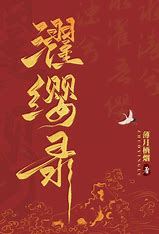
The Record of Washing Tassels
Novel Info

Summary

... Read More

Qin Ying, a criminal investigator from modern times, dies in the line of duty and transmigrates into the body of a villainess in a melodramatic novel. In the original story, this Qin Ying is the County Princess Yunyang, a pampered noblewoman obsessed with Cui Muzhi, the Marquis Changqing’s Heir. Her unrequited love drives her to frame the novel’s female lead, Lu Roujia, for murder, leading to her own death and her family’s downfall. Upon waking in the Zhaomu Pavilion, Qin Ying finds herself in the middle of a crisis: Lu Roujia is accused of killing Cui Wan, the Earl Zhongyuan’s daughter, who was found dead in a lotus pavilion ten days before her wedding. The evidence points to Lu Roujia, including a silk handkerchief found near the body, and the local magistrate, Zhao Lian, is eager to close the case by imprisoning her.

Recognizing the absurdity of the accusation and the danger of the original plot, Qin Ying intervenes. Using her forensic expertise, she challenges the assumption that the lotus pavilion is the crime scene, noting that the lake’s current could have carried the handkerchief away from the actual murder site. She proposes that Cui Wan was struck on the head before being thrown into the water. Her sharp reasoning forces the magistrate to reconsider, and she proceeds to examine the corpse herself, despite the objections of the victim’s grieving mother and the disdain of Cui Muzhi. Qin Ying discovers drag marks and external injuries, confirming that the murder occurred elsewhere, likely in the garden’s artificial mountain cave, before the body was moved.

The investigation is complicated by the sudden arrival of Xie Xinglan, the ruthless Envoy of the Longyi Guards. Unlike in the original novel, where he remains a passive observer, Xie Xinglan takes immediate control of the case, detaining the guests and demanding separate testimonies. Qin Ying learns that Xie Xinglan has recently undergone a drastic personality change, possibly due to a poisoning incident, and has already made enemies of powerful families, including the Cui family. Despite his cold demeanor and suspicion, Qin Ying realizes that his involvement offers a chance to uncover the truth before the original timeline’s tragic events unfold. She collaborates with him to analyze the testimonies of the guests, identifying inconsistencies in their alibis regarding their movements through the cave system.

As the investigation progresses, Qin Ying navigates the treacherous social landscape of the capital’s nobility. She maintains a facade of her former self to avoid suspicion while secretly gathering clues. Her father, the Marquis Linchuan, unaware of her true intentions, believes she is investigating to win Cui Muzhi’s affection and assigns a guard to protect her. Qin Ying, however, is driven by a desire to solve the puzzle and prevent the innocent Lu Roujia from suffering the fate destined for her in the novel. The story sets the stage for a complex mystery where Qin Ying must outwit both the murderer and the political machinations of the court, all while managing her complicated relationship with the volatile Xie Xinglan and the indifferent Cui Muzhi.

The narrative shifts from a simple murder mystery to a high-stakes political thriller as Qin Ying delves deeper into the secrets of the Great Zhou dynasty’s aristocracy. She uncovers layers of corruption and hidden grudges among the guests, realizing that Cui Wan’s death is not an isolated incident but part of a larger web of intrigue. Xie Xinglan’s aggressive tactics and Qin Ying’s forensic insights create a powerful dynamic, forcing the suspects into a corner. As they close in on the truth, Qin Ying must also protect herself from the original plot’s fatal trajectory, which threatens to kill her just days after the case is solved. The story follows her journey from a despised villainess to a key investigator, as she strives to rewrite her destiny and bring justice to the deceased.

Latest Release
DateGroupRelease
2026-08-11shanghai fantasy c66
2026-08-11shanghai fantasy c65
2026-08-11shanghai fantasy c64
2026-08-11shanghai fantasy c63
2026-08-11shanghai fantasy c62
2026-08-11shanghai fantasy c61
2026-08-11shanghai fantasy c60
2026-08-11shanghai fantasy c59
2026-08-11shanghai fantasy c58
2026-08-11shanghai fantasy c57
2026-08-11shanghai fantasy c56
2026-08-11shanghai fantasy c55

Community Reviews

Rating(4.1 / 5.0, 10votes)
5 stars
4(40%)
4 stars
3(30%)
3 stars
3(30%)
2 stars
0(0%)
1 stars
0(0%)

Popular reviews

... Read More
The opening scene at Qingyang Temple — scorched by smoke and fire, a hole leading to the front hall, damp and filthy — immediately sets this grim, almost claustrophobic tone. You can practically smell the incense mixing with the rot. Xie Xinglan rubbing at the scorched area while explaining the intoxicating incense... that's a very tactile, sensory detail. The author isn't just telling you what happened, they're making you feel the texture of the place. Then there's the contrast of the noble residences. Earl Weiyuan's mansion — closed doors, stewards blocking entry, the Earl already at the palace. It feels insulated, protected by power. The Minister of Personnel's residence — same thing, another closed door. But the Fu family estate? 'Eerily quiet.' That word choice is deliberate. Something is wrong there. And then — the sunset. 'By the time they left the Fu residence, the sun had already set, and the golden sunset spread across the sky.' This is such a beautiful, almost cinematic moment. After all that investigation, all that tension, there's this quiet beat of natural beauty. It gives you a breath. But it also feels like the end of something — the day's work done, the clues gathered, the night ahead full of uncertainty. The world feels lived-in. The imperial examinations, the marriage alliances, the Empress choosing a consort — all of this isn't just backdrop, it's the engine driving the plot forward.
... Read More
The pacing here is doing something really smart. We open with a forensic detail — intoxicating incense, fifteen minutes to unconsciousness — and immediately the stakes are raised. This isn't a casual murder; it's premeditated, calculated, and the killer is still OUT THERE. Then Xue Xianzhi arrives like a thunderclap. His entrance shifts the entire scene from investigation to confrontation. The father vs. son dynamic between him and Xue Suqing adds emotional weight without slowing things down. Within one scene, we've gone from crime scene analysis to family drama to a new suspect pool. The carriage ride sequences are where the pacing really shines. Each residence they visit — Earl Weiyuan, Minister of Personnel, Fu family — operates as its own mini-chapter with its own atmosphere and revelations. The pattern of closed doors and evasive servants creates this rhythm of frustration and persistence. You want them to get answers, and the author keeps just barely withholding them. The Fu Ling scene is the emotional peak of this batch. The teacup trembling, the confession about Concubine Zhang's gossip, the desperate request for secrecy — it's compact but loaded. And ending on the sunset? Perfect. It gives the reader a moment to process before the next wave of investigation hits. One concern though — the exposition about noble education and calligraphy teachers felt a little info-dumpy. But it was necessary to narrow the suspect list, so I'll forgive it.
... Read More
Okay so let me just say — the suicide note being a FORGERY is such a satisfying twist. Like, Xue Suqing was ready to sweep it all under the rug, calling it an accident, and then his own FATHER shows up with the audacity to say the handwriting is sloppy. I love that old man Xue Xianzhi. He didn't come here to make friends. He came to burn the whole thing down. And the intoxicating incense detail? That's the kind of clue that makes you sit up straight. It connects the killer's timing — they had to drug someone, get them unconscious, stage the scene, and make it look like suicide. The fact that Xie Xinglan immediately latched onto this shows he's actually thinking, not just going through the motions. But what really got me is the butterfly effect Qin Ying is noticing. In the original story, Zhao Yumian was supposed to be chosen as the Second Prince's consort. Now? She's 'sick.' And Jian Fangfei gets summoned instead. The plot is DIVERGING because of Qin Ying's presence. That means everything we thought we knew about how this story goes is now unreliable. Which is both terrifying and exciting. The Cui Wan secret affair subplot is also peeling back slowly — Concubine Zhang's gossip about Wan feigning illness and having an 'unspeakable matter.' This isn't just a murder mystery anymore, it's a web of lies spanning years. I need to know what happened four years ago.
... Read More
Okay so the opening chapter just absolutely dropped me into a murder mystery and I am HERE for it. Let me just say — the setup is classic transmigration revenge-the-villainess trope, but the execution? Chef's kiss. We open with Lu Roujia already on her knees, accused of murder, with a silk handkerchief as the sole piece of evidence. The author wastes zero time getting to the tension. No slow burn intro, no 'and then she woke up' nonsense. We're in the middle of the drama immediately. But then Qin Ying stands up and completely flips the script. The handkerchief logic? Genius. 'It could have floated on the water.' Like, that's it? That's the pivot that changes everything? I love how the author uses a simple physical observation to dismantle what everyone accepted as ironclad evidence. The scene where Zhao Lian goes from smug to panicked is so satisfying. And the revelation that Lotus Pavilion might not even be the primary crime scene? That's the kind of twist that makes you slam the book on the table and immediately keep reading. Also, the pacing is incredibly tight. Twenty thousand characters and we've already had a murder, a framing, a transmigration reveal, and the first major plot turn. The author knows exactly how to keep you hooked. Every paragraph raises a new question. Who actually killed Cui Wan? Where did it happen? And what's Qin Ying's endgame now that she's in this body?
... Read More
'A silk handkerchief wouldn't be carried so far by the wind, nor would it grow wings and fly over on its own. However, it could have been carried by the lake's current.' This single line from Qin Ying is doing so much thematic heavy lifting and I'm obsessed with it. The handkerchief — a delicate, personal object associated with femininity and domesticity — becomes the pivot point of an entire murder investigation. It's the kind of evidence that feels intimate, almost poetic, which makes its dismissal all the more powerful. The authorities treated it as proof because it was found near the body, but Qin Ying sees what they couldn't: that the water doesn't care about your assumptions. The lake itself is such a loaded symbol. Yingyue Lake — 'Reflection Moon Lake' — sounds beautiful, romantic, almost dreamlike. But it's also where a dead body is floating, and where evidence is drifting away from the scene of the crime. The water connects everything but reveals nothing on its own. You need someone to follow the current, to trace where things actually came from. And then there's the transmigration element itself — Qin Ying floating between two worlds, two identities, two stories. She's like that handkerchief: displaced, carried by currents she didn't choose, landing somewhere unexpected. The original story wanted her to be the villain who destroyed the heroine. But the currents of her own will are carrying her somewhere else entirely. Truth, like water, finds its own path. And Qin Ying is the one who knows how to follow it.
... Read More
'Don't be afraid.' Three words and suddenly the entire power dynamic in that pavilion shifts. I need to talk about Qin Ying because this woman is absolutely fascinating. In the original novel, she was the villain — the obsessed, scheming County Princess who ruined the female lead out of jealousy. But here's the thing: the real Qin Ying died in the line of duty as a criminal investigator. So when this transmigration happens, it's not some random person becoming a villain. It's a professional investigator who happens to be trapped in the body of the story's worst antagonist. The irony is delicious. Her interaction with Lu Roujia is where it all starts. Everyone expects her to slap her — she's literally been trying to slap Lu Roujia all chapter — and instead she wipes away her tears. The shock on everyone's faces, especially Cui Muzhi's, is priceless. And Lu Roujia's reaction? She thinks Qin Ying is the only one who believes her. That's such a heartbreaking detail — the tragic heroine has so little faith in anyone's kindness that the villain's sudden support feels like a lifeline. Then there's Cui Muzhi, the male lead, who can't even look at Qin Ying without disgust. The arranged marriage tension, his cold indifference, his complete refusal to protect the woman he's supposed to marry — he's already established as the kind of man who will cause so much pain. And Qin Ying? She's not falling for it. She's already seen his character in the original text and she's done. She's not here to win his love. She's here to solve the case. The fact that he has no idea what's coming for him is the best part.
See all reviews

Characters

See all characters

Custom lists

See all custom Lists