The Reason Our Paths Crossed
+Add to Custom List
Genres:
Novel Info
  • Author:
  • Status:Ongoing

Summary

... Read More

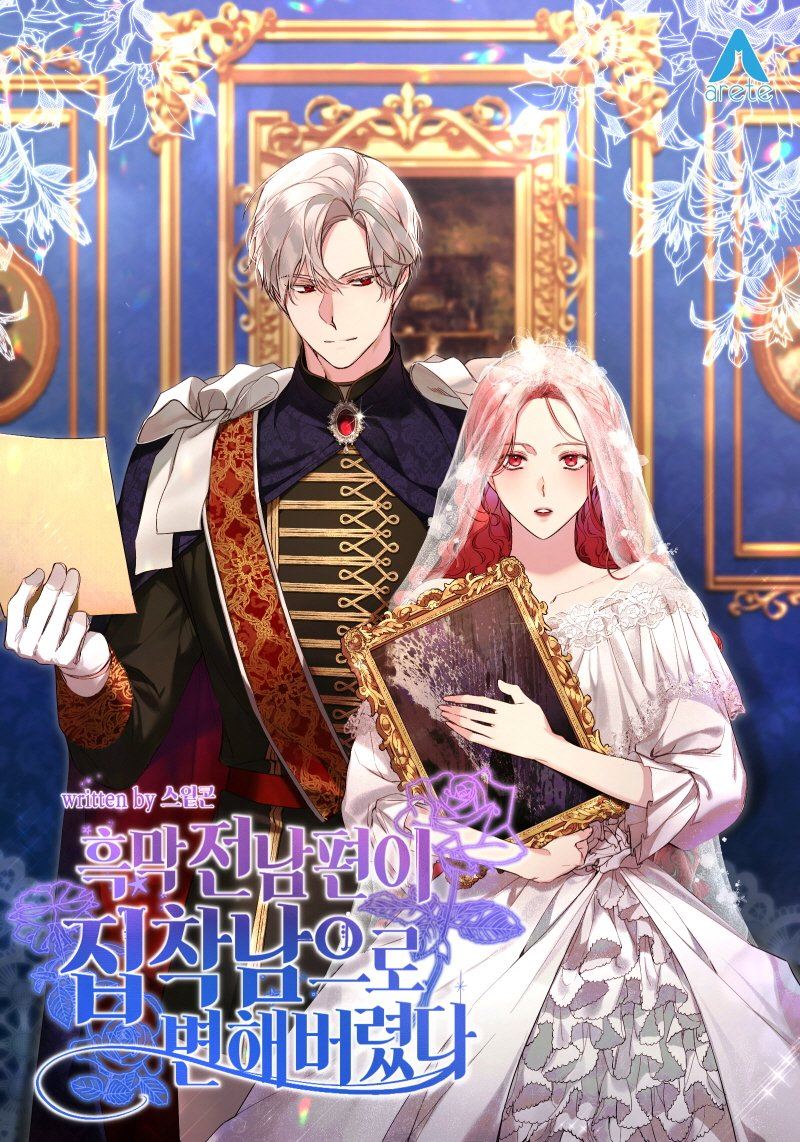
Harriet Desher, the daughter of a poor knight, married Eugene Usra, the Earl of Usra, five years ago. The marriage was arranged under false pretenses; her father, Jin Desher, had replaced Eugene on the battlefield at the request of the previous Earl to save his son's life, and Eugene had promised to marry Harriet as repayment. However, Eugene harbored deep, unrequited love for Princess Diana of Hebnia. When Diana married another, Eugene impulsively proposed to Harriet in anger, a fact he denied but which Harriet suspected due to his continued affection for the princess. For five years, Harriet endured the hostility of Eugene’s grandmother, Elizabeth, who despised her common background, while Eugene remained emotionally distant, rarely visiting her and avoiding intimacy. Harriet believed their union was built on a lie and felt unworthy of the noble title she held.

The death of Elizabeth removed Harriet’s primary oppressor, prompting her to finally confront the reality of her situation. She presented Eugene with divorce papers, having prepared them with the help of the family lawyer and butler, Pendleton. Eugene was stunned and initially refused, claiming he was happy and that there was no reason to divorce. Harriet revealed that the marriage had been wrong from the start and that she had discovered the truth about her father’s sacrifice and Eugene’s initial reluctance only two years prior. She expressed her desire to leave before her lingering feelings weakened her resolve. Eugene, however, argued that a husband does not need a reason to reject divorce and pleaded with her to stay, though his demeanor suggested internal conflict rather than genuine desire to maintain the marriage.

Amidst their argument, a letter arrived from Princess Diana, who claimed she was trapped in a miserable marriage and needed Eugene’s help. Upon seeing the name, Eugene’s demeanor shifted instantly, and he excused himself to read it. While Eugene was occupied, Harriet spoke with Pendleton, who admitted he had once doubted her but now respected her kindness, particularly recalling how Harriet had cared for Elizabeth during her final illness despite the countess’s lifelong abuse. Pendleton warned Eugene that the divorce would enter a six-month legal adjustment period during which it could be canceled, a detail Eugene seemed to overlook in his haste to respond to Diana. Eugene departed for the capital and subsequently booked passage on a ship to Piale to aid Diana, effectively choosing his love over his wife.

Harriet completed the divorce proceedings in Seldel, refusing any financial settlement or property to avoid lingering ties with Eugene. As she left the courthouse, she encountered a newspaper article detailing Diana’s divorce from the Prince of Alpen, confirming that Eugene’s departure was driven by his continued obsession with the princess. Heartbroken but resolved, Harriet impulsively boarded a train to the remote town of Edal, seeking distance from her past. On the train, she befriended a vibrant widow named Audrey Ebrahim, bonding over a popular serial novel. Upon arriving in Edal, Harriet’s only possession, a locket containing a portrait of her parents left by her father, was stolen by a young boy in the market. The local police dismissed her report, leaving her destitute and alone.

Struggling to survive on minimal funds, Harriet responded to a job advertisement for a housekeeper offering room and board. She traveled to a secluded, fenceless mansion in the countryside owned by Richard, a reclusive and handsome novelist suffering from severe PTSD related to his military past. Richard, who lived in darkness to avoid triggering memories of war, was initially hostile and suspicious of intruders. However, Harriet, desperate for shelter and work, persisted. Richard, noting her determination and lack of pretense despite her rough appearance, reluctantly agreed to let her stay. The story concludes with Harriet beginning her new life as Richard’s housekeeper in Edal, far from the noble society that had rejected her, while Eugene remains lost in his pursuit of Diana, unaware of the permanent consequences of his choices.

Latest Release
DateGroupRelease
2026-10-03dusk blossoms c87
2026-10-03dusk blossoms c86
2026-10-03dusk blossoms c85
2026-10-03dusk blossoms c84
2026-10-03dusk blossoms c83
2026-10-03dusk blossoms c82
2026-10-03dusk blossoms c81
2026-10-03dusk blossoms c80
2026-10-03dusk blossoms c79
2026-10-03dusk blossoms c78
2026-10-03dusk blossoms c77
2026-10-03dusk blossoms c76

Community Reviews

Rating(0 / 5.0, 46votes)
5 stars
0(0%)
4 stars
0(0%)
3 stars
0(0%)
2 stars
0(0%)
1 stars
0(0%)

Popular reviews

... Read More
Okay so this whole section has been quietly laying out SO much about Richard and I'm just sitting here having minor heart attacks. On the surface it looks like a domestic drama—guy writes a successful novel, friend checks in on him, new housekeeper brings tea—but then you realize there's an entire subterranean plot happening underneath. Richard's drug side effects aren't just a throwaway detail. Derek literally says Richard "once set fire to the mansion's storage room" and couldn't remember doing it. He has gaps in his memory where he shows up somewhere without knowing how he got there. This isn't quirkiness, this is dangerous. And the fact that Derek is actively hiding this from Harriet because "if she knew... she might be on edge 24 hours a day" hits different. He's protecting her but also keeping her in the dark, which is… messy? Also the Puffs Magazine threat is a proper external plot engine. Derek drops this like "right now, many people say 'Days' is the original, but if public interest shifts... 'Days' will become a forgotten work." Commercial pressure on an already fragile creator. That's a ticking clock. And Harriet finding that photo inside the magazine—the actress with cosmetics and a seductive smile, placed right after the cliffhanger line—feels like the author is deliberately mirroring Harriet's own narrative entrapment. She opened a door by reading and now she can't close it again.
... Read More
Okay so I literally threw my phone across the bed when I hit the end of these chapters. Author Owen REALLY said 'I wonder how long it'll take Harriet to notice Richard is basically a brooding vampire aristocrat with PTSD?' The Derek-Richard-Harriet triangle is SO good. Derek gives Harriet the magazine—unpublished, mind you, after the whole theft scandal—and Richard finds out and immediately gets possessive in the most subtle way possible. He's like 'Derek gave YOU his magazine?!' but filtered through twenty layers of grumpy deflection. Classic Richard move. But the real plot bomb is Owen. Richard's nephew, fragile, quiet, stuck being the heir to the Hayles dukedom when he never asked for any of it, and Richard would literally go to war in his place instead of watching him get sent to the Yudonik border. That single line—"I'd rather go to war in his place!"—and then the reply "That's against the law" hit me like a truck. The family obligation angle is weaving in so nicely. Richard came from nowhere, survived the war, got adopted by the Alpen family, and now he's tangled up with people who think he doesn't belong. Meanwhile Harriet is just over there trying to find her necklace and accidentally becoming the emotional support human for two fundamentally broken men.
... Read More
This section is rich with symbolism that goes way beneath the surface. First, there's the black pearl necklace called 'Tears of Portka.' Elizabeth wanted to give it to Eugene, saying his neck resembled his maternal grandmother's. But she also promised the villa in Petra estate to someone else, and other relatives are demanding shares of her title. The necklace becomes this symbol of inherited privilege—something passed down through bloodlines, supposedly connecting generations, but really just another item to be fought over. Then there's this legal concept: the six-month adjustment period after divorce. I kept thinking about why the author included this detail. It's not just worldbuilding—it's thematic. The law exists because a king once deposed his queen for bearing only daughters, remarried, and caused civil war. So now there's this mandated pause—a buffer between choices and consequences. It's as if the universe itself says: you can't rush redemption. You can't skip over the damage you've caused. Eugene keeps hearing 'adjustment period' in his head even though he knows he can't have both women. The adjustment period mirrors his own internal space—he's divorced, but he's not free. He's heading toward Diana, but his heart is elsewhere. This legal requirement forces him to sit with his choices, just like the historical precedent forced the kingdom to reckon with its treatment of women. And Harriet—silent Harriet, who never asked for anything, who covered for Elizabeth, who cried alone in her room. She's the living embodiment of what the adjustment period represents: the necessary pause between destruction and rebuilding. She spent years being ignored, and now she's finally choosing herself. The train ride to Bedna is her adjustment period—moving away from what destroyed her toward something unknown. The irony is that Elizabeth, who demanded everything, gets nothing at the end. Harriet, who asked for nothing, gets everything she needs: freedom, a train ticket, and the space to become herself.
... Read More
Okay I need to talk about this scene where Harriet passes out from standing up too fast and Richard literally wraps his arms around her head and waist. Both of them just frozen there staring at each other under the oil lamp light, and Richard is the FIRST one to let go. Let me repeat that. HE lets go first. This man who refuses to let her open windows for five minutes, who locks every single door, who treats everyone like they're trying to assassinate him... he physically catches her, holds her for a beat, and then APOLOGIZES with a sharp, flustered snap. The most vulnerable moment of the entire chapter and he hides it immediately behind hostility. And what kills me is Harriet's reaction. She doesn't say thank you first. She says sorry. Sorry for falling. Sorry for whatever she did wrong. She spent the ENTIRE NIGHT outside his door pacing and crouching and half-falling asleep because she was terrified he was sick, and her first instinct when he catches her is to apologize. That tells you everything about how she carries herself in this world. Earlier there's also this tiny thing—she waves at him through the window gap while weeding, all hopeful and bright, and he just YANKS the curtain shut. No acknowledgment. Nothing. But here's the thing: he didn't have to come to that window at all. He was already watching her. He was already aware of her presence. The curtain closing isn't rejection of her—it's self-preservation. He got caught looking, and that terrifies him more than anything. These two are so dangerously close to something real and neither of them knows how to say it. Richard masks it with rage. Harriet masks it with service. But the text keeps showing it anyway—in trembling eyes, in nights spent outside locked doors, in that brief frame of contact neither can quite explain. My heart is not okay.
... Read More
There's a line early on where Harriet notices the smell: "Tobacco...? No. It smells more like burning paper." Burning paper. Not tobacco. Not food. PAPER. This man is literally consuming his own words, his own thoughts, his own history—and no one knows why. The smoke isn't just atmospheric decoration. It's the visual representation of Richard's relationship with his own mind: he writes, he burns, he erases. Whatever he's working on in that writing room, it's not meant to survive. And maybe neither is he. The locks are another symbol that won't leave me alone. One, two, three... how many? Harriet counts them like a child counting steps to the gallows. They're meant to keep people out, but really they keep Richard IN. The house isn't protecting him from the world—it's protecting the world from the possibility that someone might see him vulnerable. And then there's the weeds. "They grow back every day, no matter how often I pull them." Harriet says this almost casually, but it's one of the most thematically dense sentences in the entire excerpt. Weeds = whatever Richard is trying to burn away. They keep coming back. No matter how much you destroy, something persists. Harriet keeps pulling them not because she thinks she'll win, but because leaving them alone feels worse. The whole chapter is built on this tension between burning and growing, locking and opening, isolation and the desperate human need to be seen. Richard thinks he's fighting erosion by burning everything down. Harriet is quietly proving that growth is stronger than fire.
... Read More
Okay, I need to talk about Richard and Owen because THIS is what wrecked me. Richard volunteering for the Fifth Unit just so he could be CLOSE to his nephew, five years ago, when he COULD have sent Owen somewhere safe instead—just no exceptions, his brother said. And now Owen is rotting in a trench even closer to enemy lines, and Richard showed up again, ready to drag him out if he could. That line hit me like a truck: "I might not have been able to protect him from all hardships, but wasn't he at least providing some shade from the hot sun?" He couldn't save Owen from the war, but he could be there. That's it. That's the whole heartbreaking thing about love in wartime—you can't stop the bombs, but you show up anyway. And then Harriet comes in and completely flips the emotional axis. Richard snapping at her over those crumpled papers? Brutal. But reading it knowing what we know about his father—Jin, the man who laughed like a madman when he found out Harriet's mother died, the man who cursed at his own daughter drunk and then apologized trembling the next day—it's all just layers of inherited trauma. Harriet sees Richard losing it and what does she do? She counts out loud. One, two. She doesn't flee. She grounds him. And Richard notices it. He notices HER noticing him. That moment where he realizes his anxiety had somehow subsided just from her presence—"Was it because the medicine had taken effect quickly, as he had hoped? If that were the case, his mind wouldn't be this clear." NO, Richard. It wasn't the medicine. It was her. "...What does she know." He mutters this like he's annoyed, but he's lying to himself SO hard. I'm already writing fanfiction in my head.
See all reviews

Custom lists

See all custom Lists