The Real Young Master Becomes a Police Station Celebrity Thanks to His Animal Language Ability - Reviews

The Real Young Master Becomes a Police Station Celebrity Thanks to His Animal Language Ability
+Add to Custom List
Sort
Add review
... Read More
The pacing in these chapters is a masterclass in controlled escalation. You've got the police station chaos—multiple conflicts colliding, the stabbing, the hysterical mother, the bodyguard blocking the surgeon—all happening in rapid succession. It's breathless. And then... cut to the hospital. Quiet. Private. The Su family arriving one by one like characters entering a stage. What I love is how the author uses the hospital scene as a pressure valve. After the violence, we get family drama instead—insincere flattery, cold departures, a father more worried about face than his wife's life. The tension doesn't disappear, it just changes form. From physical danger to social danger. Then the night transition: "Under the same moonlight, different people lived very different lives." This is such a clean structural pivot. Hu Xiuchun in her VIP ward eating congee versus Su Zhisheng in his dorm getting junk food from a roommate. Two worlds, same moon. The contrast does more work than pages of exposition ever could. And the ending? A job offer from the police. Not a cliffhanger, not a twist—just a quiet 'here's your new life.' It's satisfying because it rewards Su Zhisheng's good choices without being flashy. The chapter structure moves from chaos → aftermath → contrast → resolution → new beginning. Perfect rhythm.
... Read More
The stakes in this section keep escalating and I was genuinely on the edge of my seat. Let me break down what's actually at risk here because it's not just a murder mystery — it's an entire ecosystem of exploitation. On the surface, there's the murder at the Zhang family's luxury hotel. A body was hidden there, phones were buried, and the killer was caught. That's the hook. But then you peel back the layers and there's this whole organized prostitution ring running through the Su family's entertainment company. Young, attractive people get lured in with fake promises of fame, saddled with impossible debt from cosmetic surgery loans, and then forced into sex work. Liu Meiling is the tragic centerpiece — she barely earned any money from her two-day filming job that never even aired, and her debt grew to a "suffocating level" in just two weeks. The text says: "Liu Meiling, driven to desperation by her loan debt, eventually agreed." Agreed to what? To become a prostitute. That one word carries so much weight. She didn't choose this — she was funneled into it like water into a drain. But the personal stakes for Su Zhisheng are what really got me. He's not just solving a case — he's systematically dismantling his own family. His stepmother is going to prison. His father is being investigated. The engagement banquet that was supposed to be a triumphant family moment got stormed and cancelled. And the father's response? Not remorse, not reflection — he immediately starts orchestrating online harassment against his own son. "I hope those crazy fans come through and quickly dig up Su Zhisheng's identity as the wealthy family's adopted son." This is a father who would rather see his son destroyed by internet mobs than accept that he did something wrong. The fact that Su Minghao — the half-brother — actually agrees with this, saying Su Zhisheng is "just an arrogant fool who doesn't know his place," tells you everything about how toxic this family is. The tension between Su Zhisheng's dual role is brilliant too. He's a special consultant to the police — essentially working for the law — while sitting at the same table as the people who are supposed to be his family. The interrogation scene where he watches Hu Xiuchun break down, knowing he's the one who helped catch Wang Hao and uncovered the truth... that's peak dramatic irony. He's not just winning, he's making them watch him win.
... Read More
This section is built on three major locations and each one feels completely distinct, which is impressive for how much ground the author covers. The luxury hotel where the murder happened is described with this cold, opulent detachment. It's the Zhang family's operation — a front for both the hotel business and the prostitution ring. The text mentions it's a "luxury hotel" multiple times, and that contrast between the glamorous exterior and the criminal interior is the whole point. This is where Liu Meiling died, where her body was hidden, where the phones were buried nearby. The hotel is a character in itself — a place of false beauty masking rot. Then there's the police station interrogation room, which feels claustrophobic and clinical. "In the interrogation room sat the aloof Xing Tianwei. Beside him, the officer in charge of questioning, Zhang Zhengyang, had a kindly face but an extremely stern expression." The physical description of the room is minimal but the power dynamics are crystal clear. Hu Xiuchun is in a chair, powerless, while Su Zhisheng — not even in uniform — sits beside the police like he owns the place. The text emphasizes: "More critically, seated next to the two of them was Su Zhisheng, who wasn't in police uniform." He doesn't need a uniform. He doesn't need authority. He has something more dangerous — he has the truth. And the engagement banquet venue — described through netizens' photos: "an ocean of flowers and plants, paired with natural green grass. It looked like a fairyland where elves would live. All those rare flowers must have cost a fortune, and now it's all wasted." This is the most visually rich description in the entire section, and it's entirely through the lens of internet gossip. The beauty of the venue is juxtaposed with its destruction, and the netizens' reaction — "what a shame" — feels almost obscene given what actually happened. The transition between these spaces is also worth noting. The story moves from the muddy burial site → the interrogation room → the online sphere → Su Jingye's villa bathroom. Each location reveals a different layer of the story. The physical evidence, the legal consequences, the public narrative, and the private delusion. By the end, all four spaces feel connected — they're all part of the same collapse.
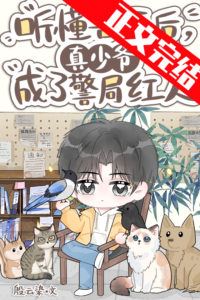
... Read More
There's this one detail that kept looping in my head after I finished this section: the phones. The killer buried them. The police dug them up. Su Zhisheng helped find them by listening to a rat snake. And these phones — these modern, waterproof, recoverable devices — become the key evidence that unravels an entire criminal empire. I think the phones are a metaphor for truth itself. You can bury them, you can cover them in mud, you can try to sink them in a river, but they're still there. Modern technology makes them almost impossible to permanently destroy. The killer thought he was being smart by burying them, but he wasn't burying them deep enough — "Without proper tools, the killer hadn't been able to bury the phones very deep, which made the search easier." That's almost poetic. Sloppy criminals leave sloppy evidence. But the deeper symbolism here is about what gets buried in this story. Liu Meiling's dreams were buried. Her agency was buried under debt and coercion. Her voice was literally silenced — she was strangled for trying to blackmail her way out. The text says: "A confrontation erupted, and in a fit of rage, the killer strangled her—ultimately leading to tragedy." Tragedy. Not justice. Not closure. Just tragedy. Then there's the snake. The rat snake that led the police to the phones. In so many stories, snakes are symbols of deception, temptation, danger. But here? The snake is helpful. It's a guide. It's the only creature in this entire story that acts purely on instinct and ends up being the hero. Su Zhisheng even says he'd dig up a snake's hands just to let it play with phones. There's a tenderness there that no human character in this story has shown for him. The engagement banquet that never happens is another symbol I can't shake. It was supposed to be a celebration — flowers, grass, an ocean of rare blooms, a fairyland for elves. But it gets destroyed by the very family it was meant to unite. The night herons flying over and scattering everything... that's not just atmosphere, that's the story telling you what's about to happen before it happens. Nature itself is rejecting this false celebration. And the pomelo leaf bath — Su Jingye and Su Minghao taking a bath to "wash away the bad luck" after being investigated. What a perfect symbol for this family. They literally cannot conceive of examining their own behavior. The only solution to their moral corruption is a bath.
... Read More
I need to process what I just read because my chest actually hurts. The strongest emotional moment isn't even a human interaction. It's the squirrel scene. Su Zhisheng is standing outside a stranger's luxury villa, holding walnuts, talking to a squirrel about a missing person. And the squirrel is scared. 'Humans are dangerous. Not safe to get close.' But it also thinks 'this young man looks so gentle. He doesn't seem like a bad person!' So it negotiates. It takes the walnuts one by one, stores each in its tree hollow, comes back, and gradually builds trust. This is literally the same thing Su Zhisheng has been doing his entire life — approaching dangerous situations carefully, reading people (and animals), offering something of value, and slowly earning trust. The squirrel is a mirror. But then there's the mother-son dynamic that really got me. Su Yingmei's line 'My illness isn't that serious. The surgery isn't urgent...' — she's trying to convince herself AND her son that she doesn't want to be a burden. She's lying through her teeth and he knows it. He just pats her hand and says 'Relax. I'm fine.' He doesn't tell her the truth about how he got the money because he knows it would worry her more. And the loneliness underneath it all — Su Zhisheng is surrounded by people who either want to use him or hurt him, and his real conversations are with animals. The sparrow that brings him information. The squirrel that becomes his first informant. The husky that accidentally reveals a murder. These aren't just plot devices — they're his actual community. He's more connected to these animals than he is to any human being in the story, and that's genuinely heartbreaking. The emotional core of this story isn't about revenge or mystery. It's about a boy who was abandoned, found love with a woman who wasn't even his mother by blood, and is now navigating a world where the only beings that truly see him are the ones with fur and feathers.
... Read More
I need to start by saying: I read these chapters in one sitting. One. Sitting. The pacing is absolutely ruthless in the best way possible. The chapter opens with Su Zhisheng already several steps ahead of everyone else, dealing with the aftermath of his adoptive mother's surgery. Quick resolution — surgery went well, recovery on track — and then BOOM, he's at the police station. No filler, no wasted time. The Zhou Jiale case plays out, the family drama unfolds, and just when you think it's done, Xing Tianwei pulls him into the next thread. Then there's this week-long time skip — "over the following week, Su Zhisheng was extremely busy" — and it works perfectly. It gives us breathing room without losing momentum. We know he's juggling hospital visits and his internship, and that sets up the Gao Lijian subplot naturally. The engagement banquet recruitment feels like it's building toward something bigger, and the fact that it's connected to the Su family (the same family Su Zhisheng was originally from) is a ticking time bomb. The author is laying groundwork without being obvious about it. And the rat scene? It comes right after the relatively calm recruitment visit, and the shift in tone is jarring in a good way. One moment it's a mundane job interview, the next it's a horror-adjacent discovery about a rotting body in a basement. The escalation is seamless. What I love most is how the author controls information. We know Su Zhisheng can hear animals. We know he's connected to the Su family somehow. We know there's a fake young master. But the full picture is still emerging, and that slow reveal keeps me hooked. The cliffhanger energy is real — not every chapter ends with a dramatic hook, but the cumulative tension is relentless.
... Read More
This novel keeps peeling back layers of a society where everything glittering has rot underneath, and I am OBSESSED with how it does it. Let me just… wander through this for a bit because there's so much to unpack. Start with the orange cat. This creature is basically a living symbol of the informal economy that exists alongside official structures. It eats from a hundred households, knows everyone in the neighborhood, remembers everyone who feeds it and no one who doesn't. It's a witness to everything but committed to nothing. And yet—this utterly self-interested, unprincipled furball is the key to solving the Wang Hao case. The official investigation couldn't find him, but the cat, motivated purely by lost dried fish, provides the critical lead about Purple Jade Island and Southeast Asia. Then there's the night herons. These birds are described as having earned the nickname 'cockroach birds' because of their antennae-like feathers, but the text immediately pushes back: 'Though, their looks were far superior to actual cockroaches. And their droppings certainly weren't as small.' This is the author winking at us—the creatures we dismiss, the ones we'd rather not notice, are actually the most valuable observers. They see what humans can't. They fly above the hotel where Su Mingjie's engagement banquet is happening, literally and figuratively looking down on the elite world. The engagement banquet itself is such a loaded symbol. Su Mingjie's fans are proud because his boyfriend is 'the heir of the top-tier Wei family.' The netizens are there to gawk at the lives of the wealthy. And underneath all this luxury, a murder has just occurred—a cleaning lady (disguised, working the night shift) has been killed and hidden in a cleaning cart. The service staff who make these extravagant events possible are literally the ones being disposed of. And Su Zhisheng himself—this boy who can hear animals, who navigates between the Su family's wealth and his own modest 30,000 yuan monthly allowance, who is both insider and outsider to the world he's investigating. His stepmother's desperate financial maneuvering with the beauty salon, the Zhang family's hidden prostitution ring, the way 'legally defined' relationships become evidence—everything connects to this theme of hidden systems operating beneath respectable surfaces.
... Read More
Let me talk about the family portrait because I cannot stop thinking about it. The large photo from fifteen or twenty years ago—Su family head, first wife, two children. Then the smaller photo taken this year after Su Zhisheng was brought back. The first wife's photo is literally larger. The new family photo is smaller. The space where Hu Xiuchun's photo should be is... occupied by a smaller version. The author keeps coming back to this image like it's a thesis statement. A portrait is supposed to capture truth, right? But every photo in this house is a lie. The large photo shows a perfect family that never really existed—the first wife is dead, the children are switched, the love is performative. The smaller photo is supposed to show the "new" happy family, but it's physically smaller, a visual admission that Hu Xiuchun's position is inferior. Even the photography is hierarchy. And then there's Su Zhisheng in the large photo as a baby—"his face red, wrinkled, and not yet fully formed." He was there from the beginning and still doesn't belong. His biological father couldn't even tell his own child was switched. The portrait doesn't lie—the family is broken. The photos are just trying to convince everyone otherwise. The yellow sweater is another symbol that got me. It's hand-knitted, intricate, made with time and patience—everything the Su family isn't. It's yellow, which is warm, bright, alive. And it's meant for winter. Su Yingmei is planning for a future she might not survive to see, making something warm for the son she loves. Meanwhile the Su family's entire existence is about appearances—photos, public apologies, engagement banquets on lawns. They have warmth but no heat. They have images but no substance. The novel keeps asking: what makes a family? Blood? Photos? Money? Or the person who knits you a sweater in August because winter is coming?
... Read More
I need to talk about how this novel just casually drops a murder mystery into what should be a celebratory chapter and I was NOT READY. Up until the night heron mentions 'that body in the cleaning cart,' everything has been relatively contained—missing persons, fraud, the occasional shady businessman. Su Zhisheng is doing field work with a cat, getting bonus money, preparing for school. It's almost cozy. And then: 'Caw caw, I was passing by the hotel yesterday… Next thing I knew, the man got so worked up he strangled the woman and shoved her into a cleaning cart.' The stakes just went from 'solve a disappearance' to 'there is a dead body at the engagement banquet and nobody knows yet.' The timing is absolutely brutal. A luxurious lawn ceremony, aristocrats and celebrities arriving, and underneath all that glamour, a murder hidden in a supply closet waiting to be discovered. The heron's casual observation that 'since the animals haven't been gossiping about a murder at the hotel yet, the body probably hasn't been discovered' sends chills. Someone is walking around a hotel full of guests, completely unaware that a corpse is literally down the hall. What makes this so tense is that Su Zhisheng now holds critical information that could save a life—or fail to. He's a rookie. He just got his first bonus. He's supposed to be focusing on university starting in September. And suddenly he's piecing together a murder investigation while the engagement photos are being posted online and fans are celebrating. The contrast between the public joy and the hidden crime is visceral. And the killer? A middle-aged man with a bald spot, working in a hotel that's part of the Zhang family's holdings—the same family connected to Su Zhisheng's stepmother, the beauty salon scandal, the prostitution ring. Everything is connecting. The personal and the professional are colliding, and Su Zhisheng is right in the center of it all. The question isn't just 'who killed her' anymore—it's how deep does this go, and how much of it is his family tangled in?
... Read More
Okay so let me just say this: Su Mingjie's public apology is the single most manipulative piece of performance art I've ever seen in a novel. The man didn't just omit details—he rewrote history in real time. He made Su Zhisheng look like the jealous adopted bastard who couldn't handle sharing parental love, when in reality HE was the one who framed Su Zhisheng. And the internet ate it up. Of course they did. The narrative was too perfect: rich legitimate heir victimized by an outsider. Classic misdirection. But here's what really got me—the timing. Su Yingmei is still in surgery, Su Zhisheng is sitting on a hospital bench waiting, and Su Mingjie decides THIS is the moment to drop his apology? That's not just cruel, that's strategic. He's testing whether Su Zhisheng will react publicly, which would give him more ammunition. And Su Zhisheng? He didn't take the bait online. Instead he went quiet and started planning something involving "a lawn engagement banquet" and "lots of small animals." I am literally shaking. This is not a man who forgives. This is a man who waits. The plot threads are converging like a spider web closing in. Xing Tianwei is connecting the child-switching case to a larger trafficking ring—that's the background mystery. Hu Xiuchun is being squeezed from all sides, her investment pulled, her husband cutting her off, and she's still trying to manipulate Su Zhisheng. Meanwhile Su Mingjie is playing both his father AND his stepmother like instruments. Everyone thinks they're pulling strings, but I have a feeling the real pivot is Su Zhisheng himself, and he's about to yank every single one of them. What I love is that the author doesn't let any of these threads dangle. The framing incident, the trafficking ring, the engagement banquet, the surgery—none of it feels accidental. Everything is connected. And I need to know what those "small animals" are going to do at that banquet. Please tell me there are bees. Please tell me there are bees.
... Read More
Okay so let me just say this first — the Su family fake young master situation is the kind of plot setup that makes me want to sit back and watch the train wreck in slow motion. Su Zhisheng is literally just letting it play out. He's not rushing to expose anything. He's sitting there like a cat watching a mouse slowly walk into a trap. And the best part? The netizens themselves become the weapon. People who felt fooled turn into the knives. That's not just clever plotting, that's almost poetic justice. But then the story pivots and I was NOT ready. The Zhou Jiale case — rest in peace, guy who was just trying to send money home — and then his family shows up at the police station demanding compensation like they're entitled to it. And his brother? The fat one who's like "once I lose weight I can be a big star too." I literally said out loud "what is WRONG with these people." The lawyer was also losing his mind and honestly same. And then — plot twist within a plot twist — Su Zhisheng overhears rats talking about a rotting body in that beauty salon. RATS. He's negotiating with rodents using beef jerky like it's totally normal at this point. The plastic surgery scam, the infected patient in the basement, the whole thing unfolds through rat intelligence. I love how the story keeps layering these threads. One minute it's family drama, next minute it's a criminal investigation, next minute Su Zhisheng is basically a superhero with animal translation powers. The plot doesn't drag, it doesn't feel forced, and every scene seems to serve at least two purposes. That engagement banquet recruitment is clearly connected to the Su family somehow, and I'm dying to know what's going on there.
... Read More
Let me just be honest — I read these seven chapters in one sitting and I am not okay. Chapter 1-2 establish the premise quickly: Su Zhisheng's background, his ability to understand animals, the mango incident. The author doesn't waste time with lengthy exposition. We get his backstory through his own reflections while he's feeding sparrows, which is efficient and natural. The confrontation scene with the Su family is where the pacing really shines. The stepmother bursts in accusing him, Su Jingye threatens him, and Su Zhisheng just... turns his laptop around. No dramatic pause, no lengthy speech. He shows the video and the power dynamic shifts instantly. 'Oh? No demand for him to come kneel before my bed?' — this line came right after the family thought they had him cornered, and it completely flipped the table. The scene moves fast but never feels rushed. Then there's the hospital scene with his mother. This is the breather chapter — slower, more emotional, more intimate. It gives the reader a moment to catch their breath after the confrontation while deepening the emotional stakes. The transition from 'I'm going to extort my fake family' to 'I need to figure out how to pay for my semester' to 'oh wait, that blind date guy might be a murderer' is the kind of pacing that keeps you turning pages. The ending of Chapter 7 — the squirrel recognizing the pinecone bracelet and then getting cut off mid-sentence — is a cliffhanger that made me immediately start the next batch. The author understands that the best way to keep readers hooked is to give them just enough information to be desperate for more. My only critique: the transition from the revenge plot to the mystery plot feels slightly abrupt. One moment he's celebrating his freedom, the next he's investigating a possible murder. But honestly, the animal-speech ability justifies this — it's what connects the two storylines organically.

Leave a comment

You must be logged in to leave comments. or
