The Radiant Young Lady of the Dark Family
+Add to Custom List
Novel Info

Summary

... Read More

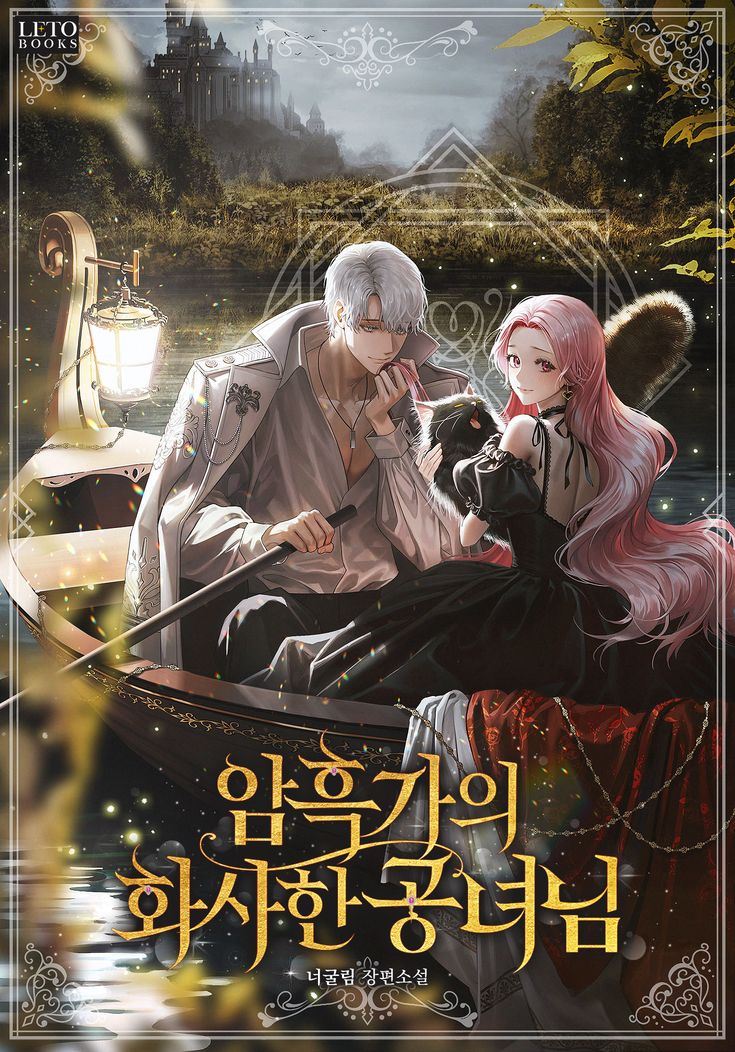
Hartbisa Cellie was born into the powerful Cellie family, known as the shadow of the Tastian Empire. Orphaned young and raised under the cruel supervision of her aunt, Helena, she lived a life of neglect and abuse. Helena, who coveted the family’s wealth and power, systematically isolated Hartbisa, subjecting her to starvation, confinement, and social humiliation. In her previous life, Hartbisa endured this treatment until she was forced into a political marriage with a Count in the Kingdom of Yursia. After a carriage accident killed her husband and left her paralyzed, she died alone and forgotten. However, the trauma of the accident triggered a sudden recovery of memories from her past life as a modern television writer. Realizing she was a character in a romance novel destined to be merely a stepping stone for the heroine, Hartbisa made a vow to live her own life.

Upon regaining consciousness, Hartbisa discovered she had been reborn years earlier, during her adolescence while still locked in the attic of the Cellie mansion. Her body was no longer frail from illness but remained physically weak due to years of malnutrition. She recognized the family crest, the two-headed snake, and understood her second chance. Immediately, she confronted the servants who mocked her, asserting her authority as the true heir of the Cellie name. She then stormed into her aunt’s drawing room, interrupting a meeting with an art dealer, and delivered a chilling warning that she would eventually remove Helena from the house. This act of defiance shocked everyone, particularly Helena, who had grown accustomed to Hartbisa’s silence and submission.

Hartbisa’s first strategic move was to repair her relationship with her father, Duke Vanwilhelm, who had withdrawn from family life after his wife’s death. He was known as the Emperor’s dog, tasked with eliminating heretics using the family’s curse of darkness, which caused decay to everything he touched. Hartbisa used her knowledge of her father’s recent business trips and interests to engage him in conversation during breakfast, gradually earning his trust and attention. She also reached out to her father’s loyal butler, Salam, and recruited a new personal maid, Tar, the daughter of Azure, a kind servant who had cared for her mother. Through Tar, Hartbisa learned that her aunt was conspiring with Viscount Merian to sell flawed land to her father.

As Hartbisa tightened her grip on the mansion, she faced resistance from Helena and her allies. Helena attempted to undermine Hartbisa’s growing influence, but Hartbisa turned the tables by exposing her aunt’s cruelty publicly. When Helena slapped her, Hartbisa played the victim so effectively that Salam was forced to intervene, marking the first time Helena’s authority was publicly checked. Meanwhile, Hartbisa received a recommendation for land from Bertolph Radant, the Young Grand Duke and her anonymous pen pal, Shine. She had ended her correspondence with him to protect him from the dangers her new path would bring, but his involvement in her affairs suggested he was watching her closely.

The central conflict revolves around Hartbisa’s determination to prevent the extinction of her family, which in the original story was the catalyst for the heroine’s rise. She suspects her aunt orchestrated the events leading to their downfall. With her father returning to the mansion and her alliances strengthening, Hartbisa begins to dismantle her aunt’s network from within. She navigates the treacherous political landscape of the Empire, leveraging her knowledge of future events and her family’s dark blessings. Her goal is not just survival but the restoration of the Cellie family’s honor and her own autonomy, free from the roles assigned to her by fate or society.

The story follows Hartbisa’s calculated efforts to outmaneuver her enemies while rebuilding her relationship with her father and brother. She discovers that the Cellie family’s curse and their role as the Empire’s shadow are keys to their power and peril. As she secures new territories and exposes Helena’s betrayals, she prepares for the inevitable confrontation with those who seek to control or destroy her. The narrative culminates in Hartbisa asserting her identity as the matriarch of her own destiny, ready to face the coming storms that threaten to tear her family apart.

Latest Release
DateGroupRelease
2026-09-27citrus aurora c53
2026-09-27citrus aurora c52
2026-09-27citrus aurora c51
2026-09-27citrus aurora c50
2026-09-27citrus aurora c49
2026-09-27citrus aurora c48
2026-09-27citrus aurora c47
2026-09-27citrus aurora c46
2026-09-27citrus aurora c45
2026-09-27citrus aurora c44
2026-09-27citrus aurora c43
2026-09-27citrus aurora c42

Community Reviews

Rating(3.6 / 5.0, 57votes)
5 stars
14(25%)
4 stars
17(30%)
3 stars
18(32%)
2 stars
8(14%)
1 stars
0(0%)

Popular reviews

... Read More
Let me just talk about how VISUALLY this chapter is constructed because the author has clearly thought about every frame. The opening scene in the garden at night with the lily of the valley—there's something almost cinematic about how the three siblings sit together under continuing moonlight while Vanwilhelm joins them. The garden isn't just decoration; it's explicitly tied to their mother's memory ('their mother had become the night in the garden itself'). This is the emotional geography of the Cellie family, and every meaningful moment happens here or in rooms connected to it. Then there's the office scene—dark, quiet, a single candlestick on the inner table, Hasa moving silently with that candle as she scans the bookshelf. The visual of her freezing when she senses someone behind her, then turning to find Salam holding his own candlestick, two lights in the darkness—this feels like a painting. Very moody, very deliberate. And I need to mention the final image of the chapter: Hartbisa at her window at dawn, rubbing sleep from her eyes, watching an unfamiliar bird fly away, the sunrise reminding her of Shine. Dawn light, a window frame, a solitary figure—all of this establishes Chelsea as a place where seasons matter, where weather and light carry emotional significance, where the world itself seems to breathe alongside the characters. The succession document itself also functions as worldbuilding—a physical artifact that contains the rules of this power system, with the mysterious omission of the ceremony being a hole in the recorded history that the reader and protagonist both notice.
... Read More
The lily of the valley keeps appearing throughout these chapters and it's honestly one of my favorite uses of recurring imagery in fiction. First we get Tar's story about her mother bringing lily of the valley flowers and telling her 'we can't tell lies in front of them.' Then Hasa remembers her own mother's rule: lily of the valley blooms in the night garden, and during teatime there, no lies can be told. And then Vanwilhelm receives Hasa's invitation on cute rabbit letter paper that says exactly this rule, and he walks to the garden where the lily of the valley is the ONLY trace of his deceased wife Anelia that remains. 'The lily of the valley always reminded him of Anelia. While most traces of her had been erased from the mansion, only the lily of the valley in the garden remained. He had ordered Salam to take good care of them. But though he had given the order, he had never once come to check.' This destroyed me. This man who has erased almost every memory of his wife from their home—except the flowers she loved. He tells someone else to tend them but never goes himself, maybe because going there would mean confronting the fact that he's been running from grief for years. And then the scene itself: he enters the garden, lights come on, and the lily of the valley 'seem to glow'—and pink hair sways at the end of this vision. First he thinks it's Anelia. It's Hasa. The replacement of the dead wife with the living daughter in his perception is so quietly devastating. The garden setting does so much work here. It's described as the 'only garden in the stark Cellie mansion,' named by Anelia for the white flowers 'more beautiful at night.' The darkness isn't menacing—it's where beauty reveals itself. That's the whole theme of this arc, isn't it? The Cellie family has been operating in emotional darkness, and these small moments of truth-telling in the Night Garden are them finally letting themselves see each other again.
... Read More
This batch starts with violence. A touch, a smack, a shout. Immediate, visceral, in media res. Then it drops us into Hartbisa's head—a spiral of guilt, a slap to her own cheek to steady herself. That's a brilliant pacing choice: after the peak of physical tension, we get a moment of internal reckoning. She decides she needs to know more about Dayan, and suddenly the plot pivots from sibling friction to investigation. Enter Tar, the maid, delivering exposition via a list. Normally, I'd roll my eyes at info-dumping, but here it works because Hartbisa has agency—she asked for this. The pacing breathes. We get a lighter beat with Tar's return and the strawberry jam callback, then slam into the study confrontation. The structure feels like a rollercoaster that deliberately dips before the next drop. Each section ends on a quiet note: Hartbisa leaving the study, Dayan calling her "stupid" with affection, the unresolved letter box. No cliffhangers, just accumulating dread. The author trusts us to sit with discomfort. My only critique? The transition between Hartbisa's realization about her father and the next day's tutoring scene is abrupt. One moment she's crying internally, the next she's praising Dayan's homework. But honestly, that jump mirrors how life moves forward even when you're falling apart. Good pacing doesn't always mean smooth—it means honest.
... Read More
The dialogue in this section is why I'm staying for the next arc. Each character has a distinct verbal fingerprint, and the author uses them to expose power dynamics without a single narration tag. Helena's voice is performative. She uses exclamation points, rhetorical questions, and titles ('Mother figure,' 'Impudent girl'). Even when she's trying to be sweet to Vanwilhelm ('My beloved brother'), it's thick with irony. Her lines are loud, trying to fill the room. Hartbisa's voice is the opposite. It's deceptively simple, often starting with polite markers ('Indeed,' 'Father,' 'Aunt') before delivering a surgical strike. Look at this exchange: Helena: 'She still has so much to learn.' Hartbisa: 'The wine served at the last party had a subtle aroma, so holding it in the mouth before swallowing was the best way to fully appreciate it. I doubt anyone would have thought as you did, Aunt.' On the surface, she's talking about wine. Underneath, she's saying: 'You're ignorant, and everyone else knows it, but they're too polite to say so. I'm not.' And then the killer line: 'However, I'm worried that everyone might have gossiped about you scolding me for that. Please don't dwell on it for too long.' She frames her critique as concern for Helena's reputation. That is next-level dialogue writing. It's passive-aggressive, but so polished it sounds like etiquette. Vanwilhelm speaks rarely, but when he does, it lands. 'Bring more cooked lamb.' 'Salamua.' These are commands of fact, not emotion. They show he's listening, processing, and that Hartbisa's display is pleasing him precisely because it's useful. The dialogue between him and Salam at the start also sets the tone: 'Words passed through mouths can't be trusted.' It's a thematic mantra that every conversation from there on contradicts or confirms. The author isn't just writing banter; they're writing warfare. And the weapons are manners.
... Read More
Can we just talk about how the pacing in these chapters is absolutely malicious in the best possible way? The opening scene hits you like a freight train. Helena going feral, the slap, the immediate power shift — all within the first few paragraphs. You're locked in immediately. But then instead of staying at that intensity, the author pivots HARD into something almost domestic: Hartbisa receiving a book recommendation about development zones. It's a breath. A moment of calm. But it's not actually calm, is it? Because beneath the surface of this seemingly mundane exchange, everything is still spinning. Salam's strange look, the unspoken question about Helena's abuse, Hartbisa's deliberate choice to change the subject — all of that tension is still there, just compressed. Then we get the Tar introduction, which feels like a completely different genre. It's lighter, almost warm, with this lovely moment of misunderstanding that turns into genuine connection. Hartbisa asking 'Perhaps you want revenge?' and Tar immediately prostrating herself? Comedy gold. And then the hand-holding scene that somehow manages to be both funny and deeply tender. And just when you think the story is taking a breather, BOOM — we cut to the Duke's office with political intrigue, land disputes, and the Grand Duke's mysterious recommendation. The stakes expand from personal family drama to empire-level consequences in a single transition. The chapter ends with Hartbisa walking into her father's office with the redevelopment book, looking 'momentarily flustered' before pulling out the book she'd been given. She's about to engage with her father directly — and that cliffhanger ending has me absolutely desperate for the next chapter. What I love about this pacing is that nothing feels wasted. Even the quietest moments carry forward momentum. The tea recipe scene seems slow, but it's building toward the emotional climax of Hartbisa and Vanwilhelm actually connecting. The Tar subplot seems like filler, but she's becoming the intelligence network Hartbisa needs. Every scene is doing double or triple duty.
... Read More
There's something about the atmosphere in these chapters that I just can't stop thinking about. The Hartbisa residence isn't just a setting — it feels like a living, breathing entity that's slowly suffocating its inhabitants. Let me paint the picture for you. We've got this enormous duke's mansion where the late madam's memory is EVERYWHERE. Vanwilhelm can't walk through a single corridor without touching traces of Anelia. Every surface holds her ghost. The text literally says: 'Every space that touched his skin held traces of Anelia.' That's not worldbuilding — that's grief made architectural. And then there's Hartbisa herself, described as someone who 'shone so brightly' against this backdrop of decay. Tar's internal monologue about her mother's description of the late madam's hair — 'like weaving pink flower petals that fit comfortably in one hand' — creates this entire emotional geography of loss that we never directly witness but feel everywhere. The contrast between the bright, hopeful imagery Hartbisa brings and the oppressive atmosphere of the mansion is what makes every scene feel layered. When she walks into her father's office with that book about redevelopment zones, the steaming black tea with strawberry jam, the text actually makes me smell it. The sensory detail of the jam dissolving into hot tea, the sweet fragrance spreading — these moments of warmth in a cold house hit different. And the empire itself feels alive. Central jurisdictions blessed by the Emperor himself with unusually good harvests, while imperial citizens outside those borders are 'marginalized and festering.' That polarization isn't just background — it's the kind of detail that tells you this world has real fractures and real history. The Dux Mountain recommendation arriving out of nowhere from the Grand Duke? That's a world that moves through letters, seals, and whispered politics. This is a story where the environment is a character. The mansion remembers. The empire divides. And Hartbisa is trying to rebuild something beautiful from everything that's broken.
See all reviews

Custom lists

See all custom Lists