The Protagonist’s Aura expanded (Quick Transmigration) - Reviews

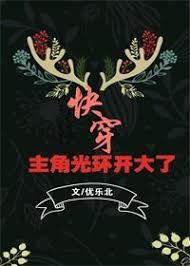
The Protagonist’s Aura expanded (Quick Transmigration)
+Add to Custom List
Sort
Add review
... Read More
The stakes in this story operate on three levels and the author layers them so smoothly you don't notice until it's too late. Level one: the personal stakes. Wei Xicheng leaves Lin Yang. Not permanently—he's maintaining contact, we're told—but the cat chooses the old lover. Lin Yang experiences loss. Yi Chengze gains. This is intimate, quiet, and completely devastating because it's framed through an animal's perspective. Level two: the body horror stakes. Mu Shuyang's original story is a masterclass in escalating dread. He's kind, he volunteers to help, he trusts scientists. And they betray him slowly—first with patience wearing thin, then with blades and syringes, then with his own suicide becoming just another data point. 'Even after his death, the people in white lab coats carefully preserved every drop of his blood and every inch of his flesh.' The conflict isn't man vs. zombie here, it's humanity vs. its own humanity. That's a stake you can't come back from. Level three: the transmigrator stakes. Wei Xicheng now occupies Mu Shuyang's body. He knows what's coming. The professor knows about his flesh. Zhong Wen is out there, destined to start the tragedy. And Wei Xicheng is physically dependent on Yi Chengze's spiritual energy because the world's energy is diluting. He can't even survive on his own terms anymore. The tension isn't whether he'll face danger—it's whether he can change fate while trapped in a body that everyone wants to harvest. 'Strangely enough, even after experiencing over a thousand mission worlds...' Wait, a THOUSAND? So he's not new at this. He's veteran-dead inside at this. And yet he still cares enough to sigh about tragic journeys. The stakes just went from survival to something much more complicated.
... Read More
The stakes in this section are deceptively low-key but genuinely nerve-wracking. On the surface, it's just two guys who might become friends—or more. But dig deeper and everything feels dangerous. Wei Xicheng's entire existence is a performance: he's a demon hiding as a cat, working for Si Yongyi while secretly tracking his lover across worlds. If Yi Chengze discovers the truth, what happens? The system reacts to physical contact, but does it react to emotional betrayal too? That's an unspoken threat hanging over every touch. Then there's Si Yongyi's assistant sniffing around 'Mao Rong's' background. Wei Xicheng deliberately declines the ride home to avoid giving the assistant extra work, but that shows how precarious his cover is. One wrong move and the whole facade cracks. The sparring scene raises the physical stakes—Yi Chengze could injure him, but he doesn't. Instead, he pins him down, and Wei Xicheng has to decide whether to fight back or stay still. That moment is pure conflict: power versus vulnerability, instinct versus calculation. The real tension isn't whether Wei Xicheng will win; it's whether he'll survive losing. And Yi Chengze? His conflict is internal—he wants to protect this little creature but suspects he's hiding something. The story makes you care about the outcome because every interaction teeters on the edge of revelation. What happens when the mask slips?
... Read More
I need to talk about Sean for a second because this boy is carrying so much internal conflict and I am exhausted on his behalf. He's a half-vampire blood hunter. He's mortal. Wei Xicheng is a pureblood who has been alive for centuries. And Sean KNOWS this. He explicitly says, "My life is limited." He pulls out a jar with a rose preserved in blood because he's trying to find some way — ANY way — to make something last, to create permanence in a world where he fundamentally cannot. That scene with the red rose made me genuinely upset. Not because it was tragic in a melodramatic way, but because it was so quietly devastating. This man is trying to preserve beauty for someone who will outlive him by centuries. And then Wei Xicheng just... wraps his arms around him and says "I won't let you face hell alone." I SCREAMED. I actually screamed. Because after everything we've seen — the coldness, the detachment, the ghost-of-the-world energy — Wei Xicheng STILL chooses him. Still picks him. That line alone is worth the entire emotional arc. The external stakes are also high. The Hunter's Guild is hunting them. They've just killed a pureblood hunter. They're on the run. But the REAL stakes are the ones between them. Can Sean trust that he's enough? Can Wei Xicheng trust that someone will stay? These are the questions that keep me up at night, not the guild politics.
... Read More
The stakes in these chapters are layered in a way that might seem light on the surface but is actually pretty intense if you pay attention. On the surface, Wei Xicheng's goal is simple: infiltrate high society through Si Yongyi and complete his mission. But there are competing forces pulling him in every direction. Yi Chengze is a physical threat — he's stronger, he grabs Wei Xicheng by the neck and his body involuntarily obeys, and he clearly has demonic instincts that make him view Wei Xicheng as prey. Wei Xicheng is a professional who's been doing this for over a thousand years, but he's visibly losing his composure. Every time Yi Chengze shows up, the mission gets harder. The neck grab isn't just flirtation — it's a demonstration of dominance. Wei Xicheng literally CANNOT resist it. His body betrays him. And yet he tries. He brushes the hand off. He makes excuses. He demands fish snacks. He transforms into white light and dashes toward the banquet. The conflict between his professional duty and his involuntary reactions to Yi Chengze is the engine driving these chapters. Meanwhile, Si Yongyi's internal conflict runs parallel — he's haunted by memories of Yang Yuan, he sees similarities between past and present, and his curiosity about Wei Xicheng is growing. But there's also the external conflict of the banquet itself, the surveillance, the need to maintain cover as a waiter with twitching ears hidden under a hat. Every scene raises the question: how much longer can Wei Xicheng keep these two worlds separate before everything collapses? The answer, apparently, is not very long at all.
... Read More
Okay so I just need to process what I just read because this chapter literally pivoted the entire story. Wei Xicheng has been dealing with these little ghosts for half a month now, right? And He Cheng has been suspicious the whole time, trying to figure out what's going on. But then YU BEIYAN SHOWS UP AS A GHOST?? Like genuinely as a spectral entity? That is such a wild turn. And here's the thing that makes it even better — He Cheng clearly sees through it immediately. He's watching Wei Xicheng react to the closed door, watching him visibly tense up, and He Cheng connects the dots. This means He Cheng is NOT stupid. He's been gathering fragments of information and he's going to put them together. I was so worried He Cheng would just be a background conspiracy guy, but nope, he's actively investigating and he's already onto something. The red bead moment gave me chills too. Yu Beiyan literally reaches into Wei Xicheng's pocket and takes it while Wei Xicheng is sitting there in total discomfort. That's such a specific, intimate kind of theft — only someone who knows Wei Xicheng's routines would know where he keeps things. It also establishes that Yu Beiyan's ghost form has physical limitations or at least needs to stay close to Wei Xicheng for something. And then the part where Wei Xicheng says "How the hell did you end up as a ghost?" and Yu Beiyan just goes "Mm... Mm your ass"? That's the kind of domestic comedy beat that makes the supernatural elements feel so grounded. These two have been through literally worlds together and even in ghost form Yu Beiyan still can't have a serious conversation without being cheeky.
... Read More
Okay, can we just talk about how brilliantly layered Wei Xicheng is becoming? This man has completely reinvented himself—not just physically, but psychologically. He walks into Jingnian Entertainment and instantly puts on this performance of timidity, and it's almost terrifying how natural it looks. The text literally says he was "oblivious" to people staring at him, but we KNOW he's fully aware. He even curls his lips at the whispers. This is a man who has spent so much time surviving that he knows exactly how to play the victim, the delicate lost boy, the kind of persona that makes people want to protect him rather than question him. And here's the thing that genuinely unsettles me: he doesn't seem entirely comfortable with his own cruelty anymore. The narration tells us "he had become more vengeful" when he thinks about Bai Linwan, and honestly? That should be a red flag. He's trying to rehabilitate Qi Chen's reputation, restore the boy's name, and yet his first instinct upon encountering anything connected to his past life is resentment. He touches his stomach—hungry, vulnerable—and then immediately thinks about revenge. That juxtaposition is not accidental, and I'm watching it closely. The relationship between Wei Xicheng and Grant is already fascinating in its asymmetry. Grant sees a muse, a fallen angel, someone untouched by the industry's corruption. Wei Xicheng sees a tool, a stepping stone, a way to buy tonight's meal and possibly more. Neither of them is seeing the real person. Grant is projecting art onto a mask, and Wei Xicheng is projecting survival onto a smile. Who's using whom here? Because honestly, this could go either way, and that uncertainty is what makes their dynamic so electric.
... Read More
This chapter does something I genuinely love—it pivots from an explosive supernatural battle right into the most mundane domestic scene imaginable, and it works so well. One moment you're watching Yu Beiyan take a hit and spit blood while Zi Daoren's compass cracks, and the next Wei Xicheng is face-down in a pillow complaining about being sore. The contrast is everything. And the domestic scenes? They're not just fluff. They ground us. We get details like the summer heat before the air conditioning kicks in, Wei's mother calling from outside the door, the whole feeling of normal Chinese family life. It makes the supernatural elements feel more real because they're happening inside an actual home with actual people. The image of Yu Beiyan hiding as a transparent shadow behind Wei Xicheng as they walk out to greet visitors—just visually so striking. And his face going cold when he hears classmates are coming? That tells you SO much without any exposition at all.
... Read More
Okay I need to talk about this scene where Wei Xicheng chokes on a potato chip and Sheng Huasen immediately jumps up to get him water, patting his back like a worried parent. LIKE BRO. A CHIPS. AND THE WAY WEI XICHENG'S INTERNAL MONOLOGUE goes from “Maybe I actually like him” to immediate panicked retraction (“Did he just discover some weird trait”?) is the most relatable emotional damage I've ever read. This man cannot catch a break. First it's the storage room incident where he's pressed against a shelf, blushing, hearing Sheng Huasen whisper “I missed you so much,” and his brain short-circuits so hard he calls the man a “beast” under his breath. Then later, lounging on the sofa, eating snacks, casually deflecting compliments with “You're handsome. Makes the snack taste better”—a line that is equal parts flirtation and deflection because obviously he can't just admit he's into it. And that moment. The one where Sheng Huasen says “You're just you.” Wei Xicheng literally freezes. Doesn't even straighten his clothes. Just thinks, “I am just me... I'll cherish this time while it lasts.” That's not a throwaway line. That's the entire emotional thesis of this relationship. He knows it might not last. He knows the world isn't built for what they have. And he's choosing to stay anyway. The domesticity is lethal. The water glass. The back pat. The “No one's going to steal your food, don't eat so recklessly.” This man is being caretaked into submission and he doesn't even realize it yet.
... Read More
'His heart had long been as still as an ancient well, with only acting giving him any real passion.' This sentence opened the entire section and it haunts me. An ancient well — that's not just a metaphor for emptiness, it's a metaphor for DEPTH. Wells are deep, they're dark, they hold water that's been there for centuries. But this particular well has gone still. Nothing disturbs it. Nothing RISES from it. And then the text asks the most devastating question in just a few words: 'It seemed like a stroke of luck, but wasn't it also a kind of loneliness?' Because immortality — living infinite lives across infinite worlds — sounds like a fantasy until you realize it means everyone you ever care about becomes temporary. Characters. Scripts. Performances. Even the warmth with Madam Zhu carries this undercurrent of 'this, too, shall end.' The symbol that keeps coming back is the concept of the well itself. In Chinese literature, wells often represent the subconscious, hidden desires, memories buried beneath the surface. An 'ancient well' suggests something that was once alive, once teeming, now preserved but dormant. But what happens when something falls into that well? What happens when Sheng Huasen's hand meets Wei Xicheng's and THAT well ripples? The tangerines are another detail I can't shake. Madam Zhu offering him peeled fruit — an act of care, of nurturing — and Wei Xicheng accepting it genuinely, stuffing his cheeks, puffing out like a hamster. For a moment, he's not an eternal actor. He's just a nineteen-year-old boy allowed to be childish in front of someone who loves him. These small symbolic gestures are what the text is really building toward: not grand revelations, but the quiet, aching beauty of moments that an immortal being will never have again.
... Read More
"Cough, cough, cough!" — Wei Xicheng nearly dies choking on a grape and I am literally dying laughing AND swooning at the same time. This scene is absolutely unhinged in the best way. The guy who's supposed to be a dangerous, lurking assassin is hidden in the ceiling beams of the emperor's bedroom, holding his breath, trying to be completely invisible, and the emperor notices him anyway. Notices him while eating grapes. And then starts coughing so dramatically that Yan Bei has to question whether he was actually discovered or whether this is just... some bizarre coincidence. But here's the thing that got me—that moment where Yan Bei shifts his body to hide behind the beam? He's treating Wei Xicheng's presence like something fragile. And Wei Xicheng, despite being the one who supposedly has all the power in this room, is the one zooming in on a mini-map like a paranoid stalker, tracking every movement. The power dynamic is completely inverted and neither of them will admit it out loud. 'Was he addicted to spying or what?' Wei Xicheng thinks. But they're both spies. They've both been watching each other this entire time. And the grape incident—whether intentional or not—is the closest either of them has come to acknowledging the elephant in the room. I am not okay.
... Read More
'Wei Xicheng grinned, and immediately the person in the mirror changed expression, his entire aura shifting.' I need to just sit with that for a second. This man can literally shift his entire presence with a facial expression because he's wearing a different face, and yet the most emotionally resonant moment in these chapters isn't even about the apocalypse or zombies or survival. It's about a man looking at his own reflection and recognizing someone beautiful enough to love. The way the author writes Wei Xicheng's reaction to Mu Shuyang's face - 'the kind of look he liked the most' - it's not shallow, it's almost tender. This is a person who has been through transmigrating, body-hopping, whatever the hell this system is doing, and the one thing that grounds him is aesthetic appreciation, is desire, is love. And then there's the Lin siblings. Their bond doesn't get any special attention from the narrative, but it's woven into every action. Lin Lei risks himself for his sister. She watches his back. They communicate in glances and whispers. It's quiet, it's real, and it exists alongside the bigger romantic quest without competing with it. What I love is how the text treats these emotional layers as equally valid. The protagonist searching for his lover isn't less important than the siblings surviving together. They're both just people trying to hold onto what matters.
... Read More
I need to talk about how this chapter sequence moves. It starts HOT—fitting room scene, public display, embarrassing nicknames, store clerks gossiping. It's fast-paced, comedic, slightly NSFW energy. Then they're walking down the street and it slows down just enough for banter. Wei Xicheng trying not to look at Yi Chengze's crotch while holding his hand? The author doesn't even try to hide how hilarious this contrast is. Then BAM—Lin Yang and Si Yongyi appear and the tone shifts. Suddenly it's not just fluffy couple nonsense, there's actual emotional weight. Wei Xicheng's internal conflict about Lin Yang creates a pivot point. And then the scene at Lin Yang's apartment? We get a full lore dump about the demon realm, spiritual energy, the balance between humans and demons. Normally I'd complain about info-dumps but this one earned its place because Wei Xicheng is actually processing everything while lying on that bed, grooming his whiskers. It feels organic to his character. The window escape at the end is a great bookend. Yi Chengze literally carrying Wei Xicheng out because the human scent was too much? Perfect. The pacing never drags—it's basically 5 acts: comedic opening, street banter, confrontation with the past (Lin Yang), lore/worldbuilding, cliffhanger-ish departure. Each section transitions smoothly because the emotional throughline stays consistent. The author also does a nice job of weaving Yi Chengze's solution tease throughout without giving it away. "Kiss me and I'll tell you" is such a good hook to end on—it makes you want to turn the page immediately.

Leave a comment

You must be logged in to leave comments. or
