The Protagonist’s Aura expanded (Quick Transmigration) - Reviews

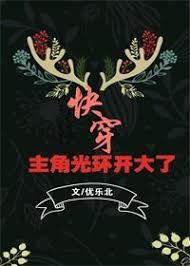
The Protagonist’s Aura expanded (Quick Transmigration)
+Add to Custom List
Sort
Add review
... Read More
Can we just appreciate the dialogue in this chapter because the character voices are so distinct I can tell who's speaking without looking at the names. Yi Chengze's lines are short, sharp, basically commands — "Turn into your human form." "Lick." He doesn't waste words on polite conversation and it makes him feel incredibly powerful and completely unaware of social boundaries. Then you have Si Yongyi who's the opposite — measured, controlled, even when he's furious. His assistant delivers bad news and Si Yongyi just says "Expand the search range and do it again." No yelling, just cold efficiency. That's such a different kind of intensity. And Lin Yang's internal monologue is so tender and naive compared to everyone else. "Perhaps he didn't know much about relationships... He still held onto beautiful, innocent expectations." The narration itself has this warm, almost protective tone when it's describing Lin Yang, which makes the contrast with Yi Chengze's frosty directness even sharper. And Wei Xicheng's cat thoughts — "WTF" and "What kind of creature is my lover" — are perfectly casual and modern, which gives him this great comedic relief voice. The author really knows how to make each character sound different just through how they speak.
... Read More
Okay, so Yi Chengze grabs Wei Xicheng by the scruff and just tosses him off the balcony? And then later his hand hovers over the hat like… wait, IS he stroking the head? The tension between these two is absolutely deranged. One second he's tossing the demon like trash, the next he's fascinated by how soft the fur feels under his palm. This man is so complicated. But honestly? What got me was the dynamic with Si Yongyi. The text literally says Si Yongyi was using thesis revision as an excuse to win Lin Yang's heart. That's such a clean way to phrase betrayal—it sounds almost romantic if you don't think about it. And Lin Yang, sweet, sheltered, naive Lin Yang, is sitting there asking his cat whether he should give it a try. The fact that he trusts Fluffy more than anyone else says everything about how isolated he is. No real friends, no real support system. Just a demon cat who happens to live in his apartment. Wei Xicheng's decision to intervene is weirdly sweet when you think about it. He doesn't have to do any of this. He could've stayed in the cat form and watched the plot play out. But he looks at Lin Yang—who fed him, who named him Fluffy, who treats him like a person—and decides to become a little white flower with hidden claws. That's not obligation. That's attachment.
... Read More
"Baby, what do you want to eat?" — said approximately four times in a supermarket setting and each time it lands differently. That's the thing about Shen Zhe's dialogue, it's never just words. It's performance. It's power play wrapped in affection. The editor in me wants to say this repetition is lazy writing, but the fan in me says no—this is character. Shen Zhe is testing boundaries. He's seeing how much tease Wei Xicheng can take before he breaks. And Wei Xicheng's internal monologue is the perfect counterpoint: "I want to eat your lips so you'll stop talking!" That thought is SO him. So painfully, adorably Wei Xicheng. He's flustered, he's trapped in public, he's being publicly claimed, and his brain's only solution is violent romantic imagination. Then there's Father Qi's dialogue, which is a masterclass in manipulation. "Even though you're with Xiao Chen now, you can't interfere with the personal affairs between a father and son!" This man is performing grief for an audience of supermarket shoppers and he's GOOD at it. The tears, the voice cracking, the theatrical collapse to the ground—it's calculated to the millimeter. And Shen Zhe's response? Cool, measured, professional: "I believe the lawyer made it very clear to you last time." That contrast between Father Qi's raw表演 and Shen Zhe's legal precision is chef's kiss. The narrative voice itself is also worth noting—the omniscient narrator slips into Wei Xicheng's head frequently enough that we're basically reading his POV with occasional zoom-outs. It creates this intimate, almost claustrophobic feeling where we're trapped inside his embarrassment alongside him.
... Read More
The visual storytelling in this passage is unmatched. Let me just list some shots: Shot 1: Wide angle of the lobby. Everyone talking, then ONE VOICE cuts through and silence falls instantly. You feel the power shift without a single explanation. Shot 2: Medium shot of Grant trying to hug Shen Zhe and getting blocked by two staff members. Grant's sheepish smile — you can see the history between these two men in one expression. Shot 3: Close-up on Wei Xicheng's wrist. Red mark. He's rubbing it, trying to make himself small. The camera catches what nobody else addresses out loud. Shot 4: Shen Zhe sitting down, legs stretched out, looking at three people across from him — but his gaze is fixed on one. The composition of that scene, the power geometry, is gorgeous. Shot 5: The eye contact. Brief. The boy is startled, looks away first. But Shen Zhe's gaze — described as 'too sharp' — actually changes. Softens considerably. This is a moment the camera would HOLD on. Shot 6: The phone call. We don't SEE it, but the SOUND design is incredible in the prose. Shouting, women laughing, objects clashing, then 'Jingnian?' and the father's tone COMPLETELY shifts. The contrast between the polished corporate lobby and that chaotic domestic hell is devastating. And the detail of Wei Xicheng's brush-like eyelashes casting small shadows on his face while he keeps his head down — that's not just pretty writing, that's character design through atmosphere. The world feels alive because every sensory detail is working double duty.
... Read More
The stakes in this chapter are so quiet but so heavy I can barely breathe. Wei Xicheng just admitted to himself that maybe getting into a relationship wouldn't be so bad—that Sheng Huasen is the only person who knows his true self—and immediately the world punishes him for it. He's been slacking, partying, ignoring the fact that the Qi family is tearing itself apart and Sheng Huasen is in the middle of a bidding war that could define both their futures. And Sheng Huasen? He's worried about Wei Xicheng's safety, not his own empire. That's the conflict that gets me. It's not just 'will they win the bid'—it's 'will Wei Xicheng get hurt because he let his guard down?' and 'will Sheng Huasen have to choose between love and business?' The Qi Yilin character is introduced as this smiley snake who's already won half the battle by the time he walks into the room. He nods at Zhushi with confidence. He knows something. The tension isn't shouted—it's in the glances, the phone calls, the porridge going cold. And that ending where Wei Xicheng realizes he's been reckless? That's the pivot point. Everything changes now. I'm not okay.
... Read More
The author structures this chapter like a tension spring—wind it up, release it, wind it up again. We start with Xiao Taozi's dramatic announcement that basically alerts the entire court, then immediately cut to Wei Xicheng grabbing him and storming into the palace. Fast. Aggressive. Then we shift to the imperial guard commander's perspective and suddenly we're in this slow, methodical conversation on a rooftop about loyalty and treason. The pace drops to a crawl while the stakes get higher. And then—BAM—we're back in the emperor's bedroom with grape-choking chaos and secret-observation madness. The three perspective shifts create this rhythm where the political tension (the commander's rebellion pitch) constantly undercuts the personal tension (Yan Bei hiding in the ceiling). Neither thread gets resolved; they just press on top of each other. The chapter ends with Wei Xicheng feeling 'a little happy inside' despite nearly suffocating, which is the perfect note to land on. It's absurd, it's intimate, it's dangerous, and it means everything. No summary, no resolution—just the sense that both of these men are walking a razor's edge and neither is backing down. The pacing never lets you breathe, and that's exactly what makes it work.
... Read More
The tension in this passage is MASTERCLASS level and I need to break down exactly WHY it works so well. It starts with the Lin siblings' car approaching two figures on the road. Three kilometers. That's it. That's the distance between safety and potential violence. Lin Huan's hand moves to her bag where knives and an axe are stored. Three other people in the back grab their supplies. These are ORDINARY PEOPLE who have spent days gathering whatever they can to survive, and they're bracing for a fight against two strangers. Then Wei Xicheng waves. Recognition. Relief. And then Yu Beiyan steps into the middle of the road like a human roadblock and the tension SNAPS back to maximum. Lin Lei's question to his sister - "Have you seen him before?" - that whisper-urgent tone tells you everything. This man could be the difference between life and death and nobody knows it yet. The forced smile moment where Wei Xicheng is desperately trying to de-escalate while Yu Beiyan is just standing there looking gorgeous and terrifying - the comedy saves it from being too intense, but the underlying threat never goes away. When Yu Beiyan KICKS A TREE IN HALF, the message is crystal clear: I could end all of you and you would not stop me. But here's what makes the stakes REAL - it's not just physical danger. Wei Xicheng is playing a role. He needs to maintain his cover as Mu Shuyang while navigating a situation where one wrong word could expose everything. The Lin siblings aren't just potential threats, they're potential allies. The script says Z City is the best base in the future, and these people might be the bridge there. Every interaction is a calculation. Every silence is a gamble. And Lin Huan in the rearview mirror, quietly observing, not trusting anyone but studying everyone - she's the voice of survival instinct in a room full of people trying to survive. The fact that she notices Wei Xicheng being tight-lipped while simultaneously being the most alert person in the car? That's dramatic irony at its finest. We know she's missing something obvious and it's making me scream.
... Read More
Lu Bosong's dialogue is actually the highlight for me. This man: "Oh, be gentle, you little brat!" right after talking about grandchildren. Who does that? He's teasing his friend's grandson like they're peers and I am obsessed. But also—the teacup scene. Lu Bosong notices the empty cup, internally questions why his friend would break his own habits, then immediately dismisses his own concern because "he was just overthinking due to his age." This is a man who sees EVERYTHING and chooses to see NOTHING. That's not senility, that's survival. Then Wei Xicheng's conversation with Meng Tao is a masterclass in misdirection. "I want to study hard and be a good kid, so that everyone changes their opinion of me." Said with a smile right before knocking on a domineering CEO's car window. The gap between what he says and what he's doing is the whole joke and I laughed out loud. Sheng Huasen's line—"Are you eager for me to leave quickly?"—has such a specific dry energy. He's clearly NOT eager for Wei Xicheng to leave but framing it as a question instead of an admission. Classic. The text mentions his "hint of dissatisfaction" and that eyebrow raise, which pairs perfectly with dialogue that sounds polite but means something entirely different. The dialogue here never feels expository or forced. Everyone speaks like a real person with their own cadence. Lu Bosong sounds like an older relative who's seen too much but pretends not to. Wei Xicheng sounds like someone performing warmth while running cold calculations. Sheng Huasen sounds like a man who's used to getting what he wants but is genuinely puzzled by someone who doesn't want what he's offering.
... Read More
Okay so here's the thing that absolutely made me sit up straight—the Zi Daoren fight. On the surface it looks like your standard xianxia battle: guy with a compass, energy beams flying, dramatic threats. But then Wei Xicheng gets hit and... nothing happens? He's not injured. The energy beams just OPEN A BRIDGE to the system. That's such a clever subversion. You're bracing for a crisis and instead you get a breakthrough. Every time I read that moment I had to reread it because my brain was like "wait, that's it? That's actually what happened?" And Yu Beiyan immediately thinking Wei Xicheng is dying and about to transfer him to another world—pure drama, pure panic—only for Wei Xicheng to just... sit up? Perfect. Also Zi Daoren's whole scheme with using the boy's body as a vessel for his junior disciple is appropriately creepy. It's clear these two have history with Wei Xicheng and the original body, which means the main plot is definitely circling back around to something bigger. I can't wait to see what He Cheng has to do with all this.
... Read More
OK so this part where Sheng Huasen is reviewing his therapy reports with Eric and realizes the descriptions of Zhu Xingyuan are dwindling while his own internal monologues take over? That hit different. I mean on paper it looks like he's just getting more self-aware, but really? He's noticing that his emotional center of gravity has shifted. Zhu Xingyuan used to occupy his mental space, and now it's just… him. Alone with his own thoughts. Which is a problem because those thoughts aren't clean. They're tangled, restless, full of people he shouldn't be thinking about. And then there's Wei Xicheng. The kid who performs. Who studies acting, who knows how to handle an audience, who has experienced a thousand worlds and still can't stop feeling things. When Sheng Huasen watches him blow his hair out of his eyes and accidentally soften, it's almost tragic. Wei Xicheng regrets it immediately — not because he made a mistake around Zhu Xingyuan, but because he melted in front of someone else. He catches himself mid-betrayal of his own heart and panics. "I've completely gone out of character. Better reflect on that, you idiot." But here's the thing — he's not wrong. He IS out of character. The unreasonable Zhu Xingyuan would never look at Sheng Huasen the way he did. He'd punch him and call him a jerk. Instead, he gets soft. And Sheng Huasen notices. Of course he notices. He's the kind of man who notices everything about the people he cares about, even when he's trying very hard not to care at all. The split personality comment from Sheng Huasen is brutal and accurate. Wei Xingyuan is literally playing two roles — the perfect Zhu family heir and the person he's becoming around Sheng Huasen. And the worst part? He's starting to forget which one is real. Is he going to figure this out before it destroys him? Or is he going to keep confusing his performances for his feelings?
... Read More
I NEED to talk about the wrist scene. Grant pulls Wei Xicheng forward, Shen Zhe sees the RED MARK on his wrist, and the boy just keeps rubbing it like it's nothing. Nothing?? He's sixteen and someone has already left marks on him. And Grant is the one holding him, slinging his arm around his shoulders like some kind of possessive older brother, and the boy's eyes are reddening but he won't let himself cry. I was sitting there like absolutely feral. But then Shen Zhe steps in and it's like — I don't even know how to process this. His voice DEEPENS when he tells Grant to stop. Not raised, not angry-shouting, just deep and sharp and uncompromising. 'Maybe you should respect whether the other party actually wants your friendly gesture.' And the boy's eyes were already reddening and Grant had to HAND HIM TISSUES. The tenderness of it all hits me in a weird way. And then — and then Shen Zhe unbuttons his collar button because he feels UNCOMFORTABLE. Not because of the heat. Because of what he's feeling looking at this boy. He tries to laugh it off internally ('how could that be possible?') but the narrative is screaming something else. That moment of eye contact where the boy's eyes are full of curiosity and unease, seeking comfort and then getting scared away? I read that three times. Three. Times. The fact that Wei Xicheng silently praises Shen Zhe's hands while keeping his face lowered is so painfully romantic in its innocence. This boy has never been treated with basic human decency and here comes this impossibly perfect man who notices the red mark and commands respect on his behalf. My heart cannot handle this direction.
... Read More
I read these four chapters in one sitting and I genuinely lost track of time. The pacing is relentless in the best way. Let me break down why this works so well. We start with He Cheng's suspicion and internal monologue — that's your slow burn setup. Then BAM, the bean sprouts dish gets announced and the whole group turns to look at Wei Xicheng. The tension snaps immediately because we know He Cheng sees something the others don't. You don't get a single breather. Then Yu Beiyan appears as a ghost, has this weird pocket-rummaging moment that's both funny and creepy, the meal ends, they go to the club, and within the same chapter span Wei Xicheng basically drops the bombshell that he and Yu Beiyan are lovers. Like, the author does not believe in letting readers rest and I am HERE FOR IT. The scene transitions are also slick. Restaurant → club entrance → private karaoke room. Each location change comes with a shift in tone — the public suspicion of the restaurant gives way to the semi-private intimacy of the club where Wei Xicheng can finally speak honestly. The author uses the setting changes to control what information gets revealed and to whom. But the real pacing masterstroke is He Cheng's yellow talisman moment. Just when you think the tension has peaked with Yu Beiyan's grand entrance, the author sneaks in this tiny detail — thin strands of light shooting out from a talisman — and suddenly you're paranoid about He Cheng all over again. One glance from Yu Beiyan and He Cheng feels like he's fallen into an ice-cold abyss. That cliffhanger energy within a single chapter? Immaculate.

Leave a comment

You must be logged in to leave comments. or
