The Protagonist’s Aura expanded (Quick Transmigration) - Reviews

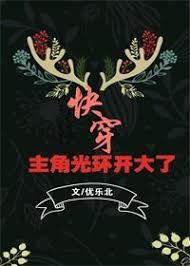
The Protagonist’s Aura expanded (Quick Transmigration)
+Add to Custom List
Sort
Add review
... Read More
I started reading this at 11 PM and closed the app at 2 AM. Not because it was long, but because the pacing doesn't give you a single excuse to look away. The author understands something most writers miss: tension isn't built by adding more information—it's built by making the reader feel the weight of what they already know. The chapter opens at maximum crisis level. Wei Xicheng is unconscious, his mother is begging doctors, and we're already inside someone's dying mind. That's an aggressive opening. But instead of dumping exposition, the narrative floats—we feel his heavy eyelids, hear distant voices, process fragmented sensations. It's almost hallucinogenic. Then, when the backstory begins, it doesn't read like an info-dump. It reads like memories flooding back, triggered by the storyline itself. The original owner's pain becomes ours because we experience it through Wei Xicheng's body, not through third-person narration. What's masterful about the structure is how the chapter bounces between temporal layers: present-tense hospital drama, past-tense school bullying, and the deeper past of the original owner's childhood trauma. Each layer deepens the previous one without stopping the momentum. By the time Wei Xicheng opens his eyes and sees that upside-down ghost, you've processed enough emotional weight that even the comedic relief lands with perfect timing. The cliffhanger—the ghost pretending to grab his neck, Wei Xicheng's deadpan response, his mother's tearful warning about going home—creates this weird emotional whiplash. You want to stay in the scene. You want to move forward. But you also need a moment to breathe. The author knows exactly when to push and when to pull back.
... Read More
Let's be real — this chapter does NOT waste time. We open in Sheng Huasen's office, quiet and internal, and by the end we're at a full-blown banquet with multiple factions on the board. That's four distinct settings and five major character moments packed into roughly ten thousand characters. The author clearly trusts the reader to keep up, which is refreshing. The structure follows a classic but effective pattern: private → public → private again. We start with Sheng Huasen alone with his thoughts (the Eric reports), move to the chaotic energy of the banquet hall, and then circle back to moments of isolation — Qi Yilin alone upstairs, Sheng Huasen alone in the corner. This push-pull between crowded spaces and lonely corners is the structural heartbeat of the chapter. Every time the room fills with people, someone gets lonelier. Every time someone is alone, the tension thickens. Scene transitions are razor-sharp. No filler. Qi Yilin spots the pair downstairs, the narrative cuts to his interaction with Qi Yiming, then drops us back to the banquet floor. Each beat earns its place. Even the author's note about "love coming like a tornado" — annoying as they usually are — actually lands here because the chapter itself feels like one. Everything accelerates toward that final image of Qi Xiuyuan introducing his son, and you know this is just the beginning of the storm. One minor gripe: the Qi Yilin section could've been tighter. His descent into villain mode is so fast it borders on cartoonish. But then again, that's probably the point. He's supposed to be a performance, and performances don't need subtlety — they need impact. Overall? Solid pacing. Doesn't drag. Doesn't rush. Just… keeps pulling you forward.
... Read More
Look, I need to address the elephant in the room — or rather, the protagonist in the room who just caused the most powerful business magnate in the narrative to lose his absolute COMPOSURE over a handshake. On the surface, the external conflict is straightforward: Wei Xicheng needs to deal with Qi Yiming and his brother, and he's decided to use the original host's revenge as cover for his own agenda. 'Since he couldn't avoid them from the start, he might as well take the original host's revenge and personally deal with them.' Cold. Calculated. The engine roars, the car drifts — this guy is READY. But here's what's actually keeping me up at night: the STAKES just changed fundamentally. It's no longer about surviving a hostile world or playing a role convincingly. Sheng Huasen — who the text establishes as someone whose 'usual composure and logic' normally never waver — just experienced something that 'seriously clouded his judgment.' And he KNOWS it. He's analyzing himself in real-time, recognizing the danger, and still unable to fully dismiss it. What if Wei Xicheng's greatest threat isn't Qi Yiming or his brother? What if it's the fact that the one thing he claimed would give him 'any real passion' — acting — is now producing REAL reactions in REAL people? The well is rippling. And for someone who prides himself on being 'always clear-headed, knowing what he should and shouldn't do,' that loss of control terrifies him more than any enemy ever could. The tension here isn't 'will he survive?' It's 'what happens when the actor finally forgets he's acting?' And honestly, that's infinitely more compelling.
... Read More
There's something about the way this author paints the base falling that just IMMERSes you completely. You hear the women screaming, children crying, men cursing, gunfire echoing—it's not just visual, it's FULL SENSORY. I could literally HEAR that chaos. The image of Lin Jianbai curling up on the ground like a boiled shrimp, his skin turning grayish-green, lips purple, eyes clouding over with that unnatural blue-gray hue... that's not subtle horror, that's straight-up body horror that lingers in your brain. And then he springs back up with zombie-speed? The contrast between his pathetic transformation and that sudden inhuman movement gives me actual chills. But my favorite scene has to be the basement moment. Countless zombies gathering around where Yu Beiyan sits motionless with Wei Xicheng's body, their dull minds unable to determine who their true master is. It's such a haunting image—this cold, quiet center point surrounded by chaos. The zombies are drawn to him like moths to a flame, not because he's evil, but because he's... something else entirely. The protective net breached, the underground tunnel as the last hope, the explosion shaking dust from the entrance as Lin Lei escapes with his sister... each location feels alive, feels dangerous, feels like a place where anything could happen. The author doesn't just describe settings—they build WORLDS that exist beyond the page.
... Read More
I've been sitting with this image—the cat choosing its owner—and it won't let me go. Wei Xicheng, the transmigration soul, disguised as a cat, making the same choice again. 'After all, he couldn't be Lin Yang's cat forever.' Not 'I wouldn't want to be Lin Yang's cat' but 'he COULDN'T be.' Because even in feline form, his heart was already somewhere else. The cat is the perfect symbol for Wei Xicheng's entire existence: small, seemingly helpless, deeply loyal, and capable of crossing between worlds. Then there's the parallel with Mu Shuyang. Another person whose body has value to others—his flesh can suppress the virus, his blood is medicine, his very existence is a resource. He becomes what the cat was: something to be possessed, used, and ultimately discarded when the utility fades. Both are trapped in bodies that others want to control. The question the story keeps asking is: when your physical form matters more than your personhood, who are you? ' Wei Xicheng sighed. There had never been an easy journey. But then again, if it wasn't tragic, how would he have ended up making a deal with the system?' This line redefines the entire premise. The author is saying that tragedy isn't a plot device—it's the currency of transmigration. Every world Wei Xicheng enters, he's stepping into someone else's pain. The spiritual energy diluting until he can't survive without Yi Chengze's gift? That's not just worldbuilding, that's a metaphor for codependency, for love as both lifeline and tether. By the time Wei Xicheng closes his eyes and says 'I'll wait for you in the next life,' the theme crystallizes: love outlasts even the system itself.
... Read More
I need to talk about the emotional undertow between these two because the author is playing 4D chess with subtext and I am weak for it. Let me start with something small that somehow wrecked me: when Yu Beiyan is outside facing all those zombies and he hears the commotion inside the car, he looks through the window specifically at Wei Xicheng and says coldly, "Close it." Why does that line destroy me every time? He's out there risking his life, possibly losing himself in the fight, and his immediate concern is whether Wei Xicheng is exposed, vulnerable, hurt. Not "am I gonna die" but "is HE okay." And Wei Xicheng—"For some reason, seeing Yu Beiyan facing the zombies alone stirred a pang of heartache in Wei Xicheng. A sudden urge rose in him to get out and accompany him." For once he doesn't just sit there and play it safe. He actually wants to go to him. The restraint, the locked door, the helplessness of it—this is two people who clearly care about each other and haven't figured out how to say it yet. Earlier in the chapter there's this quiet beat where Yu Beiyan asks Wei Xicheng straight up, "Do you like her?" referring to Lin Huan. The silence from both of them says everything. Wei Xicheng doesn't even deny it or confirm it. He just... doesn't answer. And then immediately the scene pivots to zombies and nobody talks about what just happened. Classic deflection. Meanwhile Yu Beiyan's narration establishes something crucial early on: "Perhaps because Yu Beiyan's expression was too frightening, Meizi tactfully dropped the topic." He's not just distant, he's actively intimidating. And yet with Wei Xicheng—there's this softness. The narration literally says Wei Xicheng "somehow made him feel a little better." That's not friendship language. That's the beginning of something much messier and more beautiful.
... Read More
"Don't look..." I need a minute. Just a minute. This single line, whispered so quietly it barely reaches Shen Zhe's ears, and then the whole scene unfolds from there — Wei Xicheng covering Shen Zhe's eyes to block the flashy woman winking at him, turning crimson, pulling him away into the elevator like a runaway train. This is the most overwhelmingly romantic moment in the entire book and I am NOT okay with it. Let me break down why this destroys me every time. Wei Xicheng, who has spent the entire chapter being brave — facing a lawyer, recounting years of abuse with a blank face, standing up to his father even while trembling — suddenly loses ALL composure over a woman looking at his boyfriend. The jealousy isn't petty. It's raw. It's the kind of reaction that comes from someone who has been powerless his whole life and finally found something worth being violently possessive about. And Shen Zhe's reaction? He doesn't laugh. He doesn't tease. He swallows hard, pulls the boy into his arms, and walks so fast that... well, the text cuts off but I'm imagining them crashing into that elevator like the world is burning behind them. He removes Wei Xicheng's hand gently, sees the steam rising from his head, and just... takes him. No words needed. What gets me is the contrast. Inside that room, Wei Xicheng is all calculated decisions and clipped sentences. Outside, he's a blushing mess who can't even look at another woman looking at his person. The vulnerability is staggering. And Shen Zhe sees all of it — the fierce boy who settled his own legal battle and the jealous kid who can't handle sharing eye contact — and loves every version. The CP chemistry here isn't in grand declarations or dramatic confessions. It's in the silence between words, in the way one hand covers another's eyes, in the elevator doors closing on the rest of the world. It's quiet romance at its most devastating. I've read this scene seven times and I still can't process it.
... Read More
I need to talk about the pacing here because this chapter is a masterclass in breath control. You go from full-throttle combat—Zi Daoren attacking, Yu Beiyan recovering mid-fight, the compass spinning, energy beams everywhere—to complete domestic stillness, and the transition is so seamless you almost don't notice it. That's the author being smart. They don't let you catch your breath during the fight ("hold on, just a little longer"), and then immediately after you're also catching your breath with Wei Xicheng gasping for air in bed. The rhythm mirrors the content. And then—BAM—Wei's mom shouting about classmates. The chapter literally won't let you settle. There's always something around the corner. What also works is that the Wei Xicheng backstory dump (college entrance exams, third-rate university, acting major) comes at exactly the right moment when we're already in a relaxed domestic mood. It doesn't feel like info-dumping because the scene has already lowered our guard. This chapter knows exactly what it's doing with its structure.
... Read More
Let's talk about the opening of this chapter because the author really set a trap and I walked right into it. Yan Bei arrives at the city walls with his army. Soldiers kneel. Wei Xicheng sees this and immediately knows SOMETHING is off. No ceremonial music. No fine wine. No traditional imperial procession. Just... this oddly modest welcome for a general returning in victory. His first thought? 'If I find out who's behind this, they're dead meat for making my husband think less of me.' And I'm like—SIR. SIR. You just outed yourself HARD. The plot mechanics here are SO tight. Someone clearly told Yan Bei that Wei Xicheng was easy to manipulate and deliberately set him up for this awkward entrance. But Wei Xicheng doesn't know WHO. He's already underestimated the political games, which is interesting because he usually thinks he's the smartest person in the room. Then the horse scene happens—which should be political suicide but instead becomes this incredibly intimate moment that neither of them can really process. Wei Xicheng is too busy enjoying himself to notice the implications. Yan Bei is too busy being weirdly protective to question why. The vice general trailing behind, swallowing his comments, is the perfect Greek chorus here. He sees everything. He knows everything. And he's choosing to stay silent because honestly? This is none of his business. I'm convinced someone is manipulating Yan Bei's memories or something. The way he looks at Wei Xicheng—there's something unreadable happening. And that jade pendant? I'm watching that closely.
... Read More
Xiao Taozi runs after the emperor in the garden. Half a step behind. Voice so low the guards probably can't even hear it. And he delivers this information like he's walking onto a minefield: "General Yan has been getting… quite close with the Second Prince." I physically recoiled. Not because it's shocking—I knew it was coming—but because of HOW SHAKY this delivery is. Xiao Taozi literally waited half an hour for Wei Xicheng to respond. Half. An. Hour. He expected a reaction. A scream. A command. Instead, Wei Xicheng just... didn't move. Said "I'm fine" and kept walking. That silence is louder than any outburst could be. Because what does it mean? Is he truly fine? Or is he so overwhelmed that he can't even process it? The stakes here are layered—on the surface it's political (Yan Bei allying with a rival prince), but underneath it's deeply personal (Yan Bei choosing someone else over Wei Xicheng). And the worst part? Wei Xicheng can't even prove any of it. It's "secret reports." Rumor. Gossip. He has no concrete evidence, which means he has no recourse. He just has to walk and pretend he didn't hear anything. Meanwhile Yan Bei is downstairs literally telling his servant to hide the emperor's kiss marks before people see them—that is some next-level emotional unavailability right there. He won't acknowledge Wei Xicheng publicly but he's caring for his body in private? What is this man doing.
... Read More
This is the part where I'm supposed to be excited about the next world and the promise that Yu Beiyan will find Wei Xicheng again. I should be. The text literally says: "I won't make you wait too long. Don't worry, I will find you." But I can't stop thinking about the morning after. Wei Xicheng wakes up and Yu Beiyan is gone. Just... gone. No note, no dramatic farewell, no final moment together. And then days pass, and the game moves on as if nothing happened, and Wei Xicheng lies on the grass chewing on a piece of grass, letting the faint sweetness fade, and says to the empty air: "System, teleport." He tries it once, half-expecting nothing. And it works. He doesn't even pass through the system space—he's just sent directly to the next world, dumped into ice water like garbage, and thrust into a situation where a furious woman is screaming at him to "hold onto this position properly for Aijia" and "watch over the emperor." The emotional whiplash is incredible. One moment, intimate solitude and longing. The next, chaos and survival. There's no time to grieve, no moment to process the loss. The story itself refuses to let Wei Xicheng pause. And yet—there's something almost tender in how Yu Beiyan's absence is portrayed. He didn't abandon Wei Xicheng out of cruelty. He left because the world was collapsing, because his data was too overwhelming, because he had to leave early or everything would disappear anyway. The fact that Wei Xicheng understands this intellectually but can't stop feeling the ache of it—that's the most honest portrayal of love I've ever read in fiction.
... Read More
Can we talk about how natural this dialogue sounds? I mean, these characters literally aren't human, they've been through hundreds of parallel worlds together, and yet their banter is SO grounded. Wei Xicheng's little tease about Yu Beiyan being the "all-powerful mastermind" who could just delete bugs with a thought? That's the kind of playful, slightly exasperated energy you'd expect from two people who know each other intimately. And Yu Beiyan's response—just brushing the grass off his hands and saying "There are bugs on the ground"—that's such a specific character choice. Practical, caring, slightly serious, but clearly fond. But the best exchange has to be the face-reveal conversation. Wei Xicheng trying to be dramatic: "What if I'm ugly?" And Yu Beiyan, completely missing the emotional subtext: "The system selects people who meet certain standards." The delivery is so flat, so logical, and Wei Xicheng's internal reaction—expecting heartfelt reassurance and getting system compliance instead—had me wheezing. "Alright, he shouldn't have had any expectations in the first place." This is peak couple energy. They understand each other so well that miscommunication becomes its own form of intimacy. And the author's voice? Perfectly calibrated. There's this light humor threaded through scenes that could easily become overly sentimental. The author's note at the end—sighing about the world's wrong name, being scared by reader comments about pacing—is such a human, self-aware touch. It breaks the fourth wall just enough to remind you this is crafted fiction without pulling you out of the story. The narrative tone balances drama and comedy like a tightrope walker, never quite falling into melodrama even when the emotions run deep.

Leave a comment

You must be logged in to leave comments. or
