The Princess Joins the Bandits: She Starts by Seizing the Crown Prince’s Anti-Bandit Camp - Reviews

The Princess Joins the Bandits: She Starts by Seizing the Crown Prince’s Anti-Bandit Camp
+Add to Custom List
Sort
Add review
... Read More
The way Xue Ji speaks is absolutely distinctive. Every line from him has this calculated cruelty wrapped in false concern, like honey poured over broken glass. 'That utterly lost expression… It doesn't suit the decisive Qinglan I know.' He's mocking her, but he's also studying her, analyzing her like a specimen. And then he shifts into this almost paternal disappointment—'How many times have I told you? Your heart… will never be hard enough.' The pauses, the deliberate pacing, the way he builds each accusation like a house of cards ready to topple. Compare that to Shen Yi's voice—'These Qinglong bastards are slipperier than eels'—casual, pragmatic, with that dry wit of someone who's seen enough wars to be cynical but hasn't lost his humanity. And Xiao Yu's dialogue is minimal but loaded. 'I don't care. A-Li doesn't have time to wait.' Three words, no elaboration, just pure urgency. The author gives each character a completely distinct verbal fingerprint. Even the fake prince's dialogue is different from the real Xiao Yu's—shorter sentences, sharper edges, less emotional control. You can literally hear the difference when Shen Yi gets snapped at. The dialogue carries so much subtext here. Every conversation is a power struggle, every exchange reveals something about the speaker's true nature.
... Read More
This whole section is basically a meditation on identity and the masks we wear to survive. A-Li vs. Qinglan—the abandoned princess versus the feared Pavilion Master. Xue Ji deliberately emphasizes 'Qinglan' with ridicule, as if to say this identity is a performance, a costume she put on because the real her was too weak to survive. But here's the thing—the performance has consumed the person. 'You're Qinglan now! The name that terrifies the martial world!' He's right, but it's also tragic. She wanted power to never be controlled again, but she became something even she might not recognize. Then there's the fake prince riding back on Xiao Yu's horse, wearing his clothes, speaking with his authority but none of his genuine warmth. Two layers of disguise stacked on top of each other. And the recurring imagery of light and darkness—the lightless pit where Xue Ji is imprisoned, the night mountains where Xiao Yu searches, the candle burning all night in A-Li's room as she writes her letter. Light as truth, darkness as concealment. The imperial family represents the light she can never return to, and the martial world represents the darkness she's chosen. She's standing in between, neither fully in one world nor the other. What's the cost of survival when you have to erase yourself to live?
... Read More
There's so much going on beneath the surface of these chapters. Let me talk about what the author is really saying. The jade pendant is the central symbol, and it's doing heavy lifting. The Dragon and Phoenix halves—separated for six years, now reunited. This isn't just a plot device; it's a physical manifestation of the sibling bond that was torn apart by violence and time. The fact that they fit 'perfectly. Without the slightest gap.'—that's the author telling us something fundamental: no matter what A-Li has become, no matter how far she's drifted, the bond is still there. It's still whole. The pendant doesn't lie. But here's what makes it tragic: Xiao Yu holds the complete pendant and still doesn't fully understand what it means. He knows she's his sister now, but he's still asking 'Why?' He's still trying to rationalize her choices. The pendant is complete, but their relationship isn't. Then there's the theme of disguise and identity. A-Li has become the Chieftain. She's impersonated the Crown Prince. She's worn so many masks that even her brother couldn't see through them. But the author asks a deeper question: which version is the real A-Li? The beggar girl? The bandit leader? The Crown Prince impersonator? Or the little sister who used to call him 'Brother'? The wisteria arbor scene is loaded with symbolism too. Violet blossoms cascading like waterfalls. Beauty and fragility. Cai Ling leaning against the doorway, appearing delicate and frail—but she's the one who holds all the power in this stronghold. The contrast between appearance and reality is the entire point. And the strongest theme here: guilt. Xiao Yu's guilt isn't just about failing to protect her—it's about failing to SEE her. 'She had been standing right in front of him. Yet he still hadn't recognized her.' That line destroys me. It's not just about the disguise. It's about how we can be close to someone and still not truly know them. How trauma and survival can transform a person so completely that even family becomes a stranger. The author isn't just telling a story about bandits and princes. This is about what happens to children when the world breaks them. And whether they can ever come home.
... Read More
Okay so let me just say—the Liyuan sequence is where this story completely shifts gears. You start with what feels like a lighthearted comedy of errors with Shen Yi being insufferable and the trio bickering in a carriage, and then BOOM. Underground tunnel. Corpses. Caged people. The tonal whiplash is insane and I love it. The author doesn't even give you a moment to breathe before dropping the Suzhou Prefect corruption reveal, which then immediately reframes Xiao Yu's entire mission as deeply ironic—he came to fight bandits but the real monsters are the government officials. And then the You Pavilion scene? One thousand taels for one person? That's a fantastic worldbuilding detail that tells me this intelligence network operates on a whole different level. The real plot bomb at the end though—Pavilion Master Qinglan dropping that the Emperor himself caused the Eastern Palace tragedy—now Xiao Yu's personal quest is suddenly entangled with treason against his own father. The narrative structure here is doing heavy lifting: every revelation builds on the last, and the pacing from comedic carriage ride to horror-cave to political conspiracy is masterful. I was not ready for any of this.
... Read More
Okay so let me just say this right now—Chapter 11 ended on such a devastating cliffhanger that I literally sat there staring at my phone like an idiot. The whole setup with A-Li going missing during reconnaissance, Xiao Yu going out into the mountains alone at night, and then this figure riding back on HIS horse, all disheveled and covered in dust, barking orders like a general—my heart was pounding. And then Shen Yi asks if he found A-Li and the fake prince just snaps 'Useless!' at Shouyang. USELESS! Who does that?! The real Crown Prince would never speak to his most trusted subordinate like that. The author is playing 4D chess here and I am HERE for it. This is the kind of plot twist that makes you immediately want to flip to the next chapter even though it's 2 AM. The bandit subplot with Qinglong Stronghold was also brilliantly set up—those hit-and-run tactics, the morale drain, the way A-Li's reconnaissance skills actually broke the deadlock. Everything was building toward this moment where someone impersonates Xiao Yu while the real one is out there somewhere in those mountains. What is the fake prince's endgame? Who sent him? And is the real Xiao Yu even still alive out there? I need answers NOW.
... Read More
'I merely pulled you out from the jaws of wild dogs. I gave you a place where you could live like a human being! And how did you repay me? You stole my position. You locked me in this lightless pit.' This exchange between Xue Ji and A-Li is absolutely chilling and I can't stop thinking about it. The fact that he saved her life and she repaid him by imprisoning him—this is such a rich, twisted dynamic. Xue Ji isn't just some cartoon villain cackling in a dark cave. He actually believes he did her a favor. He genuinely thinks she owes him. And yet she still couldn't bring herself to kill him. That's the thing that gets me—her weakness, her inability to fully commit to the monster she's become. Xue Ji sees it clearly: 'You commit the cruelest acts imaginable… yet still long for the most impossible affection.' He's right about her. She's torn between A-Li, the abandoned princess, and Qinglan, the feared Pavilion Master. And the worst part? Xue Ji might actually be the only person who truly knows who she is underneath all the layers. Meanwhile, Xiao Yu's relationship with 'A-Li' is developing this protective instinct that's so genuine it hurts. He went out alone into dangerous mountains at night because she didn't come back. That's not calculated. That's not strategic. That's someone who genuinely cares. But now there's a fake prince running around claiming to be him, and I'm wondering—does the fake know about this growing bond? Is that part of the plan? The character web in this novel is incredibly dense and I'm obsessed.
... Read More
The jade pendant. Let me just sit with that for a moment. When Xiao Yu wakes up drugged and powerless in the bandit stronghold, his first instinct isn't to fight or escape—it's to check his robes. And when his fingers brush against "the half of the dragon jade pendant that he always kept close to his body," the tension in his chest eases. Just slightly. But it's everything. This half-pendant is clearly a symbol of something bigger—identity, connection, maybe even a bond with someone specific. The fact that it's HALF a pendant suggests there's another half somewhere, and that someone else carries it. It's a classic motif but the author uses it so effectively here because it's Xiao Yu's ONLY anchor in a completely alien and threatening environment. Everything else is taken from him—his inner energy, his guards, his mission—but the pendant remains. And then there's the bigger thematic question: who is the Chieftain, and why does Qing Ren notice that Xiao Yu's eyes resemble hers? The pendant, the resemblance, the whispered rumors of a captive husband—all of these threads are weaving together into something about identity, connection, and fate. The story isn't just about a military campaign or a disguise; it's about two people who are clearly meant to cross paths, and the symbols keep pointing toward that inevitable collision.
... Read More
The stakes in these chapters are insane, and I need to talk about why they hit so hard. Let's start with the external conflict: the Imperial Court vs. Qinglong Stronghold. Xie Yan is besieging the stronghold. He's a competent, dangerous opponent. But the author raises the stakes by making A-Li the one standing against him—not just as a bandit leader, but as someone who has personally infiltrated his camp, disguised herself as the Crown Prince, and is now sitting across from him in a sparring match while secretly being hunted. The confrontation scene is where all the tension converges. Shen Yi and Xie Yan have surrounded her. They know something is wrong. They're closing in. And she's outnumbered, outgunned, and fighting two skilled warriors simultaneously. The physical stakes are clear: she's going to lose this fight. But the internal conflict is what makes this scene actually unbearable. Because underneath everything—the disguise, the rebellion, the sword fighting—A-Li is Xiao Yu's sister. And Xiao Yu doesn't even know it yet. The reader is sitting there screaming because we know something he doesn't. We see him pacing in his room, mourning the sister he thinks is dead, while the real sister is out there fighting for her life, disguised as him. That dramatic irony is torture. Beautiful, exquisite torture. And then there's the question of what A-Li stands to lose. She's built an entire stronghold. She's united these people. She's been their chieftain for a year. If her identity is exposed, everything collapses. But more than that—if Xiao Yu finds out she's his sister, what happens then? The author is setting up a conflict that isn't just physical but deeply emotional. Will he forgive her? Will she forgive him? Can they rebuild something that was broken six years ago? The suspense is maintained perfectly because the author never lets us forget: A-Li is running out of time. Every moment she stays disguised, the net closes tighter. Shen Yi's words are cutting: 'Who are you? Why are you impersonating His Highness?' The stakes aren't just life and death—they're identity, family, belonging. Everything. I was absolutely breathless by the end.
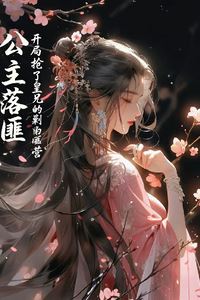
... Read More
The stakes escalation in these chapters is absolutely relentless and I am here for it. We start with personal stakes—Xiao Yu searching for his missing sister, which is already emotionally charged. Then the Liyuan discovery adds a moral and civic layer: corrupt officials are imprisoning and torturing their own people. Xiao Yu's conflict becomes external (fight the corrupt system) and internal (his confidence was naive, he was 'protected too well'). But the real stakes explosion happens at the You Pavilion. Pavilion Master Qinglan reveals that the Emperor himself caused the Eastern Palace tragedy. Suddenly Xiao Yu's entire quest isn't just personal anymore—it's political treason. If he pursues the truth, he's opposing his own father, the Emperor. And he's thirteen years old, surrounded by enemies at every level. The tension here is maintained brilliantly because every answer creates a deeper question. Who imprisoned those people? Why? What does the Emperor have to do with it? What does the You Pavilion know? The author never lets you settle into comfort, and the final line—'Almost no one knew the true cause of that incident. The fact that this person had effortlessly exposed it...'—leaves you absolutely desperate for the next chapter. What does Qinglan know that nobody else does?
... Read More
Let me just say this: the atmosphere in this book is *chef's kiss*. Chapter 2 has this one moment where Xiao Yu and Shen Yi are walking through Suzhou and Xiao Yu notices something deeply wrong. The people are all smiling. Not just happy—*uniformly* smiling. Adults and children alike, and their smiles never change. In a city supposedly ravaged by bandits, there are zero beggars and everyone's clothes look brand new. "Whether they're children or elderly people, their smiles never change. The children may not understand what's happening, but how could the adults possibly be ignorant of what's going on?" This is genuinely unsettling. It's not horror-per-se, but it creates this thick, suffocating sense that something is deeply wrong beneath the surface of this seemingly prosperous city. The bandits aren't the only threat here—and that's a brilliant misdirection. Then there's Qinglong Stronghold itself. The image of the silver-masked girl lounging on the chief's seat, lazily twirling a dagger, while Qing Ren—who was formerly the chief—stands before her like a devoted subordinate? That visual alone tells you everything about power dynamics in this world. And the hidden compartment behind the bookshelf with the half jade pendant glowing faintly under moonlight? Cinematic. I swear I could see this as a TV drama. The contrast between the warm palace sunlight in the flashback and the cold, shadowy stronghold creates this beautiful emotional geography. The world feels lived-in. Corrupt officials, rotten prefectural government, bandit strongholds that have actually improved the region's safety under the masked chief—it's all layered and real.

Leave a comment

You must be logged in to leave comments. or
