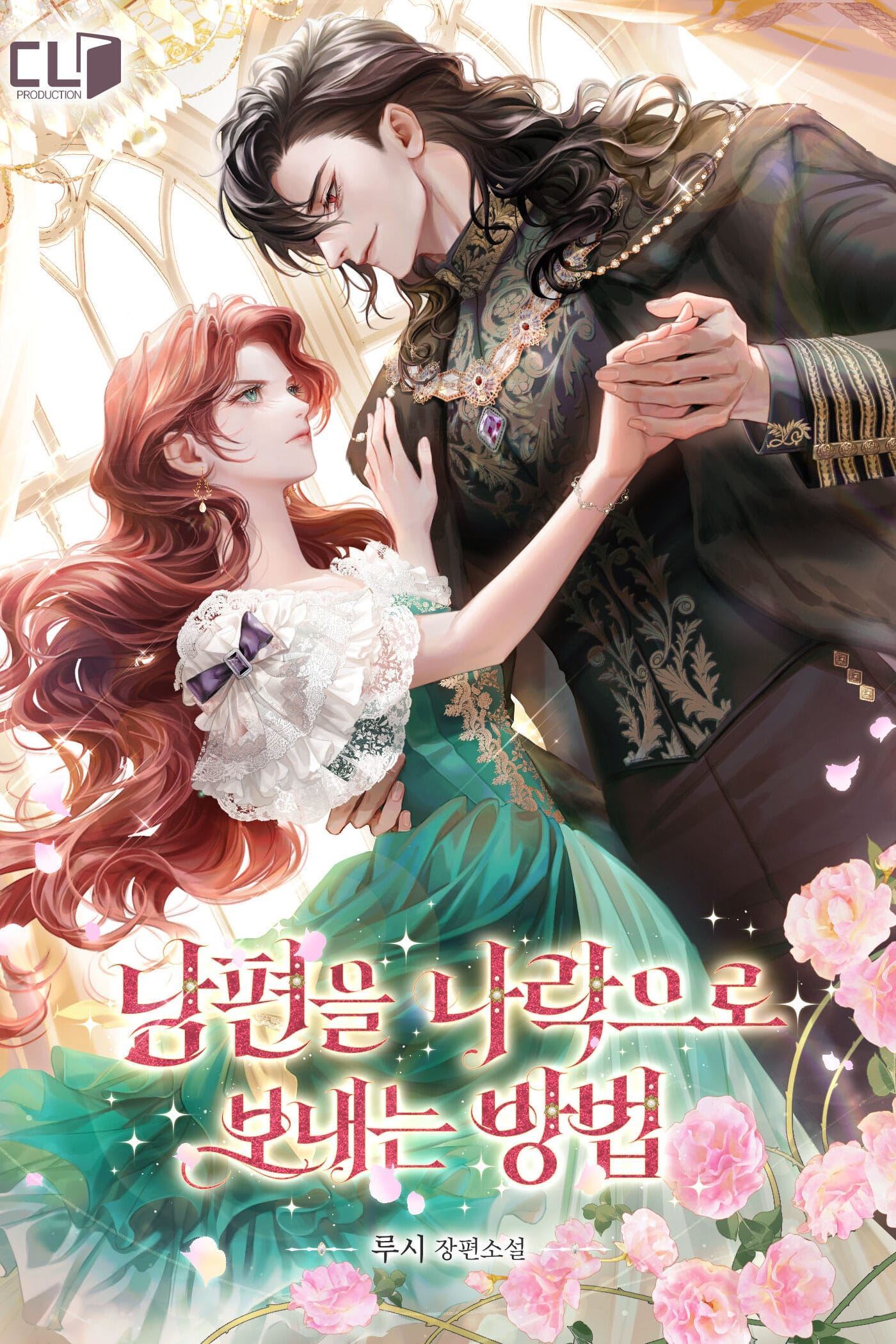
The Prince’s Taste
+Add to Custom List
Novel Info

Summary

... Read More

Judy Esther Emers is a twenty-nine-year-old office worker from South Korea who transmigrates into the body of a five-year-old girl in the Kingdom of Adrian, a fictional world from a 19+ romance novel titled "The Secrets of Cinderella's Climax." Upon awakening, she discovers she possesses the identity of Judy Esther, the Marquis of Emers's daughter, and soon realizes she has been reincarnated as the story's villainess. In the original narrative, Judy is engaged to Crown Prince Richard but is destined to die at his hands after he falls in love with Ella, a fallen baron's daughter who serves as the novel's heroine. Recognizing her lethal fate, Judy dedicates the next fifteen years of her childhood to avoiding Richard and any other main characters, adhering to survival rules such as maintaining good relationships with servants, accumulating emergency funds, and steering clear of handsome men who are typically protagonists or their admirers.

Richard Adrian, the Crown Prince, is renowned for his intellect, political acumen, and striking beauty. Unbeknownst to Judy, Richard has been observing her for years and is aware of her deliberate avoidance of him. While Judy focuses on escaping her plot-defined death, Richard orchestrates a strategy to capture her attention. During the National Founding Festival, which marks Judy's coming of age, Richard manipulates the schedule to ensure his parents and key political figures are absent, leaving him alone to approach her. He arrives at the banquet early, defying royal custom, and finds Judy on a terrace, intoxicated by a potent local wine she consumed while watching fireworks.

Judy, believing she has successfully twisted the timeline so that Richard meets Ella elsewhere, is unprepared for Richard's direct confrontation. Drunk and disoriented, she mistakes his muscular physique for an ideal match, engaging in physical contact that escalates quickly. Richard, who has trained rigorously to build muscle specifically to appeal to her known preferences, takes advantage of her intoxicated state. The two engage in a passionate night together, a scenario that starkly contrasts with the cold, murderous rejection depicted in the original novel. The following morning, Judy wakes in Richard's quarters, horrified by the consequences of her actions. She attempts to dismiss the encounter as a drunken mistake and begs Richard to claim it never happened to protect her reputation and safety.

Richard, however, refuses to let the matter drop. He reveals that he knows exactly who she is and insists she take responsibility for the night. The dynamic shifts as Richard becomes increasingly assertive, using physical intimacy to break down Judy's defenses. He challenges her attempts to flee the situation, asserting that their connection is real and that he intends to pursue her seriously. Judy faces a critical turning point: the narrative she relied on to survive has collapsed. Instead of being rejected, she is entangled with the male lead, forcing her to navigate a new reality where Richard is obsessed with her rather than hostile.

The story progresses with Richard openly claiming Judy as his own, disrupting the social order of the kingdom's nobility. Countess Ingrid, a gossiping noblewoman, witnesses their interaction and spreads news of their intimacy, ensuring the entire court is aware of the bond between the Crown Prince and the Prime Minister's daughter. Judy, originally hoping to remain an insignificant extra, now finds herself at the center of political and romantic scrutiny. She must reconcile her desire for a quiet, safe life with the undeniable attraction she feels toward Richard and the evolving nature of their relationship. Meanwhile, Richard continues to thwart her attempts to maintain distance, determined to win her affection and secure her as his partner, effectively rewriting the tragic fate written for her in the original text.

Latest Release
DateGroupRelease
2026-09-27citrus aurora c78
2026-09-27citrus aurora c77
2026-09-27citrus aurora c76
2026-09-27citrus aurora c75
2026-09-27citrus aurora c74
2026-09-27citrus aurora c73
2026-09-27citrus aurora c72
2026-09-27citrus aurora c71
2026-09-27citrus aurora c70
2026-09-27citrus aurora c69
2026-09-27citrus aurora c68
2026-09-27citrus aurora c67

Community Reviews

Rating(4.2 / 5.0, 68votes)
5 stars
25(37%)
4 stars
29(43%)
3 stars
14(21%)
2 stars
0(0%)
1 stars
0(0%)

Popular reviews

... Read More
Okay, so let's talk about this one moment—the terrace scene. You know the one. Judy Esther is sipping wine, the city of Adrian stretches out below her like it's been dipped in gold, and this sheer cliff just… drops away into nothing. That detail hit me. The author didn't just say 'they were on a balcony,' they made it feel dangerous. A chill running down to her toes, the railing right there, the man leaning against the doorframe like he owns the night itself. That's worldbuilding that makes you *feel* something, not just see it. And then the bed. The spacious bed—large enough for three or four people, stained with evidence of the night before. Not euphemisms, not fade-to-black, just… there it is. The scattered clothes on the floor, the ruined shirt, the shoes lying abandoned near the doorway. It's almost comedic in how thoroughly the author commits to showing us the aftermath. You can picture every ragged piece of fabric, every discarded accessory spread across what was presumably a very expensive bed. But here's what really sticks with me: the banquet hall. Even though we only glimpse it through Judy's fragmented memories, the author paints it vividly. The bustling ballroom, the nobles from across the kingdom, Countess Ingrid with her fan fluttering and her notorious laugh echoing. The whole scene of Judy literally dragging Richard arm-in-arm through a crowd of shocked courtiers—that reads like a fever dream of social catastrophe. I could *see* it. Wide shots of gasping nobles, close-ups of Judy's glazed drunken eyes, the way Richard's expression shifts from amusement to something unreadable. The contrast between the romantic fantasy setting and the absolute chaos that unfolds in it is what makes this world feel alive. It's not just a pretty backdrop; it's a pressure cooker where one drunk moment can ruin your entire life. And honestly? That's the best kind of setting.
... Read More
The pacing shift in these chapters is wild. You go from this tender morning-after scene where she's faking amnesia and he's being sweetly frustrated, to bathroom intimacy, to her walking out two days later like nothing happened, and THEN the narrator just drops the original text on her like a guillotine. It's almost comedic how quickly it happens—one minute she's admiring his portrait, the next she's mentally reliving every explicit scene from the novel she memorized. The author doesn't give her any buffer time to process. There's also this interesting structural pattern where each intimate scene gets progressively more intense, mirroring how Judy's emotional investment deepens even as her rational mind is screaming at her to detach. The bath scene acts as this midpoint peak, and then the aftermath—with her leaving the room, legs wobbling, walking past portraits—is where the real emotional weight lands. I thought the section where she debates whether to 'let him go' was handled brilliantly because it came right after the physical high, when she'd have the least armor. The Ella revelation hits harder because we've just spent pages seeing what she stands to lose.
... Read More
I need to talk about Richard because this man is already making me question everything I thought I knew about him. Let me just say this upfront: in the original novel, Richard is supposed to DESPISE Judy. Like, full-on revulsion levels of hate. But the way he speaks to her in this opening scene? 'Didn't we agree to call each other by name?' 'Are you thinking about someone else while you're with me?' This is not a man who despises her. This is a man who is genuinely invested in her emotional state. And that's what terrifies me as a reader. Because if Richard has already developed genuine feelings for Judy, then the entire foundation of the original plot has collapsed. The love triangle that was supposed to drive the story - Richard choosing Ella over the beautiful but wicked Judy - is already broken. Judy himself seems aware of this, and you can feel the panic underneath his calm exterior. He keeps asking why she trembles around him, which suggests he's noticed her fear and misinterpreted it as disinterest or attraction to someone else. Classic misunderstanding energy, and I am HERE for it. But let's talk about Judy for a second because his characterization is doing a lot of heavy lifting here. On the surface, he's calm, analytical, almost detached. But look at what he's actually doing: waking up naked next to the crown prince, trying to figure out if last night was a one-time thing or a pattern, and immediately starting to assess his survival options. The internal monologue about men being everywhere and his preference for muscular knights over princes? That's not just comic relief - it's a coping mechanism. He's using humor to distance himself from the terrifying reality that his entire future was supposed to end with Richard killing him. Their dynamic reminds me of enemies-to-lovers tropes but subverted in the most delicious way. In the original story, Richard's hatred for Judy was one-sided - he never even considered that she might have feelings for him. Now, somehow, the tables have turned and HE's the one reading into her behavior while she's just trying to survive. The power dynamic is completely inverted from what the source material established. There's also the family dynamic to consider. The Marchioness of Emers is introduced as warm and loving, which immediately sets Judy apart from the typical villainess upbringing. Most villainesses in these novels are raised by neglectful or abusive parents who mold them into antagonists. But Judy has actual loving parents who are concerned about his health. Does this mean his villainous nature in the original story was purely personality-driven rather than circumstantial? That would make Richard's hatred even more inexplicable - he despised someone who had every reason to be kind. And then there's Daniel, his brother. The scene where Judy watches Daniel struggle with sword training and then casually suggests he become a civil servant is telling. Judy has this protective instinct, even if it's disguised as practicality. He's already trying to improve the lives of the people around him, which is very much at odds with the villainess image the original story painted. I'm also wondering about the unnamed person who might have transmigrated before Judy. If someone else was already in this world and changed Richard's feelings toward Judy, that creates this ghost of a past existence haunting the present. Richard might be responding to traces of behavior from a previous transmigrator without even realizing it. That would make their relationship even more tragically layered - he thinks he knows Judy, but he's actually responding to someone else entirely.
... Read More
The pacing in this section is masterful. It moves through five distinct phases and each one breathes differently: Phase one: the backstory. We get Richard's childhood trauma about his mother, the scheduling of nights, the political marriages—dense exposition, but it lands because it explains EVERYTHING about why Richard is the way he is. We understand his pressure, his isolation, his obsession with maintaining his position. Phase two: the ball confrontation. Fast, loud, chaotic. The half-brothers' panic, Countess Ingrid's theatricality, Judy Esther's drunken declaration—all of it moves at a breakneck pace. This is the climax of a five-year buildup and the author doesn't waste a single beat. Phase three: the walk to the residence. Short, transitional, but necessary. Richard escorting her with "utmost courtesy" while his patience reaches its limit? The tension is palpable. Phase four: the bedroom scene. This is where the pacing SHIFTs completely. It slows down, gets intimate, vulnerable. The dialogue becomes raw and honest. His confession—"Judy Esther, you might not believe me but I've loved you for a long time"—lands because we've earned it through the previous sections. Phase five: the corset scene. A perfect comic relief moment that also deepens character. The author knows exactly when to make us laugh and when to make us ache. The rhythm here is unlike anything else in the chapter. It starts heated, gets funny with the corset disaster, then suddenly becomes devastatingly tender with the pinky promise. By the time we hit the physical intimacy scene, we're already emotionally invested and the pacing ensures we stay locked in. There's no dragging, no rushing—just perfect control.
... Read More
"If you're not feeling well, you should lie down a little longer." And just like that, the whole fairy tale machinery kicks into gear. The Cinderella references are everywhere in this chapter, but they're not just cute Easter eggs—they're actual ticking time bombs. Judy keeps thinking about the glass slipper, about the pumpkin carriage, about fate passing Richard by. These aren't random thoughts; they're the anxious calculations of someone who knows the story and is terrified of becoming part of it. The fairy tale elements represent the inescapable narrative forces that are trying to pull her into her role as villainess. There's this devastating line where she thinks about being "discarded like leftover food" and "treated like used tissue." That's not just fear of death—that's fear of *irrelevance.* Of being so insignificant that even your dramatic demise doesn't matter. The tragedy of the villainess isn't that she dies; it's that her death exists solely to make the real lovers look better. She's a narrative device, a prop, nothing more. The muscles become this weird symbol too, honestly. Judy keeps fixating on Richard's physique—the chest muscles, the arms, the way his thin silk shirt does nothing to hide anything. It's funny on the surface, but it also represents how she's being drawn in against her will. Her body responds before her brain can stop it. The same instinct that saves her in real life (physical attraction, the desire to connect) is what's slowly destroying her in the story. She's fighting her own nature, and that's both hilarious and heartbreaking. "I let my instincts take over and did something foolish." That line. That's the whole theme right there. In a world where narratives control fate, the only rebellion is… well, it's complicated.
... Read More
The author's handling of dialogue in this section is genuinely remarkable, specifically because Judy Esther has completely detached from the speech patterns of any character in this world and started operating on her own frequency. She's basically a linguistic virus spreading modern concepts through medieval high society, and the narrative treats it with such deadpan acceptance that it becomes hilarious without ever breaking tone. "Drunk truth." "Fish tank management." These aren't just clever phrases—they're genuinely innovative worldbuilding tools. The text explicitly mentions that if you don't understand Judy Esther's neologisms, you're treated like an old fogey. That's how influential her language has become. Even Countess Ingrid, the so-called rumor mill, is positioned as inferior to Judy Esther's vocabulary factory. I love that the author gives us this meta-commentary on how pop culture spreads through society. The contrast between characters in their dialogue is also where this excerpt truly shines. Daniel Emers speaks in complete, logically structured sentences: 'The paper I mentioned was published when I was only ten years old. It's lamentable that you can't even understand the logic of a ten-year-old child.' His dialogue is so coldly precise it could cut glass. Richard speaks in determined, direct statements—'I want to stop this chase-and-run relationship with you'—his words carrying the weight of someone who has rehearsed every conversation in his head a hundred times. But Judy Esther? She's completely uncontrolled. Drunken ramblings about being a bomb-shot expert fifteen years ago, questions about wine that aren't really about wine, philosophical mumbles about survival. Her dialogue feels alive in a way that makes every other character seem scripted by comparison. And that line where Richard asks 'Who are you really?' and she blurts out 'A transmigrator…?' — the author's response 'What kind of neologism is that?' is honestly one of the funniest moments in recent memory. A character being asked to explain their ontological crisis and responding with casual linguistic confusion. The comedic timing is impeccable.
See all reviews

Custom lists

See all custom Lists