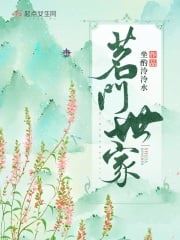
The Prestigious Tea Family
Novel Info

Summary

... Read More

Ye Yaming, a thirty-one-year-old successful tea CEO from the modern era, transmigrates into the body of a young woman in the Great Jin Dynasty after the original owner’s soul perishes on the Bridge of Helplessness. The original owner, also named Ye Yaming, was a victim of romantic betrayal and familial misfortune, having been manipulated by Meng Chengwei, a scheming royal merchant from the capital. Ye Yaming vows to change the fate of the Ye family, a prominent tea merchant clan in Jiangnan, and prevent the disasters that befell them in the original timeline. Upon awakening, she immediately identifies Meng Chengwei as a threat after he arrives at the Ye estate under the guise of rescuing her injured cousin, Ye Jiaxing, from a horse accident. Ye Yaming suspects the incident was staged to gain the family’s trust, a tactic Meng Chengwei used in the previous life to infiltrate the Ye business and eventually frame them for illegal tea trading, leading to their exile and ruin.

The Ye family is currently grappling with internal strife and external threats. The fourth uncle, Ye Hongrong, has been deceived into purchasing moldy private tea, violating the government’s strict tea monopoly laws. This crisis coincides with the disappearance of Ye Hongchang, the eldest uncle, who is traveling to the capital to collect debts. Ye Yaming takes charge of the immediate crisis, demonstrating sharp business acumen and strategic thinking. She accompanies her grandfather, Ye Chongming, and her father, Ye Hongsheng, to the tea shop to investigate the incident. Through careful interrogation of the staff, she uncovers that the manager, Ding Jian, and the clerks were bribed by Meng Chengwei to facilitate the illegal trade. Ye Yaming exposes Ding Jian’s deception, forcing him to confess and provide a list of customers who purchased the tainted tea.

With the truth revealed, Ye Yaming orchestrates a swift response to mitigate the damage. She and her father divide the customer list, visiting each household to apologize, compensate with high-quality silk, and retrieve the moldy tea. During these visits, Ye Yaming encounters Lu Guanyi, a wealthy and handsome young man from the capital who is one of the affected customers. Lu Guanyi is initially hostile due to a misunderstanding involving someone who resembles Ye Yaming, but his attitude softens after she handles the compensation with grace and professionalism. Ye Yaming also notices the presence of Qi Ji, a refined tea connoisseur and friend of Lu Guanyi, who observes the interaction with interest. Meanwhile, Ye Yaming warns her grandfather about the potential danger to Ye Hongchang’s journey to the capital, suspecting that Meng Chengwei may attempt to rob the tea funds or harm the eldest uncle to further destabilize the family.

The narrative highlights the complex family dynamics within the Ye household. The second branch, to which Ye Yaming belongs, lacks male heirs, leading to marginalization by the matriarch and the fourth branch. Ye Yaming’s assertiveness challenges these traditional norms, earning her grandfather’s respect and altering the family’s power structure. She navigates the tensions between her sisters-in-law, particularly the arrogant Madam Zhang of the fourth branch and the subdued Madam Yin of the second branch. By taking decisive action, Ye Yaming not only resolves the immediate tea crisis but also establishes her authority within the family. The story sets the stage for a prolonged struggle against Meng Chengwei’s machinations, as Ye Yaming prepares to defend the Ye family’s honor and livelihood while adapting to the political and social constraints of the ancient world.

As the Ye family recovers from the scandal, Ye Yaming continues to monitor Meng Chengwei’s movements. The royal merchant’s frustration at being rebuffed by the Ye elders drives him to devise more intricate schemes. Ye Yaming’s modern knowledge of tea production and business management positions her to reform the family’s operations, though she must proceed cautiously to avoid suspicion. The arrival of Song Yifeng, her fiancé and a newly appointed scholar, adds another layer of complexity to her life, as she must balance her familial duties with her impending marriage. The story follows Ye Yaming’s efforts to dismantle Meng Chengwei’s plot, protect her family from ruin, and carve out a space for herself as a capable leader in a patriarchal society.

Latest Release
DateGroupRelease
2026-08-11shanghai fantasy c200
2026-08-11shanghai fantasy c199
2026-08-11shanghai fantasy c198
2026-08-11shanghai fantasy c197
2026-08-11shanghai fantasy c196
2026-08-11shanghai fantasy c195
2026-08-11shanghai fantasy c194
2026-08-11shanghai fantasy c193
2026-08-11shanghai fantasy c192
2026-08-11shanghai fantasy c191
2026-08-11shanghai fantasy c190
2026-08-11shanghai fantasy c189

Community Reviews

Rating(3.6 / 5.0, 25votes)
5 stars
6(24%)
4 stars
7(28%)
3 stars
8(32%)
2 stars
4(16%)
1 stars
0(0%)

Popular reviews

... Read More
Okay so can we talk about the worldbuilding in this book because it's SO detailed and I love it. The tea-making section at the end is such a random little detail but it immediately paints this whole picture of the historical setting. We're in a dynasty equivalent to Song/Ming, and they have all these different tea types coexisting - tea cake, loose tea, powdered tea, compressed tea. Stir-fried green tea is just starting to appear but black tea and oolong don't exist yet. This is the kind of specific historical texture that makes me feel like I'm actually THERE in this world. And the social stratification through tea! The upper class drinks tea cake with spices pressed into fancy patterns, while lower-grade tea goes into loose and compressed forms for different demand levels. It's not just worldbuilding for the sake of it - it's showing me the entire economic and social hierarchy through a beverage. The Ye family's business depends on this system, and every character's position in it matters. The Lin'an City setting is also so vivid. Private schools where kids eavesdrop on lessons, merchant families with servants who gossip in the inner courtyard, the examination system as the ultimate ladder to power - it all feels lived-in. I especially love how the Yin family's private school and the Song family's rented house near it create this whole little neighborhood ecosystem. You can practically hear the students reciting classics through the walls. The Ye family's tea shop, the ancestral hall where Ye Hongrong is kneeling, the different courtyards where each woman has her own space - the physical layout of this world mirrors the social hierarchy perfectly. Every location tells you something about power and status.
... Read More
Okay, so this whole osmanthus tea sequence is actually a massive plot pivot, not just a cute skill-showcase moment. I kept waiting for it to be a simple "look how talented the MC is" scene, but no—this is where the family's entire strategic direction gets thrown into question. The brewing technique itself is basically a MacGuffin. Ye Yaming developed it over six months, keeps it secret, and then casually drops it in front of her grandfather like it's nothing. And the way the narrative handles the reveal—first the fragrance, then the taste, then the comparison with Nanny Yu's tea, then the explanation of the technique—each layer peels back something new. It's not just "the tea is good," it's "this tea is a BUSINESS WEAPON." But the real plot twist here isn't the tea. It's Ye Yaming's proposal. Her grandfather wants to hide it and protect the family legacy the old way—hoard it, guard it, hope it survives. And she's like, no, let's partner up, let's get bigger, let's stop being a small boat drowning in the waves. This completely reframes the conflict. It's not just Ye Yaming vs. the Meng family anymore. It's Ye Yaming vs. her grandfather's entire worldview. That's a plot engine that's going to keep running for a while. I'm genuinely curious how this tension resolves. Does he listen? Does she force his hand? Or does some external crisis make him realize she's right?
... Read More
I've been thinking about this book's central metaphor and I'm convinced the tea IS the story. Think about it - the Ye family's entire business is built on tea, and the plot revolves around someone trying to pass off inferior tea as premium product. Ye Hongrong puts the Ye family's tea label on private tea under Ding Jian's instigation. It's literally counterfeiting the family's identity for quick profit. And then there's the Song Yifeng situation, which is basically the same thing but in human form. He accepted the Ye family's financial support, married into their goodwill, and then looked down on them the moment he gained status. He's the human equivalent of Ye Hongrong's fake tea - someone who carries the family name but has no loyalty to it. "Flies don't land on seamless eggs." Ye Yaming says this and it hits different because it's not just about business - it's about the family's internal rot. Old Madam Ye indulging Ye Hongrong, the women being kept in the dark about the dangers of the business world, the engagement that was never about love but about social climbing - these are all cracks that could bring the whole thing crashing down. The mother washing clothes to support her son's education is such a powerful counter-image to all this corruption. She's honest labor, genuine sacrifice, the opposite of the transactional relationships everywhere else. But even she's not immune to the system - she has to beg, borrow, and manipulate to get her son ahead. The world is so rigged that even genuine goodness has to play dirty to survive. Ye Yaming's declaration to her sister about self-reliance feels like the novel's answer to all of this. If the world is full of counterfeit people and fake tea, the only authentic thing you can build is your own capability.
... Read More
"Father, you don't like the Song family?" "No." Ye Yaming could tell he was lying. I literally laughed out loud at this exchange. This is such a perfect father-daughter moment where NEITHER of them is being honest but they both KNOW it. Ye Hongsheng doesn't want to upset his daughter by admitting he dislikes her fiancé, and Ye Yaming already knows the truth from the servants' gossip. They're both performing politeness for each other, and the reader gets to watch this beautiful dance of unspoken truths. The servant dialogue is also incredibly sharp. Nanny Xia revealing the Song family's disdain to Xiao Xiang and the cook - it's such a realistic depiction of how information spreads in a household. The servants aren't just background characters; they're the nervous system of the family, carrying whispers that shape everyone's understanding of their situation. Ye Chongming's voice is SO distinct. "Where is that little beast?" - he's angry but there's this underlying warmth, like a grandfather who's frustrated but deeply caring. And then when he rewards Ye Yaming: "This is my reward for Ming'er. No one is allowed to say anything negative. If anyone is dissatisfied, come and argue with me." That's not just authority - that's a man who knows exactly how to protect his family's most valuable member. But the dialogue that got me the most was Ye Yaming's exchange with her father about breaking the engagement. She doesn't whine or cry - she just states her case logically and her father immediately supports her. "Ming'er, it's great that you realized this in time." The mutual respect between them is so refreshing. And then her line to her sister: "It's better to rely on yourself than on others. No one, not even those with status and power, can look down on you if you are capable and independent." That's not just dialogue - that's the thesis statement of the entire novel.
... Read More
The dynamic between Ye Chongming and Ye Yaming in this section is absolutely fascinating, and I think it's the emotional core of these chapters. On the surface, it's a sweet grandfather-granddaughter moment—she makes him tea, he tastes it, he's proud. But underneath, there's this enormous gulf between them that the author lays bare without ever saying it outright. Ye Chongming's fear is palpable. He literally says, "Does it really have to be this way?" when Ye Yaming suggests cooperation. He's been protecting the family for six generations, and his entire identity is built on the idea that guarding what they have is the only way to survive. When Ye Yaming proposes partnering with someone stronger, he doesn't just disagree—he looks genuinely heartbroken. Like she's asking him to betray everything his ancestors built. But Ye Yaming? She's not naive. She understands the risks perfectly. She says so herself: "instead of being forced to become slaves, we should choose a kind and benevolent partner ourselves." She's not rejecting the family—she's trying to save it from a fate she sees coming. The line about the small boat vs. the big ship is basically her entire philosophy in one metaphor. What strikes me most is how neither of them is wrong. Ye Chongming's caution has kept the family alive. Ye Yaming's ambition could save it. The tragedy is that they're speaking different languages. He hears recklessness; she hears survival. And I'm already on Ye Yaming's side, but I can't stop feeling for him too.
... Read More
I have to talk about this one line. Ye Yaming says: "Doing it ourselves is like a small boat struggling to survive among the powerful, always at risk of being overturned by the waves. Cooperating with others is like a big ship that can withstand the waves and even merge with others when they are about to capsize. When your ship is big enough, others will have to make way for you. You decide where the ship goes. Which one would you choose?" I literally stopped reading and went back to re-read it. This is the kind of line that makes a character feel fully formed, like she has a complete philosophy of life that extends way beyond this story. It's not just clever dialogue—it's the thesis statement of the entire novel, and Ye Yaming delivers it as if she's just explaining why she wants to partner with someone instead of hiding. The author's dialogue work throughout these chapters is consistently strong. Ye Chongming's voice is distinct—he speaks in sighs and bitter smiles and repetitive "good, good, good" exclamations that feel like an older man trying to hold onto composure. The old madam is present but mostly silent, which actually makes her few lines land harder. And Nanny Yu? She doesn't say much, but that moment where she tastes both teas and just looks at the old madam—no words needed. The author trusts silence. What I love most is how Ye Yaming's modern business thinking bleeds into dialogue that still feels period-appropriate. She's using concepts like market share and partnership structures, but she expresses them through metaphors (boats, ships, waves) that anyone in this world would understand. That's skillful writing. It doesn't feel like a modern person dropped into ancient China—it feels like someone who genuinely thinks this way, regardless of the era.
See all reviews

Characters

See all characters

Custom lists

See all custom Lists