Summary

... Read More

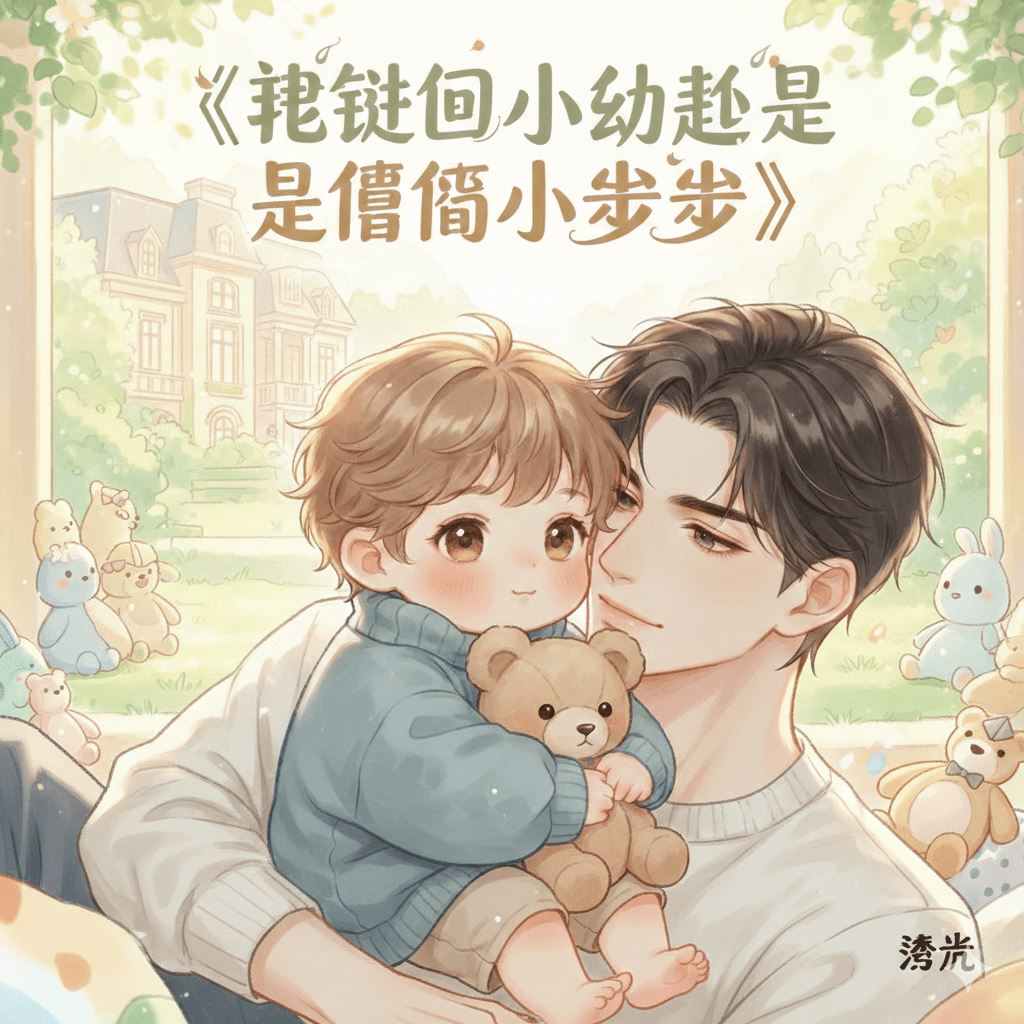
In the quiet, water-town setting of Yunshui Street in Nan City, Qin Kun and Su Siwen live a peaceful domestic life with their three-year-old adopted son, Su Youli. Su Siwen, an artist whose legs are progressively failing, relies on a wheelchair and receives meticulous care from his husband and son. Three years prior, the couple discovered the infant Su Youli abandoned in a trash bin in Beicheng during a harsh winter. After ensuring the child received medical attention, they officially adopted him and returned to Qin Kun’s hometown, raising him with deep love and devotion despite their modest financial means.

The tranquility of their life is disrupted when Zhang Shun, an assistant to the wealthy Chairman Shen Minyan, arrives at their doorstep. The Shen family, one of the most powerful conglomerates in the country, has been searching for their stolen eldest son for three years. DNA evidence and physical resemblance strongly suggest that Su Youli is the missing Shen heir, kidnapped shortly after birth rather than abandoned. Zhang Shun requests a paternity test to confirm the biological relationship, initiating a conflict between the Shen family’s claim of blood rights and the Sues’ claim of parental bonds.

Shen Minyan arrives in Yunshui Town accompanied by his second son, Shen Lin, a rebellious sixteen-year-old who secretly skipped school to join the search. Upon seeing Su Youli, Shen Lin is instantly captivated by the boy’s innocence and beauty, developing a fierce desire to protect him from his cold, distant father. Meanwhile, Su Siwen struggles with guilt and fear, believing his deteriorating health and lack of wealth make him unfit to raise Youli. He rationalizes that returning to the Shen family will provide the boy with a better future, even if it means separation from his adoptive fathers.

A confrontation occurs when Shen Minyan attempts to buy off the Sues with a million-dollar check, viewing the adoption merely as a custodial arrangement. Su Siwen and Qin Kun refuse the money, asserting that they are Youli’s true parents regardless of biology. The tension escalates when Shen Minyan forcibly removes Shen Lin from the scene, causing distress to both the teenager and the young child who witnesses the aggression. Despite the power imbalance, the Sues maintain their dignity, waiting for the official paternity results while grappling with the inevitability of losing their son.

When the DNA test confirms Su Youli is indeed Shen Minyan’s biological son, the legal tide turns against the Sues. However, the emotional landscape shifts as Shen Lin forms a genuine bond with Youli, promising to be a protective older brother. The story navigates the painful intersection of legal parenthood and emotional upbringing, exploring whether blood ties can override the years of love, care, and sacrifice invested by Qin Kun and Su Siwen. The narrative sets the stage for a prolonged struggle where the wealthy Shen family must negotiate the return of their heir, while the adoptive parents fight to preserve their role in the child’s life.

Latest Release
DateGroupRelease
2026-09-25knoxt c127
2026-09-25knoxt c126
2026-09-25knoxt c125
2026-09-25knoxt c124
2026-09-25knoxt c123
2026-09-25knoxt c122
2026-09-25knoxt c121
2026-09-25knoxt c120
2026-09-25knoxt c119
2026-09-25knoxt c118
2026-09-25knoxt c117
2026-09-25knoxt c116

Community Reviews

Rating(0 / 5.0, 41votes)
5 stars
0(0%)
4 stars
0(0%)
3 stars
0(0%)
2 stars
0(0%)
1 stars
0(0%)

Popular reviews

... Read More
I just need to talk about this one image because it's been stuck in my head since I read it. The rain, the puddles, this tall father putting his jacket over his kid so he doesn't get wet, and the small son trying to tilt the umbrella toward his dad — and Shen Lin watching them disappear into the fog and saying "a waste of effort." Like. Sir. You have no idea what you just witnessed, do you? This book has such a specific texture to it. The Nan City summer rain, the potholed roads, the humid weather making the driver grumble — it all feels so real I could smell the wet pavement. And then you've got the quieter domestic scene: Su Siwen drawing in his wheelchair, Su Youli running back to pour him water like it's the most natural thing in the world, the wooden plank path through the yard, that little wooden handle on the door made just for the kid's height. These tiny details make the world feel lived-in, you know? It's not just a backdrop — it's the actual environment these characters breathe in. The contrast between the cold luxury car cutting through the storm and the warm ramshackle yard with its barking dog is honestly giving me main character energy from both sides.
... Read More
I need to talk about how the author builds this world because honestly the atmosphere is *chef's kiss*. Right when Shen Lin is wandering through Nan City, the text paints this picture of a Jiangnan water town — misty mountains, rainbows hanging in the distance, locals chatting in their regional accents. It's not overwhelming description, just enough to make you feel like you're walking those streets yourself. "Nan City possessed the gentle charm unique to the Jiangnan water towns." That opening line alone sets the entire mood. And then you get Yunshui Street specifically, which has been through tourism development but still feels alive with actual residents going about their day. There's something really grounding about that detail — it's not a theme park version of a water town, it's a place where people actually LIVE, where kids play marbles on the street and adults know which children belong to which families. But what I found myself coming back to was the contrast between the gentle scenery and the chaotic energy of the children's conflict. You've got this beautiful riverside setting with kids playing games, and then suddenly it escalates into something genuinely tense. The river itself becomes a menacing presence because of that backstory about last year's child who fell in — the text mentions it casually but it changes everything about how you view that setting. Every threat near water takes on new weight. And Youyou's fear of it specifically, because he personally witnessed a child almost drown, makes his panic feel so earned and real. The domestic spaces are equally well-drawn — the Su family house where the three adults are locked in a stalemate, the stone post in the garden where Youyou sits like some kind of precious artifact, the eaves where Yuanzi the dog waits. These aren't just placeholders; they're specific, lived-in spaces that make the world feel tangible. The garden scene with Youyou preferring to stay there with Yuanzi rather than go to kindergarten? That's worldbuilding through character behavior, not exposition, and it's infinitely more effective.
... Read More
I need to talk about how this chapter unfolds because honestly, the pacing is doing something really clever here. On the surface, it looks like a simple family reunion story — a boy shows up, sees a kid, realizes there might be a blood tie. But the author is layering in so much subtext without ever forcing it. Let me start with the moment that genuinely caught me off guard: Shen Lin seeing Youyou for the first time. The text says, "Shen Lin swore this was the most beautiful child he had ever seen." And then immediately follows up with, "Only his mother could give birth to such a beautiful younger brother." This isn't just exposition — it's the narrative quietly planting the emotional seed before the paternity test even becomes a plot device. What struck me most was how the search itself was treated. The text mentions, "Shen Lin hadn't been involved in the search for his brother before and hadn't expected the process to be so difficult." That one line does heavy lifting. It reframes everything. This isn't a slick investigation story; it's messy, slow, and human. Then there's the breakfast scene — and I know this sounds trivial, but hear me out. The entire structural pivot of this chapter happens over soy milk and buns. Youyou serving breakfast, wiping the table, clearing his own dishes. This is where the plot stops being about "finding a missing brother" and becomes about "what family actually looks like." The narrative arc here bends toward something deeper than mystery. And I have to mention the ending — that partial sentence, "And there were countless other t…" It's an intentional fragment, isn't it? The author refuses to wrap things up neatly. It leaves you hanging in that warm, aching space between what is known and what is hoped for.
... Read More
I literally cannot stop thinking about how this chapter builds tension and then releases it in the most satisfying ways. Let me trace through the escalation because the author's pacing here is *impeccable*. We start with something seemingly harmless — kids playing marbles. But then the game shifts to "Snatch Youyou" and suddenly everything changes. This isn't just a fun childhood game; it's this invasive, almost predatory behavior that makes you immediately understand why Yang Yang's protective instincts kick in. The author doesn't need to tell you this is wrong — they just show you Yang Yang's reaction and your heart goes out to both kids instantly. Then comes the confrontation with Li Dong, and the threat about the river. This is where the chapter turns from "kids being kids" to something genuinely tense. And Youyou's response — not loud wailing but quiet, desperate sobbing, clutching his brother's clothes — is so much more powerful than any dramatic outburst could have been. The text says his cheeks turned "bright red and big tears fell like rain" and I just... I felt this in my chest. The resolution is equally well-crafted. Youyou crying AGAIN when his daddies arrive — the text describes how he'd stopped crying but then saw his daddy and it all came pouring out — this is psychologically spot-on. Kids don't perform emotions linearly; they hold it together in crisis and then collapse when they feel safe. That moment where Qin Kun picks him up and he nestles into his arms, tilting his face up for tears to be wiped? Chef's kiss. And then the final image of Youyou falling asleep in his daddy's arms while all the drama has resolved around him — it's so tender. And that ending with Shen Lin's internal monologue: "None of you are his brother; I am." What. A. Cliffhanger. The author just dropped a bombshell and I need to know what happens next IMMEDIATELY.
... Read More
Let's talk about how this passage breathes, because the rhythm is really deliberate. It opens wide—explosive sounds, lots of movement, Youyou panicked, Yang Shiqing trying to manage everything. Then it narrows down sharply: a single conversation in the changing room, fitting the uniform, Yang Shiqing's internal monologue about calcium supplements. This is the calm. The author literally slows everything to a near-standstill with these small domestic details—the sleeves covering Youyou's hands, the pants burying his feet, the coincidence that the uniform belonged to a kid who went to his grandmother's house. It's almost absurdly gentle here. And then, eight lines later, two kids pounce on Youyou and the whole thing detonates. The pivot from 'look how adorable this is' to 'his shoe is flying off and he's on his back' happens in roughly three paragraphs. That whiplash is intentional, and I think it mirrors what Youyou himself is experiencing—the world went from safe to unsafe in about four seconds. What I also appreciate is the structure of the phone call scene. We're watching Yang Shiqing video-call Su Siwen and Qin Kun, and the author uses this device to show us three separate reactions happening simultaneously: Yang Shiqing's proud exaggeration, the fathers' deadpan realism ('Isn't this filter a bit too thick?'), and then Su Siwen nearly standing up when he sees Youyou fall. Three perspectives on the same moment, layered in real time. It's cinematic in a way that's easy to take for granted until you notice it. The chapter doesn't end on resolution though—it cuts while Yang Shiqing is still holding Youyou, still asking if he's okay. No neat bow, just the image of an adult holding a hurt child. Which means the next chapter probably starts with consequences. I'm bracing myself.
... Read More
Okay so let me just say this out loud because it's driving me insane—the UGLY PUPPY named Yuanzi is absolutely central to everything and nobody's even acknowledging it. Shen Ling has NEVER seen such an ugly dog. This is the first time in his entire life he's encountered something visually unappealing that is also clearly LOVED. Yuanzi is literally a standing contradiction to everything Shen Ling knows: he's ugly but adorable, he's a pet but he has a NAME given by the child, he's allowed to steal food and get away with it because YOUYOU protects him. The dog exists in a world where IMPERFECTION IS ACCEPTED. Shen Ling tries to praise the dog insincerely because he doesn't want to hurt the child's feelings—and that is the exact same survival instinct that makes him pretend to be good when Shen Minyan shows up. He's performing kindness because he's learned that's what keeps you safe. And then Youyou throws himself on the ground wrapping his arms around Yuanzi yelling DON'T HIT HIM. This child has already built a protective worldview around something worthless in everyone else's eyes. The coincidence that Youyou resembles Shen Minyan's late wife—"a white pink-nosed ugly dog by his side"—wait. Is the author literally mirroring the child and the dog intentionally??? Both are unappreciated, both are ugly to outsiders, both have become someone's entire world. Shen Minyan seeing a shadow of his dead wife in that child is the most symbolic beat in the entire chapter and I'm convinced it's deliberate.
See all reviews

Custom lists

See all custom Lists