Summary

... Read More

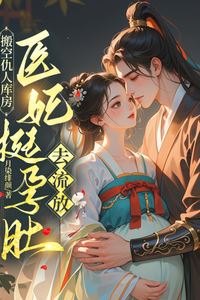
Ye Chutang, a powerhouse from the 23rd-century post-apocalyptic world, transmigrates into the body of a legitimate eldest daughter who was abandoned in the countryside for fifteen years. The original host, neglected by her father, the Minister of Revenue, was murdered by her caretakers who planned to sell her into prostitution. Upon waking, Ye Chutang uses her martial arts skills to kill the perpetrators and accidentally encounters Qi Yanzhou, a powerful man suffering from a lethal fire poison. She uses him as an antidote to neutralize a drugged broth forced upon her by the deceased caretakers and later helps suppress his poison with a pill from her spatial ability. After setting fire to the estate to destroy evidence, she returns to the capital to reclaim her birthright.

Back in the Minister's Mansion, Ye Chutang confronts her father, Ye Jingchuan, and stepmother, Kong Ru. She discovers that her father brought her back not out of familial love, but to use her as a substitute bride for a powerful eunuch, as his preferred daughter, Ye Anling, refused the match. Ye Chutang negotiates twenty thousand taels of silver as compensation for her return and asserts her dominance within the household. She systematically dismantles the spy network planted by her stepmother, punishing disloyal servants and securing the allegiance of key staff members like the maid Shan'er, who reveals the family's internal secrets.

Throughout the early chapters, Ye Chutang leverages her spatial ability to hoard resources, including thirty thousand catties of wheat from the family warehouse, and uses spiritual spring water to enhance her physical condition and win over the local villagers. She maintains a facade of compliance while secretly planning her revenge against those who wronged the original host. Her interactions with her father are marked by sharp wit and financial demands, exposing his greed and hypocrisy to the household staff and villagers.

The narrative establishes Ye Chutang as a formidable opponent who refuses to be a victim. She navigates the complex politics of the Minister's Mansion with calculated ruthlessness, turning the household's spies into loyal servants and securing her position. The story sets the stage for her eventual confrontation with the eunuch and her father's schemes, as she prepares to expose their crimes and reclaim her mother's dowry, which her father has misappropriated.

Ye Chutang's journey involves mastering her new environment while retaining her apocalyptic survival instincts. She balances the need to integrate into ancient society with her desire for vengeance, using her knowledge of medicine, martial arts, and spatial storage to gain an advantage over her enemies. The introduction of Qi Yanzhou, who remains a mysterious figure connected to her past, adds an element of intrigue to her political and familial struggles.

As the homecoming banquet approaches, tensions rise within the Ye family. Ye Chutang's refusal to submit to her stepmother's authority and her father's attempts to control her marriage prospects create a volatile atmosphere. She continues to gather information and resources, preparing for the challenges that lie ahead in the capital's elite circles.

The story highlights Ye Chutang's transformation from an abandoned village girl to a confident and powerful matriarch-in-waiting. Her actions demonstrate a strategic mind that prioritizes survival and retribution, setting the foundation for her rise in status and her eventual downfall of the corrupt officials who exploited her mother's legacy.

Latest Release
DateGroupRelease
2026-08-11shanghai fantasy c161
2026-08-11shanghai fantasy c160
2026-08-11shanghai fantasy c159
2026-08-11shanghai fantasy c158
2026-08-11shanghai fantasy c157
2026-08-11shanghai fantasy c156
2026-08-11shanghai fantasy c155
2026-08-11shanghai fantasy c154
2026-08-11shanghai fantasy c153
2026-08-11shanghai fantasy c152
2026-08-11shanghai fantasy c151
2026-08-11shanghai fantasy c150

Community Reviews

Rating(4 / 5.0, 24votes)
5 stars
9(38%)
4 stars
5(21%)
3 stars
10(42%)
2 stars
0(0%)
1 stars
0(0%)

Popular reviews

... Read More
I need to talk about Ye Jingchuan because this man is absolutely unhinged and the way the author writes him is *chef's kiss*. On one hand, he's the kind of father who sends his own daughter away to the countryside for fifteen years and then expects her to just... show up and be grateful? Please. But then there's this one moment where the text says the original host treated him decently, and Ye Chutang internally notes that he's the only Ye family member who did. That tiny detail makes everything so much more complicated, doesn't it? She's not just a blank-slate revenge protagonist who hates everyone. There's actual emotional history here. And the dynamic with Kong Ru! Oh my god. The scene where Ye Chutang looks at her stepmother and immediately says "If you don't know how to manage a household, you shouldn't be in charge of the finances"—I literally laughed out loud. That is such a cold, calculated opening move. She's not even pretending to be polite. And Kong Ru's reaction? Frozen smile, nails digging into palms, forcing herself to stay calm for her daughter's sake. These two are already at war and they haven't even exchanged more than five sentences. Then there's the whole name-changing fee negotiation. Ye Jingchuan is clearly trying to reassert paternal authority and Ye Chutang is just monetizing every interaction. "That'll be another ten thousand taels, Dad." The power dynamic is completely flipped and I am obsessed.
... Read More
The way this chapter uses setting is actually incredible. Let me walk through it. You start in a teahouse—intimate, confined, the kind of place where secrets leak out through walls. Then Ye Chutang strides out and crosses the street to Wanbao Pavilion, a jewelry shop ranked among the best in Jingcheng. The shopkeeper's reaction to her hundred-tael deposit tells you everything about the economic hierarchy—money speaks louder than status here. But the real scene is the embroidery workshop. The author paints it so vividly: "numerous embroiderers and plenty of high-ranking officials and nobles." The workshop is a microcosm of Jingcheng society—power, wealth, and gossip all threaded together like silk on a loom. The hidden owner being Consort Yun, "whom even the Empress had to tread carefully around," adds this layer of political tension that's barely visible but constantly humming beneath the surface. And the physical space matters. When Ye Anling faints and her head strikes the floor, staining the bandage red—the workshop owner immediately sends for a doctor from Huichun Hall. This isn't just drama; it's worldbuilding. There's a medical ecosystem, a commercial ecosystem, a social hierarchy. Everyone in that workshop knows exactly who Ye Chutang is, what happened to her, and why County Princess Anping's presence (or absence) matters. The detail about the Emperor going to Qingyun Temple for quiet cultivation and not returning for five days—that single piece of worldbuilding becomes the entire plot mechanism. The timing of imperial absence creates the window for the Empress's scheme. The world isn't just a backdrop; it's an active force.
... Read More
The author is playing with time like a master here. Let me explain. We start with the wheat theft—a contained incident that gets resolved relatively quickly. Chen Zhong finds the tunnel, Hu Yuan is sent to report to authorities, and within the chapter they're already on the road back to Jingcheng. The author doesn't linger on the investigation. It's done. Moved on. And that's the point. Because the real clock is ticking elsewhere. Three days. That's how long until the homecoming banquet. That's the deadline the author keeps hanging over our heads like a guillotine. Every scene after they arrive in the city has this underlying urgency—even the comedic moments about the name-changing fee feel like they're building tension because we KNOW something big is coming. The structure is basically: crisis → resolution → journey → new crisis → ticking clock. It's a classic escalation pattern and it works because the author never lets us breathe for too long. The maids' gossip scene is the perfect example—it starts as casual eavesdropping, escalates into physical intimidation, and then gets cut off at the most crucial moment by Kong Ru's arrival. I also appreciate how the chapter transitions work. The journey back serves as both a breather and a bridge—we get world-building, character moments, and humor, but it's all in service of getting us to the banquet. Nothing is wasted. Every scene earns its place.
... Read More
The stakes in this chapter are deceptively simple on the surface—young women fighting over marriage prospects in a minister's household—but the deeper conflict is about truth versus survival in a system designed to bury both. Ye Chutang's central conflict isn't really with Ye Anling. It's with the entire structure that allowed her to be abandoned for fifteen years while her father built his career on her mother's sacrifices. Every word she speaks in that embroidery workshop is a calculated strike at that structure. She's not just exposing a rumor—she's exposing a pattern. The stakes for Ye Anling are personal and political. If the Eunuch De marriage rumor spreads, she loses her position as Crown Princess candidate. But if she stays silent, she admits the scheme existed. Either way, she's trapped. Her fainting isn't just physical—it's the body's response to having no viable moves left. But the real stakes are about Ye Chutang herself. She's been playing defense for most of the story—reacting to plots, surviving attempts on her life, enduring exile. This chapter is the first time she goes fully offensive. She's not just revealing truth; she's weaponizing it. The handkerchief, the wrists, the five thousand taels—each piece of evidence is a brick in a case against the entire Ye family. And the question hanging over everything: what happens when the Emperor returns from Qingyun Temple and finds out his minister has been lying about his wealth, his daughter, and his loyalty? The stakes just went from personal revenge to political crisis. I am absolutely not ready for what comes next.
... Read More
I keep coming back to the motif of deeds of sale throughout these chapters and I think it's the most important symbolic element here. Everyone in this mansion is owned — the maids, the servants, even the concubines. Shan'er was sold for ten taels of silver to become a concubine. The three people assigned to Ye Chutang's courtyard are property. When Ye Chutang demands their deeds of sale, she's not just gaining leverage, she's offering them something that doesn't exist in their world: autonomy. The deed of sale is both a chain and a key. Whoever holds it holds power over the person, but giving it away is the only way to truly be free. This is why the scene where Shuang'er brings the three deeds and says 'Shuang'er belongs to the eldest young lady from now on and will never betray you' is so loaded. It's not really about loyalty to Ye Chutang as a person — it's about the transfer of ownership creating a new kind of bond. And then Ye Chutang makes her swear an oath with 'bowels rot and entire family perish' — she's mixing the old system of control (deeds) with the old system of fear (curses). The deeper theme here is about what freedom actually means in a world where everyone is property. Can you be free if your loyalty is bought? Ye Chutang seems to understand that in this world, power is the only currency that matters, and she's accumulating it ruthlessly.
... Read More
There's this one line that keeps echoing in my head: "Has Wangye never heard of 'hiding one's abilities'?" It's not just plot exposition—it's the entire thesis of this novel. Ye Chutang survived in a village where she was forced to embroider two handkerchiefs a day for thirty coins and eat spoiled rice, all while pretending to be someone she's not. She carries poison pills. She knows medicine. She has earth elemental abilities. And she hides it all because revealing her true self would get her killed. The merit point system she's accumulating isn't just a game mechanic—it's her insurance policy, her currency of survival in a world that wants her dead. The dark green jade token is the perfect symbol for all of this. It represents their connection, their secret night together, the unspoken promise between them. She can't take it out of her spatial ability without raising suspicion, so she has to wait. The token is both a bond and a burden, just like everything else in her life. And then there's County Princess Anping kneeling on that flat wooden floor—something impossible that happens because of Ye Chutang's powers. Is that not the perfect metaphor for this entire story? People in positions of power thinking they're immovable, only to find themselves brought low by forces they can't see or understand? The author is weaving these themes so seamlessly that you barely notice you're thinking about them until the book is over and you're sitting there trying to unpack everything.
See all reviews

Characters

See all characters

Custom lists

See all custom Lists