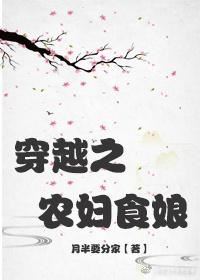
The Peasant Gourmet Chef
Novel Info

Summary

... Read More
Li Hehua, a modern woman with a background in the culinary arts, transmigrates into the body of an obese, ill-tempered woman of the same name in ancient times. Upon waking, she finds herself in a dilapidated rural home with no memories of the original owner. Her immediate concerns are survival and understanding her new reality. She discovers she is married to Zhang Tieshan, a man who has recently returned home and intends to divorce her due to the original Li Hehua's abusive behavior toward his family, particularly his mother and younger brother. The villagers despise the original owner, viewing her as a wicked shrew, which isolates Li Hehua completely. Struggling with her new overweight body and limited resources, Li Hehua resolves to lose weight and earn money to secure her independence. She begins by cleaning her home and fetching water, tasks that exhaust her due to her physical condition. Her first significant interaction is with a silent, traumatized young boy named Shulin, who appears to be Zhang Tieshan's son. Despite the boy's fear and rejection, Li Hehua feels a protective instinct toward him and secretly leaves food for him. Meanwhile, Zhang Tieshan and his family view her actions with suspicion, believing she is plotting against them. Li Hehua decides to use her culinary skills to earn income. She travels to a neighboring village and offers her services as a banquet cook. Skeptical villagers and the local family, the Wangs, allow her to prepare a dish to prove her ability. She makes suan cai yu, a pickled fish dish, which impresses everyone with its flavor. The Wangs hire her for a wedding banquet, providing her with her first source of income. With this success, she buys ingredients to improve her diet and continues to secretly feed Shulin, hoping to help him overcome his trauma and eating disorders. The core conflict revolves around Li Hehua's struggle to survive in a hostile environment while hiding her true identity and intentions. Zhang Tieshan remains distrustful, warning her to stay away from his son. However, he notices that Shulin begins to eat after consuming the food Li Hehua leaves. The story follows Li Hehua's determination to change her fate through hard work and kindness, despite the prejudice and hostility she faces from her husband, his family, and the village. She must navigate the complex social dynamics of ancient rural life while planning for her future independence.
Latest Release
DateGroupRelease
2026-08-11shanghai fantasy c54
2026-08-11shanghai fantasy c53
2026-08-11shanghai fantasy c52
2026-08-11shanghai fantasy c51
2026-08-11shanghai fantasy c50
2026-08-11shanghai fantasy c49
2026-08-11shanghai fantasy c48
2026-08-11shanghai fantasy c47
2026-08-11shanghai fantasy c46
2026-08-11shanghai fantasy c45
2026-08-11shanghai fantasy c44
2026-08-11shanghai fantasy c43

Community Reviews

Rating(4.2 / 5.0, 14votes)
5 stars
6(43%)
4 stars
5(36%)
3 stars
3(21%)
2 stars
0(0%)
1 stars
0(0%)

Popular reviews

... Read More
"Li Hehua, I don't care what schemes you're plotting in that twisted mind of yours." Oof. That line hit different. I need to unpack Zhang Tieshan because this guy is genuinely fascinating. He's not just some generic protective brother trope—he's sharp, suspicious, and absolutely ruthless when he feels threatened. The way he caught Li Hehua red-handed making dumplings for Shulin? Chef's kiss. He didn't yell, he didn't panic. He just stood there in the doorway and let her squirm. And then that warning—"don't try any tricks under my nose. If you dare to target Shulin again, I'll make you regret it"—it's delivered so calmly that it's somehow worse than if he'd screamed. This man has zero tolerance for anyone near his brother, and honestly? I respect it. But here's what's really interesting: the whole Zhang family dynamic. Zhang Qingshan is the sweet one, the one who immediately assumes the best about whoever left those noodles. He tastes it first to protect his brother, then offers the chopsticks to Zhang Tieshan. Meanwhile Zhang Tieshan is the one feeding Shulin, testing the noodles, watching every detail. And Madam Zhang? She's confused but trusting, saying "as long as it's good for Shulin, that's all that matters." The contrast between the brothers is brilliant—Qingshan is warm and impulsive, Tieshan is cold and calculating. And Li Hehua is caught in the middle, trying to do something genuinely kind while being viewed through the lens of her past behavior. Nobody believes she's changed. That's the real tragedy here, isn't it? She wants to help and the world sees a threat.
... Read More
I need to talk about the woodshed scene because I actually felt physically uncomfortable reading it. You know that moment when Li Hehua realizes all three rooms are taken, her mother-in-law just told her to stay out of sight, and Zhang Tieshan literally ignores her question about having a place to sleep? She just stands there and thinks "Doesn't he have a shred of chivalry?" and then has to do the humiliating self-correction of "Well, beautiful might be a stretch and chivalry is definitely not something I deserve." I was simultaneously crying and laughing out loud. The humiliation is so thick you can taste it. But then she just... goes to the woodshed. Two hours of cleaning, stacking firewood, building a platform bed ten centimeters off the ground. Using haystack grass as a mattress. And she does it all without a single complaint to anyone. That's the emotional core of this story for me—not the romance (though that's coming, I can feel it), but this fierce, quiet dignity of a woman who has lost everything and is still choosing to keep going. The line where she recites that passage about Heaven testing a person before giving them great responsibility? I got chills. She's literally convincing herself that this suffering has meaning. That's not just resilience, that's survival instinct wrapped in philosophy.
... Read More
Okay so I need to talk about the cooking scene because honestly it was one of those moments where I just sat there like yes this is what I came for. Li Hehua walks in, gets skeptical treatment from Old Wang, and then proceeds to absolutely demolish him with a dish nobody in the village has ever seen before. The way the author builds this whole curiosity—villagers peeking through windows, Aunt Wang asking what she's making, the assumption that it's her signature recipe—it's classic underdog setup and I was fully invested. And then the payoff: the entire pot gets devoured in silence, which is honestly such a good narrative choice. No one wants to break the spell by talking with their mouth full. Old Wang finally admits it's the best thing he's ever eaten and the crowd goes wild. But what really sealed it for me was the negotiation that follows. Li Hehua doesn't try to charge extra despite the overwhelming demand. She matches Old Zhou's rate—five wen per table—and locks in ten tables for fifty wen total. That's smart character writing right there. She's playing the long game, building reputation, not fleecing her first customer. The whole sequence from challenge to victory to business deal flows so naturally. It's a self-contained mini-arc that gives real satisfaction while also setting up her financial situation for the chapters ahead. I also loved how she immediately thinks about reinvesting—buying rice and flour instead of eating out, planning her mantou schedule to avoid the family. The plot is clearly building toward something bigger, and I'm hooked.
... Read More
Can we just appreciate the dialogue in this? Specifically the village scene where Li Hehua tries to get hired as a banquet cook? Because the author writes crowd dialogue like a god. Li Hehua's pitch: "The better I cook, the fatter I get." She's using her own body as a resume. That's either confidence or delusion and I can't decide which is funnier. But it WORKS. The middle-aged woman actually laughs. In a time period where a plump woman might be seen as lazy or unhealthy, Li Hehua reframes it as proof of her profession. That's quick thinking. Then the villagers lose their minds. "She's got guts!" "Free food!" These are not background characters — they're the Greek chorus of rural China, commenting on everything, motivated by spectacle and snacks. The author lets them breathe. They're not just scenery. But the real dialogue gem is Zhang Tieshan and Zhang Qingshan. So sparse. So loaded. "It's not your fault. You're still young." — four words that carry an entire brotherly dynamic. Zhang Tieshan absolving a thirteen-year-old of guilt he never should have carried. And then Zhang Qingshan's anger: "Brother, why are you still keeping that woman around?" The disgust is palpable, but it's tempered by the fact that Zhang Tieshan is already making his own calculations. "Not yet. I haven't settled accounts with her family." That line — cold, controlled, dangerous. The dialogue shifts from emotional to threatening in one breath. The narrative voice itself is also doing interesting work. It's mostly third-person limited, staying close to Li Hehua, but it dips into her internal monologue with a casualness that feels like a friend narrating their day. "This body's appetite is insatiable!" reads like someone talking to themselves while walking. It's intimate without being precious.
... Read More
I need to talk about Zhang Shulin because this kid absolutely wrecked me in like three paragraphs. The first time Li Hehua finds him, he's basically invisible — curled up in a firewood pile, so thin his clothes are swallowing him whole. The author describes him as having "fresh and old bruises on his arms" and I literally stopped reading for a second. This child has been through something. And then Li Hehua reaches out and he FLAILS. Like a cornered animal. The rejection isn't personal, it's survival. He doesn't trust touch. He doesn't trust anyone. And then the meat bun moment. She leaves it for him and backs away. No pressure, no expectations. Just... here, you eat. The fact that Zhang Tieshan finds it and immediately says "throw it away" tells you everything about the household dynamics. He's protective, suspicious, traumatized himself in a different way. But then Zhang Qingshan warms it up anyway, and Zhang Tieshan feeds it to Shulin piece by piece. That image — a grown man tearing off tiny bits of a precious meat bun and hand-feeding a child who won't even look at him — I'm not okay. The relationship between the three brothers is also fascinating. Zhang Tieshan is carrying the weight of the world, blaming himself for Shulin's condition. Zhang Qingshan is thirteen and already crying into his sleeve because he couldn't protect his little brother. And their mother? Off somewhere napping while the kids handle everything. The family dynamics here are so layered — love expressed through food, guilt expressed through silence, protection expressed through tiny tears of steamed bun.
... Read More
This whole section is basically a meditation on what food means when you have nothing else to give. Let me trace this through. Li Hehua arrives in this body with almost no money—thirty copper coins, hungry, weak from eating coarse porridge. Her first act of agency isn't about survival for herself, it's about cooking for others. The suan cai yu isn't just a dish, it's her proof of value, her ticket into this world. She's using what she has—her culinary skills—to negotiate her place. And then with Shulin, food becomes even more significant. She can't speak to him. He won't respond. So she leaves noodles. Then dumplings. Food is the only vocabulary she has to say "I see you, you matter, please live." The chives she steals from the Zhang family's basket—this tiny act of borrowing becomes this huge emotional gesture. She's risking everything for a child who might never know her name. And there's this recurring motif of eating versus not eating. Shulin hasn't been able to eat properly since his trauma. The fact that he finishes an entire bowl of noodles is presented almost like a miracle. Zhang Tieshan notices it too—"Ever since his return, Shulin had been like this—unable to eat"—and now he's eating. The body remembers what the mind can't process. Food becomes the bridge between starvation and survival, between isolation and connection. Even Li Hehua's own relationship with food is symbolic—she's physically struggling in this overweight body, practicing yoga, counting every coin, yet her first instinct when she has a little something is to share it. The story keeps asking: what do we do with the only thing we have? And the answer, again and again, is to cook.

See all reviews

Characters

See all characters

Custom lists

See all custom Lists