Summary

... Read More

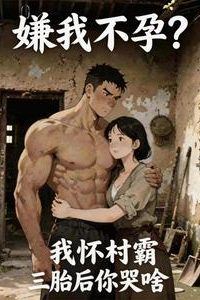
Liang Qiaoqiao, a modern woman from 2035, dies in a traffic accident and transmigrates into the body of a seventeen-year-old girl with the same name in 1977 Wutong Village. The original host is the adopted daughter of Chen Laoda, a poor farmer whose son, Chen Ziming, was a soldier recently killed in action. Upon arrival, Liang Qiaoqiao finds herself in the ancestral hall, where Chen Laoer, the younger brother of the deceased Chen Laoda, and his family are violently ransacking the house and beating the unconscious girl. The Chen Laoer family, driven by greed for the survivor benefits and family property, had previously driven Chen Laoda’s wife, Chen Pozi, to suicide. Liang Qiaoqiao realizes she has inherited a frail, starving body in a poverty-stricken era, immediately facing life-threatening hostility from her own relatives.

Using her wits, Liang Qiaoqiao feigns a severe injury after being shoved by Chen Laoer’s wife, causing her to collapse and bleed. This act draws the attention of the villagers, who intervene and drive the antagonists away. The situation escalates when Mu Yang, a battalion commander and close comrade of the martyr Chen Ziming, arrives to deliver condolences. Discovering the abuse inflicted upon the martyr’s family, Mu Yang orders the arrest of Chen Laoer and his entire household for assault and theft. He also provides Liang Qiaoqiao with additional financial support and review materials for the upcoming college entrance examination, which becomes her primary goal for escaping the village.

During the funeral preparations, Liang Qiaoqiao activates a mysterious treasure appraisal space contained within a shabby stone pendant she wore. The space, initially only one square meter, allows her to appraise items for points and collect objects into a storage dimension. She discovers that the original host’s parents were renowned scientists who were persecuted during the Cultural Revolution. Before their deaths, they buried a metal box containing confidential research materials and letters in the yard. Liang Qiaoqiao uses the space to collect a fifty-year-old persimmon tree and the metal box, earning enough points to upgrade the space to Level 1, expanding its capacity to ten square meters and adding a planting zone.

As she prepares for the future, Liang Qiaoqiao continues to explore the mountain near her home, appraising wild plants to accumulate points. She successfully upgrades the space to Level 2, increasing the usable area to one hundred square meters and unlocking a treasure map function that highlights valuable items and dangers in her vicinity. With the Chen Laoer family imprisoned and the immediate threat neutralized, she focuses on surviving the harsh winter and studying for the college entrance exam. The story follows her strategic use of the appraisal space to secure resources, clear her parents’ names, and build a new life in the 1970s, transitioning from a vulnerable victim to a determined survivor with supernatural advantages.

Latest Release
DateGroupRelease
2026-08-11shanghai fantasy c97
2026-08-11shanghai fantasy c96
2026-08-11shanghai fantasy c95
2026-08-11shanghai fantasy c94
2026-08-11shanghai fantasy c93
2026-08-11shanghai fantasy c92
2026-08-11shanghai fantasy c91
2026-08-11shanghai fantasy c90
2026-08-11shanghai fantasy c89
2026-08-11shanghai fantasy c88
2026-08-11shanghai fantasy c87
2026-08-11shanghai fantasy c86

Community Reviews

Rating(4.3 / 5.0, 11votes)
5 stars
6(55%)
4 stars
2(18%)
3 stars
3(27%)
2 stars
0(0%)
1 stars
0(0%)

Popular reviews

... Read More
I need to talk about the dialogue in this batch because it's genuinely funny and the voices are so distinct. The soldiers gossiping is peak military barracks energy. "Platoon Leader Nong, is that Battalion Commander Mu's sweetheart?" "That girl seems quite young, doesn't she?" These guys are just doing what soldiers do—being nosey and judgmental. And then Nong Yisong's response: "What are you thinking? That's Comrade Chen Ziming's sister." The way he shuts them down is perfect. He's annoyed but also protecting their reputations, and the text makes it clear he's also secretly thinking they look cute together. The subtext in his dialogue is everything. But the real comedy gold is the bicycle scene. The night shift officer's awkward laugh and implication that maybe Nong Yisong should try somewhere else—"We don't have any four-wheeled vehicles here. We do have two Er-ba Da Gang bicycles, if that'll do…" The passive-aggressive politeness of a small-town police station officer who has had enough of soldiers for one night. And then Nong Yisong just... takes them. "Our mission tonight is urgent, so we'll borrow your bicycles for now. Thank you for your cooperation and support. We will definitely return them afterward." Their word, my foot. The narrator's aside is perfect. This is the kind of dialogue that makes you laugh out loud because it's so authentically Chinese bureaucratic humor—formal words masking the fact that this man is basically robbing a police station. And Mu Yang's dialogue is always so sparse but effective. "Stay close to me later." "Let's go, our turn." He doesn't waste words. Every line has purpose.
... Read More
The opening of this section just pulls you straight into 1970s rural China and I am HERE for it. Liang Qiaoqiao bracing against the cold wind, closing her courtyard doors, burrowing under covers because she can't be bothered to examine her nighttime gains by kerosene lamp. The detail of her checking the points bar before blowing out the lamp—such a perfect blend of her modern mindset colliding with this primitive setting. And then the morning ritual. Walking over frost and cold dew with a torch, watching her breath turn to white vapor. The line about buying two sets of padded clothes when she goes to the county for exams—this is the kind of practical, mundane detail that makes the world feel REAL. She's not just surviving, she's planning. Making lists in her head like a normal person would. But the scene that absolutely wrecked me visually: the sun rising like a marinated egg yolk hanging temptingly at the horizon. I literally stopped and stared at that image. It's such an unexpected comparison—something so domestic and food-related applied to something as vast and beautiful as a sunrise. It tells us everything about Liang Qiaoqiao in one sentence: she's hungry, she's practical, and she sees the world through the lens of someone who grew up with takeout and now has to make do with sweet potato congee. The train station scene is equally vivid—the dim night lights of a small county town, the tidal wave of bodies flooding out of the carriage doors, the pothole-filled roads. Every sensory detail is there and it all just... works.
... Read More
I need to talk about this narrative voice because it's doing something really special and I don't think enough people are noticing. The narration has this casual, almost conversational tone that makes you feel like you're reading a message from a friend who just discovered something incredible. Like when Liang Qiaoqiao thinks: 'Not every time traveler is blessed with financial fortune—at least our female lead's money doesn't come easily.' That parenthetical aside? That's the narrator winking at you. That's the author saying 'yeah, I know the trope, let's subvert it.' And the dialogue between the military characters in Chapter 10 is a completely different flavor. Mu Yang's voice is sharp, economical. 'Let's go to the Armed Forces Department first. I have matters to discuss with Minister Wang.' No fluff. No wasted words. You can tell he's a military man just from how he speaks. Wang Jianguo, on the other hand, is all polite deflection and social maneuvering. 'Minister Wang, are you off work?' said with a cheerful smile while he's clearly trying to figure out what's actually going on. The contrast between these two voices is really well done. But the real star of the dialogue situation is Liang Qiaoqiao's internal monologue. It's funny without trying too hard. 'Truly the most stingy portable space in transmigration history.' 'If it had the nerve to add another zero when reaching Level 2!' This is the kind of humor that comes from character, not from jokes. You're laughing because you understand her frustration, not because the author told a punchline. The narration also has this habit of breaking the fourth wall in really natural ways. When it says 'Anyone who'd played video games in the modern era would be familiar with this kind of leveling mechanics'—that's the author trusting the reader to get the reference without over-explaining. I just love how distinct each voice is. You could tell who's speaking without tags.
... Read More
There's something deeply symbolic about Liang Qiaoqiao's Treasure Appraisal Space being so sluggish with its cross-temporal delivery function. She's a person from the future trapped in the past, armed with technology she can barely use, and the one feature she actually needs won't activate because she's too cheap to spend points on it. "You're always trying to save Points, spending so little. When do you expect the cross-temporal delivery function to activate?" The Space is basically calling her out like a disappointed parent. This is such a perfect metaphor for the immigrant experience, the transplanted-experience, the feeling of having tools at your disposal but not being able to fully access them in your new environment. She has knowledge from the future, but she can't just order an electric scooter and have it appear. She has to earn it. She has to wait. She has to make do with what she has. The mourning period restrictions are another layer of symbolism. She's trapped between worlds—literally living in someone else's house, observing customs that aren't hers, cooking congee because that's all she can manage. The sweet potato congee scene is almost heartbreaking in its simplicity. This woman who once had takeout at her disposal is now counting rice grains at the bottom of a jar, trying to make one meal last until tomorrow. And then there's the train—this moving capsule where she's suddenly thrust into action, working alongside Mu Yang, using her space abilities for something other than survival. The journey itself is symbolic: she's moving from isolation to connection, from passive survival to active participation. The crowded train is chaos, but it's also where she finds purpose. Where she finds him. The bicycles borrowed from the police station—another metaphor for making do, for improvisation, for taking what you need from a world that wasn't built for you. Nong Yisong basically stealing two Er-ba Da Gang bikes because the mission is urgent. That's Liang Qiaoqiao's whole energy: survive, adapt, take what you need, don't apologize.
... Read More
"Then you can call me Qiaoqiao." Her voice soft and gentle, remarkably soothing to hear. Mu Yang couldn't help but let laughter ripple in his eyes. He tentatively called out: 'Qiaoqiao.' His voice wasn't loud, but they stood very close, and with their height difference, his lowered head meant he was speaking right by her ear. I need a minute. I need to sit down. This is the most beautifully understated romantic tension I have ever read and I am NOT okay. The way the author writes this—no grand declarations, no dramatic confessions, just two people in a cramped train carriage creating this tiny pocket of warmth in a noisy, chaotic world. Mu Yang's arm forming a barrier between her and the jostling crowd. Her leaning against the wall with him shielding her. The invisible warmth flowing silently between them while the rest of the carriage is just... chaos. And then the eye contact. Both of them refusing to look away first, this weird competitive streak between two people who are probably similar ages and both stubborn in their own ways. And then they both laugh at the same time. Like they couldn't help it. Like the tension was too much and laughter was the only release. The soldiers gossiping about them from a distance only makes it sweeter—they're watching this tender moment and have no idea what's actually happening. Nong Yisong thinks they're compatible but can't say anything because of her deceased brother's name. The dramatic irony is KILLING me. I just want to shake Mu Yang and tell him to hold her hand already but I also respect that this slow burn is so much better.
... Read More
Okay so let's talk about Mu Yang because this man is doing THINGS. I love how he doesn't just stand there being handsome—he actively creates a protective bubble around Qiaoqiao. Remember that moment on the train when she's just staring at the door like a deer in headlights and he wraps his arm around her shoulders to guide her through the crowd? That's not just chivalry, that's calculated protectiveness. He's a military man, obviously scanning for threats even while making sure she doesn't get trampled. And then he switches from shoulder-hold to wrist-grab because apparently one form of physical contact wasn't enough. The guy is multitasking like a boss. But what really got me is the eye-contact battle. Two people who barely know each other just LOCKING EYES in a noisy train carriage like it's some romantic drama scene. And they both break at the same time laughing. That's not awkward—that's chemistry that doesn't need words. The author didn't even make them say anything profound, just this silent competition that ends in shared laughter. Mu Yang calling her "Qiaoqiao" and her calling him "Ninth Brother"—the intimacy of it is insane for people who just met. And Nong Yisong! The guy is clearly thinking they look cute together but has to play it cool because "reputation is extremely important these days." The internal conflict of a man who wants to ship people but can't say it out loud is comedy gold.
See all reviews

Characters

See all characters

Custom lists

See all custom Lists