The Nymph Wants to be Plundered - Reviews

The Nymph Wants to be Plundered
+Add to Custom List
Sort
Add review
... Read More
Let's talk about dialogue because THIS chapter's dialogue is deceptively sparse but absolutely lethal. Cassis's lines are short. Commanding. Almost never more than three or four words: "Look at me, Evelyn." "I'm going in now." "Right now." "Tell me. Now." Each one lands like a hammer. He doesn't monologue during intimacy — he commands. And the fact that the narrative frames these as "low and steady, yet carrying an edge" tells us everything about his voice: controlled, precise, barely containing something darker underneath. Evelyn's dialogue is the perfect counterpoint. Fragmented. Stuttering. "Ca-Cassis, what… ah…" "Huh… y-yes…" "…Huh? Nngh—!" She can barely form complete sentences. When she DOES speak at length — after, describing her physical sensations — her words tumble out "in a disjointed manner, her thoughts scattered." The voice shift is brilliant: during the act she's reduced to sounds, afterwards she tries to articulate and fails beautifully. But the real dialogue masterstroke is what's NOT said. The entire chapter is built on subtext. Cassis never says "I care about you." He says "empty your mind" and means it both ways — don't think, and also, forget who you are. He never says he's attracted to her. He rationalizes it as her being fooled by his face. He never says he's protecting her. He calls himself a "crow-feeding knight" and moves his hand with "renewed purpose." The narrative voice itself is worth discussing too. It's third-person limited, hovering mostly around Cassis, but it dips into Evelyn's physical experience with almost clinical precision. "The wet, squelching sounds grew louder, more distinct. Squelch, squish, schlip." Onomatopoeia in prose? Bold choice. But it works because it's followed by her internal shame spiral — the sounds are objective, her interpretation is emotional. "Will it be so wrong?" Cassis thinks, and the narrative doesn't answer. That's the author's voice speaking through him — ambiguous, uncomfortable, refusing to moralize. The dialogue style across the board matches this: nothing is confirmed, nothing is denied, everything hangs in the space between words.
... Read More
Let me just start by saying: Faye, I don't know who she is yet but I already love her. The moment Evelyn opens her eyes and Faye RUSHES in and wraps her arms around her neck sobbing "What will become of you, Evelyn"—that hit me like a truck. It's raw and immediate and completely unfiltered. This is someone who has known Evelyn forever and is watching her best friend literally turn into a mythical creature and might lose her. Meanwhile, Evelyn's first instinct is to get up and go back to WORK at the flower garden. She's so fundamentally kind and duty-bound that even facing an impossible transformation, her brain goes to "oh no, my plants." That character detail alone tells you everything about who she is. And then there's Cassis watching this whole scene. He sees the village chief bowing repeatedly, sees Evelyn's fear and hope shimmering in those green eyes, and the text literally says he "could not bring himself to turn away." Not because of duty. Not because of law. Because her suffering actually bothers him on a personal level. And then on the horse ride—Evelyn gets hiccups from nervousness and cold, her body going rigid from being held by a stranger who happens to be an elf king of a different race, and Cassis's internal response is just "it was beyond pitiful—it was utterly heartbreaking." This man is already emotionally invested and he's barely known her for ten minutes. The tension between them isn't romantic yet—none of that—but there's this immediate, undeniable recognition of each other's vulnerability. She's terrified and fragile; he's seen rejection and chose to fight it anyway. I can already feel something developing here and it's going to wreck me.
... Read More
This chapter is a pacing masterpiece and I need to break down exactly why. It opens at a glacial pace — Evelyn explaining what she KNOWS about human reproduction (nothing), Cassis asking clinical questions, the leaf touching his nose. Very slow. Very deliberate. You can feel every second stretching out. "Empty your mind," he tells her, and the reader is basically doing the same thing — clearing away expectations, settling in. Then the physical escalation begins, and it's SURGICAL. Finger by finger. Touch by touch. The author doesn't rush this. Each movement gets its own beat, its own reaction. Evelyn's confusion, her shame, her body's betrayal — all given equal weight. The pacing here is almost meditative, matching the sensual rhythm of the scene itself. "Relax, Evelyn" — and then he goes deeper. The rhythm accelerates naturally, not because the author is skipping ahead, but because the characters are moving together. Her breaths get shorter. His voice gets lower. The prose itself seems to breathe faster. And then — BANG BANG BANG. The door interrupt. The transition is SO abrupt it's practically comical. One moment: intimate, languid, charged. Next moment: "How insufferable," Cassis mutters, rising with "fluid, almost predatory grace." The structure of the chapter mirrors the structure of their relationship — slow buildup, moments of genuine connection, then the outside world coming crashing in. The pacing doesn't just serve the scene, it SERVES the theme. But here's what's genius: the chapter doesn't END on the interruption. It lingers. Cassis tells her to sleep. She whispers yes. He leaves. The final beat is HER — alone, heart racing, sheets ruined, body humming with sensations she can't explain. That's where the chapter really lands. Not on the drama of the door, but on the quiet aftermath. If this chapter had ended on the knock, it would've been a cheap cliffhanger. Ending on her in the bed? That's emotional storytelling. That's the kind of pacing that makes you immediately open the next chapter.
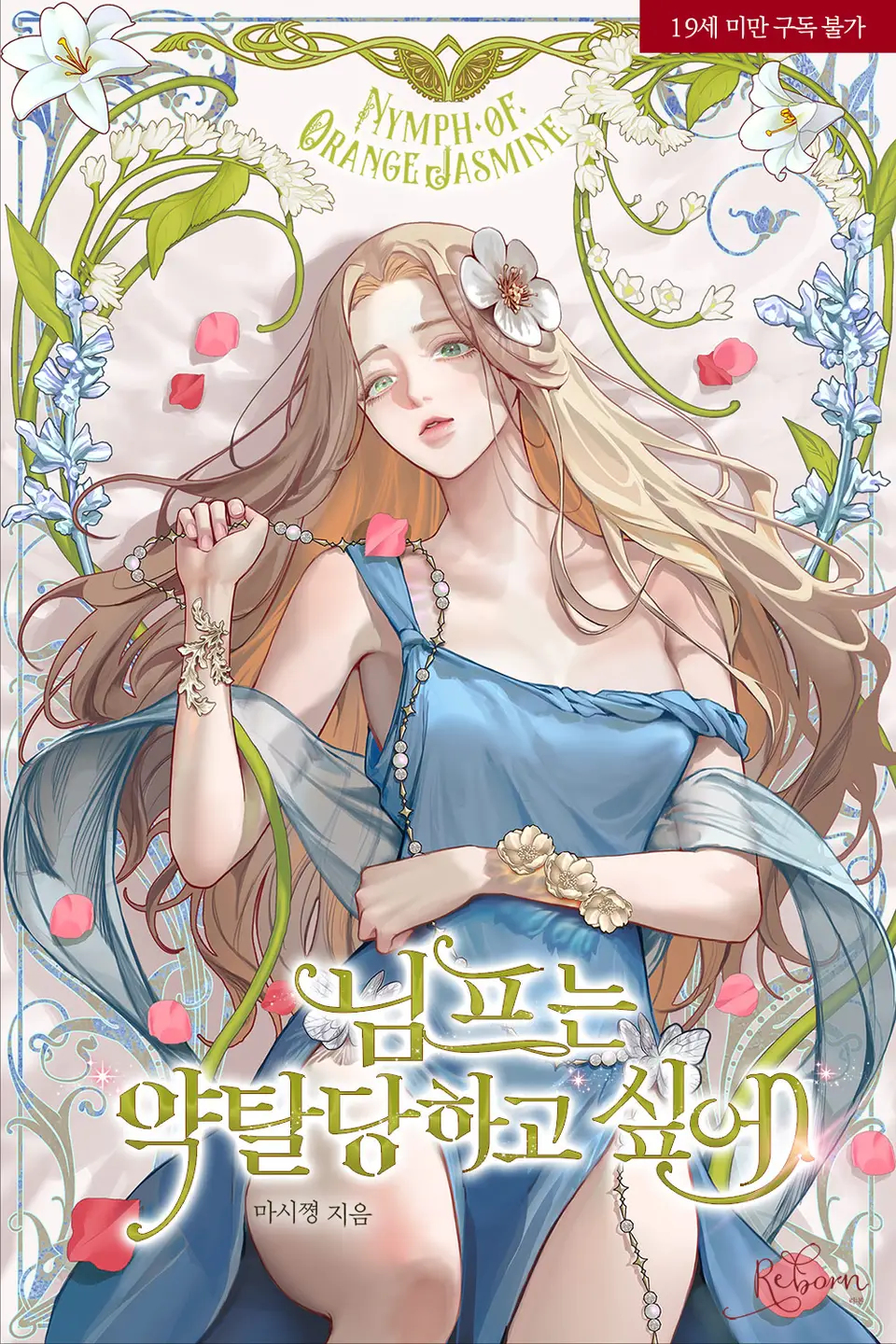
... Read More
Let me just quote this and let it speak for itself: "Love doesn't simply arrive because one waits patiently. Everything has its time. Now then, young lady. Would you accept an opportunity to fulfill that love as repayment for your kindness to me?" And then the parting words: "Whether you transform a moment as sweet as honey into eternity, or leave it as a fleeting pleasure, that choice remains yours." This woman—Polyxene in disguise, clearly—speaks in riddles that sound like genuine advice until you realize they're manipulation. Every sentence is calibrated to exploit Evelyn's loneliness. She doesn't offer the elixir outright; she makes Evelyn feel like she's earning it through kindness. "You must have a warm heart to provide so generously for a stranger"—flattery as a weapon, delivered with what sounds like genuine warmth. The narrative voice itself is this gorgeous blend of intimate third-person and lyrical prose. It dips into Evelyn's head so seamlessly that you forget you're reading something written. Lines like "Swallowing what would forever remain an unspoken confession—one she could express neither skillfully nor shyly" feel like they belong in a Jane Austen novel crossed with a fairy tale. The internal monologues are sharp and painful—"I love him…" trailing off mid-sentence because she can't bring herself to finish it. Cassis's dialogue is spare but loaded. His sleep-talking is almost comically understated—a single name, a shoulder shift—and it does more emotional work than pages of declaration. When he's awake and analyzing, his voice is cold and precise, but even that precision cracks: "Evelyn, why did you run away from me?" The word "why" carries so much weight. He's not asking for a reason—he's asking for the answer to an impossible question. The author's voice never feels distant or academic. Even when describing magical concepts like nymph biology or the World Tree's oaths, it stays grounded in emotion. The prose serves the feeling, not the information. I found myself re-reading passages just for the rhythm of the sentences.
... Read More
This chapter is PACKED with symbolism and I can't stop thinking about it. The opening image—Evelyn in the pond, half-submerged, caught between her old human life and her new nymph existence—is literally the central metaphor. Water = transformation. She's neither fully human nor fully nymph, suspended in between. And Cassis? He's the rooted one, the one who knows how trees "return to their roots" but also cannot exist without water. Their union isn't just physical—it's elemental. Human + nature. Root + flow. Stillness + movement. The strawberries he offers her like an "offering" at the chapter's start—that's symbolic too. Fruit from the forest, offered freely. Nourishment. A threshold crossing. She accepts, and the story moves forward. Then there's the recurring motif of heat and cold. She shivers from cold earlier, then warms up instantly when he touches her. At night, the forest is chilly but she's warm because of him. The sapling she carries is fragile, needing protection. Heat = life force. Cold = death/stasis. His body is literally the source of her continued existence. But the deepest symbol is probably the foot-kissing scene. Why his lips on her FOOT of all places? A foot is the lowest part of the body—grounded, practical, unglamorous. By kissing it, he's saying: I will honor every part of you, even the parts you think are beneath notice. It's intimacy stripped of pretense. Sacred in its simplicity. And what about the ending? Cassis noticing those wild strawberries are still wrapped in leaves, untouched, "not a single one had gone soft." Fresh. Preserved. Waiting. Symbolically? Their relationship is still in its earliest stage, not yet ruined or compromised. It can still grow. The chapter closes with that image deliberately. Because the story—and their bond—isn't over. It's just beginning.
... Read More
Let's talk about the World Tree seeds and what they actually mean, because this detail is doing SO much narrative work. When Evelyn first sees the golden seeds drifting through the air, she asks if that's "the seed of the World Tree" and Cassis explains that some elves can't even see them — but she CAN, because she's a nymph who serves the trees. This is basically the author telling us that Evelyn's transformation has given her new sensory abilities tied to the natural world. But here's what I think is really going on: the sapling tied to the horse is her OLD tree, the one that was withered and dying. Cassis brought it WITH him to the castle. Why? Because the World Tree at the center of Jupiter Castle might be able to heal it. Or maybe — and this is what I'm really curious about — maybe her essence needs to connect to THE World Tree, and Cassis is the bridge. His line about her needing to "receive the essence of the World Tree as soon as possible" suggests that the process involves HIM specifically, not just any elf. The plot is setting up something bigger than a simple rescue story. Evelyn isn't just a girl who needs saving — she's connected to the World Tree in a way that matters to the entire ecosystem. And Cassis, the king, is the only one who can help her. But at what cost? The author is clearly building toward a revelation about what the nymphs and the World Tree truly mean in this world, and I cannot WAIT to find out.
... Read More
Cassis speaks in clipped imperatives—"Take my hand," "Obey my words," "Tell me." But beneath the authority, there's a vulnerability he can't quite hide. When he says "Half right and half wrong," it's not evasion; it's the only language he has for emotions he's never named. His dialogue reveals an elf who has spent centuries commanding loyalty, now learning to ask for something he hasn't articulated: don't go to anyone else. Evelyn's voice is equally distinct—hesitant, observant, slowly finding courage. Her question about seeking other elves isn't naive; it's strategically innocent, testing how much control he expects to exert. When she stammers "Mmph... ugh, hmm..." during the encounter, the dialogue becomes almost primal—sounds before language, needs before words. The narrative voice operates in close third person, dipping between perspectives without warning. Sometimes we're in Cassis's head, analyzing her trembling; sometimes we're in Evelyn's, interpreting his warmth. The shift occurs organically, like breathing. The author avoids exposition dumps—worldbuilding emerges through dialogue snippets: "King of Jupiter," "guardian of the World Tree," references to nobility that suggest a fractured hierarchy. Most striking: the silences. What Cassis doesn't say—the jealousy when she mentions other elves, the fear that she'll die alone—carries more weight than any declaration. Evelyn's internal questions, left unanswered, create a dialogue between thought and speech that mirrors the chapter's central tension: some things can only be felt, not spoken.
... Read More
I've been thinking about this chapter nonstop because every image in it seems to double or triple meaning. The dying tree that belongs to Evelyn is obviously symbolic—her life force is literally planted in this kingdom, and if the tree dies, she dies. But Cassis's own body is also treated like a dying thing that needs tending. He's the Guardian of the World Tree and yet his own body won't listen to him. There's this recurring motif of things that should be under control but refuse to be: the rigid tension between his legs that 'refused to relent,' the sylphs who swarm chaotically, the ancient traditions that are crumbling, and now a human-born nymph who doesn't belong but won't leave. Everything in this world is bleeding at the edges. And that line about Eon's suggestion—'It's wiser to discard what's lost and focus on what's possible'—chills me every time. The political philosophy here is brutal: efficiency over compassion, the many over the one. But Cassis chose the one anyway. That's the real theme underneath all the romance and intrigue. It's about whether a ruler can afford to be human in a system that demands inhumanity. The World Tree sustains the kingdom, but it also imprisons everyone in it. Even the king.
... Read More
The atmosphere in this chapter is thick enough to taste. Cassis kneads leaves into a cushion, spreads his robe, creates an entire world of comfort from nothing. This is the power of the World Tree's guardian made manifest—not through grand spells or declarations, but through intimate, almost tender acts of creation. The forest itself seems to hold its breath as he works. The pond scene is pure sensory overload. Water lapping against skin, mint-green skirts pooled around her thighs, the contrast between cold wind and warming blood. When Evelyn sinks into the spring, the description shifts from external observation to internal sensation—the way water tastes different here, the way her body remembers every touch even as her mind tries to forget. The environment responds to emotion: the breeze quiets when he withdraws, wild strawberries glisten like the lips he just stole from. Jupiter feels ancient and decaying. The dying seedling, the desperate energy transfers, the royal protocols that still demand obedience from a woman who barely understands what she's become. This is a world where survival requires intimacy, where the boundaries between healer and lover, ruler and subject, are blurrier than the edges of Evelyn's vision. The most haunting image: Cassis's white robe spread across the forest floor, stained with everything that just happened there. He told her to stay, and she didn't. But the space remains charged, charged with energy that will outlast their encounter. The World Tree's essence flows through him, yes—but so does something messier, more human. Even immortals burn, it turns out.
... Read More
I have to talk about the opening image because it stayed with me. Crimson marks across a pale body. Lemon-tinted golden hair spread across dark sheets. The contrast between the violence of passion and the tenderness of sleep—that juxtaposition is everything. The author doesn't just describe the scene, they make you feel the warmth of the bed, the stickiness of sweat, the heaviness of exhaustion. And then Evelyn's hand trembling as she buttons his clothes. Those clothes "designed conveniently, requiring only a couple of buttons to put on or take off"—the domestic detail grounds the fantasy in something so mundane it hurts. The elven world feels alien but not incomprehensible. Jupiter Castle, the World Tree, the sylph's whispers—these concepts are introduced through context rather than exposition dumps, which I deeply appreciate. The World Tree's protection mechanism is particularly vivid: if someone tried to abduct Evelyn by force, "the branches of the World Tree would have extended ferociously to protect her, using its roots to subdue and bury any adversary." That's not just worldbuilding, that's a character. The tree is alive, it has opinions, it takes sides. Then we drop into the human village and the shift in atmosphere is jarring in the best way. Fireworks, grape preserves, apricot jams, the noise of wedding guests. It's warm and cramped and smells like bread and fruit. Evelyn's communal backyard where she's standing with that hexagonal violet bottle in her pocket—it's such an ordinary moment that makes the magical elements feel more dangerous by contrast. This is a village where star-folk visit and sell potions, but it's also a village where everyone marries young and the flower garden is short-staffed because nobody's left single. The sensory details throughout are consistently strong. The old woman's hair described as "more luxuriant than any thread Evelyn had ever seen"—flame-colored, almost unnatural, which subtly signals she's not what she seems. The violet liquid in the hexagonal bottle that looks like it belongs in a city apothecary, not a peasant village. Every object in this world feels like it has weight and history. I keep wanting to reach through the page and touch these things.
... Read More
I need to appreciate how well the pacing works in this section because it's genuinely masterful. The journey to the castle starts slow — Cassis riding at a deliberately reduced pace, his gaze drifting down to Evelyn's hair, remembering the raspberries. The author lingers here, and at first I thought maybe it was dragging, but no — every slow moment builds the intimacy between them. By the time Sir Iel appears and drops the title bomb, the emotional groundwork is already laid. Then the reveal hits fast and hard. "Your Majesty." One moment Evelyn thinks he's just some noble elf, the next she's having a full identity crisis. The transition from the peaceful journey to the jarring arrival of Sir Iel works perfectly as a narrative whiplash device. But the real pacing genius is what happens AFTER Cassis leaves Evelyn alone in the bedroom. The narrative slows to a crawl — she's waiting, overthinking, dozing off, getting woken by cold elves, worrying about what she needs to prepare. This is where the tension really builds. We're not waiting for action; we're waiting for INTIMACY. And the author makes us WAIT. Two elves come and go. She falls asleep. She dreams half-asleep. And then — "Someone gently grasped her shoulder and began to stroke it softly" — and it cuts off. THEY CUT IT OFF THERE. I am NOT OKAY. The chapter ends on such a perfect note of anticipation. Every scene leading up to this moment felt like it was pulling the spring tighter and tighter, and then — nothing. Just her sinking into that warm touch and the text ending mid-thought.
... Read More
I am not okay. I read this chapter and I physically cannot process what I just read. Let me collect my thoughts. The opening image of Evelyn waking up with a tear-streaked face and Cassis immediately detecting the lie—"She's not even good at lying"—that moment of being seen so completely by someone is simultaneously the most romantic and most devastating thing I have ever encountered in fiction. She's falling apart and he notices the smallest details: the red mark on her forehead, the glistening eyes, the way her voice goes lifeless. He doesn't press. He doesn't demand. He just… observes. And that restraint is so much more powerful than any grand declaration. But then the emotional whiplash. You go from this quiet, almost tender observation to a scene that is simultaneously intimate and violations-of-consent-adjacent and I have so many feelings about this and I don't know how to folderoll them into one coherent review. What gets me is the tenderness hiding inside the urgency. When he presses his face into her shoulder and inhales her scent—"Fresh, like young leaves, with a subtle sweetness of blooming flowers"—that is a man who is intoxicated not just by desire but by the sheer fact that she exists. He can smell her vitality, faint as it is, and it steadies him. The text says he was "intoxicated by the scent that few others could even detect." She is rare to him. Not just as a person but biologically, magically, existentially. She is the only one. And then the forehead kiss. After everything—the binding, the escalation, the sheer overwhelming sensory assault of a first time that Cassis is clearly not handling with the care he probably intends—the forehead kiss comes like a soft reset. "It was nothing like the teasing, persistent touches he had lavished on the sensitive curve of her shoulder earlier. This was gentle, warm, like a soft breeze filling the spaces between her toes." I cannot handle this level of writing. The contrast between his voracious hunger and that single gentle kiss—those are the two sides of the same coin. He wants her completely and he also wants to make sure she knows she's safe. The problem is, safety and desire don't always occupy the same space, and Evelyn is trapped between them. The ending of this chapter left me breathless. Not in a good way. Not in a bad way. Just… completely undone. She feels something pressing against her back—"hard, thick, and searingly hot"—and the chapter cuts there. I screamed. I actually made a noise. My roommate asked if I was okay and I couldn't answer because I was still processing the emotional magnitude of what just happened.

Leave a comment

You must be logged in to leave comments. or
