The “Non-Lady” Lessons
+Add to Custom List
Novel Info
  • Author:
  • Status:Ongoing

Summary

... Read More

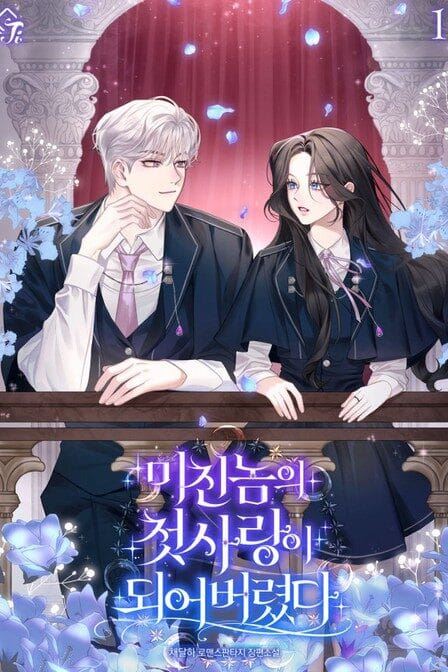
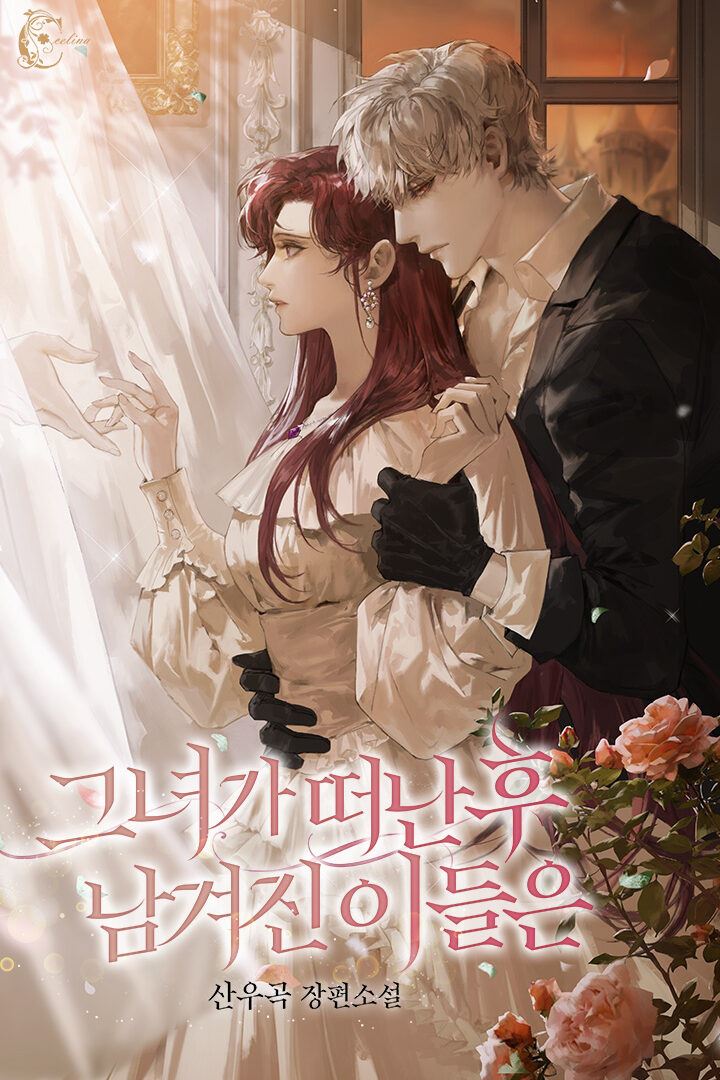
Gillian is the rightful heir to the Dratva Count family in the Kingdom of Kirak. Following the death of his father, his ambitious uncle seized control of the estate and exiled Gillian and his mother. After his mother passed away during their years of wandering, Gillian arrived in the capital of the neighboring Kingdom of Selon to prepare for his eventual return and reclaiming of his birthright. To survive without drawing the attention of his uncle’s spies, he adopted the female alias Lady Priscilla Maia, posing as a widowed noblewoman. He conceals his identity beneath elaborate dresses, heavy makeup, and practiced feminine mannerisms, relying on his natural beauty and disguise to navigate high society while maintaining a low profile.

During his time in the capital, Gillian accepts a position tutoring Andrea Ulrich, the daughter of a wealthy coal merchant. Andrea is a gentle, impressionable young woman who has always felt more comfortable in the company of women than men. Over the course of her lessons, she develops deep romantic feelings for Priscilla, mistaking her tutor’s disciplined dignity for elegance and grace. One day, during a picnic by the river, Andrea confesses her love. Gillian, though internally flustered by the situation, firmly rejects her, emphasizing their friendship and hoping to dispel her romantic notions as a temporary infatuation. He leaves the encounter believing the matter is resolved, unaware that Andrea is already spiraling into despair.

Later that evening, Gillian encounters a drunken Andrea by the river. She is despondent over her rejection and attempts to drown her sorrows in alcohol. When she collapses from intoxication, Gillian takes her to a nearby inn to recover. While checking on her, Andrea mistakes him for the male version of Priscilla she had vaguely imagined. In a state of confusion and desire, she initiates physical intimacy. Gillian, despite his initial resistance and moral reservations about exploiting a vulnerable woman, succumbs to his own physical urges and they spend the night together. The next morning, Andrea wakes in panic, believing she has dishonored herself and her feelings for Priscilla. She flees the inn in tears, leaving only a brief note of apology and thanks, convinced that the kind stranger who helped her was merely a shadow of her beloved tutor.

In the days that follow, Andrea returns to social gatherings but avoids Priscilla, while also secretly seeking out the man she met at the inn. She tracks Gillian down in a public park, offering him a picnic basket as a gesture of gratitude. During their conversation, Gillian realizes Andrea is drawn to him because he resembles Priscilla. He confronts her about her superficial attachment, leading to a tense exchange where Andrea acknowledges her confusion but admits her attraction to his striking beauty. Meanwhile, Andrea begins to suspect that her pursuit of Priscilla is linked to dangerous forces. She overhears men speaking Kirak discussing a plan to “take care of” someone named Priscilla. Acting on instinct, she follows them into a disreputable district and is intercepted by Gillian, who has been trailing the same men for his own reasons.

Gillian reveals that these men are agents connected to his uncle, confirming that his secret identity has been compromised and his life is in immediate danger. Andrea’s instinctive concern for Priscilla, manifested in her reckless search for him, inadvertently exposes Gillian’s true location and puts them both at risk. The story shifts from a romantic misunderstanding to a political thriller as Gillian and Andrea must navigate the threats posed by his uncle’s network. Andrea, having discovered the connection between her romantic fixation and real danger, becomes an unlikely ally to the man she once misunderstood, while Gillian must balance his need for secrecy with the growing dependence Andrea places on him. Their relationship transforms from one based on mistaken identity and fleeting passion into a complex partnership forged by shared peril and hidden truths.

Latest Release
DateGroupRelease
2026-10-03dusk blossoms c4
2026-10-03dusk blossoms c3
2026-10-03dusk blossoms c2
2026-10-03dusk blossoms c1

Community Reviews

Rating(0 / 5.0, 43votes)
5 stars
0(0%)
4 stars
0(0%)
3 stars
0(0%)
2 stars
0(0%)
1 stars
0(0%)

Popular reviews

... Read More
Let me just start by saying: the morning-after breakfast scene is one of the most emotionally devastating things I have ever read and I refuse to elaborate beyond that except to say the scarf. THE SCARF. So Gillian comes down looking like a mysterious bandit from a fairy tale, wrapped in a scarf so no one can see his face, and when Andrea asks about it, he gives this completely straight-faced lie about having a scar that he needs to cover up. And Andrea's response? Just this gentle, 'I didn't do mine either.' Like she's genuinely sympathetic, like she relates, like she's offering some kind of soft solidarity without any idea that the person across from her is the same person she spent half the night intimately entangled with in what she believes was a dream. I keep coming back to the fact that Andrea has no idea any of this happened. She's carrying around this warm, flushed memory of a dream that felt more real than anything she's experienced, and she has no context for it. Meanwhile Gillian is sitting there with dark circles under his eyes, having spent the entire night torn between duty, fear, desire, and guilt, and he can't tell her a word of it because if he does, everything falls apart. The emotional whiplash of reading this from both perspectives simultaneously is something else. She's blushing remembering a fantasy. He's suffering through the reality. And they're both sitting at the same breakfast table acting like nothing happened.
... Read More
Let me talk about how this opening controls the reader's experience, because the pacing here is genuinely clever. We open in medias res -- in the middle of an intimate encounter that's already reaching its climax. Andrea is half-naked, Gillian is touching her, there's explicit physical description happening. We're not given any context, no explanation of who these people are or why they're together. The reader is immediately thrown into confusion along with Andrea: who is Priscilla? Why is she being intimate with a man? What is happening? Then the author pulls back the curtain gradually. First we learn that 'Priscilla' is actually Gillian in disguise. Then we get the full revelation: Gillian is a man who has been posing as a noble widow named Lady Priscilla Maia. The scene transforms from erotic confusion to political intrigue in a single moment. After that revelation, the narrative shifts to flashback. We go back to 'that day' -- the riverside confession where Andrea first declared her feelings. This is a smart structural choice because it reframes everything we just read. The intimate scene now has a backstory, a history, a context that makes it emotionally complicated rather than simply titillating. The pacing within the flashback is also carefully controlled. Andrea's confession unfolds through dialogue, with Gillian's internal monologue providing counterpoint. We learn about her personality, her feelings, her misconceptions -- all while Gillian struggles with how to respond. The tension builds through his silence, his deliberateness, his refusal to give her a clear answer. When he finally speaks, it's gentle but firm: 'I don't want to lose a precious friend.' Then we cut back to the present, to Gillian's private moments with Jerome. The humor here -- Jerome laughing hysterically, calling him 'a delinquent college student or a street con artist' -- provides relief after the heavy emotional scenes. But it also deepens our understanding of Gillian's situation. He's not just hiding his identity; he's isolated, unable to be himself with anyone except Jerome. The chapter ends with Gillian looking out at the river, contemplating his past: fifteen years old, fleeing his homeland, his father dead, his uncle a usurper. This final section shifts the tone entirely from romantic comedy to political drama, setting up a much larger narrative arc. The pacing moves from intimate to personal to political, expanding the scope with each transition. What works best is how the author uses the revelation as a pivot point. Before it, the story is about confused desire and mistaken identity. After it, the story becomes about power, succession, and the consequences of living a lie in a dangerous political world. The structure promises that the romantic entanglement with Andrea is just the beginning of a much larger story.
... Read More
You know what struck me the most rereading this? The very first image. Gillian looking at his own reflection in the side window of the car and questioning what that bastard's eyes are saying. From page one of this section, we're dealing with mirrors, reflections, and the unsettling gap between who you are and what you see staring back at you. Then there's the scarf. Of course there's the scarf. Priscilla wears it like armor, like a curtain, like she's hiding from the world — and she is, in every sense of the word. But the scar that she claims is underneath it? That's the real symbol. It's not a physical wound, it's the wound of living a lie. Every time Andrea looks at the scarf and feels pity, she's touching something real without knowing what it is. And the hotel room itself — this temporary space where identities can blur and dreams can feel like reality. It's a liminal zone where the normal rules don't apply, where a man can become a woman and a woman can speak truths she'd never say awake. When Andrea says 'since it's a dream I can do whatever I want,' maybe she's partly right. Maybe the dream is the only space where she's actually free. The wine bottle Jerome delivers is another small symbol I couldn't shake — alcohol as the great equalizer, the thing that dissolves boundaries and pretense. Gillian uses it to create a boundary (keep her asleep so she doesn't discover the truth), but it ends up doing the exact opposite. The tool meant to protect the secret becomes the instrument that almost destroys it.
... Read More
The sensory world in this opening feels so vivid, doesn't it? Let me walk through some of the scenes that really stayed with me. That riverside confession scene is absolutely cinematic. Early spring, the lingering chill in the air but warm enough winds blowing during the day, leaves rustling and chattering above their heads -- you can feel the temperature, hear the sound of the trees, sense the tension between these two characters standing there. Andrea's face flushed red, her large eyes frightened, her features like sugar confectionery against the natural backdrop. It's a portrait of youthful vulnerability set against the ordinary beauty of a park afternoon. Then we cut to the intimate scene, and the sensory details shift dramatically. The 'rustling sound of rich fabric,' the explicit sounds, the visual contrast of Priscilla's makeup and feminine appearance against the revelation of Gillian's male body. The image of Andrea's toes curling inside her glossy lace stockings, then stretching out stiff enough to cramp -- it's visceral and disorienting in exactly the right way. You're supposed to feel her confusion, her shock, her surrender all at once. The setting of the mansion itself is interesting. Gillian moves through corridors where maids greet him, passes through rooms with partitions where he can change clothes privately, has access to a garden and riverbank where he goes to 'get some fresh air' in disguise. The staff knows his true identity, which tells us something about the level of trust and secrecy required for his cover to work. 'Since he might arouse more suspicion by trying to hide coming in as a woman and leaving as a man, he had brought trustworthy employees.' That's worldbuilding through practical detail. And then there's the political world hinted at beneath the personal drama. Gillian is the heir to the Dratva Count family, which 'owned vast territories in the southeastern part of the Kingdom of Kirak.' His uncle seized control after his father's death, and Gillian and his mother were forced to flee. They 'wandered everywhere, seeking refuge wherever would accept them, until they reached this place -- the Kingdom of Selon in the western...' -- and the text cuts off there, but you can feel the larger story waiting to unfold. The Kingdom of Kirak with its central continental position, the Kingdom of Selon to the west -- these details suggest a地图 of a world with multiple nations, political alliances, and likely conflicts. Gillian's disguise as a noble widow allows him to navigate high society while presumably plotting his return to reclaim his birthright. The tea parties, the debutante balls, the conversations with wealthy merchants like Theodore Ulrich -- these are all pieces of a much larger game. What strikes me most is how the personal and political worlds intertwine. Andrea's father is a coal merchant who 'built his wealth through coal trading' -- he's new money, part of the rising bourgeois class. Gillian, despite his disguise, is old nobility. Their interaction bridges these social worlds, and the consequences could ripple far beyond a simple romantic entanglement.
... Read More
This chapter is a masterclass in building stakes through dialogue and physical danger. Let me break down the encounter with that drunk man because this is why I stay up till 3 AM reading. The man grabs Gillian's shoulder—physical contact from a stranger that immediately signals threat. Then he says 'I'll take that woman' and offers to PAY EXTRA. The audacity. Gillian's reaction is immediate violence, grabbing the man by the collar, face twisting with rage. But here's the thing—ANDREA saves them. Not Gillian. Not some rescue fantasy where the man saves the woman. Andrea SLAMS her hand against the wall and launches into the most improvised con in literary history: 'Ten million lark! What, ten million lark? You think you can see a face like this for ten million lark anywhere? The boss really has gone crazy!' Both Gillian AND the drunk man are stunned. She's lying through her teeth and she does it with such confidence that even Gillian thinks 'She is... acting, right?' But the real tension spike comes when another man Andrea previously mentioned appears at the end of the corridor. Gillian has to cover her mouth and pull her away. They're not safe yet. The chapter doesn't resolve the threat—it redirects it into sexual tension, which is honestly the bravest pacing choice the author could have made. Because now the stakes aren't just 'will they get caught,' they're 'what happens when they finally have privacy and they've been running on adrenaline this whole time?'
... Read More
Can we just appreciate for a moment how DIFFERENT Gillian sounds from every other male lead in romance fiction? His dialogue is rough, direct, sometimes almost rude—but never cruel. When Andrea gets flustered untangling her ribbon and grabs his hand instead, he says 'Wait. I'll do it for you.' Simple. No flourish. When he catches her watching him and realizes he's practically embracing her, he just says 'Sorry.' That's it. He doesn't apologize excessively, he doesn't over-explain, he just... acknowledges it and releases his arms. And then later when he's being intimate with her and she's trying to protest weakly, he says 'You're not very convincing. Getting this wet.' Which is objectively the most honest thing anyone has ever said in a romance novel and I'm screaming. But the dialogue that really defines him is when he reads her thoughts about class and says 'I just... meant it's a place that doesn't suit you.' The hesitation. The ellipsis. The vulnerability disguised as casual observation. And Andrea's voice is equally distinct—when she's acting, her dialogue goes into overdrive, rapid-fire insults and absurd pricing. When she's genuinely flustered? Minimal. Stammers. Broken sentences. The author gives each character a completely different rhythm and I can tell who's speaking without looking at the names.
See all reviews

Custom lists

See all custom Lists