Summary

... Read More

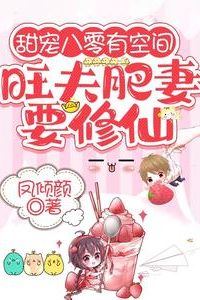
Gu Suisui is a marshmallow essence who reincarnates into a human body within the world of an entertainment-themed rebirth novel. Her new identity is that of a three-year-old child born to Feng Yaoqin, a single mother struggling with financial difficulties in an imperial city. Unlike her previous life as a demon who relied on her older sisters, the Peach Demon Sister Tao Yao and the Tree Demon Sister, for support, Gu Suisui must now navigate human society with limited demonic power. She quickly discovers that her natural beauty makes her a prime candidate for child acting, a profession she observed her sister Tao Yao practice with great success and comfort. Recognizing the economic benefits, Gu Suisui embraces her new role as a child star, not only to secure a comfortable life but also to earn money to buy beautiful dresses and support her mother.

The story begins with Gu Suisui auditioning for a small but significant role as the deceased little princess in the historical drama "Dormant." The casting process reveals the underlying dynamics of the entertainment industry, where connections and favor-trading play crucial roles. Feng Yaoqin leverages her relationship with an assistant director named Li Fugui to secure the part for her daughter. Upon joining the set, Gu Suisui finds herself in a rigorous environment managed by the strict Director Chen. Despite her young age, she demonstrates an innate sense for the camera and an ability to embody emotions with surprising depth, much to the satisfaction of the production team. Her performance during the initial scenes, which involve her character's tragic death, is marked by genuine tears that stem from her own melancholy about being separated from her demon sisters in another world.

Central to the narrative is Gu Suisui's evolving relationship with the cast and crew. She forms a warm bond with Lu Chi, the male lead and a junior university student making his first leading role, who becomes protective and caring toward her. Their on-screen sibling dynamic is complemented by genuine off-screen affection, as Lu Chi frequently provides her with snacks and ensures her comfort during long filming days. Additionally, she encounters Fu Yingyu, the female lead, known for her cold and aloof persona. Their first interaction occurs when Fu Yingyu, seeking solitude due to personal turmoil, consoles the crying child with candy. This moment hints at a softer side beneath Fu Yingyu's ruthless exterior, establishing a complex foundation for their future interactions.

As filming progresses, the narrative introduces secondary conflicts involving other characters, such as Su Yuqing, a child actor harboring hidden resentment and malicious intent toward Gu Suisui. This tension foreshadows the competitive and sometimes hostile nature of the industry. Meanwhile, Feng Yaoqin makes the difficult decision to reduce her daughter's workload, seeking more stable employment while recognizing the emotional toll of child stardom. However, Gu Suisui's enthusiasm for acting and her desire to provide for her mother lead her to agree to further opportunities, propelling her career forward.

A significant turning point occurs after the release of the official makeup photos from "Dormant." The images, featuring Gu Suisui alongside Lu Chi, garner massive attention on social media. Lu Chi's decision to publicly acknowledge her by tagging her new Weibo account results in a sudden surge of fame, gaining her hundreds of thousands of followers almost overnight. This viral moment marks Gu Suisui's transition from an unknown child model to a recognized young actress, setting the stage for her future rise in the entertainment world. The story establishes her journey as one of balancing her supernatural origins with the demands of human ambition, relationships, and professional success.

Latest Release
DateGroupRelease
2026-09-26knoxt c8
2026-09-26knoxt c7
2026-09-26knoxt c6
2026-09-26knoxt c5
2026-09-26knoxt c4
2026-09-26knoxt c3
2026-09-26knoxt c2
2026-09-26knoxt c1

Community Reviews

Rating(4 / 5.0, 29votes)
5 stars
9(31%)
4 stars
10(34%)
3 stars
10(34%)
2 stars
0(0%)
1 stars
0(0%)

Popular reviews

... Read More
Let me just say — the way this story handles the Lu Chi / Gu Suisui dynamic is genuinely fascinating and I need to unpack it. On the surface, they're co-stars. He's the famous lead actor, she's this tiny three-year-old nobody. But the text keeps reframing their relationship through this weird, almost familial lens. He calls her his "sister" in the play, but also... outside the play? The narrative blurs that line intentionally. He watches her eat snacks with this soft smile. He tells her to eat well and not save money for her brother. These are BROther-level things to say to a toddler you barely know. What's wild is Lu Chi's internal monologue. He doesn't eat the snacks himself — he just finds it "quite interesting to watch children eat." That's such a specific, almost anthropological fascination. Like he's observing something pure that he's disconnected from. And then he's genuinely pleased when the filming goes smoothly because of her. Not annoyed by a child being a child — pleased BY her competence. Meanwhile, Suisui's worldview is delightfully simple: "whoever treats her well is a good person." Lu Chi is one rank below her mother in her hierarchy. That's it. That's the whole relationship map. No suspicion, no calculation. But the MOMENT that sold me was when she smiles at him after he compliments her work ethic and "reveals a mouthful of white teeth." That image — this tiny human radiating trust at a stranger who bought her snacks — it changes the temperature of the entire scene. Lu Chi goes from a professional on set to someone genuinelysoftened. And then there's the mother-daughter relationship which operates on the complete opposite frequency. Feng Yaoqin is saturated with guilt, regret, and self-blame. Every sweet thing Suisui does becomes evidence of her own failure as a parent. The contrast between these two relationship dynamics — one built on naive trust, the other on heavy-handed love — creates this incredible emotional tension throughout the chapter. I also can't ignore Sun Hong's internal fangirling. The fact that a makeup artist is internally screaming about how cute the kid is adds this whole extra layer of community care around Suisui. She's not just loved by family — she's LOVED by everyone who crosses her path. Which makes the whole thing feel almost unfair, you know?
... Read More
The way this scene unfolds is genuinely cinematic. It starts so domestic—you've got the mom in the kitchen, the kid sprawled on the sofa, phone in hand, watching some variety show. This is a normal evening in a not-quite-rich family. But then the whole thing EXPLODES outward. Within a few paragraphs, we're talking about Weibo hot searches, professional makeup photos, casting decisions, and the difference between yellow V verified accounts and regular ones. The worldbuilding here is subtle but incredibly effective. You don't get a giant infodump about the Chinese entertainment industry—you learn everything through Suisui's eyes as she navigates WeChat, follows accounts, and tries to understand the system her mom is navigating on her behalf. The detail about Director Chen's costume design being 'expensive enough that everyone could see it cost a lot of money' is such a small, perfect touch. It's the kind of worldbuilding that doesn't announce itself—it just makes everything feel lived-in and authentic. And that final image of Lu Chi holding Suisui in his arms in gorgeous palace costume? I could literally see that photograph.
... Read More
There's a really clever meta-narrative happening here about the relationship between performance and authenticity, and I think the author is doing something subtle with how they structure the filming scenes. The chapter opens with Director Chen praising Suisui's natural, unpretentious performance — the kind of thing "older children can't perform." But then immediately undercuts this by showing us that getting those perfect moments is NOT easy. The crying sequence took multiple NGs. She cried until her eyes were red and the director STILL wasn't satisfied. The gap between "natural performance" and "repeatable, director-approved natural performance" is where the real drama lives. What I found most interesting is Suisui's actual motivation for crying. It's NOT about the scene. It's about her costume making her look ugly. She's dirty and black as coal and emotionally distressed about her appearance, not the narrative. Director Chen is asking for emotional authenticity tied to a fictional tragedy, and she's delivering genuine tears — just for the WRONG reasons. And honestly? That's kind of brilliant storytelling on the author's part. The child's real pain is more powerful than any acted pain ever could be. Director Chen's response is also noteworthy. He doesn't get frustrated. He doesn't yell. He breaks down the acting process into concepts a three-year-old might grasp: "Acting is when you believe that the moment is true." This man is essentially giving a masterclass in method acting to a toddler who is currently worried about looking ugly. The structural choice to alternate between the glamorous on-set moments and the intimate car ride with her mother creates this constant tension between public success and private sacrifice. Every compliment the director pays Suisui is immediately undercut by the reveal that her mother is alone, worried, and carrying the financial burden. And that ending line — "Substitute yourself?" — bit the straw of her cartoon water bottle — it's perfect. She's trying to process this adult concept about emotional substitution while literally drinking from a cartoon bottle. The child logic colliding with professional directing philosophy. I love how the plot keeps finding these tiny collision points.
... Read More
The thing that got me wasn't even a big moment. It was that line: "As her first meal as a human being, Gu Suisui ate very contentedly. She touched her chubby belly and hiccuped cutely." That's it. That's the entire emotional thesis of this passage right there. This being who once was some kind of ancient tree demon — someone who lived for thousands of years, probably in solitude — now sits at a table as a little girl and a human woman wipes food from her mouth and tells her to be good while mom goes out. The sheer weight of how far she's come and how much she didn't have before just hits different. And then when she starts crying later from homesickness for Peach Demon Sister and Tree Demon Sister... she CAN cry now. As a demon, holding back tears was survival. Now she doesn't have to hold back but she still does, and that's somehow even sadder.
... Read More
This batch is doing something really smart with pacing that I want to unpack. You start at full emotional intensity - Gu Sui is sobbing, the director is scrambling to capture it, Lu Chi is helpless. Peak drama. Then Fu Yingyu appears with a candy and it deflates almost comically fast. The crying stops INSTANTLY. The tension breaks. And then the chapter does a HARD pivot to Fu Yingyu's agent discussing business about a new movie role, and then SOMEHOW jumps to Feng Yaoqin working a convenience store job. That last transition is jarring on purpose I think - the author is refusing to let us settle into any one emotional register. One moment we're at peak drama, next we're in cold business negotiations, next we're in a quiet moment about economic survival. It keeps you on your feet because you can't predict where the story is going to land next. And then the chapter ends mid-sentence basically - Feng Yaoqin thinking about whether her daughter's appearance will be enough, and the text just cuts off. That's a cliffhanger disguised as an incomplete thought. It's not a dramatic 'to be continued' moment, it's more like the story just runs out of room and you have to wait. I found myself immediately opening the next chapter because of that. The pacing here is restless and I respect it. It doesn't trust the reader to sit with any single emotion for too long.
... Read More
There's this recurring question underneath everything in these chapters that I can't shake: what is real and what is performance? Gu Sui is literally inside a movie, playing a character who might be replacing a queen with a demon sister. That's performance within performance. Fu Yingyu gives candy to a crying child but her agent and co-star both question whether it's genuine - is she performing kindness or is this the first real thing she's done? Even her coldness might be a performance, just like her warmth could be. And Lu Chi can't tell which version he's seeing. Then you have Feng Yaoqin, who chose acting as a career for her daughter not out of artistic passion but pure economic necessity. The entertainment industry as a survival mechanism. The strawberry candy itself is funny to me - such a mundane object that carries enormous emotional weight in that scene. It stops tears. That's not a powerful spell or a dramatic gesture, it's a piece of candy from a pocket. The most effective tools in this story seem to be the smallest and most ordinary things. And the motif of replacement runs through everything - Gu Sui replacing the queen figure, Ji Min potentially replacing Fu Yingyu for the lead role, the mother possibly wanting to replace her daughter's career path from modeling to something else. Who replaces whom and why is basically the central question of the whole narrative so far.
See all reviews

Custom lists

See all custom Lists