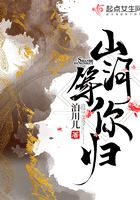
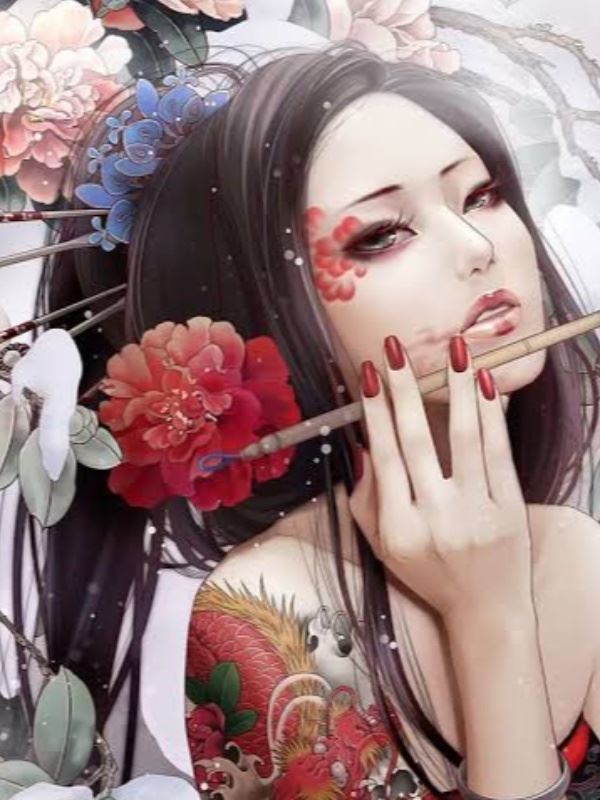
The Mountains and Rivers Are Waiting for Your Return
Novel Info

Summary

... Read More

Pei Nai, the last heir of the Pei family and commander of the Pei Army, died heroically in the Battle of Cliff Valley ten years ago. She sacrificed her life alongside the enemy general Tuoba Huo to protect the nation, leaving behind a legacy as the Supreme Peerless Divine Martial Grand Lady. However, her soul did not pass into oblivion. Instead, she awoke in the body of Tang Mingzhi, a frail noblewoman who had died from illness. The resurrection was orchestrated by the Monk of Zhongchuan, an ancient master who had been a friend of Pei Nai’s father. The monk revealed that a Hun Tree Fragment, embedded in Mingzhi’s tongue, had preserved Pei Nai’s soul and facilitated her rebirth. Though Pei Nai regained her consciousness and martial prowess, she found herself in a world ten years changed: her former lover, Gu Jinheng, had risen to become the Duke of Duanding and served as the regent for the current emperor, Xiao Yi. The emperor, whom Pei Nai had once rescued from assassination, now ruled under the Chongde era name.

Pei Nai initially kept her true identity secret, posing as Tang Mingzhi while investigating the circumstances of her return. She discovered that Gu Jinheng had devoted himself to a woman named Lady Xuanwu, who owned the famous Mingyue Tower and bore a striking resemblance to Pei Nai. This revelation caused Pei Nai significant emotional turmoil, compounded by fragmented memories of past betrayals and the harsh reality that Gu Jinheng had never explicitly loved her. Meanwhile, the capital was plagued by a series of assassinations targeting government officials, creating an atmosphere of suspicion and fear. Pei Nai’s search for answers led her to encounter Ju Liancheng, the son of Gu Jinheng’s strategist Ju Yan, who possessed an eidetic memory and correctly identified Pei Nai despite her new appearance. Ju Liancheng agreed to keep her secret, recognizing the unique mannerisms and combat habits that belonged to the legendary Lady Yingwu.

As Pei Nai adjusted to her new life, she continued to train in secret, refining the Ten Thousand Hatreds Palm and the Fixed Light Compassion Palm taught to her by the monk. Her path crossed with envoys from the State of Qilu, including Gongyang Zisheng, the master of the Southern Wuqiang Sword. During a confrontation in the woods, Pei Nai demonstrated her superior spear techniques, forcing Gongyang to acknowledge her skill while noting the peculiarities of her palm strikes. These encounters highlighted the shifting dynamics of the martial world, where the Upper Three Mountains still held sway but new powers were emerging. Pei Nai also learned that her death had not been entirely voluntary; Gu Jinheng believed she had chosen to die to avoid seeing him, a misunderstanding that deepened the emotional complexity of their past relationship.

The narrative unfolds against the backdrop of political intrigue within the imperial court. Gu Jinheng, though powerful, faced growing tension with Emperor Xiao Yi, who sought to consolidate his own authority. The Duke mourned Pei Nai publicly, standing before her portrait in the ancestral hall, yet his emotional distance from her during their lifetime remained a source of regret. Pei Nai, now inhabiting Mingzhi’s body, found herself entangled in these web of secrets. She interacted with Wang Yixi, the Princess Chenzhao, who provided insights into the public perception of Pei Nai and Lady Xuanwu. The story moves toward a reckoning where Pei Nai must decide whether to reveal her identity to Gu Jinheng and Xiao Yi, or continue operating from the shadows to uncover the true purpose of her rebirth and the conspiracy that led to her death.

Novel Items

More
Medicinal Herb
A special medicinal herb placed under the tongue. When Pei Hao first placed one under young Pei Nai's tongue, it sprouted roots that burrowed deep into her flesh and merged with it, beneficial for eyesight and longevity. Ten years after Pei Nai's death, an old monk placed one under Mingzhi's tongue, reviving her after she had stopped breathing for hours. The fragment reappeared in Pei Nai's new body when she woke up.
Weapon
Pei Nai's spear, black as ink. She named it for Zhou Mingfang, telling him the name before striking him down. It was capable of withstanding the Heaven Axe's strikes and delivering the fatal ninth-form blow.
Cultivation Method
The signature spear technique of the Pei family, also called the Northern Pursuit Spear of the Upper Three Mountains. Pei Nai mastered all nine forms. The third form is Piercing Clouds and Armor. The ninth and final form is Shifting the Realm, which Pei Nai used to defeat Zhou Mingfang, splitting the ground with a spear strike like a falling star.
Weapon
Zhou Mingfang's long ancient silver axe, famed for its power to split rivers and shatter earth. He wielded it during his battle with Pei Nai at Qinghu Mountain. He eventually hurled it at Pei Nai, which wounded her left arm before she defeated him.
Cultivation Method
A powerful axe technique wielded by Zhou Mingfang. Pei Nai recognized it during their battle and identified him as the Heaven Axe of Tao River based on this technique.
Cultivation Method
The ninth and final form of the Pei family spear. Pei Nai used this technique to defeat Zhou Mingfang, with her spear descending like a falling star, splitting the ground and sending up walls of snow. Blood poured into the cracked earth as Zhou Mingfang collapsed.
Latest Release
DateGroupRelease
2026-08-11shanghai fantasy c57
2026-08-11shanghai fantasy c56
2026-08-11shanghai fantasy c55
2026-08-11shanghai fantasy c54
2026-08-11shanghai fantasy c53
2026-08-11shanghai fantasy c52
2026-08-11shanghai fantasy c51
2026-08-11shanghai fantasy c50
2026-08-11shanghai fantasy c49
2026-08-11shanghai fantasy c48
2026-08-11shanghai fantasy c47
2026-08-11shanghai fantasy c46

Community Reviews

Rating(3.9 / 5.0, 30votes)
5 stars
8(27%)
4 stars
12(40%)
3 stars
10(33%)
2 stars
0(0%)
1 stars
0(0%)

Popular reviews

... Read More
This is the kind of pacing that ruins your sleep schedule and I have zero regrets. Chapter 2 opens with the title reveal—boom, mystery established. Then she steps out, the crowd reacts to her transformed appearance, she gets in the carriage, and within three paragraphs we're already learning it's her memorial day. The author doesn't linger. She gives us the emotional hit and immediately pivots to action. 'By the time the moon rose and the stars shone bright, she might not even catch up to the old monk.' That line alone is a hook so sharp it could cut glass. Then the horse scene. She inspects the guards' horses, finds the chestnut one, removes the harness, takes the guard's saddle, mounts up, and rides off. All in one fluid sequence. No hesitation, no internal monologue about whether this is a good idea. She just does it. And the crowd parting on its own? That's character through action, not exposition. The city gate scene is where the pacing really shines. She needs to leave. The guard says no. She says 'forgive me,' takes his spear, knocks him down, and rides off. Three beats. Setup, obstacle, resolution. And the resolution is violent but quick—no drawn-out fight scene, just one decisive moment that tells us everything about her capabilities. Then the teahouse. The pace slows. The monk appears. They talk. And then—the demonstration. The wind rises, objects float, and suddenly we're in a whole different register of the story. The teaching sequence is where the chapter breathes, and it works because the preceding action has already established urgency. We're not slowing down—we're shifting gears. The chapter ends on 'When the time comes, you will naturally understand it.' Which is either the most satisfying or most infuriating cliffhanger depending on your temperament. I am currently in the 'infuriating' camp but I will absolutely read the next chapter.
... Read More
The pacing shift between Chapter 12 and Chapter 13 is fascinating. Chapter 12 is pure kinetic energy—swords clashing, gales erupting, techniques named and deployed. It's breathless. Then Chapter 13 opens with a solar term poem and the most tranquil setup imaginable: "The nation was peaceful and prosperous, so this year's winter banquet would proceed as usual." That contrast is deliberate. The author takes a hard right from life-or-death combat into courtly politeness, and it works because the tension doesn't disappear—it just changes form. Pei Nai's goal shifts from surviving a duel to remaining "inconspicuous, blending among the families of officials—just to catch a distant glimpse of them." The stakes are still high (she hasn't uncovered the truth behind her rebirth), but the expression of those stakes is completely different. The Yuanxiao Pavilion scene then layers in another type of tension—social tension. Yixi's warning "Let's hope they don't come to the eastern wing" followed by the immediate arrival of Jiang Qingyue and Jin Ling'er is classic comedic timing. The author lets the reader breathe between conflicts, which makes each new conflict feel fresh rather than exhausting. What I appreciate most is that the chapter structure mirrors Pei Nai's own experience: she moves from a place of physical danger to a place of social danger, and neither feels safe. The pacing never lets you settle.
... Read More
These eight chapters move like a well-oiled machine and I need to talk about the pacing because it's genuinely impressive. Chapter 47-48: The banquet scene. Starts with Pei Nai writing on Gu Jinheng's palm (tension!), then the Qilu delegation arrives, Da Xi'an proposes, Xiao Yi deflects with wisdom, and it ends with that devastating moonlight walk. The entire political drama plays out in what feels like a single breathless sitting. Then Chapter 49-50: BAM, we're in a teahouse. The storyteller narrates Pei Nai's origin story—her birth in the military camp, the naming scene with Guo Min writing 奈. This is where the emotional weight lands. She's drinking tea like it's wine because the past is overwhelming her. And then the child calls her beautiful lady and she thinks about what could have been with Gu Jinheng. The teahouse owner's son: "Hehe, lady!" And she's just… pinching his cheek, smiling, thinking about a child she'll never have with the man she loved. Chapter 51-54: The Ascending Cloud Heroes Tournament. The transition from quiet teahouse to packed arena is jarring in the best way. The crowd, the noise, the gossip about the Hunxi Whip, and then—Han Ruizhe. Her childhood friend. The last heir. The man who never got the whip because his elder brother died. The chapter endings are doing heavy lifting here. Each one opens a new door: the proposal, the naming story, the tournament registration, Han Ruizhe's name dropping like a bomb. I finished chapter 54 and immediately opened the next one. No dragging, no filler. Every scene advances either plot, character, or both.
... Read More
I need to talk about Da Xi'an because this man is a gift. While Gongyang Zisheng is all cold efficiency and Pei Nai is internally screaming, Da Xi'an is over here like "So ruthless. I was worried you'd get hurt, and this is how you treat me?" after getting blasted by her palm strike. The contrast in voices is hilarious. Gongyang Zisheng speaks in complete sentences about martial arts philosophy. Da Xi'an complains about his fan getting wrecked. And Pei Nai? Her dialogue is minimal, almost clipped—"Who's there?" "You are one of the Three Peaks—the Wuqiang Sword of the Southern Domain, Gongyang Zisheng!" She's in combat mode, every word calculated. But then there's the Duke's monologue on the rooftop, which is pure theatrical grief: "Her love was intense… but even her hatred was just as absolute." That line has such a distinctive voice—it's the voice of a man who has been drinking for hours and finally letting it out to his only trusted servant. The author gives each character a clear verbal fingerprint. Ju Yan is respectful but direct. The Duke is poetic in his despair. Da Xi'an is flamboyant and genuinely warm beneath the noise. Even Lady Xuanwu's stage speech has a performed quality—"Thank you all esteemed guests for coming"—which contrasts sharply with Pei Nai's internal bitterness. The dialogue does heavy lifting here. It tells us who these people are without needing exposition dumps.
... Read More
I need to talk about dialogue because this author understands that what characters DON'T say is often more powerful than what they do. Let's start with the most devastating exchange in the entire text. Pei Nai gives her thoughtful, heartfelt answer about home being "a place of belonging. A place that shelters you from wind and rain, where you can let down all your defenses and feel at ease and warm." And Gu Jinheng's response? "I have no home." Four words. Four. Words. That's it. That's the whole answer. And it completely shatters everything Pei Nai just said. The contrast between her warmth and his emptiness is so brutal I actually had to pause and stare at the wall for a minute. But here's what's brilliant—the author doesn't let Gu Jinheng just deliver a cool one-liner and move on. He follows it up by SHIFTING HIS GAZE, taking a book, and not responding further. The silence AFTER the four words is where the real dialogue happens. He's not being rude; he's being honest in the only way he knows how. And Pei Nai, who lived with him for five years, reads that silence perfectly. She doesn't push. She just stands there stunned. Yixi's dialogue is also wonderfully distinct. She's the anxious friend, the one writing in Pei Nai's palm, the one who says "Mingzhi, your life matters!" with genuine panic. Her voice is fast, worried, practical. Jiang Qingyue is sharp and sneering—"Our Princess Chenzhao is afraid now?"—very different energy. And Daxi An? "He blinked at her, smiling openly. His deep-set features made even the slightest smile appear charming and full of allure." His dialogue is minimal but his presence is electric. The narrative voice itself is worth praising too. It's intimate without being purple, descriptive without being sluggish. Lines like "His words were like a Zen koan—mysterious and unfathomable" and "That smile seemed to pierce through time" show an author who trusts the reader to feel things without over-explaining. And can we talk about the sign language detail? Pei Nai says she needs paper and brush because "the Duke Ding'an cannot speak"—and then the author drops the bomb that his muteness was cured ten years ago. The dramatic irony is *chef's kiss*. Pei Nai thinks she's hiding her knowledge, but the reader already knows she's operating on outdated information. That gap between what she thinks and what we know creates this delicious tension in every line of dialogue that follows.
... Read More
I'm still thinking about Xiao Yi's dialogue because it's genuinely one of the most well-written speech moments I've read in this genre. When Da Xi'an requests Pei Nai's hand, Xiao Yi doesn't just say no. He doesn't get angry or political. He says: "Marriage is no trivial matter. It concerns the happiness of two families, and only mutual affection can be called a destined union. I have followed her teachings all these years and have never arranged marriages arbitrarily." This is a ruler speaking, but it's also a man who was taught by a woman (Lady Yingwu) and actually internalized her philosophy. The dialogue does triple duty here: it advances the plot, it characterizes Xiao Yi as thoughtful and principled, and it thematically echoes Pei Nai's own values from her past life. And Pei Nai's internal response—"Well said! Her teachings—how well he had learned them."—is such a perfect character beat. She's proud. Not of herself directly, but of the legacy she left behind living on in someone else. The storyteller's voice is also distinct. "In the Battle of Chishan, General Guo Min died a tragic and heroic death. The Wu tribe colluded with Xiao Bin, plotting to seize the throne." There's a performative quality to it—rising and falling, vivid emotion—that contrasts with Pei Nai's quiet, internal reactions. The dialogue between the two men discussing the Hunxi Whip feels like natural eavesdropping: "It's just a gimmick" vs "How can they let it be tainted in a mere competition?" Even the child's dialogue—"beau…tiful… lady…"—is perfectly rendered. Simple, broken speech that carries enormous emotional weight because of what Pei Nai projects onto it.
See all reviews

Characters

See all characters

Custom lists

Oops…There is nothing here.