The Most Popular Comedian - Reviews

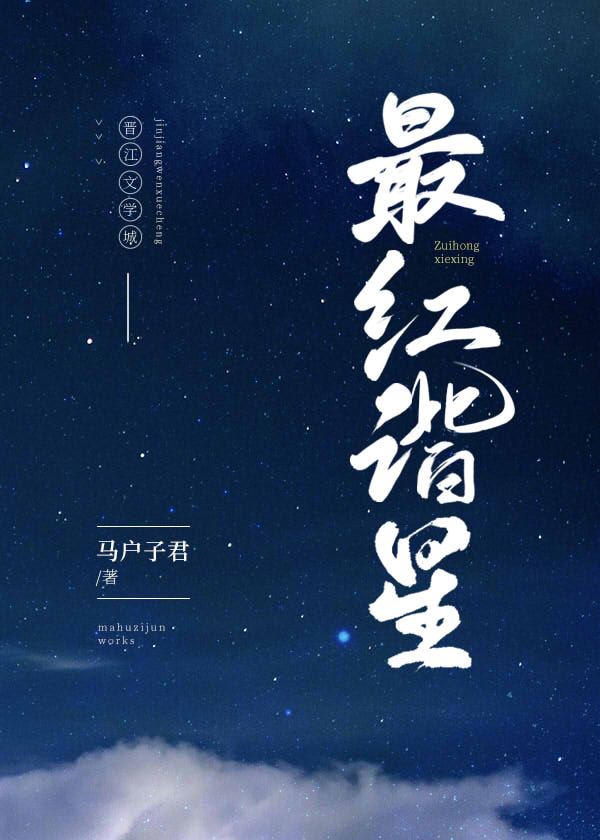
The Most Popular Comedian
+Add to Custom List
Sort
Add review
... Read More
The pacing in this chunk is deceptively loose. It starts with Rong Yuheng eating noodles and scrolling through his phone — totally casual, almost slice-of-life — and then each scene builds slightly more heat without ever feeling rushed. The internet drama gets a beat to breathe, we get the comedic relief of his reply, the commenters have fun with it, and then the show episode begins. But here's where the author is clever: the show segment isn't just filler. Every line of dialogue on screen pushes the plot forward. The host change to Xi Lin gets acknowledged but isn't dwelled on — efficient. The dessert Q&A seems like small talk until Wen Zhecheng says 'mille-feuille' and then immediately credits Rong Yuheng for it. That's the turn. One sentence and suddenly the entire comment section is connecting dots. And Rong Yuheng's accidental confession about studying abroad comes right after, like he's compounding the explosion himself. The structure here is almost mathematical — setup, misdirection, then double reveal. Huang Jianing acts as our surrogate, reacting to each escalation so we feel it too. His potato chip going airborne is basically the author winking at us: yes, this is the moment. The chapter ends on a cliffhanger with Ron about to do something, which is a classic hook. It doesn't overstay its welcome and it doesn't rush — it just keeps finding new angles to tilt the situation. Masterclass in managing momentum without throwing everything at the wall at once.
... Read More
I have to appreciate the sheer commitment this show has to making people uncomfortable. The second room? Forty hanging boards arranged in a 5×8 grid, suspended over a pool that's OVER A METER DEEP, with ropes dangling from the ceiling. Each board is literally hanging in midair and you have to step on it without falling. This isn't a puzzle room, this is an obstacle course disguised as a brain teaser and I respect the design. The visual of Rong Yuheng carefully lying down across three boards—"I'm lying down now, I'm the character '一' in Chinese"—while his shirt clings to his waist creating alluring curves... the author clearly wants us to see this moment from Wen Zhecheng's POV. The camera literally follows his gaze. It's cinematic. But what really sold me was how every room has a DIFFERENT theme. Room one was cuisine and couplets, room two was music and physical coordination, and room three goes BACK to cuisine like the universe is just playing with them. The world feels lived-in and intentional—there's a plaque above the door frame that lights up with riddles, walls that slide open revealing passages, musical scores carved into stone. This isn't some generic game show set. The environment itself feels like it has memory. "In the thirty nights of the Ninth Winter, cold and warmth part ways"—that line appearing on the plaque gave me actual chills. It's cryptic enough to be mysterious but specific enough to feel like it matters. The atmosphere shifts from comedic (saliva drama) to tense (crossing swinging boards) to atmospheric (ancient-seeming room with sliding walls) and it never feels jarring. The worldbuilding does its job without explaining itself.
... Read More
Something about the island survival movie they're watching stuck with me long after I finished this chapter. On the surface it's just a plot device—a thing for the characters to watch together—but I keep coming back to the symbolism. A group of people washed ashore, forced into close quarters, facing danger together, trust breaking down. That's basically the entire premise of any relationship that's developing under pressure, isn't it? Wen Zhecheng chose that movie intentionally. Not a romance, not a comedy—an isolation thriller about people who can't escape each other. Maybe he didn't choose it consciously, maybe it was random. But the parallel is too clean to ignore. These two are on their own kind of deserted island: removed from public life, removed from their usual social roles, just surviving together in a sealed room with flickering projector light. The shoes too—I keep thinking about the blue slippers waiting for Rong Yuheng at the door. "Those blue shoes are for you." This gesture of domestic preparation, of having something ready before the person even arrives, it speaks to a quiet kind of care that the characters never verbalize. Wen Zhecheng doesn't say "I looked forward to you coming." He says "those shoes are for you" and that's it. But the shoes were already there. And then there's the projection screen itself—this artificial world being cast onto a wall while two people sit in darkness, physically close, sharing an experience that isn't really about the movie at all. The movie is just the excuse. The real story is happening in the glances, the accidental arm touches, the silence between lines. The author keeps returning to this image of mediated intimacy—watching something together while actually connecting through the shared darkness. The author's note about "the path to becoming a god is full of hardships" takes on a different meaning when read alongside all this. Maybe the "hardship" isn't about career success. Maybe it's about the difficulty of becoming someone who can be truly known by another person. Wen Zhecheng has built this protected world—his home, his movies, his routines—and Rong Yuheng has found his way in through square dancing and kekekeke laughter. That's not nothing. Anyway I'm probably overthinking the shoes but I'm not stopping.
... Read More
This chapter might seem like a quiet slice-of-life interlude on the surface, but there's actually a LOT happening structurally. First, we get confirmation that Rong Yuheng had a terrible phone call with Rong Congyan earlier that made him cry for an hour — that's a subplot thread that's clearly building toward something bigger. Then Wen Zhongyun's arrival and his emotional realization essentially serves as a parental blessing moment, which in this genre is HUGE. He doesn't just accept it, he actively chooses to support it by making a fuss and then retreating with that bittersweet smile. And then the overnight stay — Rong Yuheng pretending to be shy about it ('I didn't bring any toiletries or spare clothes') while Wen Zhecheng completely sees through it and offers his own clothes. The plot is moving forward through these seemingly small domestic beats rather than big dramatic events, and honestly that's more powerful. Each moment builds their relationship deeper while also advancing the family dynamics subplot. The hook at the end with Rong Yuheng lowering his head bashfully is a perfect mini-cliffhanger that makes me want to immediately read the next chapter.
... Read More
Let me just say this about Bian Chen: the moment he appears, every single contestant in that room stops training. That is not a small detail. That is the author telling us THIS IS A THREAT without writing a single warning label. "Bian Chen exuded an undeniable aura of aggression." Nine words. NINE WORDS and I am already bracing myself for what comes next. And then he doesn't just insult Yuheng—he performs the insult. He turns on his microphone and delivers a full rap diss track about how Yuheng is a passerby, how his singing is desperate, how he's the weakest in the entire audience. This isn't a conflict that happens in private; it's a public confrontation designed to humiliate on purpose. The stakes here are SO much higher than a talent show competition. Yuheng was already kicked out of his family home after a dispute with his father. He's living away from home, practicing in empty rooms, trying to prove himself. And now Bian Chen is essentially saying: you don't belong here. You're not one of us. The text ends with Yuheng stunned, eyes wide, and Bian Chen just staring at him waiting for a reaction. What happens next? I genuinely cannot sleep until I know.
... Read More
I need to just sit with this moment for a second. Wen Zhecheng wiping crumbs off Rong Yuheng's mouth and Rong Yuheng's immediate response is 'Your carpet will get dirty.' Not 'thank you,' not anything emotional—just worrying about the CARPET. And Wen Zhecheng's response is 'If it gets dirty, it gets dirty. I'll clean it up later.' This man doesn't even care about his own house and yet he's gently cleaning someone else's face. I'm not okay. Their dynamic throughout this arc has been so carefully built and here it just comes pouring out in this tiny gesture. But what wrecked me was the timing. Right after this incredibly soft moment, Wen Zhecheng tries to say something meaningful—'No matter what happens, the bond of family won't break...' and Rong Yuheng cuts him off with '...but now, it's not so certain.' LIKE YOU JUST HAD THAT BEAUTIFUL MOMENT AND THEN RIP. Wen Zhecheng clearly thought he was offering comfort and support about Rong Yuheng's family situation, and Rong Yuheng just exposed the fact that he's been thinking about leaving or rejecting his family, and the camera caught EVERYTHING. The betrayal of having your vulnerable moment broadcast to the world while your friend is trying to help you is so painfully realistic. And Rong Congyan in the flashback—oh my god, he's the brother who enables everything but also has genuine schadenfreude when his dad gets mad. That smile 'tinged with a hint of schadenfreude' then freezing when he realizes the implication of the scallop joke? Complex characterization in one paragraph.
... Read More
This passage is one of those rare moments where the setting does so much heavy lifting. You've got complete darkness — not just dim lighting but actual pitch black where people are feeling along walls and nearly colliding. Then the switches get hit and instead of floods of light, these faint clusters of candle flames suddenly ignite at the far end. The description of the electronic candles beneath transparent glass domes casting sparkles into Rong Yuheng's eyes is oddly cinematic. It's like the whole room transforms from a disorienting void into something warm and almost sacred. And the food — soy sauce duck, roasted pork, steamed fish, glutinous rice balls, dumplings, stewed ribs. Ten dishes arranged in a circle. The author doesn't just list them; they make you feel the atmosphere shift from cold mystery to something domestic and ceremonial. Duan Xiu nails it when he says the first room felt purely decorative but this table of food has an atmosphere. That's worldbuilding through intuition, not exposition. The old wooden houses, big red couplets, traditional stove, and now this feast — it all slowly builds into this very specific cultural picture of a Chinese village New Year's Eve setting. What's brilliant is how the environment mirrors the emotional arc. Starting in total darkness and confusion, the characters literally find their way toward light and meaning. By the time the candles are all lit and they're gathered around the table, they've also found their answer. The physical space becomes a metaphor for understanding. And Rong Yuheng's gaze being brighter than the candlelight? That's not just atmosphere, that's the setting reflecting internal state back at him.
... Read More
There's something so cinematic about the car scene. Wen Zhecheng leaning halfway out of the car, his long arm pushing open the door, looking UP at Rong Yuheng from below with bright eyes. Just that one image — the low angle, the sunlight, the domestic intimacy of someone bringing breakfast to someone else's apartment — and I'm transported. This isn't some grand fantasy set piece but it hits just as hard because it feels REAL. The mille-feuille note on the fridge is another one of those tiny worldbuilding details that does triple duty. Zou Yi's handwriting on a sticky note, the alias "Anonymous Tango Dancer," the whole ecosystem of people living together and leaving passive-aggressive food messages. It makes the world feel inhabited, not just a backdrop for the romance. And the garage scene! "This was Rong Yuheng's second time coming to Wen Zhecheng's place, and he tried his best to show off his merits, smoothly pressing the elevator button, 'Allow me.'" You can feel the pride in that gesture — this isn't his home but he's trying to make it feel like one, trying to earn a place in this space. The author doesn't need to describe the apartment at all because we already understand what this place means through actions. The contrast between the investigation files sitting on the phone and the actual world of cars and fridges and elevators is also interesting — this story exists in two registers simultaneously, and both feel equally vivid.
... Read More
Okay so let me just— Wen Zhecheng is out here saying things like "Don't worry, I'm here for you" and then later reveals he actually said it because he was trying to reassure himself that it's fine to say as a teacher?? The man is SO compromised. And Rong Yuheng's interpretation of that message?? Oh my god. He immediately goes to "does this mean Teacher Wen thinks I'm more attractive than him??" and then somehow still ends up deeply moved by Wen Zhecheng's "selfless spirit." This man is impossible. Their dynamic is absolutely peak. Rong Yuheng clearly reads everything through this lens of admiration and devotion, while Wen Zhecheng is walking this razor-thin line between professional mentorship and actual personal care. The author note at the end—"No, you don't understand!"—is the cherry on top because obviously Wen Zhecheng meant it in a teacher way and Rong Yuheng made it something else entirely. Also can we talk about the otter emoji exchanges? These two are basically flirting through marine mammal imagery and I am HERE FOR IT. The power dynamic is fascinating too—Rong Yuheng positions himself as the vulnerable one needing protection while Wen Zhecheng keeps giving exactly that protection, completely unaware of how his words land.
... Read More
Okay can we just talk about how perfectly these two have each other figured out?? Wen Zhecheng calling Rong Yuheng his "little hamster" and Rong Yuheng literally BRIGHTENING because of it — like, that moment when he sees the message and his mood instantly shifts from slightly distressed to completely smooth? That is such a specific kind of love language and I am OBSESSED. The way Wen Zhecheng writes "Master" then deletes it because it felt awkward shows he's self-aware enough to care about how things come across, but then immediately sends "My little hamster knows how to repay his master" which is equal parts teasing and genuinely affectionate. He's walking this line between dominant and soft and it works so well for their dynamic. And Rong Yuheng! He's got this whole parallel storyline going on with the Maixiang Yogurt and SH Vision Entertainment investigation, but when Wen Zhecheng shows up at his door, ALL of that just gets set aside. "My more important Master" — the fact that he literally prioritizes over business is everything. But what I love most is that Rong Yuheng isn't some passive recipient of this care. He brings the mille-feuille PROUDLY, he slips into the car like he owns the place, he pulls up his shirt unceremoniously to show his stomach like WTF bro what are you doing in a moving car— "How dare he, he was afraid that he would lose control and turn them into runaway lovebirds." THIS LINE THO. Wen Zhecheng internally SCREAMING while maintaining his calm exterior. "Don't pull it up, if your stomach gets cold, it'll hurt." Being this flustered but trying to sound normal. I'm dead.
... Read More
Okay so I need to talk about Wen Zhecheng because honestly this man is doing the most and pretending he isn't. The hair-touching moment?? He literally just reached out and smoothed down Rong Yuheng's stubborn sticking-up hair like it was the most natural thing in the world. And Rong Yuheng just... obeyed? Lowered his head shyly? That right there tells you everything about their dynamic shift. This guy who seems cold and restrained on the surface is basically tail-feathers-fluffed-and-preening around Rong Yuheng without even realizing it. But what really got me is Wen Zhecheng apologizing. He had zero obligation to protect Rong Yuheng from Xu Sun's shenanigans, yet he still said sorry like he personally failed him. That's not professional courtesy, that's someone who's already emotionally invested without wanting to admit it. And then Rong Yuheng thinking about how much capital he brought — he doesn't tell Wen Zhecheng because he wants to maintain some kind of boundary, some dignity. But the irony is Wen Zhecheng probably already knows or suspects something, and he's still choosing to treat him gently. The brother dynamic is also interesting. Rong Yuheng thinks about his elder brother Rong Congyan and wonders if he still has him in mind after all this time. Meanwhile Wen Zhecheng is over there genuinely trying to mentor him without crossing into improper territory. Two people approaching this relationship from completely different angles but somehow landing in the same emotional space.
... Read More
This chapter does something interesting with its structure. It opens with actual conflict — Wang Wenge vs. the group, tension about Rong Yuheng training elsewhere, Huang Jianing getting defensive — and then smoothly transitions into this long, unhurried sequence of two guys video-calling and watching TV together. The transition itself is well-handled. After the classroom scene, we get 'After returning, Rong Yuheng trained with his teammates for a while until it was time for dinner' — a simple bridge that lets us breathe before settling into the evening routine. Then the shower, the lounge, setting up the floating window software. Each detail adds to the mundanity in a way that feels authentic. The variety show segment inside the chapter is clever too. We're watching characters watch a show, which creates this layer of commentary — the barrage comments, Wen Zhecheng's reactions, Rong Yuheng's innocent observations. It's not just filler; it's world-building that tells us about the entertainment industry these characters exist in. There's a nice rhythm to the pacing. The opening conflict is quick and sharp — dialogue-heavy, moving fast. Then the video call scene slows down considerably. We linger on Wen Zhecheng's appearance, his thoughts, his nervousness. The prose gives these moments room to breathe. And within the variety show watching, there are smaller beats — the doorknob moment, the grouping discussion, Gou Li's trip — each one a mini-punchline. The chapter ends mid-thought: 'The program moved on to the segment of searching for clu...' — cut off mid-word. This is a bold choice. It creates a sense of continuous flow, like life doesn't stop at chapter boundaries. It also makes you want to keep reading immediately. I get it. I want to keep reading too.

Leave a comment

You must be logged in to leave comments. or