The Missing Child
+Add to Custom List
Genres:
Novel Info
  • Author:
  • Status:Ongoing

Summary

... Read More

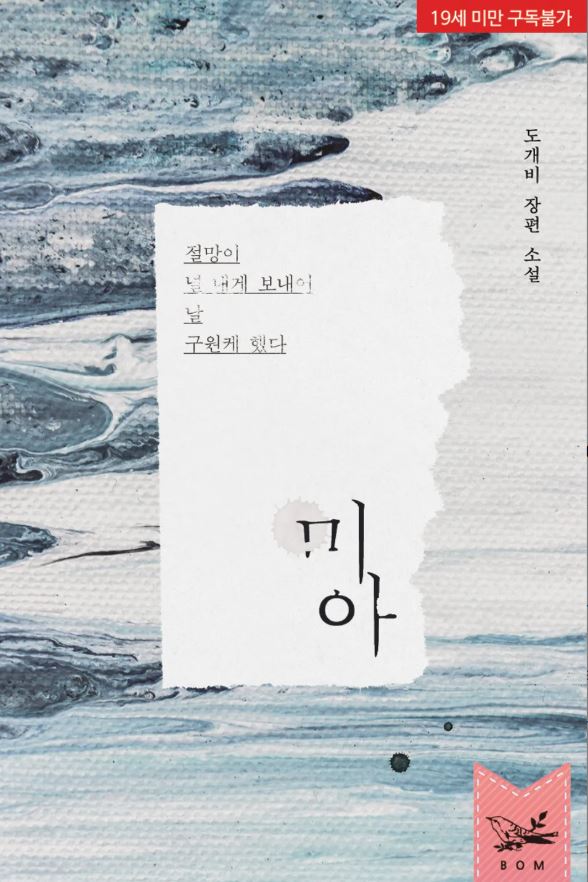
Lee Chun-hee was born in a garbage-filled shantytown in Seoul and raised by a mother who worked in prostitution. For twenty years, she lived among sex workers, running errands and selling cigarettes to survive. Her mother died from kidney failure after being sold into slavery to pay gambling debts. At age twenty-one, Chun-hee was sold to settle the remaining debt and forced into a brothel in the Mia red-light district. She refused to comply, enduring brutal beatings and attempting suicide by jumping from windows. After escaping, she sought refuge in Mia Temple, where she was found by a mysterious man she later learned was a detective named Kim Yong-beom.

Kim Yong-beom had a different past. Abandoned by his father and abused by an adoptive sister who threw him into the sea, he survived by learning to swim and diving for abalone. He eventually moved to the mainland, where he worked as a dishwasher and delivery boy in a Chinese restaurant. He taught himself to read and write, discovering his real name was Kim Yong-beom. A squad leader noticed his potential and recruited him as an undercover operative within the Mia gang, making him a "shadow detective" who wielded a knife to maintain his cover.

Chun-hee escaped the brothel and found work at a card factory, where she met Gyeong-seok, a mute girl who helped her. Despite the harsh conditions, Chun-hee felt safer than in the red-light district. However, her obsession with retrieving a poetry book left to her by a deceased friend named Poet drove her back to the inn. The book was her most prized possession, the only thing that gave her life meaning. While searching for it, she stumbled upon Kim Yong-beom murdering the pimp who had betrayed the gang by spying for the police.

Kim Yong-beom recognized Chun-hee as the girl he had saved in the temple but chose not to kill her. Instead, he instructed her to count to ten and run to the temple. Chun-hee escaped, but returned to the scene to help an injured girl and call an ambulance. She was subsequently taken to the police station for questioning. There, she encountered Kim Yong-beom again, who was now working in plainclothes. He pressured her for information about the murder, subtly threatening her while offering protection.

Chun-hee realized the man who killed the pimp and the detective were the same person. She provided carefully chosen answers that implicated the dead pimp as a traitor without revealing Kim Yong-beom's involvement. After leaving the station, Kim Yong-beom kidnapped Chun-hee and held her captive in his home to prevent her from speaking to the police. He tortured and starved her, attempting to break her will.

Throughout the captivity, Chun-hee remained defiant, clinging to her poetry book. Kim Yong-beom struggled with his dual identity, torn between his duty as a detective and his role as a gang enforcer. He eventually showed small acts of kindness, such as providing food, while maintaining his control over her. The story explores the complex dynamics between two broken individuals trapped in a corrupt system where survival requires compromise and moral ambiguity.

The narrative highlights the brutal realities of poverty, exploitation, and the loss of identity. Both protagonists are marked by their traumatic pasts and struggle to find meaning in their lives. Chun-hee's determination to hold onto her humanity through the poetry book contrasts with Kim Yong-beom's descent into violence. Their forced proximity creates a tense relationship where trust is impossible yet necessary for survival. The story leaves their future uncertain, with Chun-hee still captive and Kim Yong-beom's double life increasingly precarious.

Latest Release
DateGroupRelease
2026-10-03dusk blossoms c21
2026-10-03dusk blossoms c20
2026-10-03dusk blossoms c19
2026-10-03dusk blossoms c18
2026-10-03dusk blossoms c17
2026-10-03dusk blossoms c16
2026-10-03dusk blossoms c15
2026-10-03dusk blossoms c14
2026-10-03dusk blossoms c13
2026-10-03dusk blossoms c12
2026-10-03dusk blossoms c11
2026-10-03dusk blossoms c10

Community Reviews

Rating(0 / 5.0, 43votes)
5 stars
0(0%)
4 stars
0(0%)
3 stars
0(0%)
2 stars
0(0%)
1 stars
0(0%)

Popular reviews

... Read More
OK SO. The scene where he teaches her to smoke. I keep coming back to it. Let me just say it: there is an INTIMACY here that has nothing to do with romance and everything to do with two broken people figuring out how to exist in the same space without destroying each other. "When the flame touches the end, inhale right away." His hand on her throat. Not hurting her—guiding her. She said herself: "His technique was terrible. I broke into a violent coughing fit." And yet—yet—he keeps going. He doesn't let go. He says, "Who told you to hold it in?" Because he notices when she's drowning and he's not going to let her pretend she's fine. And her perspective after he leaves—the rain, the broken radio, lighting match after match just to watch them die. That's not boredom. That's a nervous system that doesn't know what to do with silence. "In order to waste money, you need money. Money is disgustingly important. I learned this truth at the age of nine." Nine. NINE. She was nine and she already knew the arithmetic of survival. And then she thinks about what he said about being a prostitute and his whole body goes rigid because she realizes HE knows what she ran from. He KNOWS. And instead of using it against her, he just... redefined what that word means so she wouldn't have to carry it. I am not okay.
... Read More
Can we just talk about the dialogue in this book for a second because WOW. The author writes conversation like it's actually happening. Not like it's performed. The rhythm between these two characters is chef's kiss. They bounce off each other like two cats hissing at each other over a fence. Take this exchange: "Why are you taking your stupidity out on me? A thug like you, acting all high and mighty." "Looks like you've got it good. I feed you, keep you company, and now you think I'm easy?" That's not dialogue. That's a verbal spar. You can hear the sneer. You can hear the exhaustion. You can hear the weird mutual respect buried under all the venom. And the narration voice—oh god, the narration voice. It's raw and immediate and sometimes almost funny in its absurdity: "Was this some kind of dressing-up game? Crazy bastard." Simple. Direct. That's it. But it tells you everything about her state of mind. The poetry book scene had me breathless though. When he reads from it: "You can look down on me all you want—but not that. Someone like you has no right." Her inner voice there is so fiercely protective. That poetry book isn't just a book—it's her soul on paper, and he's flipping through it like it's a newspaper. The contrast between how casually he handles her deepest thing and how violently she reacts says more than any authorial description ever could. And the Chief's dialogue? Perfect. "Our Kalpan—doesn't even bother with girls from cafés or bars." The way he talks about women like they're furniture. The way the narrator just... accepts it. These voices are so distinct, so lived-in. Every conversation feels like eavesdropping on something real. That's rare.
... Read More
THE DIALOGUE IN THIS BOOK. Let me just say it out loud: THE DIALOGUE IS EXCEPTIONAL. His voice is this perfect storm of aggression and vulnerability that never quite resolves. Watch how he says things: "You'll die first." —threat but also, you know, observation "Get a hold of yourself!" —yelling at someone you're carrying on your back while they're bleeding "Don't you feel the cold at all?" —after leaving her freezing for HOURS "Eat or don't." —the most caring way to offer food in the history of literature This man cannot form a single sentence without either lying, deflecting, or being accidentally honest. The dialogue is CHARACTER. Every line tells us who he is without ever explaining it. And her voice! Lee Chun-hee's internal monologue is a whole mood. She talks to HIM even when he's not there. She has entire CONVERSATIONS with an absent person and they feel more real than most dialogues in fiction. "Wow, look at you—so quick! The pipes froze ages ago!" She's SNAPPY. She's angry. She's also... waiting? Hoping? The reader understands what she's doing even when she won't admit it to herself. The narration itself—first person, alternating between them—has this raw, unpolished quality that feels like overhearing someone's thoughts at 3 AM. No pretension. No literary showing-off. Just: "F*cking hell." "D*mn it." "What the hell are you?" The author trusts the reader to understand everything without explanation. That's confidence. That's craft.
... Read More
Can we talk about how sharp the dialogue is here? Every line feels like it could cut you but the author also knows exactly when to let silence do the work. "Just listen quietly, will you?" / "Can't I even use my own mouth to talk?" This exchange is EVERYTHING. It's not about the radio. It's about control. It's about two people who have never had control over anything arguing over who gets to make noise in a room. And then his monologue about what a prostitute actually is—"someone who is consumed by money and obsessed with men — someone who would abandon their own child just to chase what lies between a man's legs. Learn what it really means before you speak." That is SO much character revelation in one angry speech. You learn his class prejudice, his trauma about his mother, his moral code, and his inability to say nice things directly—all in one go. But the BEST part is what he DOESN'T say. After he delivers this whole speech, after he's explained that she's NOT a prostitute, he just says "That's what a prostitute is. Not you." and walks away. He can't sit with his own softness. He has to leave the room. And Chun-hee's internal voice? "Who the hell does he think he is—damn it!" She's angry but she's also thinking about him the whole time. Her thoughts loop back to him. That's the author telling us everything without narrating it. The writer clearly understands that what characters avoid saying is louder than what they shout.
... Read More
Okay, so let me just say this: I have never encountered a character dynamic this deeply messed up and yet somehow also the most fascinating thing I've read all year. The man who rescued the narrator from the snowstorm is a walking contradiction wrapped in violence and bad decisions. On one hand, he's brutal. He threatens her with a knife he used to kill someone. He pins her to the floor like prey. He calls her a "thug" and treats her like property. He literally dragged her away from safety and locked her up. By any reasonable metric, this is the worst person ever. But then—then—he cooks rice. Properly. With stew and two fried eggs. He nags her about not wasting rice water like some bizarre husband yelling at his wife. He cleans up after her when she vomits. He gets angry when she tears the clothes he gave her but doesn't actually hurt her further. And when she bites his hand, he just... leaves and comes back with a radio. The conversation with the Chief is where it all crystallizes. He casually mentions serving her meals, cleaning up after her, dressing her—and says "I'm taking real good care of her" like it's normal. Like it's something to be proud of. The Chief jokes about a honeymoon and he actually laughs. This man exists in a moral gray zone so thick you could choke on it. The narrator herself is equally complicated. She hates him. She bites him. She runs into blizzards. But she also cooks when he's gone, eats his food, and—god help me—parts of her seem to want to understand why he did what he did. Her defiance is her armor, but her curiosity is the crack in it. These two are trapped in each other's gravity well and I cannot look away.
... Read More
Okay I need to talk about the emotional violence happening between these two because the author does something brilliant here. It's not romance. Not really. But it's not hatred either. It's this strange, dangerous third thing that sits somewhere between them and neither one will name it. The most devastating passage for me was when she remembers the fight in the factory dorm — pulling hair over warm water, swearing, shouting — and realizes those weren't just memories, they were the last time she felt anything real. "Nothing I had experienced had lasted long enough to merit such a word." Nothing worth holding on to. And then Gyeong-seok. Just one name and the tears come. Not because she's weak — she's explicitly told us she doesn't cry, she curses back harder, she shoves burning ash into people's eyes. She cries because this is the first person who made her feel grateful. That single sentence about Gyeong-seok hits like a physical blow. But here's what kills me — she's in a room with a man who abducted her, who has every reason to be terrified of, and yet she finds the energy to mock him. To tease him. To throw his clothes at his face and kick them into his shoes afterward. This isn't submission. This is survival through aggression, through refusing to give him the satisfaction of fear. And when she finally steps toward the door to escape into the snow anyway, she's trembling not just from cold but from the sheer impossibility of what she's choosing. Death over this. And he lets her walk to the threshold before stopping her. Why does that not feel like rescue? Why does it feel like something far more complicated?
See all reviews

Custom lists

See all custom Lists